

Ozone Pharmaceticals Ltd
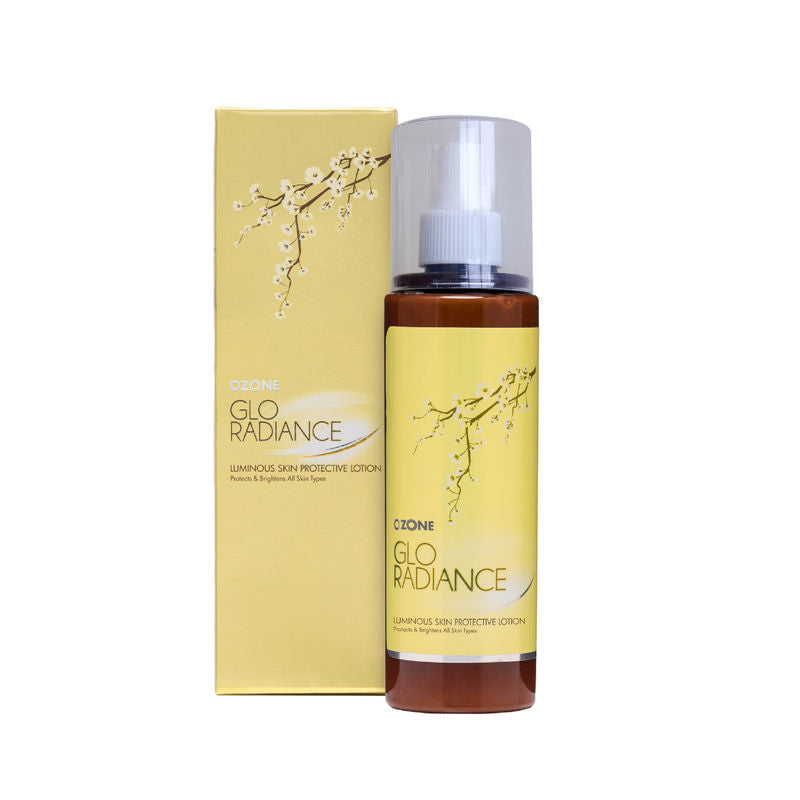
Ozone Glo Radiance Luminous Skin Protection Lotion

Ozone Glo Radiance Luminous Skin Protection Lotion
Ozone Pharmaceticals Ltd
ozone-glo-radiance-luminous-skin-protection-lotion
Moisturize
10085506711845
Morning or Evening?
How often will you use this product?
Notes


Highlights
WHAT IS IT?
Luminous Skin Protection Lotion with 5 active ingredients
FEATURES
Skin protective lotion that protects and brightens the skin, Enriched with aloe vera, sweet almond oil and mango seed butter, Feather-light sun protection that protects against UVA and UVB rays, Helps prevent premature ageing like wrinkles and fine lines, Enhances complexion and evens out the skin tone, Suitable for all skin types, Free from harmful chemicals like alcohol and paraben, Cruelty-free and EcoCert-certified
BEST FOR
sensitive
CHECKS
alcohol, paraben
Who Is It For?
What Does It Help With?
Uva/uvb Protection Premature Ageing Wrinkles Fine Lines Complexion Skin ToneBudget
Affordable (under $30)How To Use
Which routine should it be used in?
Instructions:
Key Information


What Ozone Pharmaceticals Ltd Says
Product Description:
Get glowing skin even when out in the sun. Glo Radiance Luminous Skin Protection Lotion provides effective UVA/UVB protection while reversing your skin's age with the nourishment of aloe vera, mango seed butter, shea butter and white willow bark. This is a light-weight skin protection lotion that acts as an effective barrier between your skin and the notorious ultraviolet rays. A dual-impact lotion that not just shields the skin, but also works on correcting its flaws. Mango seed butter, shea butter, aloe vera extract and white willow bark repair and replenish the skin while hydrating it optimally such that you shine right in the face of the sun! Features: Skin protective lotion that protects and brightens the skin; Enriched with aloe vera, sweet almond oil and mango seed butter; Feather-light sun protection that protects against UVA and UVB rays; Helps prevent premature ageing like wrinkles and fine lines; Enhances complexion and evens out the skin tone; Suitable for all skin types; Free from harmful chemicals like alcohol and paraben; This product is cruelty-free and EcoCert-certified.
About the Brand:
Ingredients Overview
Ingredients List
Aloe-Barbadensis-Extract, Sweet-Almond-oil, Mango-Seed-Butter, Shea-Butter, Willow-Bark-Extract
Key Ingredients
Aloe Barbadensis Extract, Sweet Almond oil, Mango Seed Butter, Shea Butter, Willow Bark Extract
Ingredients Details
Aloe Barbadensis Extract
Common Name(s): Aloe barbadensis extract,aloe barbadensis extract,botanical extract,phytochemical active
CAS Number: N/a
DESCRIPTION
What It Does: Provides antioxidant protection from polyphenol radical scavenging, anti-inflammatory activity from terpenoid nf-kb/cox pathway inhibition, and skin conditioning from the phytochemical secondary metabolite complex.
Why It's Used: Aloe barbadensis extract is selected for the characteristic secondary metabolite signature of aloe barbadensis — whether polyphenols, terpenoids, alkaloids, or polysaccharides, the phytochemical profile provides antioxidant, anti-inflammatory, or skin conditioning benefits specific to this botanical species.
How It Works: Botanical secondary metabolites: polyphenol catechol h-atom donation for ros scavenging (rate constants 10⁶-10⁹ m⁻¹s⁻¹); terpenoids inhibit iκb kinase blocking nf-κb; flavonoids compete at cox-1/2; alkaloids modulate specific receptors for targeted bioactivity.
Typically Found In: Botanical skin care
TECHNICAL DETAILS
Primary Category: Active ingredient – antioxidant
Secondary Functions: Free radical scavenging,anti-aging
Application Areas:

Facial Skincare
Body Care

Hair Care
Beard Care
Color Cosmetics (Makeup)
Dietary/Oral Supplements
Typical Concentration Range: 0.1%–10%
SOURCING & ETHICS
Vegan Status: Conditional
Halal Status: Conditional
Source Notes: Plant-derived extract or synthetic.
SKIN COMPATIBILITY
Irritancy Rating: 1/5 – very low
Comedogenicity Rating: 0/5 – non-comedogenic
Sensitivity Concerns: Non-irritating; well-tolerated.
Safe for Sensitive Skin: Yes
SAFETY & COMPATIBILITY
Safety Profile: Excellent safety profile. ewg score: 1.
Works Well With: Vitamin c,vitamin e,ferulic acid,spf,other antioxidants
Avoid Combining With: No significant incompatibilities
SCIENTIFIC NOTE
Standardise to marker compounds for consistent bioactivity — field-grown material varies 3-10× in secondary metabolite content.
Last Verified: Cosing database,aloe barbadensis extract botanical extract review
Primary Sources: 2026-03-22
Shea Butter
Common Name(s): Shea butter,karite butter
CAS Number: 91080-23-8
DESCRIPTION
What It Does: Provides deep nourishing emolliency with anti-inflammatory cinnamic acid esters and a uniquely rich unsaponifiable fraction.
Why It's Used: The most nutritious plant butter – unique cinnamic acid esters, lupeol, and rich unsaponifiable fraction provide anti-inflammatory and wound healing benefits beyond standard fatty acid emolliency.
How It Works: Cinnamic acid esters absorb uv radiation providing mild natural uv filtering (spf 3-4). lupeol inhibits nf-kb for anti-inflammatory activity. high stearic acid provides occlusive barrier function. rich unsaponifiable fraction (4-9%) provides phytosterols, tocopherols, and triterpenes for bioactive skin benefits.
Typically Found In: Body butters,rich moisturizers,baby products,hair conditioners,lip balms
TECHNICAL DETAILS
Primary Category: Functional ingredient – emollient
Secondary Functions: Cinnamic acid uv support,lupeol anti-inflammatory,rich emolliency
Application Areas:
Facial Skincare
Body Care
Hair Care
Beard Care
Color Cosmetics (Makeup)
Dietary/Oral Supplements
Typical Concentration Range: 1%–100%
SOURCING & ETHICS
Vegan Status: Yes – from butyrospermum parkii nuts
Halal Status: Yes
Source Notes: Unrefined (raw) shea retains more unsaponifiable fraction and stronger natural scent/color. refined shea is odorless, white, and cleaner for formulation. certified fair trade supports west african women's cooperatives.
SKIN COMPATIBILITY
Irritancy Rating: 1/5 – very low
Comedogenicity Rating: 0/5 – non-comedogenic (refined); 2/5 – low (raw/unrefined)
Sensitivity Concerns: Non-irritating.
Safe for Sensitive Skin: Yes
SAFETY & COMPATIBILITY
Safety Profile: Excellent safety profile. ewg score: 1.
Works Well With: Humectants,ceramides,actives as carrier
Avoid Combining With: No significant incompatibilities
SCIENTIFIC NOTE
Shea butter's unsaponifiable fraction (4-9%, vs coconut oil's 0.5% and olive oil's 1-2%) is exceptionally rich in triterpenes, phytosterols, and tocopherols. this fraction is responsible for shea's anti-inflammatory and wound healing properties that simple fatty acid analysis fails to reveal.
Last Verified: Cosing database,lin et al. shea butter cinnamic acid study,cir safety assessment
Primary Sources: 2026-03-12
Sweet Almond Oil
Common Name(s): Sweet almond oil,almond oil
CAS Number: 8013-76-1
DESCRIPTION
What It Does: Provides gentle, well-tolerated emolliency for all skin types including sensitive and baby skin.
Why It's Used: The most universally tolerated plant oil – gentle, light, and well-tolerated across all age groups and skin types.
How It Works: Balanced oleic (62-73%) and linoleic (20-30%) fatty acid composition provides dual emolliency and barrier repair. light texture (lower viscosity vs avocado/olive) provides better aesthetic for face and body. vitamin e provides antioxidant protection.
Typically Found In: Baby products,sensitive skin formulas,body oils,massage oils,facial oils
TECHNICAL DETAILS
Primary Category: Functional ingredient – emollient
Secondary Functions: Universal tolerability,gentle emolliency
Application Areas:
Facial Skincare
Body Care
Hair Care
Beard Care
Color Cosmetics (Makeup)
Dietary/Oral Supplements
Typical Concentration Range: 1%–100%
SOURCING & ETHICS
Vegan Status: Yes – from prunus amygdalus dulcis seeds
Halal Status: Yes
Source Notes: Cold-pressed from sweet almond kernels. non-roasted (cosmetic grade) has lighter color and odor than food-grade roasted. shelf life 12-18 months.
SKIN COMPATIBILITY
Irritancy Rating: 1/5 – very low
Comedogenicity Rating: 2/5 – low to moderate
Sensitivity Concerns: Non-irritating.
Safe for Sensitive Skin: Yes
SAFETY & COMPATIBILITY
Safety Profile: Excellent safety profile. ewg score: 1.
Works Well With: Humectants,ceramides,actives as carrier
Avoid Combining With: No significant incompatibilities
SCIENTIFIC NOTE
Sweet almond oil's balanced oleic/linoleic ratio (approximately 3:1) provides both the emollient (oleic-driven skin softening) and barrier repair (linoleic-driven ceramide synthesis support) properties from a single oil, making it a particularly complete standalone facial and body moisturizing oil.
Last Verified: Cosing database,cir safety assessment
Primary Sources: 2026-03-12
Willow Bark Extract
Common Name(s): Willow bark extract extract
DESCRIPTION
What It Does: Provides antioxidant protection, soothing anti-inflammatory effects, and skin-conditioning benefits through plant-derived polyphenols and phytochemicals.
Why It's Used: Plant extracts concentrate bioactive phytochemicals evolved for environmental protection — uv, microbial, and oxidative stressors — that translate to skin benefits.
How It Works: Polyphenols (flavonoids, phenolic acids) inhibit nf-κb-mediated inflammatory signaling, scavenge reactive oxygen species through electron donation, and chelate pro-oxidant metal ions to reduce oxidative skin damage.
Typically Found In: Serums,toners,moisturizers,masks,essences
TECHNICAL DETAILS
Primary Category: Botanical extracts
Secondary Functions: Antioxidant,anti-inflammatory
Application Areas:
Facial Skincare
Body Care
Hair Care
Beard Care
Color Cosmetics (Makeup)
Dietary/Oral Supplements
Typical Concentration Range: 0.1–10%
SOURCING & ETHICS
Vegan Status: Yes
Halal Status: Yes
Source Notes: Plant-derived extract; no animal components.
SKIN COMPATIBILITY
Irritancy Rating: 1899-12-31 00:00:00 -0800
Sensitivity Concerns: Low sensitization potential at recommended use concentrations.
Safe for Sensitive Skin: Yes
SAFETY & COMPATIBILITY
Safety Profile: Well-characterized cosmetic ingredient with established safety profile. generally non-irritating at typical use concentrations. suitable for leave-on and rinse-off cosmetics.
Works Well With: Niacinamide,hyaluronic acid,vitamin c,ceramides
Avoid Combining With: Strong oxidizing agents
SCIENTIFIC NOTE
Plant secondary metabolites (flavonoids, terpenes, phenolic acids) are biosynthesized as defense compounds against uv, herbivores, and pathogens. their anti-inflammatory activity typically derives from competitive inhibition of cox-2 and 5-lox enzymes (ic50 1–50 µm), while antioxidant activity involves single electron transfer (set) and hydrogen atom transfer (hat) mechanisms with structure-dependent rate constants.
Last Verified: Cosing eu database; pcpc cosmetic ingredient safety reviews; phytochemical and ethnobotanical literature
Primary Sources: 2025-01-15
