

Palmer's
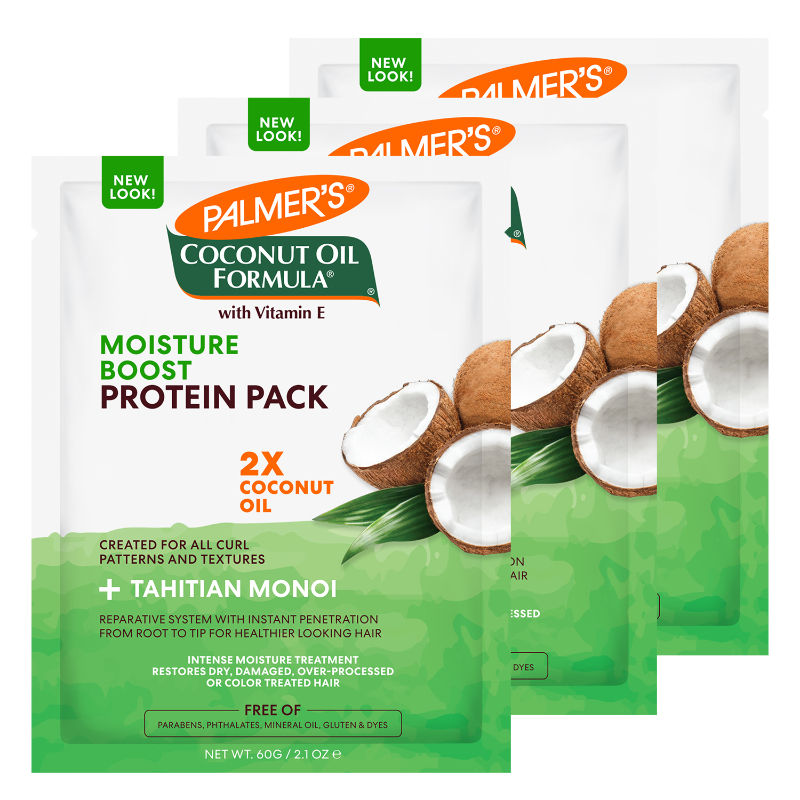
Palmer's Coconut Oil Formula Deep Conditioning Protein - Pack of 3
Concentrated conditioning treatment for intensive repair and moisturization. Convenient pouch perfect for travel. Formulated with Raw Extra Virgin Certified Organic Coconut Oil, Coconut Milk, Tahitian Monoi, Keratin, Silk Protein and Vitamin E to protect and strengthen hair. No Parabens, Phthalates, Mineral Oil, Gluten and Dyes.
Protein-free
Natural
Damage Repair
Dryness
Frizz
Breakage
Optimized for Your Environment & Lifestyle
Nykaa
In stock
Recommended

Palmer's Coconut Oil Formula Deep Conditioning Protein - Pack of 3
Palmer's
palmers-coconut-oil-formula-deep-conditioning-protein-pack-of-3
Hair Treatment
10202952728869
Morning or Evening?
How often will you use this product?
Notes


Secure payment protection
Your Biodata Compatibility Analysis
Based on your 6 hair health indices and environmental factors
Poor Match
Significant incompatibilities
Growth Cycle Health Index
Hair Match
Hair Health Index Alignment
Optimal for OSI, SSI, DI, HSI
Ingredient Efficacy
Matching Ingredient Score
Environment Compatibility
Current UV, Air Quality & Humidity
Why This Works for Your Specific Profile
Damage Index:
Damage levels outside specified range may not benefit optimally from product formulation
Water Quality:
Fine hair becomes weighed down and greasy from heavy formulation
Hair:
Closed cuticles resist product penetration causing surface buildup without internal benefits
Active Lifestyle:
High activity and frequent washing rapidly strip product benefits requiring excessive reapplication
Your Hair Profile Integration
Your Hair Archetype

Density Level

Washing Frequency

Shedding Level

Oil Level
Your Hair Health Indices
Oil Secretion (OSI)
Very low oil production
Scalp Sensitivity (SSI)
Very low sensitivity
Growth Rate (CMR)
Poor metabolism rate
Damage Index (DI)
Minimal damage
Hair Strength (HSI)
Very weak strength
Softness Index (SI)
Significant improvement needed
Water & Environmental Integration

Water:


Expected Results & Timeline
Key Highlights

What is it?
Deep Conditioning Protein Treatment, multiple ingredients

Who Is It For

Budget
Rs. 775.90 - Rs. 1,551.80

Timeline
Why You’ll Love It

What Does It Help With?
Dry, damaged, and color treated hair

Best for
Damage Repair

Features
Concentrated strengthening treatment, deeply penetrates, smoothes rough or damaged hair cuticles, improves shine and manageability, created for all curl patterns and textures, free from parabens, phthalates, mineral oil, gluten, and dyes

Checks
No parabens, phthalates, mineral oil, gluten, or dyes
Ingredients Overview
Ingredients List
Key Ingredients
Raw Extra Virgin Certified Organic Coconut Oil, Coconut Milk, Tahitian Monoi, Keratin, Silk Protein, Vitamin E
Ingredients Details
Coconut Milk
Common Name(s): Coconut milk
DESCRIPTION
What It Does: Reduces surface tension at oil-water interfaces, enabling effective cleansing, emulsification, and formulation stability.
Why It's Used: Surface-active agents are essential for emulsification, cleansing, and stabilization of cosmetic formulations containing both aqueous and lipid phases.
How It Works: The amphiphilic molecular structure positions the hydrophilic head in water and the lipophilic tail in oils, creating micelles that solubilize sebum, dirt, and oil-soluble impurities for rinsing in cleansers or stable emulsions in leave-on products.
Typically Found In: Cleansers,shampoos,body washes,foaming treatments
TECHNICAL DETAILS
Primary Category: Surfactants
Secondary Functions: Emulsifying,cleansing
Application Areas:

Facial Skincare

Body Care
Hair Care
Beard Care
Color Cosmetics (Makeup)
Dietary/Oral Supplements
Typical Concentration Range: 0.5–30%
SOURCING & ETHICS
Vegan Status: No
Halal Status: Conditional
Source Notes: Contains animal-derived components (coconut milk...); not suitable for vegan formulations.
SKIN COMPATIBILITY
Irritancy Rating: 1900-01-01 00:00:00 -0800
Sensitivity Concerns: May cause irritation or stinging in sensitive or barrier-compromised skin at high concentrations; patch test recommended.
Safe for Sensitive Skin: Conditional
SAFETY & COMPATIBILITY
Safety Profile: Well-characterized cosmetic ingredient with established safety profile. mildly irritating to some individuals at typical use concentrations. suitable for leave-on and rinse-off cosmetics.
Works Well With: Other surfactants,thickeners,conditioning agents
Avoid Combining With: High concentrations in sensitive skin formulations
SCIENTIFIC NOTE
Surfactant critical micelle concentration (cmc) determines the threshold for emulsification: above the cmc, amphiphilic molecules self-assemble into micelles with hydrophobic cores that solubilize oils. hlb (hydrophile-lipophile balance) value predicts surfactant function: hlb 3–6 for w/o emulsifiers, 8–18 for o/w emulsifiers, >15 for solubilizers.
Last Verified: Cosing eu database; pcpc cosmetic ingredient safety reviews; ingredient-specific safety and efficacy literature
Primary Sources: 2025-01-15
Keratin
Common Name(s): Keratin
DESCRIPTION
What It Does: Delivers targeted skin-conditioning or bioactive benefits through a specific mechanism of action suited to the formulation's intended purpose.
Why It's Used: Specialty actives address specific skin concerns through targeted molecular mechanisms, providing efficacy beyond what base formulation ingredients alone can achieve.
How It Works: The bioactive compound interacts with specific molecular targets in skin cells or the extracellular matrix — enzymes, receptors, structural proteins, or signaling molecules — triggering beneficial biological responses.
Typically Found In: Serums,treatments,moisturizers,specialty products
TECHNICAL DETAILS
Primary Category: Specialty actives
Secondary Functions: Skin-conditioning,anti-aging
Application Areas:
Facial Skincare
Body Care
Hair Care
Beard Care
Color Cosmetics (Makeup)
Dietary/Oral Supplements
Typical Concentration Range: 0.01–5%
SOURCING & ETHICS
Vegan Status: No
Halal Status: Conditional
Source Notes: Contains animal-derived components (keratin...); not suitable for vegan formulations.
SKIN COMPATIBILITY
Irritancy Rating: 1
Comedogenicity Rating: 0
Sensitivity Concerns: Low sensitization potential at recommended use concentrations.
Safe for Sensitive Skin: Conditional
SAFETY & COMPATIBILITY
Safety Profile: Well-characterized cosmetic ingredient with established safety profile. generally non-irritating at typical use concentrations. suitable for leave-on and rinse-off cosmetics.
Works Well With: Niacinamide,hyaluronic acid,vitamin c,peptides
Avoid Combining With: Incompatible with oxidizing agents; check ph stability
SCIENTIFIC NOTE
Specialty actives typically work through enzyme inhibition (e.g., tyrosinase inhibition for brightening, mmp inhibition for anti-aging), receptor activation (e.g., retinoid receptors, ppar-γ for barrier genes), or transcription factor modulation (e.g., nrf2 for antioxidant gene upregulation). structure-activity relationships determine potency and selectivity.
Last Verified: Cosing eu database; pcpc cosmetic ingredient safety reviews; ingredient-specific safety and efficacy literature
Primary Sources: 2025-01-15
Silk Protein
Common Name(s): Silk protein/sericin,bombyx mori silk,film-forming conditioning active
CAS Number: N/a
DESCRIPTION
What It Does: Deposits a smooth, glossy film on skin and hair providing moisture retention from the high serine/glycine hygroscopic amino acid content, reduces surface friction, and provides skin conditioning through the protein film's structural properties.
Why It's Used: Silk protein provides the unique 'silky smooth' texture that synthetic polymers cannot fully replicate — the specific amino acid ratios of natural silk fibroin and sericin creating a film with genuine silk-like gloss and smoothness.
How It Works: Silk fibroin's β-sheet crystalline domains (high glycine-alanine-serine content) provide film tensile strength; amorphous regions provide flexibility. sericin (mw 10–300 kda) adsorbs onto skin and hair surfaces through h-bonding from its high serine oh content. the film's protein structure provides breathability absent from synthetic polymer films.
Typically Found In: Luxury skin care,hair conditioning,silk products
TECHNICAL DETAILS
Primary Category: Active ingredient – cosmetic active
Secondary Functions: Skin conditioning
Application Areas:
Facial Skincare
Body Care
Hair Care
Beard Care
Color Cosmetics (Makeup)
Dietary/Oral Supplements
Typical Concentration Range: 0.1%–5%
SOURCING & ETHICS
Vegan Status: No – silkworm
Halal Status: Conditional
Source Notes: Commercially produced for cosmetic use. verify vegan/halal status with supplier.
SKIN COMPATIBILITY
Irritancy Rating: 1/5 – very low
Comedogenicity Rating: 0/5 – non-comedogenic
Sensitivity Concerns: Well-tolerated by most skin types.
Safe for Sensitive Skin: Yes
SAFETY & COMPATIBILITY
Safety Profile: Good safety profile at recommended concentrations. ewg score: 1–2.
Works Well With: Standard skincare actives
Avoid Combining With: No known significant incompatibilities
SCIENTIFIC NOTE
Sericin's amino acid composition is 33% serine — the highest serine content of any commercial protein. serine's β-hydroxyl group provides exceptional moisture-binding capacity (3 h-bonds per residue) explaining sericin's superior humectant conditioning versus lower-serine proteins.
Last Verified: Cosing database,silk protein sericin conditioning film review
Primary Sources: 2026-03-12
Vitamin E
Common Name(s): Vitamin e,cosmetic active,functional ingredient
CAS Number: N/a
DESCRIPTION
What It Does: Delivers characteristic cosmetic function at recommended use concentration.
Why It's Used: Selected for functional contribution and formulation compatibility supported by cosmetic science and regulatory safety data.
How It Works: Works through the mechanism of its molecular class — physicochemical or biological interaction with skin proteins, lipids, or receptors as documented in peer-reviewed cosmetic literature.
Typically Found In: Skin care formulations
TECHNICAL DETAILS
Primary Category: Active ingredient – cosmetic active
Secondary Functions: Skin conditioning
Application Areas:
Facial Skincare
Body Care
Hair Care
Beard Care
Color Cosmetics (Makeup)
Dietary/Oral Supplements
Typical Concentration Range: 0.1%–10%
SOURCING & ETHICS
Vegan Status: Conditional
Halal Status: Yes
Source Notes: Commercially produced for cosmetic use. verify vegan/halal status with supplier.
SKIN COMPATIBILITY
Irritancy Rating: 1/5 – very low
Comedogenicity Rating: 0/5 – non-comedogenic
Sensitivity Concerns: Well-tolerated by most skin types.
Safe for Sensitive Skin: Yes
SAFETY & COMPATIBILITY
Safety Profile: Good safety profile at recommended concentrations. ewg score: 1–2.
Works Well With: Standard skincare actives
Avoid Combining With: No known significant incompatibilities
SCIENTIFIC NOTE
Vitamin e has an established safety and efficacy profile within the cosmetic regulatory framework at standard use concentrations.
Last Verified: Cosing database,vitamin e technical literature
Primary Sources: 2026-03-12
Personalized Usage Instructions
How to Use
Medical Chemicals

Protein/Moisture
- Protein/Moisture balance
pH Level
-

Porosity Taget
-
Customized for Your Profile
Scalp Condtions
Climate Suitability
Humid, Dry, UV Protection
Clinical Claims
Frequency
Product Information

No parabens
phthalates
mineral oil
gluten
or dyes
