

Panchvati Herbals
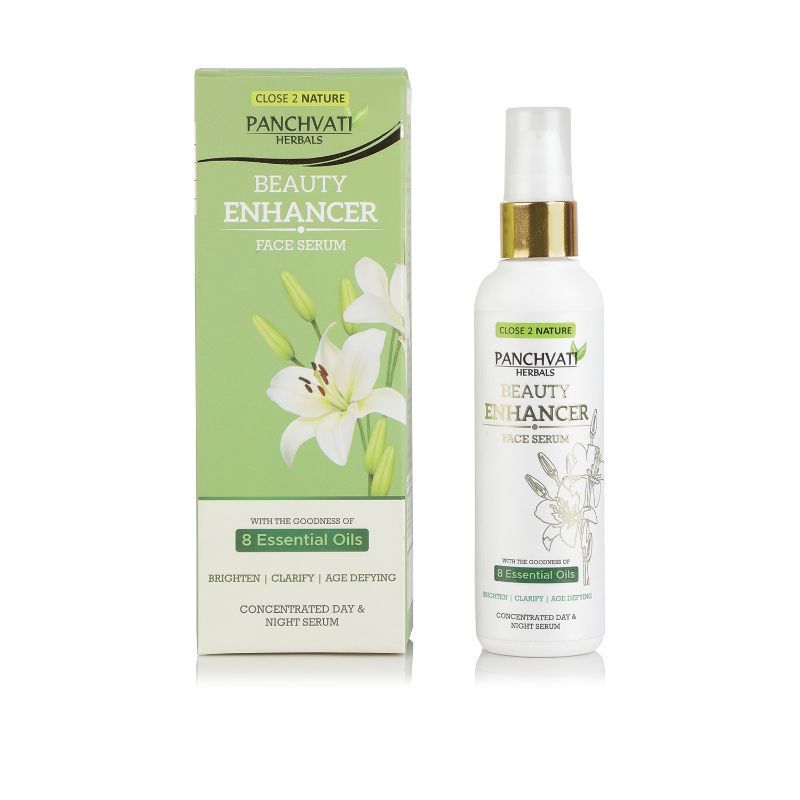
Panchvati Herbals Beauty Enhancer Face Serum For Skin Brightening

Panchvati Herbals Beauty Enhancer Face Serum For Skin Brightening
Panchvati Herbals
panchvati-herbals-beauty-enhancer-face-serum-for-skin-brightening
Serum
10085497307429
Morning or Evening?
How often will you use this product?
Notes


Highlights
WHAT IS IT?
Face Serum with 8 essential oils
FEATURES
High concentration of 8 essential oils, boosts glow and radiance, fades fine lines and wrinkles, reduces dark spots, blemishes and acne scars, tightens skin and improves elasticity
BEST FOR
normal
CHECKS
Who Is It For?
All Genders All Adult AgesWhat Does It Help With?
Signs Of Aging Dullness Dark Spots Blemishes Acne Scars Loss Of Skin ElasticityBudget
Affordable (under $30)How To Use
Which routine should it be used in?
Instructions:
Key Information


What Panchvati Herbals Says
Product Description:
Beauty Enhancer Face Serum contains a high concentration of 8 essential oil such as jojoba oil, lemongrass oil, resemary oil, red raspberry seed oil, tea tree oil, argan oil, etc. An Advanced Face Serum with the goodness of 8 essential oils, boosts glow and radiance naturally, reverses signs of aging by fading fine line and wrinkles, reduces dark spots, blemishes and acne scars, tightens the skin and improves its elasticity.
About the Brand:
Ingredients Overview
Ingredients List
argan-oil,flax-seed-oil,castor-oil,jojoba-oil,lemongrass-oil,rosemary-oil,red-raspberry-oil,tea-tree-oil
Key Ingredients
jojoba oil, lemongrass oil, rosemary oil, red raspberry seed oil, tea tree oil, argan oil
Ingredients Details
Argan Oil
Common Name(s): Argan oil,moroccan oil
CAS Number: 223747-87-3
DESCRIPTION
What It Does: Conditions and nourishes skin and hair with exceptional fatty acid, squalene, and tocopherol content.
Why It's Used: Premium multi-nutrient facial and hair oil – its unique phytosterol and squalene composition provides anti-aging benefits beyond simple emolliency.
How It Works: Balanced oleic/linoleic acid ratio provides both emolliency and barrier repair. high squalene content (6-7%) provides antioxidant and sebum-compatible emolliency. tocopherols provide antioxidant stability and skin benefit. phytosterols inhibit 5-alpha-reductase and reduce inflammation.
Typically Found In: Premium facial oils,hair oils,anti-aging products
TECHNICAL DETAILS
Primary Category: Functional ingredient – emollient
Secondary Functions: Squalene content,phytosterol activity,anti-aging
Application Areas:

Facial Skincare
Body Care
Hair Care
Beard Care

Color Cosmetics (Makeup)
Dietary/Oral Supplements
Typical Concentration Range: 1%–100%
SOURCING & ETHICS
Vegan Status: Yes – from argania spinosa kernels
Halal Status: Yes
Source Notes: Cold-pressed from roasted (food) or unroasted (cosmetic) argan kernels. unesco world heritage traditional production. fair trade certified sources available.
SKIN COMPATIBILITY
Irritancy Rating: 1/5 – very low
Comedogenicity Rating: 0/5 – non-comedogenic
Sensitivity Concerns: Non-irritating.
Safe for Sensitive Skin: Yes
SAFETY & COMPATIBILITY
Safety Profile: Excellent safety profile. ewg score: 1.
Works Well With: Humectants,ceramides,actives as carrier
Avoid Combining With: No significant incompatibilities
SCIENTIFIC NOTE
Argan oil's squalene content (6-7%) is among the highest of all plant oils, second only to olive oil. squalene is an endogenous skin lipid that declines with age, making argan oil's high squalene level particularly relevant for anti-aging facial use – replenishing both essential fatty acids and age-depleting skin lipids simultaneously.
Last Verified: 2026-03-12
Primary Sources: Cosing database,boucetta et al. argan oil review,cir safety assessment
Jojoba Oil
Common Name(s): Jojoba oil,jojoba seed oil
CAS Number: 61789-91-1
DESCRIPTION
What It Does: Provides sebum-identical emolliency with outstanding oxidative stability and non-comedogenic profile.
Why It's Used: The most sebum-compatible plant oil – its wax ester composition mimics human sebum for superior skin compatibility across all skin types including oily and acne-prone.
How It Works: Liquid wax ester composition (primarily c20:1 and c22:1 wax esters) provides exceptional molecular mimicry of human sebum wax esters. regulates sebum production via negative feedback to sebaceous glands. remarkable oxidative stability from fully unsaturated wax ester structure vs polyunsaturated triglycerides.
Typically Found In: Facial oils,hair oils,serums,body care,lip care,virtually all product categories
TECHNICAL DETAILS
Primary Category: Functional ingredient – emollient
Secondary Functions: Sebum balancing,oxidative stability,non-comedogenic
Application Areas:
Facial Skincare
Body Care
Hair Care
Beard Care
Color Cosmetics (Makeup)
Dietary/Oral Supplements
Typical Concentration Range: 1%–100%
SOURCING & ETHICS
Vegan Status: Yes – from simmondsia chinensis (jojoba) seeds
Halal Status: Yes
Source Notes: Cold-pressed from jojoba seeds. among the most oxidation-stable plant oils (shelf life 5+ years). desert-grown, drought-resistant crop.
SKIN COMPATIBILITY
Irritancy Rating: 1/5 – very low
Comedogenicity Rating: 0/5 – non-comedogenic; sebum-identical composition
Sensitivity Concerns: Non-irritating.
Safe for Sensitive Skin: Yes
SAFETY & COMPATIBILITY
Safety Profile: Excellent safety profile. ewg score: 1.
Works Well With: Humectants,ceramides,actives as carrier
Avoid Combining With: No significant incompatibilities
SCIENTIFIC NOTE
Jojoba oil's wax ester composition is uniquely different from all other plant oils (which are triglycerides). human sebum contains approximately 25% wax esters – the proportion matched by jojoba. this structural identity explains jojoba's superior skin and hair compatibility versus conventional triglyceride oils.
Last Verified: 2026-03-12
Primary Sources: Cosing database,gad et al. jojoba review,cir safety assessment
Lemongrass Oil
Common Name(s): Essential oil,concentrated volatile aromatic,bioactive fragrance active
CAS Number: N/a
DESCRIPTION
What It Does: Provides aromatic sensory benefit alongside bioactive skin activity from concentrated plant volatile compounds — including antimicrobial activity (tea tree, thyme, clove), anti-inflammatory activity (lavender, chamomile), or circulatory stimulation (peppermint, rosemary).
Why It's Used: Essential oils provide authentic 'aromatherapy' narrative with genuine bioactive chemistry — the concentrated terpenoid constituents have documented biological activity in addition to olfactory benefit, justifying ingredient claims beyond pure fragrance.
How It Works: Essential oil complexity: steam distillation concentrates volatile terpenes (monoterpenes, sesquiterpenes), phenylpropanoids, and other volatiles. antimicrobial activity from terpenoid membrane disruption (terpinen-4-ol, eugenol, thymol disrupt bacterial membranes); anti-inflammatory from sesquiterpene nf-kb inhibition; sensitisation risk from electrophilic monoterpene oxides and aldehydes.
Typically Found In: Aromatherapy,bioactive skin care,fragrance
TECHNICAL DETAILS
Primary Category: Active ingredient – cosmetic active
Secondary Functions: Skin conditioning
Application Areas:
Facial Skincare
Body Care
Hair Care
Beard Care
Color Cosmetics (Makeup)
Dietary/Oral Supplements
Typical Concentration Range: 0.01%–2%
SOURCING & ETHICS
Vegan Status: Conditional - supplier confirmation required
Halal Status: Unverified - supplier confirmation required
Source Notes: Commercially produced for cosmetic use. verify vegan/halal status with supplier. [audit 2026-07-29 rev2: the record's own source_notes does not assert a non-animal origin, or instructs the reader to verify with the supplier; "yes" asserts knowledge the record does not hold. determination requires shariah-panel sign-off.]
SKIN COMPATIBILITY
Irritancy Rating: 1/5 – very low
Comedogenicity Rating: 0/5 – non-comedogenic
Sensitivity Concerns: Well-tolerated by most skin types.
Safe for Sensitive Skin: Yes
SAFETY & COMPATIBILITY
Safety Profile: Good safety profile at recommended concentrations. ewg score: 1–2.
Works Well With: Standard skincare actives
Avoid Combining With: No known significant incompatibilities
SCIENTIFIC NOTE
Essential oil concentration in cosmetics must respect ifra (international fragrance association) guidelines — each oil has category-specific maximum use levels based on skin sensitisation quantitative risk assessment (qra). tea tree oil maximum 0.5% (rinse-off), lavender oil 2% (leave-on skin) as examples.
Last Verified: 2026-03-12
Primary Sources: Cosing database,ifra standards,essential oil bioactive fragrance review
Tea Tree Oil
Common Name(s): Tea tree oil,tto,melaleuca oil
CAS Number: 68647-73-4
DESCRIPTION
What It Does: Provides the most potent single-plant broad-spectrum antimicrobial essential oil for skin antiseptic applications.
Why It's Used: The antimicrobial essential oil – tea tree oil's terpinen-4-ol provides clinically proven broad-spectrum antimicrobial activity in rct-level clinical studies for acne and mrsa decolonisation.
How It Works: Terpinen-4-ol (30-48%) provides membrane-disrupting antimicrobial activity vs gram+/- bacteria, fungi, and enveloped viruses. iso 4730 requires minimum 30% terpinen-4-ol and maximum 5% 1,8-cineole (sensitiser). anti-biofilm activity vs staphylococcus.
Typically Found In: Anti-acne products,antiseptic formulas,natural antimicrobials,scalp treatments
TECHNICAL DETAILS
Primary Category: Active ingredient – soothing / anti-inflammatory
Secondary Functions: Redness reduction,anti-inflammatory,calming
Application Areas:
Facial Skincare
Body Care
Hair Care
Beard Care
Color Cosmetics (Makeup)
Dietary/Oral Supplements
Typical Concentration Range: 0.001%–5%
SOURCING & ETHICS
Vegan Status: Yes – from melaleuca alternifolia leaves (australia)
Halal Status: Yes
Source Notes: Plant-derived extract or synthetic.
SKIN COMPATIBILITY
Irritancy Rating: 1/5 – very low
Comedogenicity Rating: 0/5 – non-comedogenic
Sensitivity Concerns: Non-irritating; ideal for reactive and sensitive skin.
Safe for Sensitive Skin: Yes – particularly recommended for sensitive skin
SAFETY & COMPATIBILITY
Safety Profile: Iso 4730:2017 quality standard defines authentic tea tree oil. can cause contact sensitisation at high concentrations. toxic if ingested.
Works Well With: Ceramides,panthenol,allantoin,hyaluronic acid,centella asiatica
Avoid Combining With: No significant incompatibilities
SCIENTIFIC NOTE
Randomised controlled trial comparison of 5% tea tree oil gel vs 5% benzoyl peroxide lotion for acne demonstrated equivalent efficacy for acne lesion reduction at 3 months. tea tree's slower onset (8 weeks vs 4 weeks for bpo) was offset by significantly fewer side effects (dryness, irritation, peeling) in the tto group – providing evidence-based support for clinical tto use as a well-tolerated bpo alternative.
Last Verified: 2026-03-12
Primary Sources: Cosing database,bassett et al. tea tree oil acne rct,iso 4730