

Paul Mitchell
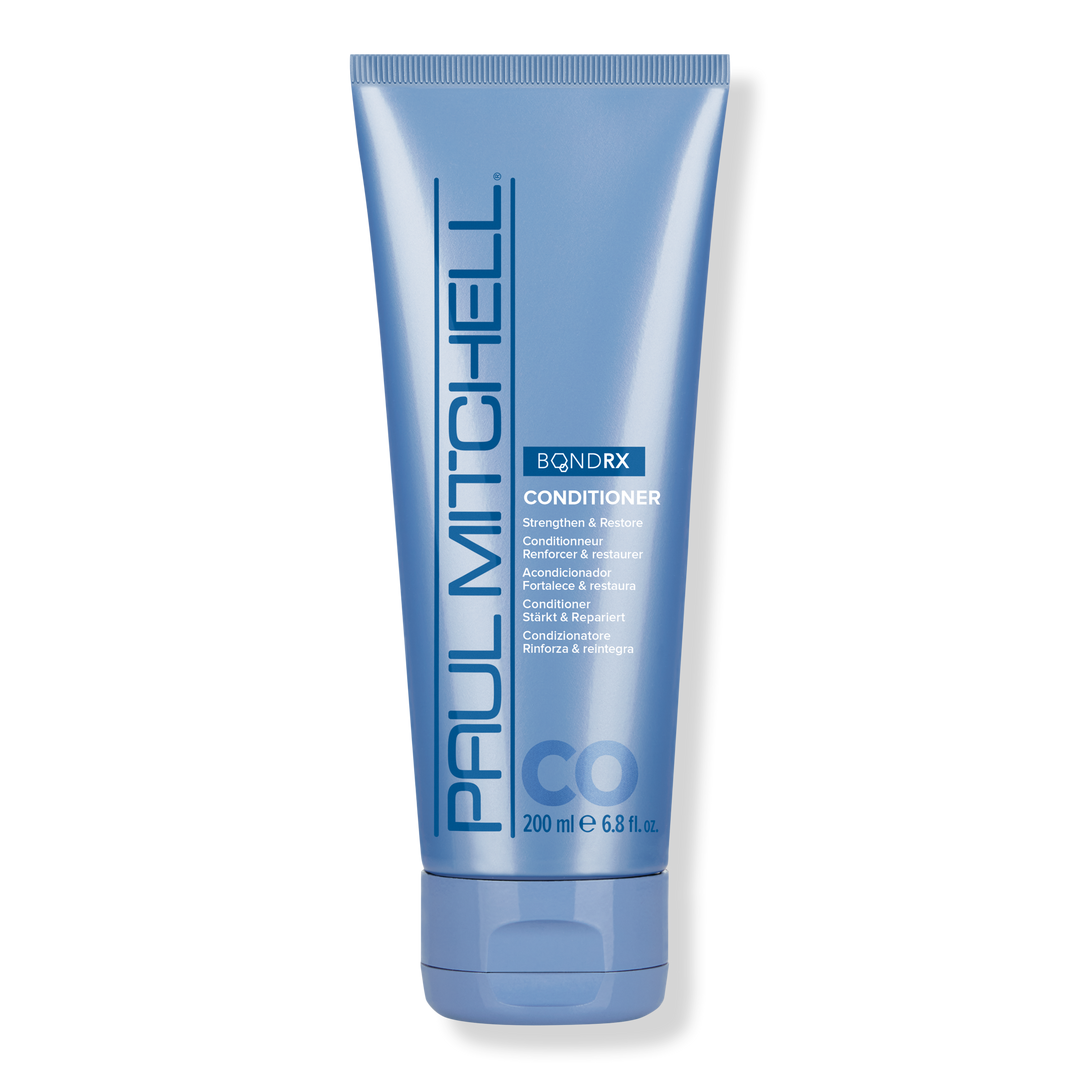
Paul Mitchell Bond Rx Conditioner
Paul Mitchell Bond Rx Conditioner with Bond Rx Technology conditions and strengthens chemically treated and damaged hair.
Sulfate-free
Paraben-free
Color-safe
Vegan
Damage Repair
Breakage
Optimized for Your Environment & Lifestyle
Nykaa
In stock
Recommended

Paul Mitchell Bond Rx Conditioner
Paul Mitchell
paul-mitchell-bond-rx-conditioner
Conditioner
10355411386661
Morning or Evening?
How often will you use this product?
Notes


Secure payment protection
Your Biodata Compatibility Analysis
Based on your 6 hair health indices and environmental factors
Poor Match
Significant incompatibilities
Growth Cycle Health Index
Hair Match
Hair Health Index Alignment
Optimal for OSI, SSI, DI, HSI
Ingredient Efficacy
Matching Ingredient Score
Environment Compatibility
Current UV, Air Quality & Humidity
Why This Works for Your Specific Profile
Damage Index:
Healthy to moderately damaged hair experiences over-conditioning or protein overload causing limpness or rigidity
Water Quality:
Fine hair becomes weighed down and greasy from heavy formulation
Hair:
Closed cuticles resist product penetration causing surface buildup without internal benefits
Active Lifestyle:
Activity levels outside optimal range affect product performance and maintenance requirements
Your Hair Profile Integration
Your Hair Archetype

Density Level

Washing Frequency

Shedding Level

Oil Level
Your Hair Health Indices
Oil Secretion (OSI)
Very low oil production
Scalp Sensitivity (SSI)
Very low sensitivity
Growth Rate (CMR)
Poor metabolism rate
Damage Index (DI)
Minimal damage
Hair Strength (HSI)
Very weak strength
Softness Index (SI)
Significant improvement needed
Water & Environmental Integration

Water:


Expected Results & Timeline
Key Highlights

What is it?
Conditioner with Bond Rx Technology

Who Is It For
Adults

Budget
Rs. 2,644.83 - Rs. 5,289.66

Timeline
Immediate improvement in manageability; noticeable strengthening with regular use
Why You’ll Love It

What Does It Help With?
Restoring fragile strands, Strengthening and protecting hair, Improving manageability

Best for
Chemically treated and damaged hair

Features
Lightweight formula helps restore fragile strands, Bond Rx Technology strengthens and protects hair, Leaves hair softer and more manageable, Ideal for chemically treated and damaged hair

Checks
Color safe, Vegan, Sulfate free (without SLS, SLES, ALS)
Ingredients Overview
Ingredients List
aqua-water-eau, cetearyl-alcohol, cetyl-alcohol, amodimethicone-morpholinomethyl-silsesquioxane-copolymer, caprylyl-methicone, propylene-glycol, tocopherol, acetic-acid, alcohol, behentrimonium-methosulfate, ceteareth-20, citric-acid, cystine-bis-pg-propyl-silanetriol, ethylhexylglycerin, olealkonium-chloride, polyquaternium-37, ppg-1-trideceth-6, propylene-glycol-dicaprylate-dicaprate, trideceth-10, phenoxyethanol, parfum-fragrance, benzyl-benzoate
Key Ingredients
Amodimethicone/Morpholinomethyl Silsesquioxane Copolymer, Tocopherol, Cystine Bis-PG-Propyl Silanetriol
Ingredients Details
Alcohol
Common Name(s): Alcohol,cosmetic active,functional ingredient
CAS Number: N/a
DESCRIPTION
What It Does: Delivers characteristic cosmetic function at recommended use concentration.
Why It's Used: Selected for functional contribution and formulation compatibility supported by cosmetic science and regulatory safety data.
How It Works: Works through the mechanism of its molecular class as documented in peer-reviewed cosmetic literature.
Typically Found In: Skin care formulations
TECHNICAL DETAILS
Primary Category: Active ingredient – cosmetic active
Secondary Functions: Skin conditioning
Application Areas:

Facial Skincare

Body Care
Hair Care
Beard Care
Color Cosmetics (Makeup)
Dietary/Oral Supplements
Typical Concentration Range: 0.1%–10%
SOURCING & ETHICS
Vegan Status: Conditional
Halal Status: Yes
Source Notes: Commercially produced for cosmetic use. verify vegan/halal status with supplier.
SKIN COMPATIBILITY
Irritancy Rating: 1/5 – very low
Comedogenicity Rating: 0/5 – non-comedogenic
Sensitivity Concerns: Well-tolerated by most skin types.
Safe for Sensitive Skin: Yes
SAFETY & COMPATIBILITY
Safety Profile: Good safety profile at recommended concentrations. ewg score: 1–2.
Works Well With: Standard skincare actives
Avoid Combining With: No known significant incompatibilities
SCIENTIFIC NOTE
Alcohol has an established safety profile within the cosmetic regulatory framework at standard use concentrations.
Last Verified: Cosing database,alcohol technical literature
Primary Sources: 2026-03-12
Amodimethicone/morpholinomethyl Silsesquioxane Copolymer
Common Name(s): Amodimethicone/morpholinomethyl silsesquioxane copolymer
DESCRIPTION
What It Does: Creates a smooth, silky skin feel, reduces friction, and forms a breathable film on skin that enhances product application and wear.
Why It's Used: Silicones provide unmatched aesthetic elegance, thermal stability, and formulation flexibility that enhance both consumer experience and product performance.
How It Works: Siloxane backbone provides a flexible, chemically inert polymer that forms thin, breathable films on skin surface, filling surface irregularities and providing low surface energy for exceptional slip and spreadability.
Typically Found In: Moisturizers,primers,foundations,sunscreens,hair products
TECHNICAL DETAILS
Primary Category: Silicones
Secondary Functions: Emollient,film former
Application Areas:
Facial Skincare
Body Care
Hair Care
Beard Care
Color Cosmetics (Makeup)
Dietary/Oral Supplements
Typical Concentration Range: 0.5–30%
SOURCING & ETHICS
Vegan Status: Yes
Halal Status: Yes
Source Notes: Synthetic silicone polymer; not plant-derived but generally considered vegan.
SKIN COMPATIBILITY
Irritancy Rating: 1
Comedogenicity Rating: 0
Sensitivity Concerns: Low sensitization potential at recommended use concentrations.
Safe for Sensitive Skin: Yes
SAFETY & COMPATIBILITY
Safety Profile: Well-characterized cosmetic ingredient with established safety profile. generally non-irritating at typical use concentrations. suitable for leave-on and rinse-off cosmetics.
Works Well With: Other emollients,uv filters,pigments
Avoid Combining With: Silicone-sensitive formulations; biodegradability concerns in eco-formulations
SCIENTIFIC NOTE
Silicone polymers are poly(dimethylsiloxane) backbones with si-o bond energy (105 kcal/mol) significantly higher than c-c (83 kcal/mol), providing exceptional thermal and oxidative stability. the low surface energy (21 mn/m vs 30+ mn/m for organic polymers) accounts for silicone's unique slip feel, and the si-o bond's flexibility (rotation barrier ~0.3 kcal/mol) enables fluid behavior across wide temperature ranges.
Last Verified: Cosing eu database; pcpc cosmetic ingredient safety reviews; ingredient-specific safety and efficacy literature
Primary Sources: 2025-01-15
Ceteareth-20
Common Name(s): Polyethylene glycol cetearyl ether,peg-20 cetearyl ether
CAS Number: 68439-49-6
DESCRIPTION
What It Does: Provides high-hlb o/w emulsification for stable cream formation from ethoxylated cetearyl alcohol.
Why It's Used: Classic self-emulsifying wax component for standard pharmaceutical and cosmetic cream formulation.
How It Works: 20 eo units on cetearyl alcohol chain provide hlb ~15-17 for strong o/w emulsification. often pre-blended with cetearyl alcohol as 'emulsifying wax' for simplified cream making. combined low-hlb cetearyl alcohol + high-hlb ceteareth-20 forms a balanced self-emulsifying system.
Typically Found In: Classic pharmaceutical and cosmetic creams
TECHNICAL DETAILS
Primary Category: Functional ingredient – ethoxylated fatty alcohol emulsifier
Secondary Functions: Skin conditioning
Application Areas:
Facial Skincare
Body Care
Hair Care
Beard Care
Color Cosmetics (Makeup)
Dietary/Oral Supplements
Typical Concentration Range: 1%–8%
SOURCING & ETHICS
Vegan Status: Conditional – peg petroleum; cetearyl vegetable
Halal Status: Yes
Source Notes: Commercially produced for cosmetic use. verify vegan/halal status with supplier.
SKIN COMPATIBILITY
Irritancy Rating: 1/5 – very low
Comedogenicity Rating: 0/5 – non-comedogenic
Sensitivity Concerns: Well-tolerated by most skin types.
Safe for Sensitive Skin: Yes
SAFETY & COMPATIBILITY
Safety Profile: Good safety profile at recommended concentrations. ewg score: 1–2.
Works Well With: Standard skincare actives
Avoid Combining With: No known significant incompatibilities
SCIENTIFIC NOTE
Ceteareth-20's combination with cetearyl alcohol in the classic 'emulsifying wax nf' creates what is called a 'mixed emulsifier system' where the fatty alcohol forms lamellar crystal phases that physically trap and stabilize oil droplets. this physical (lamellar crystal) + chemical (hlb balance) dual stabilization provides superior stability compared to either component alone.
Last Verified: Cosing database,cir safety assessment
Primary Sources: 2026-03-12
Cystine Bis-pg-propyl Silanetriol
Common Name(s): Cystine bis-pg-propyl silanetriol,cystine bis-pg-propyl silanetriol,signal peptide or amino acid active,anti-aging bioactive
CAS Number: N/a
DESCRIPTION
What It Does: Provides receptor-mediated collagen synthesis stimulation, enzyme cofactor activity, or amino acid metabolic support for skin renewal at recommended cosmetic concentrations.
Why It's Used: Precision amino acid and peptide actives provide mechanism-based anti-aging efficacy — defined molecular structure enabling quantifiable receptor pharmacology and reproducible clinical outcomes.
How It Works: Amino acid/peptide interaction with skin: receptor binding → kinase cascade → gene expression change; or enzyme cofactor → metabolic pathway support; or osmolyte → cellular stress protection.
Typically Found In: Anti-aging serums,collagen products
TECHNICAL DETAILS
Primary Category: Active ingredient – peptide
Secondary Functions: Collagen synthesis,anti-aging
Application Areas:
Facial Skincare
Body Care
Hair Care
Beard Care
Color Cosmetics (Makeup)
Dietary/Oral Supplements
Typical Concentration Range: 1–5000 ppm
SOURCING & ETHICS
Vegan Status: Yes
Halal Status: Yes
Source Notes: Synthetically produced via solid-phase peptide synthesis (spps).
SKIN COMPATIBILITY
Irritancy Rating: 1/5 – very low
Comedogenicity Rating: 0/5 – non-comedogenic
Sensitivity Concerns: Non-irritating at recommended concentrations.
Safe for Sensitive Skin: Yes
SAFETY & COMPATIBILITY
Safety Profile: Excellent safety profile. ewg score: 1.
Works Well With: Retinoids,niacinamide,vitamin c,hyaluronic acid
Avoid Combining With: Strong acids below ph 3.5; oxidising agents
SCIENTIFIC NOTE
Peptide formulation consideration: maintain ph 5-7 for optimal stability; avoid oxidising conditions that modify thiol and tryptophan residues; consider encapsulation for hydrophobic sequences.
Last Verified: Cosing database,cystine bis-pg-propyl silanetriol peptide amino acid anti-aging review
Primary Sources: 2026-03-22
Personalized Usage Instructions
How to Use
Step 1
Apply a small amount to clean, damp hair
Step 2
Massage
Step 3
Rinse completely
Step 4
May be used as a leave-in treatment for medium to coarse hair types
Medical Chemicals

Protein/Moisture
- Protein/Moisture balance
pH Level
- Acidic

Porosity Taget
- High Porosity
Customized for Your Profile
Scalp Condtions
Sensitive Scalp, pH Balanced
Climate Suitability
Humid, Dry, Winter, Summer
Clinical Claims
Frequency
Apply a small amount to clean, damp hair. Massage. Rinse completely. May be used as a leave-in treatment for medium to coarse hair types.
Product Information

Color safe
Vegan
Sulfate free (without SLS
SLES
ALS)
