

Patyka
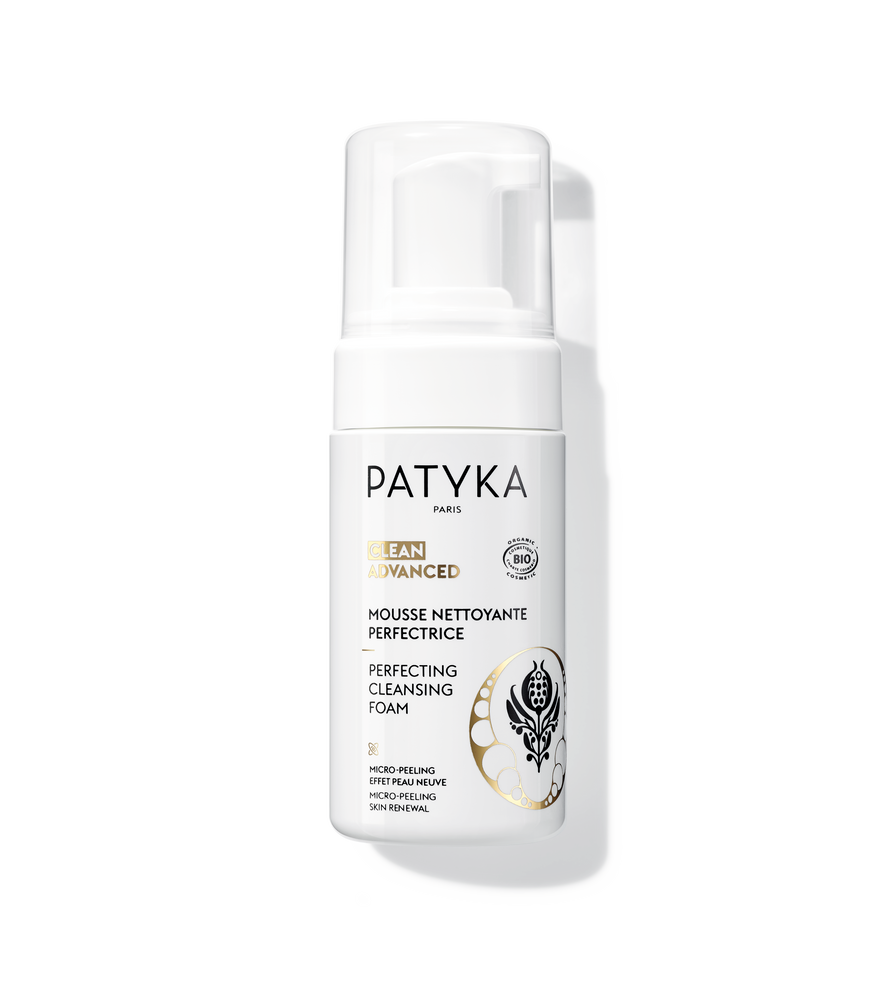
Perfecting Cleansing Foam

Perfecting Cleansing Foam
Patyka
perfecting-cleansing-foam
Cleanse
9706864705829
Morning or Evening?
How often will you use this product?
Notes


Highlights
WHAT IS IT?
Cleansing foam
FEATURES
Micro-peeling action, enriched with natural Fruit Acids
BEST FOR
All skin types, Mature skin
CHECKS
Free of silicones, parabens, polymers, phthalates, PEGs, fatty alcohols, solvents, mineral oils, waxes, synthetic fragrances
Who Is It For?
Adults (18+) Both Women And MenWhat Does It Help With?
Eliminates Impurities Refines Skin Texture Reveals RadianceBudget
Mid-rangeHow To Use
Which routine should it be used in?
Instructions:
Key Information


What Patyka Says
Product Description:
Over the years, it is important to enhance your makeup removal routine with anti-aging active ingredients and to adopt a specific gesture to have a smooth and plumping skin with a radiant and luminous complexion.
About the Brand:
Ingredients Overview
Ingredients List
HORDEUM VULGARE STEM WATER, AQUA (WATER), DECYL GLUCOSIDE, SODIUM LAUROYL GLUTAMATE, COCOBETAINE, APRICOT KERNEL OIL POLYGLYCERYL6 ESTERS, VACCINIUM MYRTILLUS FRUIT EXTRACT, SACCHARUM OFFICINARUM (SUGAR CANE) EXTRACT, CITRUS AURANTIUM DULCIS (ORANGE) FRUIT EXTRACT, CITRUS LIMON (LEMON) FRUIT EXTRACT, ACER SACCHARUM (SUGAR MAPLE) EXTRACT, PUNICA GRANATUM PERICARP EXTRACT, GLYCERIN, SODIUM CHLORIDE, CITRIC ACID, PARFUM (FRAGRANCE), BETAINE, COCOGLUCOSIDE, GLYCERYL OLEATE, LEVULINIC ACID, ALPHAGLUCAN OLIGOSACCHARIDE, SODIUM BENZOATE, SODIUM LEVULINATE, POTASSIUM SORBATE, TOCOPHEROL, HYDROGENATED PALM GLYCERIDES CITRATE, LECITHIN, ASCORBYL PALMITATE
Key Ingredients
ORGANIC POMEGRANATE EXTRACT, PREBIOTICS, COMPLEX OF 5 NATURAL FRUIT ACIDS
Ingredients Details
Decyl Glucoside
Common Name(s): Capryl glucoside,apg surfactant,alkyl polyglucoside
CAS Number: 68515-73-1
DESCRIPTION
What It Does: Provides gentle non-ionic cleansing from natural glucose-derived surfactant chemistry.
Why It's Used: Leading natural-origin surfactant for green/natural formulations requiring gentle, non-ionic cleansing with excellent biodegradability credentials.
How It Works: Non-ionic surfactant with glucoside headgroup and decyl (c10) chain provides mild cleansing via micelle formation. non-ionic character provides lower irritation potential than anionic surfactants. fully biodegradable and from renewable sources.
Typically Found In: Natural cleansers,baby products,green beauty formulas,scalp cleansers
TECHNICAL DETAILS
Primary Category: Functional ingredient – alkyl glucoside surfactant
Secondary Functions: Skin conditioning
Application Areas:

Facial Skincare
Body Care
Hair Care

Beard Care
Color Cosmetics (Makeup)
Dietary/Oral Supplements
Typical Concentration Range: 2%–20%
SOURCING & ETHICS
Vegan Status: Conditional - supplier confirmation required
Halal Status: Unverified - supplier confirmation required
Source Notes: Commercially produced for cosmetic use. verify vegan/halal status with supplier. [audit 2026-07-29 rev2: the record's own source_notes does not assert a non-animal origin, or instructs the reader to verify with the supplier; "yes" asserts knowledge the record does not hold. determination requires shariah-panel sign-off.]
SKIN COMPATIBILITY
Irritancy Rating: 1/5 – very low
Comedogenicity Rating: 0/5 – non-comedogenic
Sensitivity Concerns: Well-tolerated by most skin types.
Safe for Sensitive Skin: Yes
SAFETY & COMPATIBILITY
Safety Profile: Good safety profile at recommended concentrations. ewg score: 1–2.
Works Well With: Standard skincare actives
Avoid Combining With: No known significant incompatibilities
SCIENTIFIC NOTE
Alkyl glucosides' (apgs) non-ionic character means they have no electrical charge that could interact with skin surface proteins and phospholipids – a key reason for their exceptional mildness. ionic surfactants (sulfates, carboxylates) bind to positively charged protein lysine/arginine residues causing denaturation; apgs have no such binding affinity.
Last Verified: 2026-03-12
Primary Sources: Cosing database,cir safety assessment
Saccharum Officinarum Sugar Cane Extract
Common Name(s): Saccharum officinarum sugar cane extract extract
DESCRIPTION
What It Does: Provides antioxidant protection, soothing anti-inflammatory effects, and skin-conditioning benefits through plant-derived polyphenols and phytochemicals.
Why It's Used: Plant extracts concentrate bioactive phytochemicals evolved for environmental protection — uv, microbial, and oxidative stressors — that translate to skin benefits.
How It Works: Polyphenols (flavonoids, phenolic acids) inhibit nf-κb-mediated inflammatory signaling, scavenge reactive oxygen species through electron donation, and chelate pro-oxidant metal ions to reduce oxidative skin damage.
Typically Found In: Serums,toners,moisturizers,masks,essences
TECHNICAL DETAILS
Primary Category: Botanical extracts
Secondary Functions: Antioxidant,anti-inflammatory
Application Areas:
Facial Skincare
Body Care
Hair Care
Beard Care
Color Cosmetics (Makeup)
Dietary/Oral Supplements
Typical Concentration Range: 0.1–10%
SOURCING & ETHICS
Vegan Status: Yes
Halal Status: Yes
Source Notes: Plant-derived extract; no animal components.
SKIN COMPATIBILITY
Irritancy Rating: 1899-12-31 00:00:00 -0800
Sensitivity Concerns: Low sensitization potential at recommended use concentrations.
Safe for Sensitive Skin: Yes
SAFETY & COMPATIBILITY
Safety Profile: Well-characterized cosmetic ingredient with established safety profile. generally non-irritating at typical use concentrations. suitable for leave-on and rinse-off cosmetics.
Works Well With: Niacinamide,hyaluronic acid,vitamin c,ceramides
Avoid Combining With: Strong oxidizing agents
SCIENTIFIC NOTE
Plant secondary metabolites (flavonoids, terpenes, phenolic acids) are biosynthesized as defense compounds against uv, herbivores, and pathogens. their anti-inflammatory activity typically derives from competitive inhibition of cox-2 and 5-lox enzymes (ic50 1–50 µm), while antioxidant activity involves single electron transfer (set) and hydrogen atom transfer (hat) mechanisms with structure-dependent rate constants.
Last Verified: 2025-01-15
Primary Sources: Cosing eu database; pcpc cosmetic ingredient safety reviews; phytochemical and ethnobotanical literature
Sodium Lauroyl Glutamate
Common Name(s): Sodium n-cocoyl glutamate,amisoft ls-11
CAS Number: 29923-31-7
DESCRIPTION
What It Does: Cleanses skin gently with minimal irritation using amino acid-based mild surfactant chemistry.
Why It's Used: The mildest class of surfactants – amino acid-based, suitable for baby, sensitive, and compromised skin cleansers.
How It Works: Anionic surfactant with glutamate headgroup reduces irritation potential vs traditional anionic surfactants (sls). glutamate moiety conditions skin surface while lauryl chain provides micelle formation for soil removal.
Typically Found In: Gentle cleansers,baby washes,sensitive skin cleansers
TECHNICAL DETAILS
Primary Category: Functional ingredient – amino acid surfactant
Secondary Functions: Skin conditioning
Application Areas:
Facial Skincare
Body Care
Hair Care
Beard Care
Color Cosmetics (Makeup)
Dietary/Oral Supplements
Typical Concentration Range: 2%–15%
SOURCING & ETHICS
Vegan Status: Conditional - supplier confirmation required
Halal Status: Unverified - supplier confirmation required
Source Notes: Commercially produced for cosmetic use. verify vegan/halal status with supplier. [audit 2026-07-29 rev2: the record's own source_notes does not assert a non-animal origin, or instructs the reader to verify with the supplier; "yes" asserts knowledge the record does not hold. determination requires shariah-panel sign-off.]
SKIN COMPATIBILITY
Irritancy Rating: 1/5 – very low
Comedogenicity Rating: 0/5 – non-comedogenic
Sensitivity Concerns: Well-tolerated by most skin types.
Safe for Sensitive Skin: Yes
SAFETY & COMPATIBILITY
Safety Profile: Good safety profile at recommended concentrations. ewg score: 1–2.
Works Well With: Standard skincare actives
Avoid Combining With: No known significant incompatibilities
SCIENTIFIC NOTE
Amino acid surfactants' low irritation derives from their naturally acidic headgroups (matching skin's ph 5.5 acidic surface) rather than strongly anionic or cationic chemistry. the glutamate headgroup's pka (~4.1) is closer to the optimal skin surface ph than sulfate or carboxylate surfactants, reducing barrier disruption.
Last Verified: 2026-03-12
Primary Sources: Cosing database,bondi et al. amino acid surfactant review
Vaccinium Myrtillus Fruit Extract
Common Name(s): Vaccinium myrtillus fruit extract,botanical extract,phytochemical active
CAS Number: N/a
DESCRIPTION
What It Does: Provides antioxidant protection, anti-inflammatory activity, and skin conditioning from polyphenols, terpenoids, and phytochemicals in the extract.
Why It's Used: Natural plant extracts provide multi-functional phytochemical profiles supporting concurrent skin care claims from one ingredient with authentic botanical heritage.
How It Works: Polyphenols scavenge ros via h• donation; terpenoids inhibit nf-kb or cox inflammatory pathways; vitamins and minerals provide cofactor skin nutrition.
Typically Found In: Botanical skin care,natural products
TECHNICAL DETAILS
Primary Category: Active ingredient – antioxidant
Secondary Functions: Free radical scavenging,anti-aging
Application Areas:
Facial Skincare
Body Care
Hair Care
Beard Care
Color Cosmetics (Makeup)
Dietary/Oral Supplements
Typical Concentration Range: 0.1%–30%
SOURCING & ETHICS
Vegan Status: Conditional - supplier confirmation required
Halal Status: Conditional - basis not stated in source record; supplier origin confirmation required to determine what evidence applies
Source Notes: Plant-derived extract or synthetic. [audit 2026-07-29 rev2: status downgraded on audit. determination requires shariah-panel sign-off.]
SKIN COMPATIBILITY
Irritancy Rating: 1/5 – very low
Comedogenicity Rating: 0/5 – non-comedogenic
Sensitivity Concerns: Non-irritating; well-tolerated.
Safe for Sensitive Skin: Yes
SAFETY & COMPATIBILITY
Safety Profile: Excellent safety profile. ewg score: 1.
Works Well With: Vitamin c,vitamin e,ferulic acid,spf,other antioxidants
Avoid Combining With: No significant incompatibilities
SCIENTIFIC NOTE
Plant secondary metabolites evolved for uv photoprotection and pathogen defence — mechanisms directly applicable to cosmetic antioxidant and anti-inflammatory activity in human skin.
Last Verified: 2026-03-12
Primary Sources: Cosing database,vaccinium myrtillus fruit extract botanical review