

iS CLINICAL
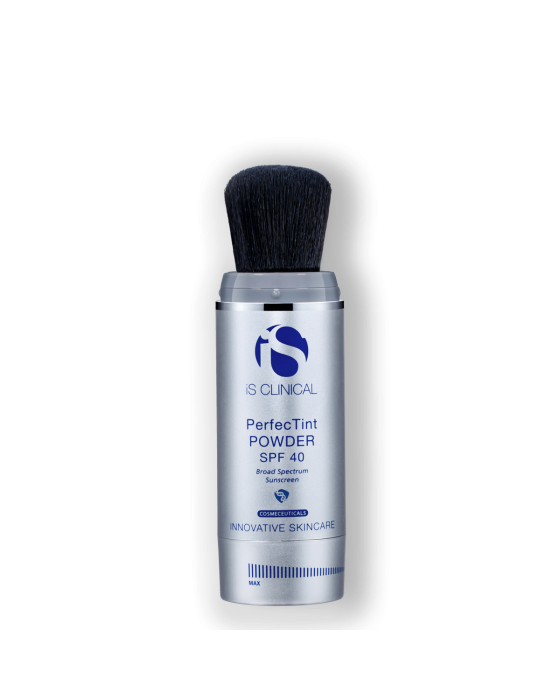
PerfecTint Powder SPF 40

PerfecTint Powder SPF 40
iS CLINICAL
perfectint-powder-spf-40
Suncare
9643589337381
Morning or Evening?
How often will you use this product?
Notes


Highlights
WHAT IS IT?
Tinted powder sunscreen with SPF 40
FEATURES
Help protect skin from environmental stressors while providing hydration even in powder form.
BEST FOR
All skin types
CHECKS
Free of paraben, oil, fragrance
Who Is It For?
Adults Both Men And WomenWhat Does It Help With?
Budget
PremiumHow To Use
Which routine should it be used in?
Instructions:
Key Information


What iS CLINICAL Says
Product Description:
PerfecTint Powder SPF 40 provides silky smooth broad spectrum coverage to help protect skin against the visible signs of photoaging while minimizing the appearance of pores and absorbing surface oil to create a flawless finish. This luxurious formula features our botanical antioxidant Extremozyme technology which is clinically proven to help protect skin from environmental stressors while providing hydration even in powder form. Available in five tints to tastefully match any skin tone from ivory to deep. Excellent for sports, face, neck, décolleté, scalp, and all over protection.
About the Brand:
Ingredients Overview
Ingredients List
Mica, Zinc Oxide, Dimethicone/Vinyl Dimethicone Crosspolymer, Calcium Sodium Borosilicate, Hydroxyapatite, Methyl Methacrylate Crosspolymer, Sodium Anisate, Lycopodium Clavatum Extract, Imperata Cylindrica Root Extract, Capryloyl Glycine, Glycerin, Triethoxycaprylylsilane, +/- CI 77491, CI 77499, CI 77492.
Key Ingredients
Zinc Oxide, Glycerin, Lycopodium Clavatum, Imperata Cylindrica Root Extract, Hydroxyapatite
Ingredients Details
Calcium Sodium Borosilicate
Common Name(s): Calcium sodium borosilicate,cosmetic active,functional ingredient
CAS Number: N/a
DESCRIPTION
What It Does: Delivers characteristic cosmetic function at recommended use concentration.
Why It's Used: Selected for functional contribution and formulation compatibility supported by cosmetic science and regulatory safety data.
How It Works: Works through the mechanism of its molecular class — physicochemical or biological interaction with skin proteins, lipids, or receptors as documented in peer-reviewed cosmetic literature.
Typically Found In: Skin care formulations
TECHNICAL DETAILS
Primary Category: Active ingredient – cosmetic active
Secondary Functions: Skin conditioning
Application Areas:

Facial Skincare

Body Care
Hair Care
Beard Care
Color Cosmetics (Makeup)
Dietary/Oral Supplements
Typical Concentration Range: 0.1%–10%
SOURCING & ETHICS
Vegan Status: Conditional
Halal Status: Yes
Source Notes: Commercially produced for cosmetic use. verify vegan/halal status with supplier.
SKIN COMPATIBILITY
Irritancy Rating: 1/5 – very low
Comedogenicity Rating: 0/5 – non-comedogenic
Sensitivity Concerns: Well-tolerated by most skin types.
Safe for Sensitive Skin: Yes
SAFETY & COMPATIBILITY
Safety Profile: Good safety profile at recommended concentrations. ewg score: 1–2.
Works Well With: Standard skincare actives
Avoid Combining With: No known significant incompatibilities
SCIENTIFIC NOTE
Calcium sodium borosilicate has an established safety and efficacy profile within the cosmetic regulatory framework at standard use concentrations.
Last Verified: Cosing database,calcium sodium borosilicate technical literature
Primary Sources: 2026-03-12
Capryloyl Glycine
Common Name(s): N-capryloyl glycine,dermosoft gmcy
CAS Number: 14246-53-8
DESCRIPTION
What It Does: Provides antimicrobial and sebum-regulating activity from naturally-derived caprylic acid-glycine conjugate.
Why It's Used: Natural multifunctional antimicrobial — capryloyl glycine's anti-seborrheic and antimicrobial dual action provides comprehensive oily skin and anti-dandruff benefits from a single naturally-sourced ingredient.
How It Works: Acyl glycine conjugate provides antimicrobial via fatty acid membrane disruption mechanism. inhibits lipase enzyme reducing sebum fatty acid liberation (sebum regulation). mild surfactant from carboxylate head group. anti-dandruff via malassezia inhibition.
Typically Found In: Anti-seborrheic products,natural antimicrobials,anti-dandruff
TECHNICAL DETAILS
Primary Category: Functional ingredient – acyl amino acid surfactant/preservative
Secondary Functions: Skin conditioning
Application Areas:
Facial Skincare
Body Care
Hair Care
Beard Care
Color Cosmetics (Makeup)
Dietary/Oral Supplements
Typical Concentration Range: 0.5%–2%
SOURCING & ETHICS
Vegan Status: Yes – caprylic acid from coconut + glycine from plant fermentation
Halal Status: Yes
Source Notes: Commercially produced for cosmetic use. verify vegan/halal status with supplier.
SKIN COMPATIBILITY
Irritancy Rating: 1/5 – very low
Comedogenicity Rating: 0/5 – non-comedogenic
Sensitivity Concerns: Well-tolerated by most skin types.
Safe for Sensitive Skin: Yes
SAFETY & COMPATIBILITY
Safety Profile: Good safety profile at recommended concentrations. ewg score: 1–2.
Works Well With: Standard skincare actives
Avoid Combining With: No known significant incompatibilities
SCIENTIFIC NOTE
Capryloyl glycine's sebum regulation via lipase inhibition mirrors the same mechanism as triethyl citrate and ethylhexylglycerin — convergent mechanism discovery across structurally diverse ingredient classes. the parallel lipase inhibition by ester-based (triethyl citrate), ether-based (ethylhexylglycerin), and amide-based (capryloyl glycine) compounds validates lipase inhibition as a universally accessible target for sebum control through multiple chemical approaches.
Last Verified: Cosing database,schülke dermosoft gmcy technical data
Primary Sources: 2026-03-12
Dimethicone/vinyl Dimethicone Crosspolymer
Common Name(s): Dimethicone/vinyl dimethicone crosspolymer
DESCRIPTION
What It Does: Creates a smooth, silky skin feel, reduces friction, and forms a breathable film on skin that enhances product application and wear.
Why It's Used: Silicones provide unmatched aesthetic elegance, thermal stability, and formulation flexibility that enhance both consumer experience and product performance.
How It Works: Siloxane backbone provides a flexible, chemically inert polymer that forms thin, breathable films on skin surface, filling surface irregularities and providing low surface energy for exceptional slip and spreadability.
Typically Found In: Moisturizers,primers,foundations,sunscreens,hair products
TECHNICAL DETAILS
Primary Category: Silicones
Secondary Functions: Emollient,film former
Application Areas:
Facial Skincare
Body Care
Hair Care
Beard Care
Color Cosmetics (Makeup)
Dietary/Oral Supplements
Typical Concentration Range: 0.5–30%
SOURCING & ETHICS
Vegan Status: Yes
Halal Status: Yes
Source Notes: Synthetic silicone polymer; not plant-derived but generally considered vegan.
SKIN COMPATIBILITY
Irritancy Rating: 1
Comedogenicity Rating: 0
Sensitivity Concerns: Low sensitization potential at recommended use concentrations.
Safe for Sensitive Skin: Yes
SAFETY & COMPATIBILITY
Safety Profile: Well-characterized cosmetic ingredient with established safety profile. generally non-irritating at typical use concentrations. suitable for leave-on and rinse-off cosmetics.
Works Well With: Other emollients,uv filters,pigments
Avoid Combining With: Silicone-sensitive formulations; biodegradability concerns in eco-formulations
SCIENTIFIC NOTE
Silicone polymers are poly(dimethylsiloxane) backbones with si-o bond energy (105 kcal/mol) significantly higher than c-c (83 kcal/mol), providing exceptional thermal and oxidative stability. the low surface energy (21 mn/m vs 30+ mn/m for organic polymers) accounts for silicone's unique slip feel, and the si-o bond's flexibility (rotation barrier ~0.3 kcal/mol) enables fluid behavior across wide temperature ranges.
Last Verified: Cosing eu database; pcpc cosmetic ingredient safety reviews; ingredient-specific safety and efficacy literature
Primary Sources: 2025-01-15
Hydroxyapatite
Common Name(s): Hydroxyapatite,cosmetic active,functional ingredient
CAS Number: N/a
DESCRIPTION
What It Does: Delivers characteristic cosmetic function at recommended use concentration.
Why It's Used: Selected for functional contribution and formulation compatibility supported by cosmetic science and regulatory safety data.
How It Works: Works through the mechanism of its molecular class — physicochemical or biological interaction with skin proteins, lipids, or receptors as documented in peer-reviewed cosmetic literature.
Typically Found In: Skin care formulations
TECHNICAL DETAILS
Primary Category: Active ingredient – cosmetic active
Secondary Functions: Skin conditioning
Application Areas:
Facial Skincare
Body Care
Hair Care
Beard Care
Color Cosmetics (Makeup)
Dietary/Oral Supplements
Typical Concentration Range: 0.1%–10%
SOURCING & ETHICS
Vegan Status: Conditional
Halal Status: Yes
Source Notes: Commercially produced for cosmetic use. verify vegan/halal status with supplier.
SKIN COMPATIBILITY
Irritancy Rating: 1/5 – very low
Comedogenicity Rating: 0/5 – non-comedogenic
Sensitivity Concerns: Well-tolerated by most skin types.
Safe for Sensitive Skin: Yes
SAFETY & COMPATIBILITY
Safety Profile: Good safety profile at recommended concentrations. ewg score: 1–2.
Works Well With: Standard skincare actives
Avoid Combining With: No known significant incompatibilities
SCIENTIFIC NOTE
Hydroxyapatite has an established safety and efficacy profile within the cosmetic regulatory framework at standard use concentrations.
Last Verified: Cosing database,hydroxyapatite technical literature
Primary Sources: 2026-03-12
