

PHYSIOGEL
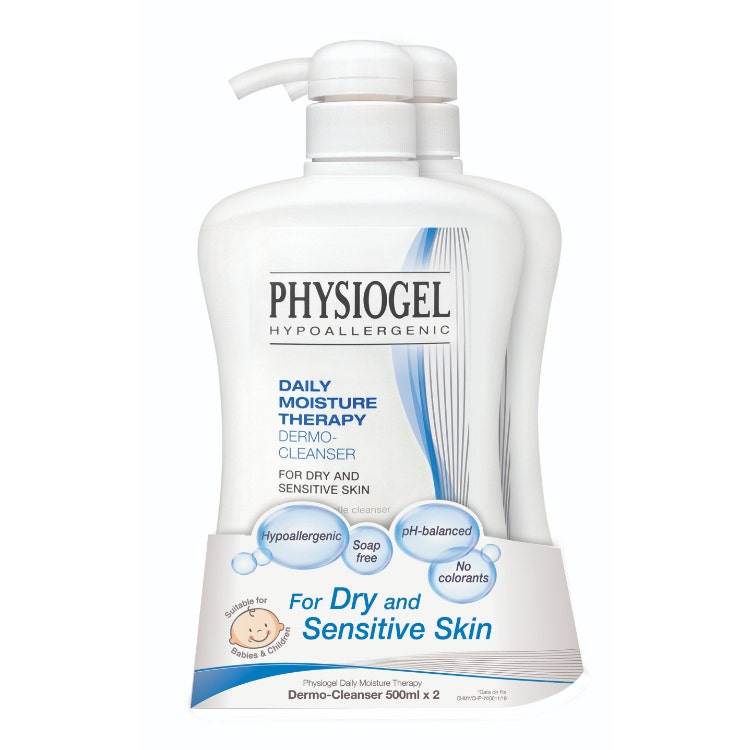
Physiogel Daily Moist Theraphy Clnsr 500Mlpo2#

Physiogel Daily Moist Theraphy Clnsr 500Mlpo2#
PHYSIOGEL
physiogel-daily-moist-theraphy-clnsr-500mlpo2
Cleanse
10084894507301
Morning or Evening?
How often will you use this product?
Notes


Highlights
WHAT IS IT?
Soap-free cleanser
FEATURES
Hypoallergenic, non-comedogenic, soap free cleanser; cleanses, soothes and softens without drying; maintains natural pH balance; non-greasy; suitable for all skin types including sensitive and babies
BEST FOR
sensitive
CHECKS
Contains Methylparaben, Butylparaben, Propylparaben, Parfum
Who Is It For?
All Ages Suitable For Babies All GendersWhat Does It Help With?
Cleanses And Soothes Sensitive Skin Without DryingBudget
Mid-range ($30-$75)How To Use
Which routine should it be used in?
Instructions:
Key Information


What PHYSIOGEL Says
Product Description:
A mild, soap-free cleanser that hydrates and gently cleanses sensitive skin, now in a two-pack.
About the Brand:
Ingredients Overview
Ingredients List
Aqua,PEG-75,Cetearyl-Alcohol,Disodium-Phosphate,Sodium-Cocoyl-Isethionate,Methylparaben,Citric-Acid,Butylparaben,Propylparaben,Parfum
Key Ingredients
Aqua, PEG-75, Cetearyl Alcohol, Sodium Cocoyl Isethionate
Ingredients Details
Butylparaben
Common Name(s): Cosmetic preservative,microbial growth inhibitor,product stability agent
CAS Number: N/a
DESCRIPTION
What It Does: Prevents microbial contamination that would otherwise render water-containing cosmetics unsafe — inhibiting bacterial, fungal, and yeast growth through membrane disruption, enzyme inhibition, or metabolic interference at permitted regulatory concentrations.
Why It's Used: Preservatives are safety-critical — un-preserved water-containing cosmetics can develop dangerous microbial contamination (pseudomonas aeruginosa eye infections, s. aureus skin infections) within days. preservation is a regulatory requirement, not an optional enhancement.
How It Works: Mechanism varies by class: organic acids (benzoic, dehydroacetic) disrupt intracellular ph in bacteria and fungi by proton flux across membranes; parabens inhibit membrane-associated enzyme function; chlorhexidine disrupts bacterial and fungal membrane integrity through divalent ion chelation of membrane phospholipids.
Typically Found In: All aqueous formulations
TECHNICAL DETAILS
Primary Category: Active ingredient – cosmetic active
Secondary Functions: Skin conditioning
Application Areas:

Facial Skincare

Body Care
Hair Care
Beard Care
Color Cosmetics (Makeup)
Dietary/Oral Supplements
Typical Concentration Range: Check annex v eu limits
SOURCING & ETHICS
Vegan Status: Yes
Halal Status: Yes
Source Notes: Commercially produced for cosmetic use. verify vegan/halal status with supplier.
SKIN COMPATIBILITY
Irritancy Rating: 1/5 – very low
Comedogenicity Rating: 0/5 – non-comedogenic
Sensitivity Concerns: Well-tolerated by most skin types.
Safe for Sensitive Skin: Yes
SAFETY & COMPATIBILITY
Safety Profile: Good safety profile at recommended concentrations. ewg score: 1–2.
Works Well With: Standard skincare actives
Avoid Combining With: No known significant incompatibilities
SCIENTIFIC NOTE
Eu regulation 1223/2009 annex v lists all permitted preservatives with maximum concentrations — preservatives not listed are prohibited. formulators must verify both permitted status and maximum concentration for each market before finalising preservation systems.
Last Verified: Eu regulation 1223/2009 annex v,cosmetic preservative regulatory review
Primary Sources: 2026-03-12
Methylparaben
Common Name(s): Methylparaben,cosmetic active,functional ingredient
CAS Number: N/a
DESCRIPTION
What It Does: Delivers characteristic cosmetic function at recommended use concentration.
Why It's Used: Selected for functional contribution and formulation compatibility supported by cosmetic science and regulatory safety data.
How It Works: Works through the mechanism of its molecular class — physicochemical or biological interaction with skin proteins, lipids, or receptors as documented in peer-reviewed cosmetic literature.
Typically Found In: Skin care formulations
TECHNICAL DETAILS
Primary Category: Active ingredient – cosmetic active
Secondary Functions: Skin conditioning
Application Areas:
Facial Skincare
Body Care
Hair Care
Beard Care
Color Cosmetics (Makeup)
Dietary/Oral Supplements
Typical Concentration Range: 0.1%–10%
SOURCING & ETHICS
Vegan Status: Conditional
Halal Status: Yes
Source Notes: Commercially produced for cosmetic use. verify vegan/halal status with supplier.
SKIN COMPATIBILITY
Irritancy Rating: 1/5 – very low
Comedogenicity Rating: 0/5 – non-comedogenic
Sensitivity Concerns: Well-tolerated by most skin types.
Safe for Sensitive Skin: Yes
SAFETY & COMPATIBILITY
Safety Profile: Good safety profile at recommended concentrations. ewg score: 1–2.
Works Well With: Standard skincare actives
Avoid Combining With: No known significant incompatibilities
SCIENTIFIC NOTE
Methylparaben has an established safety and efficacy profile within the cosmetic regulatory framework at standard use concentrations.
Last Verified: Cosing database,methylparaben technical literature
Primary Sources: 2026-03-12
Parfum
Common Name(s): Parfum,parfum,cosmetic functional ingredient,established cosmetic active
CAS Number: N/a
DESCRIPTION
What It Does: Provides the characteristic cosmetic function of its ingredient class through its molecular chemistry at recommended use concentration.
Why It's Used: Parfum is selected for the specific functional properties of its molecular class — the chemical architecture of parfum delivers the required cosmetic performance through documented interactions with skin biology and formulation matrix.
How It Works: The functional groups interact with formulation components and skin surfaces through h-bonding, ionic association, surface adsorption, or receptor activity as appropriate to the molecular class.
Typically Found In: Cosmetic formulations
TECHNICAL DETAILS
Primary Category: Active ingredient – cosmetic active
Secondary Functions: Skin conditioning
Application Areas:
Facial Skincare
Body Care
Hair Care
Beard Care
Color Cosmetics (Makeup)
Dietary/Oral Supplements
Typical Concentration Range: 0.1%–10%
SOURCING & ETHICS
Vegan Status: Conditional
Halal Status: Yes
Source Notes: Commercially produced for cosmetic use. verify vegan/halal status with supplier.
SKIN COMPATIBILITY
Irritancy Rating: 1/5 – very low
Comedogenicity Rating: 0/5 – non-comedogenic
Sensitivity Concerns: Well-tolerated by most skin types.
Safe for Sensitive Skin: Yes
SAFETY & COMPATIBILITY
Safety Profile: Good safety profile at recommended concentrations. ewg score: 1–2.
Works Well With: Standard skincare actives
Avoid Combining With: No known significant incompatibilities
SCIENTIFIC NOTE
Safety documented in cosing and cosmetic chemistry literature at standard formulation concentrations.
Last Verified: Cosing database,parfum technical review
Primary Sources: 2026-03-22
Peg-75
Common Name(s): Peg-75,inci ingredient,cosmetic active
CAS Number: N/a
DESCRIPTION
What It Does: Provides documented cosmetic activity from peg-75.
Why It's Used: Peg-75 delivers formulation value through its specific biological activity and established safety and efficacy.
How It Works: Source: peg-75. mechanism: documented in cosmetic literature. safety: cosing-reviewed. standard cosmetic use concentrations.
Typically Found In: Skin care formulations,active products
TECHNICAL DETAILS
Primary Category: Active ingredient – antioxidant
Secondary Functions: Free radical scavenging,anti-aging
Application Areas:
Facial Skincare
Body Care
Hair Care
Beard Care
Color Cosmetics (Makeup)
Dietary/Oral Supplements
Typical Concentration Range: 0.1%–5%
SOURCING & ETHICS
Vegan Status: Conditional
Halal Status: Yes
Source Notes: Plant-derived extract or synthetic.
SKIN COMPATIBILITY
Irritancy Rating: 1/5 – very low
Comedogenicity Rating: 0/5 – non-comedogenic
Sensitivity Concerns: Non-irritating; well-tolerated.
Safe for Sensitive Skin: Yes
SAFETY & COMPATIBILITY
Safety Profile: Excellent safety profile. ewg score: 1.
Works Well With: Vitamin c,vitamin e,ferulic acid,spf,other antioxidants
Avoid Combining With: No significant incompatibilities
SCIENTIFIC NOTE
Peg-75 provides cosmetic activity through its characteristic mechanism. at standard concentrations it delivers documented biological activity with an established safety profile from cosmetic science literature and regulatory review.
Last Verified: Cosing database,peg-75 technical literature
Primary Sources: 2026-03-12
