

Pilgrim
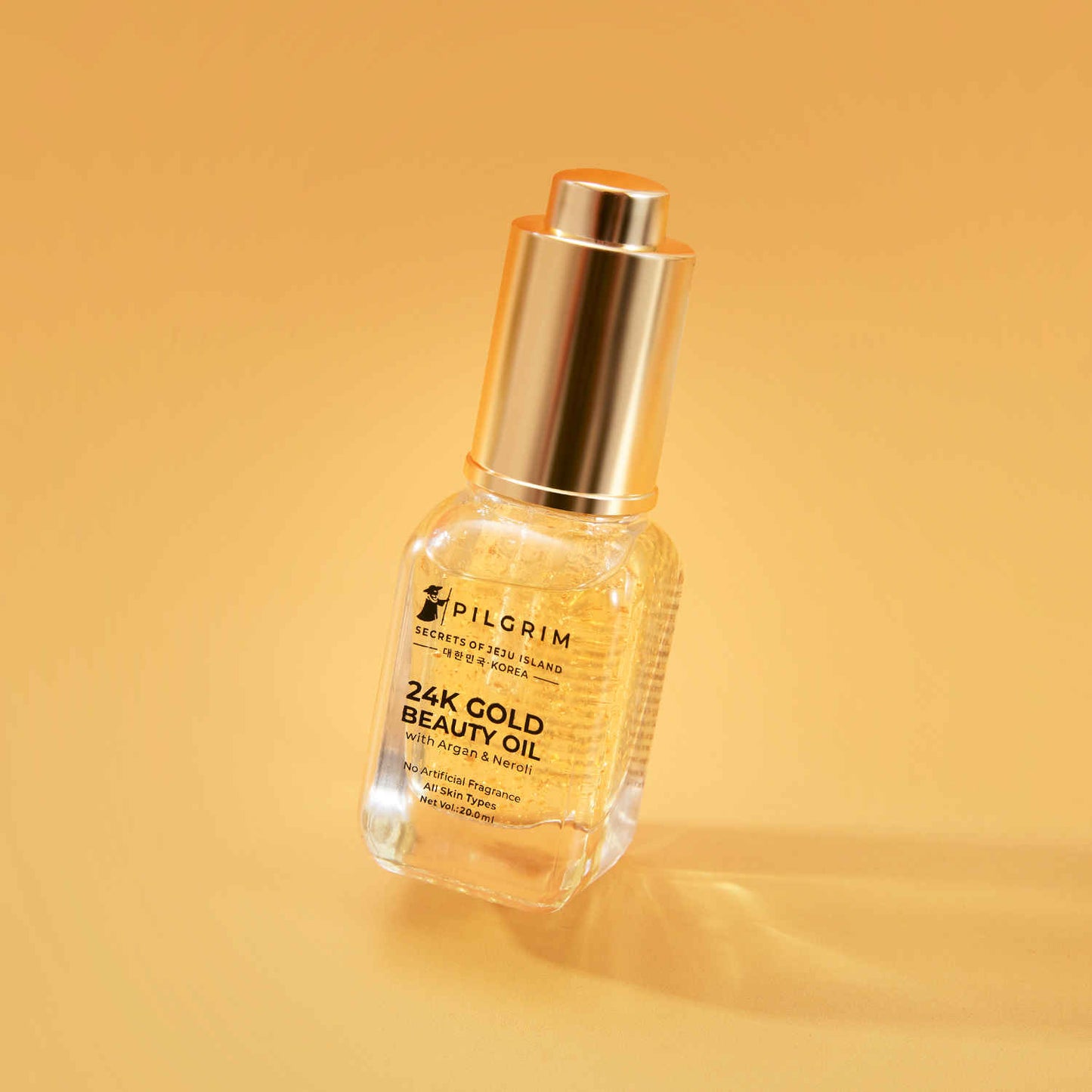
Pilgrim 24K Gold Beauty Oil for radiant & youthful skinn -20 ml

Pilgrim 24K Gold Beauty Oil for radiant & youthful skinn -20 ml
Pilgrim
pilgrim-24k-gold-beauty-oil-for-radiant-youthful-skinn-20-ml
Face Oil
10084949623077
Morning or Evening?
How often will you use this product?
Notes


Highlights
WHAT IS IT?
Facial Oil with multiple active oils and 24K gold flakes
FEATURES
Brightens skin instantly and over time, reduces wrinkles and fine lines, boosts collagen production, nourishes deeply with antioxidants, omega fatty acids, and vitamins, prevents breakouts, smooths wrinkles and reduces scars, hydrating and softening
BEST FOR
sensitive
CHECKS
Does not contain greasy or sticky residues
Who Is It For?
For Adults Suitable For All GendersWhat Does It Help With?
Instant Natural Glow Anti-aging Hydration Skin Elasticity Reduction Of Fine Lines And Wrinkles Prevention Of Breakouts Scar ReductionBudget
Affordable (under $30)How To Use
Which routine should it be used in?
Instructions:
Key Information


What Pilgrim Says
Product Description:
Brightens Skin - The ultralight oil brightens the skin instantly and over time. Fades dark spots and reduces the appearance of discolorations to even out skin tone & texture. Deeply Nourishing - A multitasking blend of fast-absorbing oils, it is naturally rich in Antioxidants, Omega Fatty Acids, and Vitamins. Nourishes the deeper layers of the skin with these micronutrients to counteract environmental stressors that can cause premature aging. Restores Natural Glow Instantly - Enriched with pure 24K crushed gold flakes, the oil bestows unmatched radiance. The skin looks bright and luminous instantly. 24K Gold for Skin Tightening - Reduces wrinkles & fine lines, Boosts collagen production & Brightens the skin. Argan Oil - Hydrates & nourishes, Improves skin elasticity & Softens skin. Neroli Oil- Prevents breakouts, Smooths wrinkles & Reduces scars.
About the Brand:
Ingredients Overview
Ingredients List
Caprylic Capric Triglyceride, Olive Oil, Argan Oil, Rosa Canina (Rosehip) Oil, Passiflora Edulis (Passion Fruit) Seed Oil, Tocopherol Acetate, Carota Sativa (Carrot) Seed Oil, Juglans Regia (Walnut) Seed Oil, Aurantium Amara Flower (Neroli) Oil, Polyurethane-79, Gold Leaf, Sandalwood Oil, Orange Peel Oil
Key Ingredients
Gold flakes, Argan Oil, Neroli Oil
Ingredients Details
Argan Oil
Common Name(s): Argan oil,moroccan oil
CAS Number: 223747-87-3
DESCRIPTION
What It Does: Conditions and nourishes skin and hair with exceptional fatty acid, squalene, and tocopherol content.
Why It's Used: Premium multi-nutrient facial and hair oil – its unique phytosterol and squalene composition provides anti-aging benefits beyond simple emolliency.
How It Works: Balanced oleic/linoleic acid ratio provides both emolliency and barrier repair. high squalene content (6-7%) provides antioxidant and sebum-compatible emolliency. tocopherols provide antioxidant stability and skin benefit. phytosterols inhibit 5-alpha-reductase and reduce inflammation.
Typically Found In: Premium facial oils,hair oils,anti-aging products
TECHNICAL DETAILS
Primary Category: Functional ingredient – emollient
Secondary Functions: Squalene content,phytosterol activity,anti-aging
Application Areas:

Facial Skincare
Body Care
Hair Care
Beard Care

Color Cosmetics (Makeup)
Dietary/Oral Supplements
Typical Concentration Range: 1%–100%
SOURCING & ETHICS
Vegan Status: Yes – from argania spinosa kernels
Halal Status: Yes
Source Notes: Cold-pressed from roasted (food) or unroasted (cosmetic) argan kernels. unesco world heritage traditional production. fair trade certified sources available.
SKIN COMPATIBILITY
Irritancy Rating: 1/5 – very low
Comedogenicity Rating: 0/5 – non-comedogenic
Sensitivity Concerns: Non-irritating.
Safe for Sensitive Skin: Yes
SAFETY & COMPATIBILITY
Safety Profile: Excellent safety profile. ewg score: 1.
Works Well With: Humectants,ceramides,actives as carrier
Avoid Combining With: No significant incompatibilities
SCIENTIFIC NOTE
Argan oil's squalene content (6-7%) is among the highest of all plant oils, second only to olive oil. squalene is an endogenous skin lipid that declines with age, making argan oil's high squalene level particularly relevant for anti-aging facial use – replenishing both essential fatty acids and age-depleting skin lipids simultaneously.
Last Verified: Cosing database,boucetta et al. argan oil review,cir safety assessment
Primary Sources: 2026-03-12
Caprylic Capric Triglyceride
Common Name(s): Caprylic capric triglyceride
DESCRIPTION
What It Does: Delivers targeted skin-conditioning or bioactive benefits through a specific mechanism of action suited to the formulation's intended purpose.
Why It's Used: Specialty actives address specific skin concerns through targeted molecular mechanisms, providing efficacy beyond what base formulation ingredients alone can achieve.
How It Works: The bioactive compound interacts with specific molecular targets in skin cells or the extracellular matrix — enzymes, receptors, structural proteins, or signaling molecules — triggering beneficial biological responses.
Typically Found In: Serums,treatments,moisturizers,specialty products
TECHNICAL DETAILS
Primary Category: Specialty actives
Secondary Functions: Skin-conditioning,anti-aging
Application Areas:
Facial Skincare
Body Care
Hair Care
Beard Care
Color Cosmetics (Makeup)
Dietary/Oral Supplements
Typical Concentration Range: 0.01–5%
SOURCING & ETHICS
Vegan Status: Yes
Halal Status: Yes
Source Notes: Specialty active ingredient; check individual sourcing for vegan status.
SKIN COMPATIBILITY
Irritancy Rating: 1899-12-31 00:00:00 -0800
Sensitivity Concerns: Low sensitization potential at recommended use concentrations.
Safe for Sensitive Skin: Yes
SAFETY & COMPATIBILITY
Safety Profile: Well-characterized cosmetic ingredient with established safety profile. generally non-irritating at typical use concentrations. suitable for leave-on and rinse-off cosmetics.
Works Well With: Niacinamide,hyaluronic acid,vitamin c,peptides
Avoid Combining With: Incompatible with oxidizing agents; check ph stability
SCIENTIFIC NOTE
Specialty actives typically work through enzyme inhibition (e.g., tyrosinase inhibition for brightening, mmp inhibition for anti-aging), receptor activation (e.g., retinoid receptors, ppar-γ for barrier genes), or transcription factor modulation (e.g., nrf2 for antioxidant gene upregulation). structure-activity relationships determine potency and selectivity.
Last Verified: Cosing eu database; pcpc cosmetic ingredient safety reviews; ingredient-specific safety and efficacy literature
Primary Sources: 2025-01-15
Olive Oil
Common Name(s): Olive oil oil
DESCRIPTION
What It Does: Nourishes and softens skin through its balanced fatty acid profile, while antioxidant compounds protect against oxidative skin damage.
Why It's Used: Plant oils provide physiologically compatible lipid structures that integrate into the skin barrier and deliver fat-soluble antioxidants directly to skin cells.
How It Works: Fatty acids integrate into stratum corneum lipid lamellae, reinforcing the lipid barrier. antioxidants (tocopherols, carotenoids, polyphenols) neutralize ros through electron donation or singlet oxygen quenching.
Typically Found In: Face oils,serums,moisturizers,hair treatments,body oils
TECHNICAL DETAILS
Primary Category: Plant oils
Secondary Functions: Emollient,antioxidant
Application Areas:
Facial Skincare
Body Care
Hair Care
Beard Care
Color Cosmetics (Makeup)
Dietary/Oral Supplements
Typical Concentration Range: 0.5–30%
SOURCING & ETHICS
Vegan Status: Yes
Halal Status: Yes
Source Notes: Cold-pressed or solvent-extracted plant oil; no animal components.
SKIN COMPATIBILITY
Irritancy Rating: 1899-12-31 00:00:00 -0800
Comedogenicity Rating: 1900-01-01 00:00:00 -0800
Sensitivity Concerns: Low sensitization potential at recommended use concentrations.
Safe for Sensitive Skin: Yes
SAFETY & COMPATIBILITY
Safety Profile: Well-characterized cosmetic ingredient with established safety profile. generally non-irritating at typical use concentrations. suitable for leave-on and rinse-off cosmetics.
Works Well With: Vitamin e,ceramides,other plant oils,squalane
Avoid Combining With: Strong oxidizers (accelerate rancidity)
SCIENTIFIC NOTE
Vegetable oils are triglyceride matrices where the fatty acid composition determines skin compatibility, barrier function, and comedogenicity. oleic acid-rich oils (>60%) soften barrier lipids and enhance penetration; linoleic acid-rich oils reinforce ceramide-poor stratum corneum; saturated fatty acid-rich oils provide occlusion without skin penetration.
Last Verified: Cosing eu database; pcpc cosmetic ingredient safety reviews; aocs plant oil composition databases; fatty acid pharmacology reviews
Primary Sources: 2025-01-15
Polyurethane-79
Common Name(s): Polyurethane-79
DESCRIPTION
What It Does: Delivers targeted skin-conditioning or bioactive benefits through a specific mechanism of action suited to the formulation's intended purpose.
Why It's Used: Specialty actives address specific skin concerns through targeted molecular mechanisms, providing efficacy beyond what base formulation ingredients alone can achieve.
How It Works: The bioactive compound interacts with specific molecular targets in skin cells or the extracellular matrix — enzymes, receptors, structural proteins, or signaling molecules — triggering beneficial biological responses.
Typically Found In: Serums,treatments,moisturizers,specialty products
TECHNICAL DETAILS
Primary Category: Specialty actives
Secondary Functions: Skin-conditioning,anti-aging
Application Areas:
Facial Skincare
Body Care
Hair Care
Beard Care
Color Cosmetics (Makeup)
Dietary/Oral Supplements
Typical Concentration Range: 0.01–5%
SOURCING & ETHICS
Vegan Status: Yes
Halal Status: Yes
Source Notes: Specialty active ingredient; check individual sourcing for vegan status.
SKIN COMPATIBILITY
Irritancy Rating: 1
Comedogenicity Rating: 0
Sensitivity Concerns: Low sensitization potential at recommended use concentrations.
Safe for Sensitive Skin: Yes
SAFETY & COMPATIBILITY
Safety Profile: Well-characterized cosmetic ingredient with established safety profile. generally non-irritating at typical use concentrations. suitable for leave-on and rinse-off cosmetics.
Works Well With: Niacinamide,hyaluronic acid,vitamin c,peptides
Avoid Combining With: Incompatible with oxidizing agents; check ph stability
SCIENTIFIC NOTE
Specialty actives typically work through enzyme inhibition (e.g., tyrosinase inhibition for brightening, mmp inhibition for anti-aging), receptor activation (e.g., retinoid receptors, ppar-γ for barrier genes), or transcription factor modulation (e.g., nrf2 for antioxidant gene upregulation). structure-activity relationships determine potency and selectivity.
Last Verified: Cosing eu database; pcpc cosmetic ingredient safety reviews; ingredient-specific safety and efficacy literature
Primary Sources: 2025-01-15
