

Pilgrim
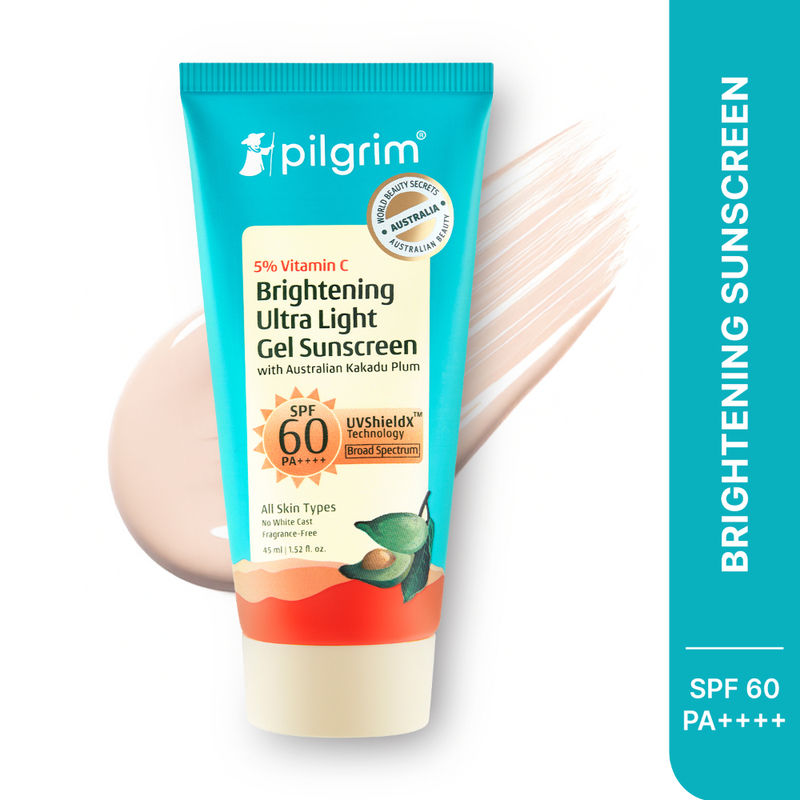
Pilgrim 5% Vitamin C Brightening Ultra Light Gel Sunscreen SPF 60 PA++++ With Australian Kakadu Plum

Pilgrim 5% Vitamin C Brightening Ultra Light Gel Sunscreen SPF 60 PA++++ With Australian Kakadu Plum
Pilgrim
pilgrim-5-vitamin-c-brightening-ultra-light-gel-sunscreen-spf-60-pa-with-australian-kakadu-plum
Suncare
10084921671973
Morning or Evening?
How often will you use this product?
Notes


Highlights
WHAT IS IT?
Brightening Ultra Light Gel Sunscreen with 5% Vitamin C
FEATURES
Fights Tanning & Sun Damage, Brightens & Smoothens, Light & Non-Greasy
BEST FOR
sensitive
CHECKS
Parabens,Sulfates,Mineral oils
Who Is It For?
What Does It Help With?
Sun Protection Brightening Fighting Tanning Evening Out Skin ToneBudget
Affordable (under $30)How To Use
Which routine should it be used in?
Instructions:
Key Information


What Pilgrim Says
Product Description:
5% Vitamin C Brightening Ultra Light Gel Sunscreen offers powerful sun protection with broad-spectrum SPF 60 PA++++, guarding your skin against harmful UVA, UVB rays, and blue light damage. Infused with 5% Vitamin C (3-O Ethyl Ascorbic Acid) which is one of the most stable forms of Vitamin C, it brightens the skin and evens out skin tone, giving you a natural glow. The addition of Australian Kakadu Plum, one of the richest natural sources of Vitamin C, nourishes and enhances skin texture. Pilgrim’s proprietary UVShieldX Technology works synergistically with UV filters to deeply protect and nourish the skin, while its ultra-light gel texture absorbs quickly without leaving any sticky residue or white cast. This ultra light gel sunscreen provides a matte, non-greasy finish, making it perfect for daily use, keeping your skin shine-free and comfortable throughout the day. Rich in antioxidants, it shields your skin from environmental damage and helps fight tanning, while the brightening formula leaves your skin with a smooth, healthy glow. Fragrance-free and suitable for all skin types, this sunscreen is ideal for those looking for advanced sun protection without compromising on comfort or performance.
About the Brand:
Ingredients Overview
Ingredients List
Aqua,Octyl-Methoxycinnamate,Butyl-Methoxydibenzoylmethane,Bis-Ethylhexyloxyphenol-Methoxyphenyl-Triazine,1,3-Butylene-Glycol,Diethylhexyl-Butamido-Triazone,Phospholipids,Ethylhexylglycerin,3-O-Ethyl-Ascorbic-Acid,Propanediol,Caprylyl-Methicone,Peg-12-Dimethicone/Ppg-20-Crosspolymer,Dicaprylyl-Carbonate,Sodium-Acrylates-Copolymer,Lecithin,Phenoxyethanol,Panthenol,Zinc-Oxide,Tocopheryl-Acetate,Caesalpinia-Spinosa-Gum,Niacinamide,Centella-Asiatica-Extract,Camellia-Sinensis-Leaf-White-Tea-Extract,Vp/Acrylates/Lauryl-Methacrylate-Copolymer,Terminalia-Ferdinandiana-Fruit-Extract,Sodium-Hyaluronate,Aqua-Glycerin-Alcohol-Achyrocline-Satureioides-Flower-Extract-Plantago-Lanceolata-Leaf-Extract-Sodium-Pca-Fabiana-Imbricata-Leaf/Stem-Extract-Verbascum-Thapsus-Extract,C.I.-15985
Key Ingredients
5% Vitamin C (3-O Ethyl Ascorbic Acid),UVShieldX Technology,Australian Kakadu Plum
Ingredients Details
Ethylhexylglycerin
Common Name(s): Octylglycerin,2-ethylhexyl glycerol ether,sensiva sc 10
CAS Number: 70445-33-9
DESCRIPTION
What It Does: Provides antimicrobial skin conditioning with deodorant activity and preservation system enhancement.
Why It's Used: Multifunctional clean beauty preservation active — ethylhexylglycerin provides antimicrobial, deodorant, and skin conditioning in a single ingredient accepted in most natural cosmetic certification schemes.
How It Works: Glycerol ether provides antimicrobial via bacterial membrane phospholipid disruption. deodorant activity via reduction of underarm lipase enzyme activity (similar mechanism to triethyl citrate). skin conditioning from glycerol humectant component. synergistic with phenoxyethanol and diols.
Typically Found In: Natural preservation systems,deodorants,skin conditioning products
TECHNICAL DETAILS
Primary Category: Functional ingredient – antimicrobial glycerol ether
Secondary Functions: Skin conditioning
Application Areas:

Facial Skincare

Body Care
Hair Care
Beard Care
Color Cosmetics (Makeup)
Dietary/Oral Supplements
Typical Concentration Range: 0.1%–0.5%
SOURCING & ETHICS
Vegan Status: Conditional - supplier confirmation required
Halal Status: Unverified - supplier confirmation required
Source Notes: Commercially produced for cosmetic use. verify vegan/halal status with supplier. [audit 2026-07-29 rev2: the record's own source_notes does not assert a non-animal origin, or instructs the reader to verify with the supplier; "yes" asserts knowledge the record does not hold. determination requires shariah-panel sign-off.]
SKIN COMPATIBILITY
Irritancy Rating: 1/5 – very low
Comedogenicity Rating: 0/5 – non-comedogenic
Sensitivity Concerns: Well-tolerated by most skin types.
Safe for Sensitive Skin: Yes
SAFETY & COMPATIBILITY
Safety Profile: Good safety profile at recommended concentrations. ewg score: 1–2.
Works Well With: Standard skincare actives
Avoid Combining With: No known significant incompatibilities
SCIENTIFIC NOTE
Ethylhexylglycerin's deodorant mechanism is pharmacologically identical to triethyl citrate: both inhibit skin surface microbial lipase enzymes that convert odourless triglycerides to odorous free fatty acids. the glycerol ether structure of ethylhexylglycerin, combined with the 2-ethylhexyl chain, provides lipase inhibition similar to ester-based lipase inhibitors from a different chemical class.
Last Verified: 2026-03-12
Primary Sources: Cosing database,schülke sensiva sc 10 technical data,cir safety assessment
Lecithin
Common Name(s): Soy lecithin,sunflower lecithin,phosphatidylcholine complex
CAS Number: 8002-43-5
DESCRIPTION
What It Does: Provides natural phospholipid emulsification with barrier-compatible delivery and liposome-forming properties.
Why It's Used: The most biologically authentic emulsifier – identical to cell membrane composition providing barrier-compatible delivery and liposome formation unavailable from synthetic emulsifiers.
How It Works: Phosphatidylcholine (pc), phosphatidylethanolamine (pe), phosphatidylinositol (pi) mixture provides hlb 7-12 for o/w emulsification. forms liposomal bilayers for active encapsulation. pc/pe/pi composition mirrors cell membrane for barrier-compatible delivery.
Typically Found In: Natural cosmetics,liposomal products,barrier repair,penetration-enhanced formulas
TECHNICAL DETAILS
Primary Category: Functional ingredient – natural phospholipid emulsifier
Secondary Functions: Skin conditioning
Application Areas:
Facial Skincare
Body Care
Hair Care
Beard Care
Color Cosmetics (Makeup)
Dietary/Oral Supplements
Typical Concentration Range: 0.5%–10%
SOURCING & ETHICS
Vegan Status: No - animal-derived
Halal Status: Conditional - animal origin stated in the record's own description; documentation required
Source Notes: Commercially produced for cosmetic use. verify vegan/halal status with supplier. [audit 2026-07-29 rev2: pass-1 miss: the record's own detail text states an animal derivation, but pass 1 classified on the name and source_notes only. determination requires shariah-panel sign-off.]
SKIN COMPATIBILITY
Irritancy Rating: 1/5 – very low
Comedogenicity Rating: 0/5 – non-comedogenic
Sensitivity Concerns: Well-tolerated by most skin types.
Safe for Sensitive Skin: Yes
SAFETY & COMPATIBILITY
Safety Profile: Good safety profile at recommended concentrations. ewg score: 1–2.
Works Well With: Standard skincare actives
Avoid Combining With: No known significant incompatibilities
SCIENTIFIC NOTE
Lecithin's phospholipid composition mirrors the composition of the stratum corneum's own lamellar bodies that deliver barrier lipids to the skin surface. this structural mimicry allows lecithin-based delivery systems to integrate seamlessly with the barrier lipid structure, exploiting the same transport pathway the skin uses for its own lipid secretion.
Last Verified: 2026-03-12
Primary Sources: Cosing database,cir safety assessment
Niacinamide
Common Name(s): Vitamin b3,nicotinamide,pyridine-3-carboxamide
CAS Number: 98-92-0
DESCRIPTION
What It Does: Niacinamide strengthens the skin barrier, reduces visible pore size, regulates sebum production, fades dark spots, and improves skin texture and tone.
Why It's Used: It is used because it addresses multiple skin concerns at once without irritation, making it suitable for all skin types. it is stable in formulations and pairs well with most other actives.
How It Works: Niacinamide inhibits the transfer of melanosomes (pigment packets) to skin cells, reducing hyperpigmentation. it also stimulates ceramide synthesis to strengthen the skin barrier and reduces inflammation by modulating cytokine activity.
Typically Found In: Serums,moisturizers,toners,cleansers,eye creams,sunscreens,primers
TECHNICAL DETAILS
Primary Category: Active ingredient – vitamin
Secondary Functions: Barrier repair,brightening,anti-inflammatory
Application Areas:
Facial Skincare
Body Care
Hair Care
Beard Care
Color Cosmetics (Makeup)
Dietary/Oral Supplements
Typical Concentration Range: 2%–10% (typical: 5%; higher concentrations may cause flushing in some individuals)
SOURCING & ETHICS
Vegan Status: Yes – synthetically produced
Halal Status: Yes – synthetic origin
Source Notes: Commercially produced via synthesis from nicotinic acid or 3-cyanopyridine. no animal-derived sources used in cosmetic-grade niacinamide.
SKIN COMPATIBILITY
Irritancy Rating: 1/5 – very low; concentrations above 10% may cause temporary flushing in sensitive individuals
Comedogenicity Rating: 0/5 – non-comedogenic
Sensitivity Concerns: At concentrations >10%, some users experience niacin flush (transient redness/tingling). generally very well-tolerated.
Safe for Sensitive Skin: Yes – one of the best-tolerated actives for sensitive skin
SAFETY & COMPATIBILITY
Safety Profile: Extensively studied and considered very safe. ewg hazard score: 1. no significant systemic toxicity concerns at topical concentrations.
Works Well With: Retinol,peptides,ahas/bhas,hyaluronic acid,ceramides,zinc,vitamin c,spf
Avoid Combining With: High concentrations of vitamin c (ascorbic acid) may theoretically convert to niacin – use at different times if using pure l-ascorbic acid above 15%
SCIENTIFIC NOTE
Niacinamide is a precursor to nad+ and nadp+, coenzymes vital to cellular energy metabolism. its benefits for dna repair and mitochondrial function make it a key ingredient in anti-aging strategies.
Last Verified: 2026-03-12
Primary Sources: Cosing database,cir safety assessment,ewg skin deep,pubmed clinical studies
Panthenol
Common Name(s): Provitamin b5,d-panthenol,dl-panthenol,d-pantothenyl alcohol,(r)-2,4-dihydroxy-n-(3-hydroxypropyl)-3,3-dimethylbutanamide
DESCRIPTION
What It Does: Panthenol deeply moisturizes skin and hair, soothes irritation, accelerates wound healing, strengthens the skin barrier, and improves hair elasticity and shine.
Why It's Used: It is used because it is exceptionally versatile, working in both skin and hair formulations. it is gentle enough for sensitive and post-procedure skin, and converts to the active vitamin b5 within the skin.
How It Works: Panthenol penetrates skin and hair, where it is oxidized to pantothenic acid (vitamin b5), a coenzyme a precursor essential to metabolism. in skin, it acts as a humectant and stimulates fibroblast proliferation. in hair, it coats the shaft, improving manageability.
Typically Found In: Moisturizers,serums,toners,after-sun products,wound healing products,shampoos,conditioners,hair masks,beard care
TECHNICAL DETAILS
Primary Category: Active ingredient – provitamin b5
Secondary Functions: Anti-inflammatory,wound healing,hair conditioning
Application Areas:
Facial Skincare
Body Care
Hair Care
Beard Care
Color Cosmetics (Makeup)
Dietary/Oral Supplements
Typical Concentration Range: 0.5%–5% (typical: 1–3%)
SOURCING & ETHICS
Vegan Status: Conditional - supplier confirmation required
Halal Status: Unverified - supplier confirmation required
Source Notes: Commercially synthesized. both d- and dl-forms used in cosmetics; d-panthenol is the biologically active isomer but dl-panthenol is less expensive and widely used. [audit 2026-07-29 rev2: the record's own source_notes does not assert a non-animal origin, or instructs the reader to verify with the supplier; "yes" asserts knowledge the record does not hold. determination requires shariah-panel sign-off.]
SKIN COMPATIBILITY
Irritancy Rating: 1/5 – very low; one of the most soothing ingredients in cosmetics
Comedogenicity Rating: 0/5 – non-comedogenic
Sensitivity Concerns: Extremely rare contact allergy; considered one of the safest cosmetic ingredients. suitable for all skin types.
Safe for Sensitive Skin: Yes – ideal for sensitive, reactive, and post-procedure skin
SAFETY & COMPATIBILITY
Safety Profile: Exceptionally safe. ewg hazard score: 1. no significant concerns for irritation, sensitization, or systemic toxicity. safe during pregnancy.
Works Well With: Hyaluronic acid,ceramides,allantoin,niacinamide,centella asiatica,retinol (reduces irritation),glycerin
Avoid Combining With: No known significant incompatibilities
SCIENTIFIC NOTE
Panthenol has demonstrated wound-healing properties in clinical studies, stimulating fibroblast proliferation and migration. its dual humectant and anti-inflammatory action makes it particularly effective in barrier-repair formulations.
Last Verified: 2026-03-12
Primary Sources: Cosing database,cir safety assessment,ebner et al. (2002) skin pharmacology and applied skin physiology