

Pilgrim
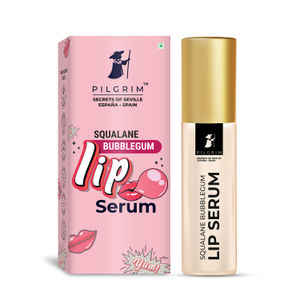
Pilgrim Squalane Bubblegum Lip Serum With Roll-On For Visibly Plump Lips | Hydrating Lip Serum For Dark Lips | Lip Serum With Shea Butter & Pomegranate Extracts For Moisturized & Soft Lips | Men & Women, 6 ml

Pilgrim Squalane Bubblegum Lip Serum With Roll-On For Visibly Plump Lips | Hydrating Lip Serum For Dark Lips | Lip Serum With Shea Butter & Pomegranate Extracts For Moisturized & Soft Lips | Men & Women, 6 ml
Pilgrim
pilgrim-squalane-bubblegum-lip-serum-with-roll-on-for-visibly-plump-lips-hydrating-lip-serum-for-dark-lips-lip-serum-with-shea-butter-pomegranate-extracts-for-moisturized-soft-lips-men-women-6-ml
Lip care
10085112381733
Morning or Evening?
How often will you use this product?
Notes


Highlights
WHAT IS IT?
Lip Serum with 5 main active ingredients
FEATURES
Hydrates and soothes chapped lips, Contains squalane, shea butter, sweet almond oil and jojoba oil, Visibly plumps lips, Softens lips
BEST FOR
sensitive
CHECKS
Does not mention parabens, sulfates, silicones, fragrance-free, preservative-free
Who Is It For?
Men & Women All AgesWhat Does It Help With?
Dry Lips Cracked Lips Dark Lips Hydration Softening PlumpingBudget
Affordable (under ₹500)How To Use
Which routine should it be used in?
Instructions:
Key Information


What Pilgrim Says
Product Description:
Pilgrim Squalane Bubblegum Lip Serum is a delicious and fun must-have for soft and hydrated lips. Expertly blended with squalane, shea butter, sweet almond oil and Jojoba oil to hydrate and soothe chapped lips. Glide the lip serum on your lips and watch it look visibly plump and soft.
About the Brand:
Ingredients Overview
Ingredients List
Squalane, Pomegranate Extract, Shea Butter
Key Ingredients
squalane,shea butter,sweet almond oil,jojoba oil,pomegranate extracts
Ingredients Details
Pomegranate Extract
Common Name(s): Pomegranate extract,punica extract,pomegranate polyphenol
CAS Number: 84929-27-1
DESCRIPTION
What It Does: Provides punicalagin-based exceptional antioxidant activity with anti-inflammatory and skin regeneration benefits.
Why It's Used: Highest-orac common fruit extract – punicalagins provide unmatched antioxidant activity alongside oestrogenic urolithins for anti-aging and barrier support.
How It Works: Punicalagins a and b (2x the antioxidant power of red wine) provide orac value ~10,000 μmol te/g. metabolized to urolithins by skin microbiome – urolithin a activates mitophagy for cellular anti-aging. ellagic acid inhibits tyrosinase for brightening. mild estrogenic activity via urolithin phytoestrogens.
Typically Found In: Premium antioxidant products,brightening formulas,anti-aging serums
TECHNICAL DETAILS
Primary Category: Active ingredient – antioxidant
Secondary Functions: Punicalagin orac,urolithin mitophagy
Application Areas:

Facial Skincare
Body Care

Hair Care
Beard Care
Color Cosmetics (Makeup)
Dietary/Oral Supplements
Typical Concentration Range: 0.1%–5%
SOURCING & ETHICS
Vegan Status: Yes – from punica granatum fruit
Halal Status: Yes
Source Notes: Plant-derived extract or synthetic.
SKIN COMPATIBILITY
Irritancy Rating: 1/5 – very low
Comedogenicity Rating: 0/5 – non-comedogenic
Sensitivity Concerns: Non-irritating; well-tolerated.
Safe for Sensitive Skin: Yes
SAFETY & COMPATIBILITY
Safety Profile: Excellent safety profile. ewg score: 1.
Works Well With: Vitamin c,vitamin e,ferulic acid,spf,other antioxidants
Avoid Combining With: No significant incompatibilities
SCIENTIFIC NOTE
Pomegranate punicalagin's conversion to urolithin a by skin microbiome represents a remarkable prebiotic-probiotic relationship: the skin's resident bacteria metabolize the polyphenol precursor to create the bioactive urolithin that activates mitophagy (cellular mitochondrial quality control). this microbiome-dependent bioactivation means the same punicalagin extract has different anti-aging potency across individuals depending on their microbiome composition.
Last Verified: Cosing database,seeram et al. pomegranate punicalagin review
Primary Sources: 2026-03-12
Shea Butter
Common Name(s): Shea butter,karite butter
CAS Number: 91080-23-8
DESCRIPTION
What It Does: Provides deep nourishing emolliency with anti-inflammatory cinnamic acid esters and a uniquely rich unsaponifiable fraction.
Why It's Used: The most nutritious plant butter – unique cinnamic acid esters, lupeol, and rich unsaponifiable fraction provide anti-inflammatory and wound healing benefits beyond standard fatty acid emolliency.
How It Works: Cinnamic acid esters absorb uv radiation providing mild natural uv filtering (spf 3-4). lupeol inhibits nf-kb for anti-inflammatory activity. high stearic acid provides occlusive barrier function. rich unsaponifiable fraction (4-9%) provides phytosterols, tocopherols, and triterpenes for bioactive skin benefits.
Typically Found In: Body butters,rich moisturizers,baby products,hair conditioners,lip balms
TECHNICAL DETAILS
Primary Category: Functional ingredient – emollient
Secondary Functions: Cinnamic acid uv support,lupeol anti-inflammatory,rich emolliency
Application Areas:
Facial Skincare
Body Care
Hair Care
Beard Care
Color Cosmetics (Makeup)
Dietary/Oral Supplements
Typical Concentration Range: 1%–100%
SOURCING & ETHICS
Vegan Status: Yes – from butyrospermum parkii nuts
Halal Status: Yes
Source Notes: Unrefined (raw) shea retains more unsaponifiable fraction and stronger natural scent/color. refined shea is odorless, white, and cleaner for formulation. certified fair trade supports west african women's cooperatives.
SKIN COMPATIBILITY
Irritancy Rating: 1/5 – very low
Comedogenicity Rating: 0/5 – non-comedogenic (refined); 2/5 – low (raw/unrefined)
Sensitivity Concerns: Non-irritating.
Safe for Sensitive Skin: Yes
SAFETY & COMPATIBILITY
Safety Profile: Excellent safety profile. ewg score: 1.
Works Well With: Humectants,ceramides,actives as carrier
Avoid Combining With: No significant incompatibilities
SCIENTIFIC NOTE
Shea butter's unsaponifiable fraction (4-9%, vs coconut oil's 0.5% and olive oil's 1-2%) is exceptionally rich in triterpenes, phytosterols, and tocopherols. this fraction is responsible for shea's anti-inflammatory and wound healing properties that simple fatty acid analysis fails to reveal.
Last Verified: Cosing database,lin et al. shea butter cinnamic acid study,cir safety assessment
Primary Sources: 2026-03-12
Squalane
Common Name(s): Perhydrosqualene,2,6,10,15,19,23-hexamethyltetracosane
CAS Number: 0111-01-03
DESCRIPTION
What It Does: Provides endogenous-skin-identical emolliency with exceptional stability and skin compatibility.
Why It's Used: The most skin-compatible emollient – chemically identical to human sebum squalene component with outstanding tolerability across all skin types.
How It Works: Fully saturated hydrocarbon with zero oxidation sites provides exceptional stability unlike squalene's 6 double bonds. integrates into stratum corneum lipid bilayers with near-perfect biocompatibility. provides antioxidant protection to formulation via radical quenching.
Typically Found In: Facial oils,serums,non-comedogenic moisturizers,luxury body care
TECHNICAL DETAILS
Primary Category: Functional ingredient – emollient
Secondary Functions: Maximum biocompatibility,antioxidant stabilizer,non-comedogenic
Application Areas:
Facial Skincare
Body Care
Hair Care
Beard Care
Color Cosmetics (Makeup)
Dietary/Oral Supplements
Typical Concentration Range: 1%–100%
SOURCING & ETHICS
Vegan Status: Conditional – plant-derived (sugarcane, olive) preferred; shark liver-derived being phased out
Halal Status: Yes – plant-derived
Source Notes: Sustainable plant-derived squalane from sugarcane fermentation (amyris) or olive oil fractionation is preferred over shark liver-derived. chemically identical regardless of source.
SKIN COMPATIBILITY
Irritancy Rating: 1/5 – very low
Comedogenicity Rating: 0/5 – non-comedogenic
Sensitivity Concerns: Non-irritating.
Safe for Sensitive Skin: Yes
SAFETY & COMPATIBILITY
Safety Profile: Excellent safety profile. ewg score: 1.
Works Well With: Humectants,ceramides,actives as carrier
Avoid Combining With: No significant incompatibilities
SCIENTIFIC NOTE
Squalene constitutes approximately 12-15% of human sebum – the highest proportion of any skin lipid. topical squalane (stable, hydrogenated form) replenishes this abundant endogenous skin lipid. the complete absence of oxidizable double bonds (unlike squalene's 6 double bonds) eliminates the pro-oxidant concerns of natural squalene oxidation.
Last Verified: Cosing database,huang et al. squalane review,cir safety assessment
Primary Sources: 2026-03-12
