
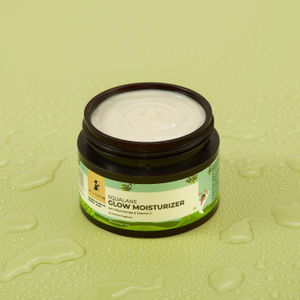

Pilgrim
Pilgrim Squalane Glow Moisturizer For Face With Niacinamide & Vitamin C | Vitamin C For Brightens Skin & Hydrating Skin (50 gm)

Pilgrim Squalane Glow Moisturizer For Face With Niacinamide & Vitamin C | Vitamin C For Brightens Skin & Hydrating Skin (50 gm)
Pilgrim
pilgrim-squalane-glow-moisturizer-for-face-with-niacinamide-vitamin-c-vitamin-c-for-brightens-skin-hydrating-skin-50-gm
Moisturize
10084864524581
Morning or Evening?
How often will you use this product?
Notes


Highlights
WHAT IS IT?
Face Moisturizer with 6 key ingredients
FEATURES
Ultra-hydrating repair blend; Reduces appearance of fine lines and wrinkles; Brightens and firms skin; Hydrates dry skin; Fast-absorbing; Locks in moisture; Smooths uneven texture
BEST FOR
dry
CHECKS
No greasy feel
Who Is It For?
Men And Women All AgesWhat Does It Help With?
Brightening Skin Hydration Fading Dark Spots Anti-aging Reducing Fine Lines And Wrinkles Firming SkinBudget
Affordable (under ₹30)How To Use
Which routine should it be used in?
Instructions:
Key Information


What Pilgrim Says
Product Description:
Pilgrim's Squalane Glow Face Moisturizer with Niacinamide & Vitamin C is an ultrahydrating repair blend that reduces the appearance of fine lines and wrinkles while making the skin glow. Moisturizer for face that brightens skin. Moisturizer that brightens and firms with the power of Vitamin C and Niacinamide. Moisturizer for dry skin to hydrate. Squalane is a 'does-it-all' ingredient that locks in moisture & smooths uneven texture. Youthful Glow. The fast-absorbing blend causes a reduction in the appearance of fine lines and wrinkles. How to use: 1. Apply to face and neck after cleansing and toning. 2. Follow up with broad spectrum sunscreen during the day. Key ingredients as squalane, niacinamide & vitamin c: Squalane 'Hydrates skin Fights fine lines & wrinkles Makes skin soft & supple', Niacinamide 'Brightens & smooths skin Fades dark spots & pigmentation Keeps skin firm', Vitamin C 'Natural skin brightening agent Reverses signs of ageing Fades dark spots'
About the Brand:
Ingredients Overview
Ingredients List
Purified Water, Niacinamide, Squalane, Caprylic Capric Triglyceride, Sodium Acrylates Copolymer, Lecithin, Alpha Arbutin, Prunus Amygdalus Dulcis (Sweet Almond) Oil, Maltodextrin, Punica Granatum Flower Extract, Sodium Ascorbyl Phosphate, Glycyrrhiza Glabra (Licorice) Root Extract, Hamamelis Virginiana (Witch Hazel) Extract, Citrus Medica Limonum (Lemon) Peel Extract, Citrus Aurantium Dulcis (Orange) Peel Extract, Sodium Hyaluronate, Sodium Benzoate, Potassium Sorbate, Carbomer, Panthenol, Phenoxyethanol, Ethylhexylglycerin, Tocopheryl, Sodium, Gluconate, Rose Oil, Tuberose Oil, Bergamot Oil
Key Ingredients
squalane, niacinamide, vitamin-c
Ingredients Details
Alpha Arbutin
Common Name(s): Alpha arbutin
DESCRIPTION
What It Does: Delivers targeted skin-conditioning or bioactive benefits through a specific mechanism of action suited to the formulation's intended purpose.
Why It's Used: Specialty actives address specific skin concerns through targeted molecular mechanisms, providing efficacy beyond what base formulation ingredients alone can achieve.
How It Works: The bioactive compound interacts with specific molecular targets in skin cells or the extracellular matrix — enzymes, receptors, structural proteins, or signaling molecules — triggering beneficial biological responses.
Typically Found In: Serums,treatments,moisturizers,specialty products
TECHNICAL DETAILS
Primary Category: Specialty actives
Secondary Functions: Skin-conditioning,anti-aging
Application Areas:

Facial Skincare

Body Care
Hair Care
Beard Care
Color Cosmetics (Makeup)
Dietary/Oral Supplements
Typical Concentration Range: 0.01–5%
SOURCING & ETHICS
Vegan Status: Yes
Halal Status: Yes
Source Notes: Specialty active ingredient; check individual sourcing for vegan status.
SKIN COMPATIBILITY
Irritancy Rating: 1899-12-31 00:00:00 -0800
Sensitivity Concerns: Low sensitization potential at recommended use concentrations.
Safe for Sensitive Skin: Yes
SAFETY & COMPATIBILITY
Safety Profile: Well-characterized cosmetic ingredient with established safety profile. generally non-irritating at typical use concentrations. suitable for leave-on and rinse-off cosmetics.
Works Well With: Niacinamide,hyaluronic acid,vitamin c,peptides
Avoid Combining With: Incompatible with oxidizing agents; check ph stability
SCIENTIFIC NOTE
Specialty actives typically work through enzyme inhibition (e.g., tyrosinase inhibition for brightening, mmp inhibition for anti-aging), receptor activation (e.g., retinoid receptors, ppar-γ for barrier genes), or transcription factor modulation (e.g., nrf2 for antioxidant gene upregulation). structure-activity relationships determine potency and selectivity.
Last Verified: Cosing eu database; pcpc cosmetic ingredient safety reviews; ingredient-specific safety and efficacy literature
Primary Sources: 2025-01-15
Bergamot Oil
Common Name(s): Bergamot oil,fcf bergamot,calabrian bergamot
CAS Number: 89957-91-5
DESCRIPTION
What It Does: Provides the signature citrus-floral bergamot scent central to eau de cologne tradition.
Why It's Used: The defining eau de cologne fragrance – bergamot oil's unique linalyl acetate-limonene balance creates the fresh floral-citrus character that defines classic cologne and most modern citrus fragrances.
How It Works: Linalyl acetate (25-40%) provides floral note; d-limonene (30-45%) provides citrus. bergaptene (naturally phototoxic furanocoumarin) removed in fcf (furocoumarin-free) certified grades. linalool provides anxiolytic gaba-a activity.
Typically Found In: Cologne/eau de toilette,men's and women's fragrance,earl grey products
TECHNICAL DETAILS
Primary Category: Fragrance – citrus floral
Secondary Functions: Skin conditioning
Application Areas:
Facial Skincare
Body Care
Hair Care
Beard Care
Color Cosmetics (Makeup)
Dietary/Oral Supplements
Typical Concentration Range: 0.001%–5%
SOURCING & ETHICS
Vegan Status: Yes – from citrus bergamia peel (calabria, italy)
Halal Status: Yes
Source Notes: Commercially produced for cosmetic use. verify vegan/halal status with supplier.
SKIN COMPATIBILITY
Irritancy Rating: 1/5 – very low
Comedogenicity Rating: 0/5 – non-comedogenic
Sensitivity Concerns: Well-tolerated by most skin types.
Safe for Sensitive Skin: Yes
SAFETY & COMPATIBILITY
Safety Profile: Use fcf (furocoumarin-free) grade for leave-on skin products to avoid bergaptene phototoxicity. multiple eu declared allergens present.
Works Well With: Standard skincare actives
Avoid Combining With: No known significant incompatibilities
SCIENTIFIC NOTE
Genuine bergamot oil is grown exclusively in a small coastal strip of calabria, southern italy (reggio calabria province). eu pdo (protected designation of origin) certification was granted to calabrian bergamot in 2001 – one of the few essential oils with geographic origin protection comparable to champagne for sparkling wine, reflecting the terroir-dependent composition differences between calabrian and other bergamot sources.
Last Verified: Cosing database,ifra standards
Primary Sources: 2026-03-12
Caprylic Capric Triglyceride
Common Name(s): Caprylic capric triglyceride
DESCRIPTION
What It Does: Delivers targeted skin-conditioning or bioactive benefits through a specific mechanism of action suited to the formulation's intended purpose.
Why It's Used: Specialty actives address specific skin concerns through targeted molecular mechanisms, providing efficacy beyond what base formulation ingredients alone can achieve.
How It Works: The bioactive compound interacts with specific molecular targets in skin cells or the extracellular matrix — enzymes, receptors, structural proteins, or signaling molecules — triggering beneficial biological responses.
Typically Found In: Serums,treatments,moisturizers,specialty products
TECHNICAL DETAILS
Primary Category: Specialty actives
Secondary Functions: Skin-conditioning,anti-aging
Application Areas:
Facial Skincare
Body Care
Hair Care
Beard Care
Color Cosmetics (Makeup)
Dietary/Oral Supplements
Typical Concentration Range: 0.01–5%
SOURCING & ETHICS
Vegan Status: Yes
Halal Status: Yes
Source Notes: Specialty active ingredient; check individual sourcing for vegan status.
SKIN COMPATIBILITY
Irritancy Rating: 1899-12-31 00:00:00 -0800
Sensitivity Concerns: Low sensitization potential at recommended use concentrations.
Safe for Sensitive Skin: Yes
SAFETY & COMPATIBILITY
Safety Profile: Well-characterized cosmetic ingredient with established safety profile. generally non-irritating at typical use concentrations. suitable for leave-on and rinse-off cosmetics.
Works Well With: Niacinamide,hyaluronic acid,vitamin c,peptides
Avoid Combining With: Incompatible with oxidizing agents; check ph stability
SCIENTIFIC NOTE
Specialty actives typically work through enzyme inhibition (e.g., tyrosinase inhibition for brightening, mmp inhibition for anti-aging), receptor activation (e.g., retinoid receptors, ppar-γ for barrier genes), or transcription factor modulation (e.g., nrf2 for antioxidant gene upregulation). structure-activity relationships determine potency and selectivity.
Last Verified: Cosing eu database; pcpc cosmetic ingredient safety reviews; ingredient-specific safety and efficacy literature
Primary Sources: 2025-01-15
Carbomer
Common Name(s): Carbopol,polyacrylic acid,carboxyvinyl polymer
DESCRIPTION
What It Does: Provides transparent gel textures and thickening at very low concentrations via ph-responsive swelling.
Why It's Used: The most widely used gel thickener – provides crystal-clear, stable gels at concentrations as low as 0.1-0.5% with ph-controlled viscosity.
How It Works: Highly crosslinked polyacrylic acid remains tightly coiled at acidic ph. neutralization with naoh or triethanolamine ionizes carboxylic groups causing electrostatic repulsion that unfolds and swells the polymer coils, dramatically increasing viscosity. concentration-dependent thickening.
Typically Found In: Gels,serums,emulsions,sunscreens
TECHNICAL DETAILS
Primary Category: Functional ingredient – polyacrylic acid thickener
Secondary Functions: Skin conditioning
Application Areas:
Facial Skincare
Body Care
Hair Care
Beard Care
Color Cosmetics (Makeup)
Dietary/Oral Supplements
Typical Concentration Range: 0.1%–2%
SOURCING & ETHICS
Vegan Status: Yes – synthetic
Halal Status: Yes
Source Notes: Commercially produced for cosmetic use. verify vegan/halal status with supplier.
SKIN COMPATIBILITY
Irritancy Rating: 1/5 – very low
Comedogenicity Rating: 0/5 – non-comedogenic
Sensitivity Concerns: Well-tolerated by most skin types.
Safe for Sensitive Skin: Yes
SAFETY & COMPATIBILITY
Safety Profile: Good safety profile at recommended concentrations. ewg score: 1–2.
Works Well With: Standard skincare actives
Avoid Combining With: No known significant incompatibilities
SCIENTIFIC NOTE
Carbomer's ph-responsive swelling mechanism provides an elegant formulation control tool: a neutralized gel can be liquefied by ph reduction (adding acid) and re-thickened by reneutralization. this reversible rheology control allows two-phase products that mix on application without the need for mechanical emulsification.
Last Verified: Cosing database,cir safety assessment
Primary Sources: 2026-03-12
