

Pilgrim
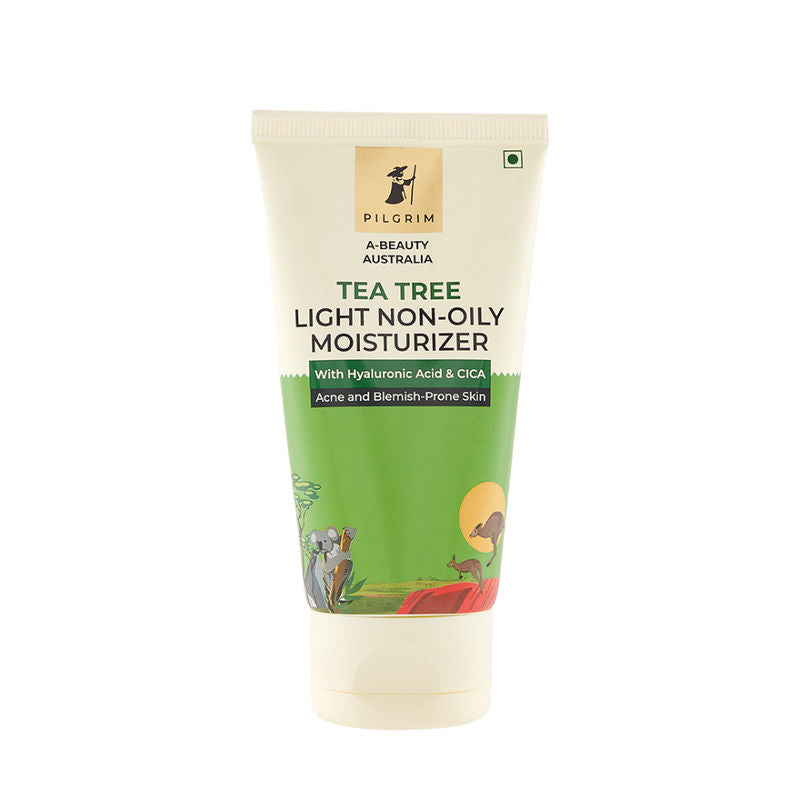
Pilgrim Tea Tree Light Non-Oily Moisturizer

Pilgrim Tea Tree Light Non-Oily Moisturizer
Pilgrim
pilgrim-tea-tree-light-non-oily-moisturizer
Moisturize
10085473911077
Morning or Evening?
How often will you use this product?
Notes


Highlights
WHAT IS IT?
Light Non-Oily Moisturizer with 3 key ingredients
FEATURES
Lightweight, non-oily, hydrates and moisturizes skin, Enriched with tea tree, hyaluronic acid and cica, Controls breakouts, reduces acne and blemishes, Suitable for oily and acne-prone skin, 100% vegan, dermatologically tested, FDA approved, Free from parabens, sulphates, toxin chemicals, cruelty-free
BEST FOR
oily
CHECKS
Parabens, Sulphates, Toxin chemicals
Who Is It For?
What Does It Help With?
Controls Breakouts Reduces Acne And Blemishes Hydration For Oily And Acne-prone SkinBudget
Affordable (under $30)How To Use
Which routine should it be used in?
Instructions:
Key Information


What Pilgrim Says
Product Description:
It's a myth that oily and acne-prone skin needs no moisturizing! Excess oil on your skin may just be a cry for more hydration. That's why the Pilgrim Tea Tree Light Non-Oily Moisturizer fits right in your skincare routine. Features: Lightweight, non-oily moisturizer that hydrates and moisturizes the skin, Enriched with the goodness of tea tree, hyaluronic acid and cica, Helps control breakouts, reduces acne and blemishes, Suitable for oily and acne-prone skin, This product is 100% vegan, dermatologically tested and FDA approved, Free from parabens, sulphates, and toxin chemicals; cruelty-free.
About the Brand:
Ingredients Overview
Ingredients List
tea-tree, hyaluronic-acid, cica-centella-asiatica
Key Ingredients
Tea Tree, Hyaluronic Acid, Cica
Ingredients Details
Hyaluronic Acid
Common Name(s): Ha,sodium hyaluronate (salt form),hyaluronan,d-glucuronic acid-n-acetyl-d-glucosamine polymer
CAS Number: 9004-61-9
DESCRIPTION
What It Does: Hyaluronic acid draws and locks moisture into the skin at multiple depths (surface and deeper layers depending on molecular weight), creating a plumping, smoothing, and hydrating effect.
Why It's Used: It is used because it is endogenous to human skin, making it exceptionally biocompatible and non-irritating. its unparalleled moisture-binding capacity makes it the most effective hydrating ingredient available.
How It Works: Ha binds water molecules through its many hydroxyl and carboxyl groups, creating a gel-like matrix. high molecular weight ha (>500 kda) hydrates the skin surface; low molecular weight ha (<50 kda) penetrates deeper to provide interior hydration.
Typically Found In: Serums,moisturizers,sheet masks,toners,eye creams,lip treatments,dermal fillers (injectable)
TECHNICAL DETAILS
Primary Category: Active ingredient – humectant/hydrator
Secondary Functions: Barrier repair,plumping,anti-aging
Application Areas:

Facial Skincare
Body Care

Hair Care
Beard Care
Color Cosmetics (Makeup)
Dietary/Oral Supplements
Typical Concentration Range: 0.1%–2% (effective at very low concentrations; multi-weight ha provides superior results)
SOURCING & ETHICS
Vegan Status: Conditional - feedstock declaration required
Halal Status: Unverified - feedstock declaration required (plant, animal and petrochemical routes all exist)
Source Notes: Originally extracted from rooster combs; now predominantly produced via biotechnology (bacterial fermentation), which is vegan and more sustainable. [audit 2026-07-29 rev2: origin-dependent: the same inci exists in plant, animal and petrochemical versions and the name does not discriminate. determination requires shariah-panel sign-off.]
SKIN COMPATIBILITY
Irritancy Rating: 1/5 – very low; one of the gentlest skincare ingredients known
Comedogenicity Rating: 0/5 – non-comedogenic
Sensitivity Concerns: In very dry environments, high-molecular-weight ha on the surface can potentially draw moisture out of the skin if not sealed with an occlusive. apply to damp skin and seal with moisturizer.
Safe for Sensitive Skin: Yes – ideal for all skin types including rosacea, eczema, and post-procedure skin
SAFETY & COMPATIBILITY
Safety Profile: Exceptional safety profile. endogenous molecule – no toxicity concerns. ewg hazard score: 1. safe during pregnancy.
Works Well With: Virtually all ingredients; especially ceramides,glycerin,peptides,retinol (reduces irritation),niacinamide,vitamin c
Avoid Combining With: No significant incompatibilities; high concentrations of alcohol in a formula may reduce its efficacy
SCIENTIFIC NOTE
Hyaluronic acid naturally degrades in skin (half-life ~1–2 days). the skin produces it endogenously, but production decreases with age. multi-molecular-weight ha formulas provide hydration at both surface and deeper skin levels.
Last Verified: 2026-03-12
Primary Sources: Cosing database,cir safety assessment,papakonstantinou et al. (2012) dermato-endocrinology