

Origins
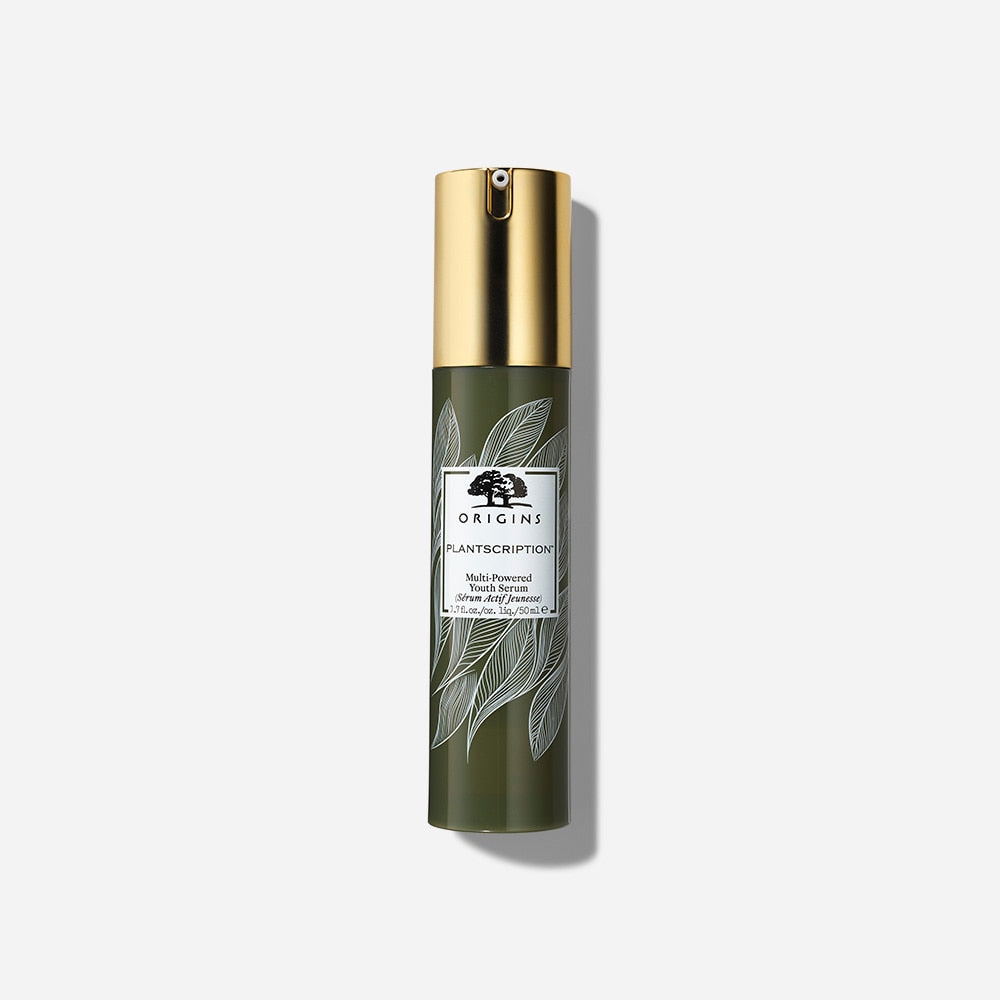
PLANTSCRIPTION Multi-Powered Youth Serum

PLANTSCRIPTION Multi-Powered Youth Serum
Origins
plantscription-multi-powered-youth-serum
Serum
9818390036773
Morning or Evening?
How often will you use this product?
Notes


Highlights
WHAT IS IT?
Anti-aging serum with 6 peptides
FEATURES
Reduces look of 5 types of wrinkles, visibly improves pores, skin tone, radiance, and firmness
BEST FOR
Normal, Dry, Oily, Combination
CHECKS
Free of parabens, phthalates, formaldehyde, SLS, mineral oil, petrolatum, paraffin, DEA, polyethylene beads
Who Is It For?
All Ages All GendersWhat Does It Help With?
Fine Lines Wrinkles Pores Skin Firmness Lifted AppearanceBudget
Premium ($76-$150)How To Use
Which routine should it be used in?
Instructions:
Key Information


What Origins Says
Product Description:
See visibly diminished lines & wrinkles and more lifted skin with our #1 anti-aging serum for face, neck, and décolleté. Potent, fibrillin-loving Anogeissus Bark meets Peptides and Niacinamide—it's the power of Plantscription™.
About the Brand:
Ingredients Overview
Ingredients List
Water\Aqua\Eau, Butylene Glycol, Niacinamide, Glycerin, Heptyl Undecylenate, Octyldodecanol, Glycereth-26, Sodium Acrylates Copolymer, Algae Extract, Illicium Verum (Anise) Fruit/Seed Oil*, Citrus Aurantium Bergamia (Bergamot) Fruit Oil*, Pelargonium Graveolens Flower Oil*, Lavandula Angustifolia (Lavender) Oil*, Citrus Limon (Lemon) Peel Oil*, Litsea Cubeba Fruit Oil*, Citrus Nobilis (Mandarin Orange) Peel Oil*, Myristica Fragrans (Nutmeg) Kernel Oil*, Citrus Aurantium Dulcis (Orange) Oil*, Rosa Damascena Flower Oil*, Hibiscus Abelmoschus Extract, Carthamus Tinctorius (Safflower) Seed Oil, Linalool, Geraniol, Citronellol, Limonene, Anogeissus Leiocarpus Bark Extract, Acetyl Hexapeptide-8, Palmitoyl Tripeptide-1, Acetyl Octapeptide-3, Palmitoyl Tetrapeptide-7, Palmitoyl Hexapeptide-12, Dipeptide Diaminobutyroyl Benzylamide Diacetate, Sodium Hyaluronate, Sigesbeckia Orientalis (St. Paul'S Wort) Extract, Commiphora Mukul Resin Extract, Laminaria Saccharina Extract, Glucosamine Hcl, Bambusa Vulgaris (Bamboo) Extract, Caffeine, Rosmarinus Officinalis (Rosemary) Leaf Extract, Molasses Extract\Saccharum Officinarum\Extrait De Melasse, Tocopheryl Acetate, Scutellaria Baicalensis Root Extract, Pyrus Malus (Apple) Fruit Extract, Cucumis Sativus (Cucumber) Fruit Extract, Pisum Sativum (Pea) Extract, Caprylic/Capric Triglyceride, Lecithin, Xanthan Gum, Caprylyl Glycol, Hexylene Glycol, Peg-8, Glyceryl Polymethacrylate, Carbomer, Polysorbate 20, Sodium Metabisulfite, Sodium Sulfite, Disodium Edta, Sodium Phytate, Bht, Potassium Sorbate, Phenoxyethanol * Essential Oil
Key Ingredients
Anogeissus Bark Extract, Peptides, Niacinamide, Hyaluronic Acid
Ingredients Details
Algae Extract
Common Name(s): Algae extract,botanical extract,phytochemical active
CAS Number: N/a
DESCRIPTION
What It Does: Provides antioxidant protection from reactive oxygen species, reduces inflammatory cytokine production in skin, and conditions skin surface through the plant's secondary metabolite complex.
Why It's Used: Chosen for its natural origin narrative, traditional use heritage, and multi-functional phytochemical profile that supports several concurrent skin care claims from one ingredient.
How It Works: Polyphenols, terpenoids, and alkaloids in the extract scavenge ros via hydrogen atom transfer, inhibit nf-kb or cox-2 inflammatory pathways, and interact with skin surface proteins for conditioning.
Typically Found In: Botanical skin care,natural products
TECHNICAL DETAILS
Primary Category: Active ingredient – antioxidant
Secondary Functions: Free radical scavenging,anti-aging
Application Areas:

Facial Skincare
Body Care

Hair Care
Beard Care
Color Cosmetics (Makeup)
Dietary/Oral Supplements
Typical Concentration Range: 0.1%–10%
SOURCING & ETHICS
Vegan Status: Yes
Halal Status: Yes
Source Notes: Plant-derived extract or synthetic.
SKIN COMPATIBILITY
Irritancy Rating: 1/5 – very low
Comedogenicity Rating: 0/5 – non-comedogenic
Sensitivity Concerns: Non-irritating; well-tolerated.
Safe for Sensitive Skin: Yes
SAFETY & COMPATIBILITY
Safety Profile: Excellent safety profile. ewg score: 1.
Works Well With: Vitamin c,vitamin e,ferulic acid,spf,other antioxidants
Avoid Combining With: No significant incompatibilities
SCIENTIFIC NOTE
Plant secondary metabolites evolved as uv photoprotectants and antimicrobial agents — mechanisms that directly translate to cosmetic antioxidant and anti-inflammatory activity in human skin.
Last Verified: 2026-03-12
Primary Sources: Cosing database,algae extract botanical review
Butylene Glycol
Common Name(s): 1,3-butanediol,bg,1,3-butylene glycol
CAS Number: 107-88-0
DESCRIPTION
What It Does: Provides humectant hydration and active ingredient solubilization with excellent skin feel.
Why It's Used: Preferred glycol humectant in premium and k-beauty formulations for superior skin feel vs propylene glycol with equivalent functionality.
How It Works: Two hydroxyl groups at 1,3-positions provide water binding and solvent activity. better tolerated than propylene glycol with minimal sensitization risk. 4-carbon backbone provides slightly greater hydrophobic character enabling dissolution of less polar actives vs pg.
Typically Found In: Toners,essences,serums,k-beauty formulas
TECHNICAL DETAILS
Primary Category: Functional ingredient – glycol humectant
Secondary Functions: Tewl reduction,skin plumping
Application Areas:
Facial Skincare
Body Care
Hair Care
Beard Care
Color Cosmetics (Makeup)
Dietary/Oral Supplements
Typical Concentration Range: 1%–10%
SOURCING & ETHICS
Vegan Status: Yes – synthetic
Halal Status: Yes
Source Notes: Synthetic or naturally derived. excellent aqueous solubility.
SKIN COMPATIBILITY
Irritancy Rating: 1/5 – very low
Comedogenicity Rating: 0/5 – non-comedogenic
Sensitivity Concerns: Non-irritating; suitable for all skin types.
Safe for Sensitive Skin: Yes
SAFETY & COMPATIBILITY
Safety Profile: Excellent safety profile. ewg score: 1.
Works Well With: Ceramides,emollients,occlusives,glycerin,hyaluronic acid
Avoid Combining With: No significant incompatibilities
SCIENTIFIC NOTE
K-beauty's preference for butylene glycol over propylene glycol is driven by two factors: bg's superior skin feel (less tacky than pg's higher viscosity) and its lower sensitization potential (1,3-bg has better spatial distribution of hydroxyl groups that reduces protein interaction vs pg's 1,2-position oh groups).
Last Verified: 2026-03-12
Primary Sources: Cosing database,cir safety assessment
Glycereth-26
Common Name(s): Glycereth-26,cosmetic active,functional ingredient
CAS Number: N/a
DESCRIPTION
What It Does: Delivers characteristic cosmetic function at recommended use concentration.
Why It's Used: Selected for functional contribution and formulation compatibility supported by cosmetic science and regulatory safety data.
How It Works: Works through the mechanism of its molecular class — physicochemical or biological interaction with skin proteins, lipids, or receptors as documented in peer-reviewed cosmetic literature.
Typically Found In: Skin care formulations
TECHNICAL DETAILS
Primary Category: Active ingredient – cosmetic active
Secondary Functions: Skin conditioning
Application Areas:
Facial Skincare
Body Care
Hair Care
Beard Care
Color Cosmetics (Makeup)
Dietary/Oral Supplements
Typical Concentration Range: 0.1%–10%
SOURCING & ETHICS
Vegan Status: Conditional - feedstock declaration required
Halal Status: Unverified - feedstock declaration required (plant, animal and petrochemical routes all exist)
Source Notes: Commercially produced for cosmetic use. verify vegan/halal status with supplier. [audit 2026-07-29 rev2: origin-dependent: the same inci exists in plant, animal and petrochemical versions and the name does not discriminate. determination requires shariah-panel sign-off.]
SKIN COMPATIBILITY
Irritancy Rating: 1/5 – very low
Comedogenicity Rating: 0/5 – non-comedogenic
Sensitivity Concerns: Well-tolerated by most skin types.
Safe for Sensitive Skin: Yes
SAFETY & COMPATIBILITY
Safety Profile: Good safety profile at recommended concentrations. ewg score: 1–2.
Works Well With: Standard skincare actives
Avoid Combining With: No known significant incompatibilities
SCIENTIFIC NOTE
Glycereth-26 has an established safety and efficacy profile within the cosmetic regulatory framework at standard use concentrations.
Last Verified: 2026-03-12
Primary Sources: Cosing database,glycereth-26 technical literature
Glycerin
Common Name(s): Glycerol,glycerine,1,2,3-propanetriol
CAS Number: 56-81-5
DESCRIPTION
What It Does: Glycerin pulls water from the environment and deeper skin layers into the outer skin layer (epidermis), boosting moisture levels and keeping skin soft, smooth, and plump.
Why It's Used: It is used in virtually every moisturizer, serum, and cleanser because it is highly effective at hydrating skin, is well-tolerated by all skin types, and enhances the texture and spreadability of formulations.
How It Works: As a humectant, glycerin forms hydrogen bonds with water molecules, trapping them in the skin. it also reinforces the skin barrier by integrating into lipid structures between skin cells.
Typically Found In: Moisturizers,serums,cleansers,toners,sheet masks,sunscreens,body lotions,shampoos,conditioners
TECHNICAL DETAILS
Primary Category: Humectant
Secondary Functions: Skin barrier support,emollient,solvent
Application Areas:
Facial Skincare
Body Care
Hair Care
Beard Care
Color Cosmetics (Makeup)
Dietary/Oral Supplements
Typical Concentration Range: 1%–30% (typical: 3–10%)
SOURCING & ETHICS
Vegan Status: Conditional - feedstock declaration required
Halal Status: Unverified - feedstock declaration required (plant, animal and petrochemical routes all exist)
Source Notes: Derived from plant oils via hydrolysis or saponification; synthetic versions also available. palm-derived glycerin carries sustainability concerns. [audit 2026-07-29 rev2: origin-dependent: the same inci exists in plant, animal and petrochemical versions and the name does not discriminate. determination requires shariah-panel sign-off.]
SKIN COMPATIBILITY
Irritancy Rating: 1/5 – very low; non-irritating at all standard concentrations
Comedogenicity Rating: 0/5 – non-comedogenic
Sensitivity Concerns: Extremely rare allergic reactions; generally safe for all skin types including sensitive and baby skin
Safe for Sensitive Skin: Yes
SAFETY & COMPATIBILITY
Safety Profile: Widely recognized as safe. ewg hazard score: 1. no significant concerns for irritation, sensitization, or toxicity at typical concentrations (up to 50%).
Works Well With: Hyaluronic acid,ceramides,niacinamide,panthenol,urea,peptides,retinol,ahas/bhas
Avoid Combining With: No known incompatibilities at standard concentrations
SCIENTIFIC NOTE
Glycerin is an endogenous skin component found naturally in the stratum corneum. aquaporin-3 channels in keratinocytes facilitate glycerin transport, making it integral to natural skin hydration pathways.
Last Verified: 2026-03-12
Primary Sources: Cosing database,cir safety assessment,ewg skin deep,inci decoder