

Plum
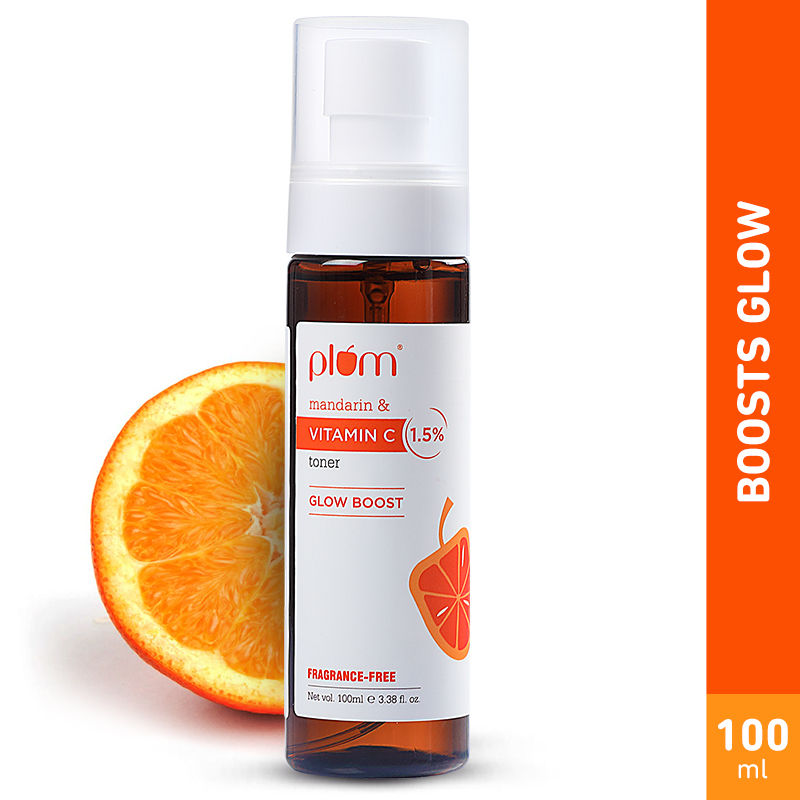
Plum 1.5% Vitamin C Alcohol-Free Spray Toner With Mandarin & Witch Hazel For Glow Boost & Open Pores

Plum 1.5% Vitamin C Alcohol-Free Spray Toner With Mandarin & Witch Hazel For Glow Boost & Open Pores
Plum
plum-1-5-vitamin-c-alcohol-free-spray-toner-with-mandarin-witch-hazel-for-glow-boost-open-pores
Tone
10084921639205
Morning or Evening?
How often will you use this product?
Notes


Highlights
WHAT IS IT?
Spray toner with 12 ingredients
FEATURES
Boosts natural luminosity of the skin, refreshes skin and fades dark spots, enhances the efficacy of vitamin C, evens out skin tone, promotes skin rejuvenation, maximizes hydration, protects skin from free radicals
BEST FOR
sensitive
CHECKS
No alcohol, No parabens, No fragrance
Who Is It For?
All Genders AdultWhat Does It Help With?
Glow Boost Open Pores Pigmentation HydrationBudget
Affordable (under $30)How To Use
Which routine should it be used in?
Instructions:
Key Information


What Plum Says
Product Description:
Explore the entire range of Toners & Mists available on Nykaa. Shop more Plum products here.You can browse through the complete world of Plum Toners & Mists.
About the Brand:
Ingredients Overview
Ingredients List
Aqua,Propanediol,3-O-Ethyl-Ascorbic-Acid,Methyl-Gluceth-20,Citrus-Reticulata-(Mandarin)-Peel-Extract,Terminalia-Ferdinandiana-(Kakadu-Plum)-Fruit-Extract,Hamamelis-Virginiana-(Witch-Hazel)-Extract,Sodium-Citrate,Cyclodextrin,Benzyl-Alcohol,Hydroxyacetophenone,Caprylyl-Glycol,Sodium-Gluconate,Sorbitol,Citric-Acid,Sucrose
Key Ingredients
Vitamin C, Japanese Mandarin, Kakadu Plum
Ingredients Details
Cyclodextrin
Common Name(s): Bcd,cycloheptaamylose,betadex
CAS Number: 7585-39-9
DESCRIPTION
What It Does: Provides molecular encapsulation for improved solubility, stability, and controlled release of challenging cosmetic actives.
Why It's Used: Molecular encapsulation technology — beta-cyclodextrin's toroidal cavity provides a hydrophobic microenvironment for solubilising and stabilising oil-soluble actives in aqueous formulations.
How It Works: 7 glucose units in cyclic toroidal structure provide 6.0-6.5å inner cavity. hydrophobic interior complexes lipophilic guest molecules. complexation improves water solubility (guest molecule becomes water-dispersible), stability (protection from oxidation and hydrolysis), and controlled release (guest releases gradually by diffusion). outer hydrophilic face provides water compatibility.
Typically Found In: Active delivery systems,fragrance encapsulation,stability-challenged actives
TECHNICAL DETAILS
Primary Category: Functional ingredient – inclusion complex host
Secondary Functions: Skin conditioning
Application Areas:

Facial Skincare

Body Care
Hair Care
Beard Care
Color Cosmetics (Makeup)
Dietary/Oral Supplements
Typical Concentration Range: 0.1%–10%
SOURCING & ETHICS
Vegan Status: Yes – from starch (corn, potato)
Halal Status: Yes
Source Notes: Commercially produced for cosmetic use. verify vegan/halal status with supplier.
SKIN COMPATIBILITY
Irritancy Rating: 1/5 – very low
Comedogenicity Rating: 0/5 – non-comedogenic
Sensitivity Concerns: Well-tolerated by most skin types.
Safe for Sensitive Skin: Yes
SAFETY & COMPATIBILITY
Safety Profile: Good safety profile at recommended concentrations. ewg score: 1–2.
Works Well With: Standard skincare actives
Avoid Combining With: No known significant incompatibilities
SCIENTIFIC NOTE
Beta-cyclodextrin's pharmaceutical drug delivery applications (dozens of fda-approved cd-drug complexes) provide unparalleled safety and efficacy documentation for a cosmetic excipient. the same cd technology that delivers cholesterol-lowering drugs and antifungals in pharmaceutical formulations enables cosmetic actives to be delivered more effectively — a pharmaceutical innovation directly adapted to cosmetic performance enhancement.
Last Verified: Cosing database,loftsson & brewster cyclodextrin review
Primary Sources: 2026-03-12
Hydroxyacetophenone
Common Name(s): Para-hydroxyacetophenone,piceol,4-acetylphenol
CAS Number: 99-93-4
DESCRIPTION
What It Does: Provides antioxidant and preservative-boosting activity in a naturally-occurring clean-label phenolic.
Why It's Used: Clean-label preservation support — hydroxyacetophenone provides antioxidant and antimicrobial-boosting properties from a naturally-occurring compound accepted in natural cosmetic certifications.
How It Works: Para-hydroxyl group provides antioxidant radical scavenging. disrupts bacterial cell membrane penetration for preservative system boosting. anti-inflammatory via nf-kb inhibition. occurs naturally in plants including pear and raspberry as a secondary metabolite.
Typically Found In: Natural preservation systems,antioxidant serums,clean beauty
TECHNICAL DETAILS
Primary Category: Functional ingredient – antioxidant preservative booster
Secondary Functions: Free radical scavenging,anti-aging
Application Areas:
Facial Skincare
Body Care
Hair Care
Beard Care
Color Cosmetics (Makeup)
Dietary/Oral Supplements
Typical Concentration Range: 0.1%–1%
SOURCING & ETHICS
Vegan Status: Yes – natural from plants or synthetic
Halal Status: Yes
Source Notes: Plant-derived extract or synthetic.
SKIN COMPATIBILITY
Irritancy Rating: 1/5 – very low
Comedogenicity Rating: 0/5 – non-comedogenic
Sensitivity Concerns: Non-irritating; well-tolerated.
Safe for Sensitive Skin: Yes
SAFETY & COMPATIBILITY
Safety Profile: Excellent safety profile. ewg score: 1.
Works Well With: Vitamin c,vitamin e,ferulic acid,spf,other antioxidants
Avoid Combining With: No significant incompatibilities
SCIENTIFIC NOTE
Hydroxyacetophenone's natural occurrence in fruits (pear, raspberry, passion fruit) at detectable concentrations provides clean-label justification for use in natural cosmetics. its cosmos certification acceptance reflects the growing demand for functional preservation ingredients that meet natural certification criteria — an ingredient with genuine plant-origin credentials that provides meaningful antimicrobial and antioxidant functions simultaneously.
Last Verified: Cosing database,cosmos-standard approved ingredients,cir safety assessment
Primary Sources: 2026-03-12
Propanediol
Common Name(s): 1,3-propanediol,zemea,bio-propanediol
CAS Number: 504-63-2
DESCRIPTION
What It Does: Provides humectant and solvent functionality from sustainable corn-based fermentation.
Why It's Used: Bio-based propylene glycol alternative from renewable corn — propanediol provides equivalent functionality to propylene glycol with sustainable renewable feedstock and superior skin feel.
How It Works: Two oh groups provide humectant water binding. excellent solvent for fragrances, actives, and preservatives. mild antimicrobial from diol structure for preservative system boosting. renew corn fermentation origin (dupont zemea process). better skin feel than propylene glycol — less sticky.
Typically Found In: Virtually all cosmetic categories as pg alternative
TECHNICAL DETAILS
Primary Category: Functional ingredient – humectant
Secondary Functions: Tewl reduction,skin plumping
Application Areas:
Facial Skincare
Body Care
Hair Care
Beard Care
Color Cosmetics (Makeup)
Dietary/Oral Supplements
Typical Concentration Range: 1%–20%
SOURCING & ETHICS
Vegan Status: Yes – from corn sugar fermentation
Halal Status: Yes
Source Notes: Synthetic or naturally derived. excellent aqueous solubility.
SKIN COMPATIBILITY
Irritancy Rating: 1/5 – very low
Comedogenicity Rating: 0/5 – non-comedogenic
Sensitivity Concerns: Non-irritating; suitable for all skin types.
Safe for Sensitive Skin: Yes
SAFETY & COMPATIBILITY
Safety Profile: Excellent safety profile. ewg score: 1.
Works Well With: Ceramides,emollients,occlusives,glycerin,hyaluronic acid
Avoid Combining With: No significant incompatibilities
SCIENTIFIC NOTE
Propanediol's dupont tate & lyle bio products 'zemea' process ferments corn sugar to 1,3-propanediol using engineered e. coli — one of the first commercially viable bio-fermentation routes to a cosmetic diol previously made only from petroleum. the renewable route produces chemically identical 1,3-propanediol while reducing carbon footprint by approximately 40% vs petrochemical synthesis.
Last Verified: Cosing database,dupont tate & lyle zemea technical data,cir safety assessment
Primary Sources: 2026-03-12
Sorbitol
Common Name(s): D-glucitol,l-glucitol,sorbol
CAS Number: 50-70-4
DESCRIPTION
What It Does: Attracts and retains moisture providing skin softening and hydration.
Why It's Used: Widely used, cost-effective humectant and formulation ingredient in moisturizers, toothpastes, and personal care.
How It Works: 6 hydroxyl groups provide strong water binding through hydrogen bonding. metabolized slowly by skin as an osmolyte.
Typically Found In: Moisturizers,body lotions,toothpaste,shampoos,many personal care products
TECHNICAL DETAILS
Primary Category: Functional ingredient – sugar alcohol humectant
Secondary Functions: Formulation solvent,viscosity modifier
Application Areas:
Facial Skincare
Body Care
Hair Care
Beard Care
Color Cosmetics (Makeup)
Dietary/Oral Supplements
Typical Concentration Range: 1%–30%
SOURCING & ETHICS
Vegan Status: Yes – plant-derived (corn, apples) or synthetic
Halal Status: Yes
Source Notes: Produced by catalytic hydrogenation of glucose. derived from corn starch or other carbohydrate sources. gras food-approved.
SKIN COMPATIBILITY
Irritancy Rating: 1/5 – very low
Comedogenicity Rating: 0/5 – non-comedogenic
Sensitivity Concerns: Non-irritating; suitable for all skin types.
Safe for Sensitive Skin: Yes
SAFETY & COMPATIBILITY
Safety Profile: Excellent safety profile. ewg score: 1.
Works Well With: Ceramides,emollients,occlusives,glycerin,hyaluronic acid
Avoid Combining With: No significant incompatibilities
SCIENTIFIC NOTE
Sorbitol's osmolyte function in cells (accumulates in response to osmotic stress) suggests it may provide protection to skin cells under dehydrating environmental conditions, complementing its well-established surface humectant activity.
Last Verified: Cosing database,cir safety assessment,ewg skin deep
Primary Sources: 2026-03-12
