
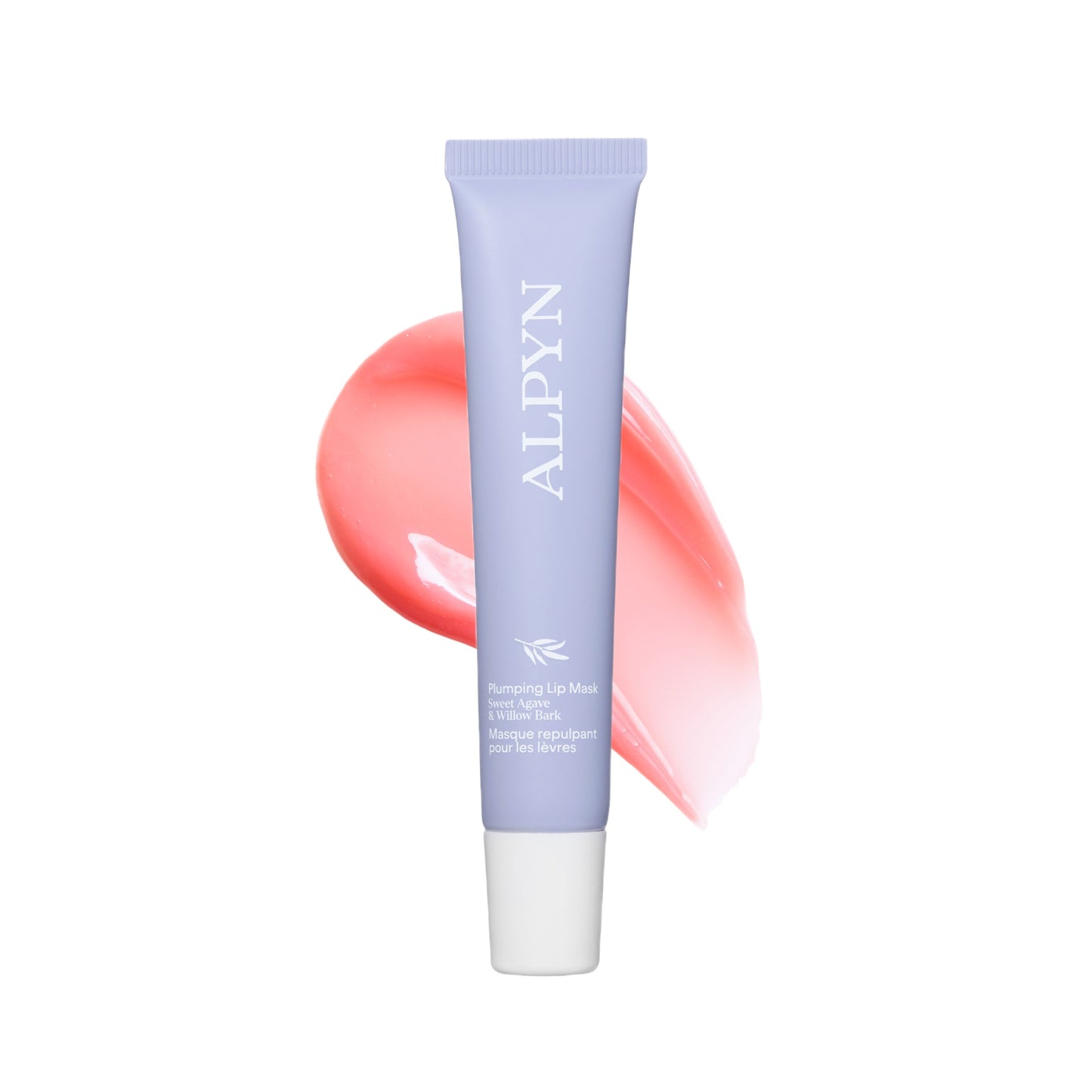

Alpyn
Plumping Lip Mask

Plumping Lip Mask
Alpyn
plumping-lip-mask
Lip care
9818416316709
Morning or Evening?
How often will you use this product?
Notes


Highlights
WHAT IS IT?
Lip mask with 3 key ingredients
FEATURES
Delivers lip-quenching hydration, adds visible fullness, exfoliates and smooths
BEST FOR
dry
CHECKS
Free of Phenoxyethanol, Parabens, Formaldehyde Donors, MEA/DEA/TEA, Palm Ingredients, Sulfates, Synthetic Dyes, Colors, Fragrance, Phthalates, Petrochemicals, PEG’s/ PPG’s, Metallic Aluminum, Triclosan, Talc, Mineral Oil, Petrolatum
Who Is It For?
All Ages And GendersWhat Does It Help With?
Hydration Plumping Smoothing And Softening Of LipsBudget
Affordable (under $30)How To Use
Which routine should it be used in?
Instructions:
Key Information


What Alpyn Says
Product Description:
An every day, anytime mask—powered by sweet agave, hyaluronic acid, and smoothing willow bark—for soft, cushiony-feeling, fuller-looking lips.
About the Brand:
Ingredients Overview
Ingredients List
hydroxystearic/linolenic/oleic polyglycerides, helianthus annuus (sunflower) seed oil, ricinus communis (castor) seed oil, polyhydroxystearic acid, agave tequilana leaf extract, cocos nucifera, (coconut) oil, hydrogenated castor oil, capryloyl glycerin/sebacic acid copolymer, helianthus annuus, (sunflower) seed wax, copernicia cerifera (carnauba) wax, aloe barbadensis leaf extract, salix alba extract, simmondsia chinensis (jojoba) seed oil, linoleic acid, squalane, tocopherol, c18-38 alkyl hydroxystearoyl stearate, moringa oleifera seed oil, rosa centifolia flower, extract, eclipta prostrata extract, citrus limon (lemon) peel oil, menthyl lactate, melia azadirachta, leaf extract, euterpe oleracea sterols, sodium hyaluronate, stevia rebaudiana leaf/stem extract, oleic acid, linolenic acid, citral, citronellol, limonene
Key Ingredients
Sweet Agave, Hyaluronic Acid, Willow Bark
Ingredients Details
Hyaluronic Acid
Common Name(s): Ha,sodium hyaluronate (salt form),hyaluronan,d-glucuronic acid-n-acetyl-d-glucosamine polymer
CAS Number: 9004-61-9
DESCRIPTION
What It Does: Hyaluronic acid draws and locks moisture into the skin at multiple depths (surface and deeper layers depending on molecular weight), creating a plumping, smoothing, and hydrating effect.
Why It's Used: It is used because it is endogenous to human skin, making it exceptionally biocompatible and non-irritating. its unparalleled moisture-binding capacity makes it the most effective hydrating ingredient available.
How It Works: Ha binds water molecules through its many hydroxyl and carboxyl groups, creating a gel-like matrix. high molecular weight ha (>500 kda) hydrates the skin surface; low molecular weight ha (<50 kda) penetrates deeper to provide interior hydration.
Typically Found In: Serums,moisturizers,sheet masks,toners,eye creams,lip treatments,dermal fillers (injectable)
TECHNICAL DETAILS
Primary Category: Active ingredient – humectant/hydrator
Secondary Functions: Barrier repair,plumping,anti-aging
Application Areas:

Facial Skincare
Body Care

Hair Care
Beard Care
Color Cosmetics (Makeup)
Dietary/Oral Supplements
Typical Concentration Range: 0.1%–2% (effective at very low concentrations; multi-weight ha provides superior results)
SOURCING & ETHICS
Vegan Status: Conditional - feedstock declaration required
Halal Status: Unverified - feedstock declaration required (plant, animal and petrochemical routes all exist)
Source Notes: Originally extracted from rooster combs; now predominantly produced via biotechnology (bacterial fermentation), which is vegan and more sustainable. [audit 2026-07-29 rev2: origin-dependent: the same inci exists in plant, animal and petrochemical versions and the name does not discriminate. determination requires shariah-panel sign-off.]
SKIN COMPATIBILITY
Irritancy Rating: 1/5 – very low; one of the gentlest skincare ingredients known
Comedogenicity Rating: 0/5 – non-comedogenic
Sensitivity Concerns: In very dry environments, high-molecular-weight ha on the surface can potentially draw moisture out of the skin if not sealed with an occlusive. apply to damp skin and seal with moisturizer.
Safe for Sensitive Skin: Yes – ideal for all skin types including rosacea, eczema, and post-procedure skin
SAFETY & COMPATIBILITY
Safety Profile: Exceptional safety profile. endogenous molecule – no toxicity concerns. ewg hazard score: 1. safe during pregnancy.
Works Well With: Virtually all ingredients; especially ceramides,glycerin,peptides,retinol (reduces irritation),niacinamide,vitamin c
Avoid Combining With: No significant incompatibilities; high concentrations of alcohol in a formula may reduce its efficacy
SCIENTIFIC NOTE
Hyaluronic acid naturally degrades in skin (half-life ~1–2 days). the skin produces it endogenously, but production decreases with age. multi-molecular-weight ha formulas provide hydration at both surface and deeper skin levels.
Last Verified: 2026-03-12
Primary Sources: Cosing database,cir safety assessment,papakonstantinou et al. (2012) dermato-endocrinology
Willow Bark
Common Name(s): White willow bark extract,salix extract,natural bha source
CAS Number: 84082-82-6
DESCRIPTION
What It Does: Provides natural salicylate exfoliation and anti-inflammatory activity from the botanical origin of aspirin.
Why It's Used: The natural bha alternative — willow bark extract provides salicin that converts to salicylic acid on the skin surface, providing natural beta-hydroxy acid exfoliation with the authenticity of the original aspirin plant.
How It Works: Salicin (salicyl glucoside) is hydrolysed by skin esterases to saligenin, then oxidised to salicylic acid at the skin surface. provides natural beta-hydroxy acid exfoliation. tannins provide anti-inflammatory astringent activity. flavonoids provide antioxidant activity.
Typically Found In: Natural exfoliants,natural bha products,anti-acne natural formulas
TECHNICAL DETAILS
Primary Category: Active ingredient – natural salicylate source
Secondary Functions: Brightening,collagen stimulation
Application Areas:
Facial Skincare
Body Care
Hair Care
Beard Care
Color Cosmetics (Makeup)
Dietary/Oral Supplements
Typical Concentration Range: 0.1%–5%
SOURCING & ETHICS
Vegan Status: Yes – from salix alba bark
Halal Status: Yes
Source Notes: Fermentation-derived or synthetic. ph must be ≤4.0 for aha activity.
SKIN COMPATIBILITY
Irritancy Rating: 2/5 – low to moderate
Comedogenicity Rating: 0/5 – non-comedogenic
Sensitivity Concerns: Photosensitizing – mandatory spf use. start at low frequency.
Safe for Sensitive Skin: Use with caution – spf required
SAFETY & COMPATIBILITY
Safety Profile: Safe at otc concentrations. eu: ≤10% leave-on at ph ≥3.5. mandatory spf advisory.
Works Well With: Niacinamide,ceramides,hyaluronic acid,spf
Avoid Combining With: Retinol in same step; multiple exfoliants simultaneously
SCIENTIFIC NOTE
Willow bark extract's salicin → salicylic acid conversion is the same biological pathway that led felix hoffmann to synthesise aspirin (acetylsalicylic acid) in 1897. the traditional use of willow bark for pain and fever in ancient egypt, greece, and rome (where it was described by hippocrates c.400 bc) was the empirical observation that preceded by 2300 years the identification of salicin as the active compound.
Last Verified: 2026-03-12
Primary Sources: Cosing database,cir safety assessment