
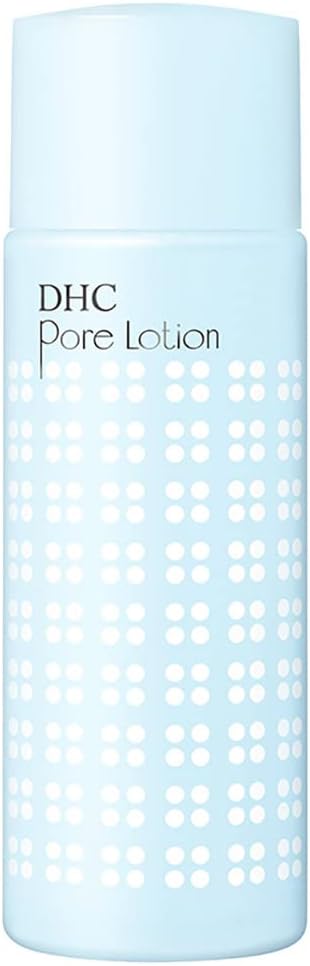

DHC
Pore Lotion

Pore Lotion
DHC
pore-lotion
Tone
9706790715685
Morning or Evening?
How often will you use this product?
Notes


Highlights
WHAT IS IT?
Alcohol-free liquid toner with 24 ingredients
FEATURES
Alcohol-free, Dual-action, Utilizes Nanomicelle Delivery Technology, Visibly tightens pores, Clarifying, Balancing, Brightening
BEST FOR
Oily, Blemish-prone skin
CHECKS
Free of parabens, colorants, fragrance
Who Is It For?
Above 18 Women And MenWhat Does It Help With?
Enlarged Pores Excess Sebum Uneven Skin ToneBudget
Mid-rangeHow To Use
Which routine should it be used in?
Instructions:
Key Information


What DHC Says
Product Description:
This gentle, alcohol-free, dual-action liquid lotion prepares the skin for moisturizer and utilizes Nanomicelle Delivery Technology to visibly tighten the appearance of enlarged pores. A blend of artichoke leaf extract, vitamin C and algae extract leaves skin looking clear, balanced, bright-looking and ready for moisturizer.
About the Brand:
Ingredients Overview
Ingredients List
water/aqua/eau, butylene glycol, pentylene glycol, glycerin, PPG-13-decyltetradeceth-24, sodium citrate, PEG-40 hydrogenated castor oil, arginine, citric acid, dipotassium glycyrrhizate, disodium EDTA, zinc PCA, fomes officinalis (mushroom) extract, citrus aurantium dulcis (orange) peel oil, citrus grandis (grapefruit) peel oil, cladosiphon novae-calendoniae extract, citrus limon (lemon) peel oil, citrus nobilis (mandarin orange) peel oil, olea europaea (olive) leaf extract, 3-O-ethyl ascorbic acid, oligopeptide-56 amido PEG-75 methyl ether, calendula officinalis flower extract, citrus aurantium dulcis (orange) peel extract, citrus limon (lemon) peel extract, citrus nobilis (mandarin orange) peel extract, citrus paradisi (grapefruit) peel extract, scutellaria baicalensis root extract, citrus aurantium amara (bitter orange) flower oil, cynara scolymus (artichoke) leaf extract, punica granatum pericarp extract, artocarpus lakoocha wood extract, phenoxyethanol, limonene
Key Ingredients
Zinc PCA, Artichoke leaf extract, Vitamin C, Brown algae extract, Mushroom extract, Grapefruit and orange peel extracts
Ingredients Details
Arginine
Common Name(s): L-arginine,2-amino-5-guanidinopentanoic acid
CAS Number: 74-79-3
DESCRIPTION
What It Does: Conditions skin, attracts moisture, supports wound healing, and improves microcirculation via no synthesis.
Why It's Used: Multi-functional amino acid for skin hydration, conditioning, and wound healing in peptide and nmf formulations.
How It Works: Guanidinium group binds water (humectant). substrate for nitric oxide synthase (enos) producing nitric oxide that vasodilates capillaries improving skin nutrition. stimulates fibroblast proliferation for wound healing.
Typically Found In: Anti-aging serums,wound healing products,nmf moisturizers,scalp treatments
TECHNICAL DETAILS
Primary Category: Active ingredient – amino acid
Secondary Functions: Wound healing,microcirculation,nmf component
Application Areas:

Facial Skincare

Body Care
Hair Care
Beard Care
Color Cosmetics (Makeup)
Dietary/Oral Supplements
Typical Concentration Range: 0.5%–5%
SOURCING & ETHICS
Vegan Status: Conditional - feedstock declaration required
Halal Status: Unverified - feedstock declaration required (plant, animal and petrochemical routes all exist)
Source Notes: Fermentation-derived or synthetic. natural skin component. [audit 2026-07-29 rev2: origin-dependent: the same inci exists in plant, animal and petrochemical versions and the name does not discriminate. determination requires shariah-panel sign-off.]
SKIN COMPATIBILITY
Irritancy Rating: 1/5 – very low
Comedogenicity Rating: 0/5 – non-comedogenic
Sensitivity Concerns: Non-irritating; endogenous skin molecule.
Safe for Sensitive Skin: Yes
SAFETY & COMPATIBILITY
Safety Profile: Excellent safety profile. natural skin nmf component. ewg score: 1.
Works Well With: Hyaluronic acid,ceramides,peptides,other amino acids
Avoid Combining With: No significant incompatibilities
SCIENTIFIC NOTE
Arginine is a conditionally essential amino acid in wound healing where local demand exceeds synthesis capacity. topical arginine provides the nos substrate locally for no-mediated vasodilation and immune cell function in healing tissue.
Last Verified: 2026-03-12
Primary Sources: Cosing database,cir safety assessment,witte & barbul arginine wound healing review
Butylene Glycol
Common Name(s): 1,3-butanediol,bg,1,3-butylene glycol
CAS Number: 107-88-0
DESCRIPTION
What It Does: Provides humectant hydration and active ingredient solubilization with excellent skin feel.
Why It's Used: Preferred glycol humectant in premium and k-beauty formulations for superior skin feel vs propylene glycol with equivalent functionality.
How It Works: Two hydroxyl groups at 1,3-positions provide water binding and solvent activity. better tolerated than propylene glycol with minimal sensitization risk. 4-carbon backbone provides slightly greater hydrophobic character enabling dissolution of less polar actives vs pg.
Typically Found In: Toners,essences,serums,k-beauty formulas
TECHNICAL DETAILS
Primary Category: Functional ingredient – glycol humectant
Secondary Functions: Tewl reduction,skin plumping
Application Areas:
Facial Skincare
Body Care
Hair Care
Beard Care
Color Cosmetics (Makeup)
Dietary/Oral Supplements
Typical Concentration Range: 1%–10%
SOURCING & ETHICS
Vegan Status: Yes – synthetic
Halal Status: Yes
Source Notes: Synthetic or naturally derived. excellent aqueous solubility.
SKIN COMPATIBILITY
Irritancy Rating: 1/5 – very low
Comedogenicity Rating: 0/5 – non-comedogenic
Sensitivity Concerns: Non-irritating; suitable for all skin types.
Safe for Sensitive Skin: Yes
SAFETY & COMPATIBILITY
Safety Profile: Excellent safety profile. ewg score: 1.
Works Well With: Ceramides,emollients,occlusives,glycerin,hyaluronic acid
Avoid Combining With: No significant incompatibilities
SCIENTIFIC NOTE
K-beauty's preference for butylene glycol over propylene glycol is driven by two factors: bg's superior skin feel (less tacky than pg's higher viscosity) and its lower sensitization potential (1,3-bg has better spatial distribution of hydroxyl groups that reduces protein interaction vs pg's 1,2-position oh groups).
Last Verified: 2026-03-12
Primary Sources: Cosing database,cir safety assessment
Citric Acid
Common Name(s): Lemon acid,2-hydroxypropane-1,2,3-tricarboxylic acid
CAS Number: 77-92-9
DESCRIPTION
What It Does: Adjusts ph to optimal ranges, chelates destabilizing metal ions, provides mild exfoliation at higher concentrations.
Why It's Used: Universal cosmetic ph adjuster and chelating agent. aha exfoliant activity is secondary.
How It Works: As ph adjuster, donates protons. as chelating agent, three carboxylic groups bind divalent metals (ca²⁺, mg²⁺, fe²⁺) preventing oxidative degradation.
Typically Found In: Nearly all cosmetic formulations,brightening products,exfoliants
TECHNICAL DETAILS
Primary Category: Active ingredient – alpha hydroxy acid (aha)
Secondary Functions: Chelating agent,ph adjustment,preservation enhancement
Application Areas:
Facial Skincare
Body Care
Hair Care
Beard Care
Color Cosmetics (Makeup)
Dietary/Oral Supplements
Typical Concentration Range: 0.1%–10%
SOURCING & ETHICS
Vegan Status: Yes – synthetic or fermentation-derived
Halal Status: Yes
Source Notes: Produced by fermentation of sugars by aspergillus niger. gras (e330). most abundant organic acid in citrus.
SKIN COMPATIBILITY
Irritancy Rating: 1/5 – very low at low concentrations; 2/5 at exfoliant concentrations
Comedogenicity Rating: 0/5 – non-comedogenic
Sensitivity Concerns: Photosensitizing – mandatory spf use. start at low frequency.
Safe for Sensitive Skin: Use with caution – spf required
SAFETY & COMPATIBILITY
Safety Profile: Safe at otc concentrations. eu: ≤10% leave-on at ph ≥3.5. mandatory spf advisory.
Works Well With: Niacinamide,ceramides,hyaluronic acid,spf
Avoid Combining With: Retinol in same step; multiple exfoliants simultaneously
SCIENTIFIC NOTE
Three carboxylic acid groups provide multiple proton donation sites and stronger chelation than monocarboxylic ahas. this makes citric acid the preferred cosmetic chelating agent alongside edta.
Last Verified: 2026-03-12
Primary Sources: Cosing database,cir safety assessment,ewg skin deep
Dipotassium Glycyrrhizate
Common Name(s): Dpg,dipotassium glycyrrhizinate,glycyrrhizic acid potassium salt
CAS Number: 68797-35-3
DESCRIPTION
What It Does: Provides glycyrrhizic acid anti-inflammatory and cortisol-potentiating soothing activity.
Why It's Used: The anti-inflammatory licorice active — dipotassium glycyrrhizate provides stronger anti-inflammatory activity than glabridin-containing licorice extract, making it the preferred licorice active for anti-inflammatory formulations.
How It Works: Glycyrrhizic acid inhibits 11-beta-hsd (11-beta-hydroxysteroid dehydrogenase) which inactivates cortisol to cortisone. local cortisol levels increase providing anti-inflammatory activity analogous to mild topical corticosteroid. also inhibits phospholipase a2 and prostaglandin synthesis directly.
Typically Found In: Sensitive skin serums,anti-inflammatory products,anti-itch formulas
TECHNICAL DETAILS
Primary Category: Active ingredient – anti-inflammatory licorice
Secondary Functions: Redness reduction,anti-inflammatory,calming
Application Areas:
Facial Skincare
Body Care
Hair Care
Beard Care
Color Cosmetics (Makeup)
Dietary/Oral Supplements
Typical Concentration Range: 0.1%–1%
SOURCING & ETHICS
Vegan Status: Yes – from glycyrrhiza glabra root
Halal Status: Yes
Source Notes: Plant-derived extract or synthetic.
SKIN COMPATIBILITY
Irritancy Rating: 1/5 – very low
Comedogenicity Rating: 0/5 – non-comedogenic
Sensitivity Concerns: Non-irritating; ideal for reactive and sensitive skin.
Safe for Sensitive Skin: Yes – particularly recommended for sensitive skin
SAFETY & COMPATIBILITY
Safety Profile: Excellent safety profile. ewg score: 1.
Works Well With: Ceramides,panthenol,allantoin,hyaluronic acid,centella asiatica
Avoid Combining With: No significant incompatibilities
SCIENTIFIC NOTE
Dipotassium glycyrrhizate's 11-beta-hsd inhibition provides a corticosteroid-potentiating mechanism: by preventing cortisol deactivation to cortisone, it effectively amplifies the anti-inflammatory activity of the skin's own naturally produced glucocorticoid without introducing exogenous steroids — providing a 'natural steroid potentiation' that explains why licorice preparations have been used as a topical anti-inflammatory for millennia.
Last Verified: 2026-03-12
Primary Sources: Cosing database,armanini et al. glycyrrhizate review