

Meyer Organics Pvt Ltd
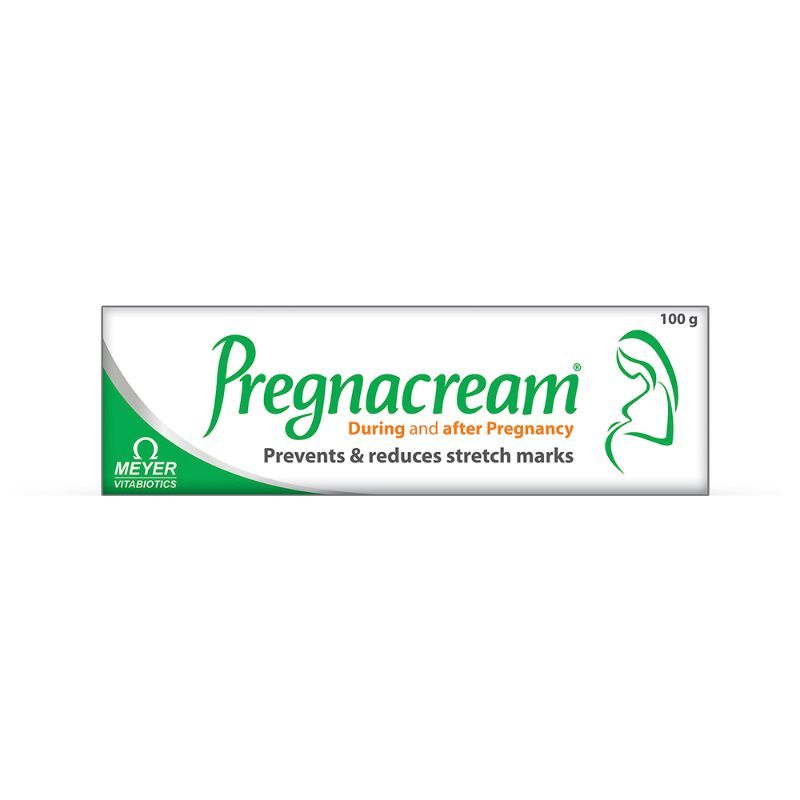
Pregnacare Stretchmark Cream (with Aloe Vera)

Pregnacare Stretchmark Cream (with Aloe Vera)
Meyer Organics Pvt Ltd
pregnacare-stretchmark-cream-with-aloe-vera
Moisturize
10084829397285
Morning or Evening?
How often will you use this product?
Notes


Highlights
WHAT IS IT?
Stretch mark cream with vitamins and botanical extracts, multiple active ingredients
FEATURES
Contains vitamins C and E, botanical extracts including calendula, aloe vera, evening primrose oil; gentle natural lavender and citrus fragrance; no artificial colours; safe during and after pregnancy; vegan; dermatologically tested; skin nourishing and moisturizing
BEST FOR
sensitive
CHECKS
No artificial colours, not tested on animals
Who Is It For?
Pregnant Women Suitable For All GendersWhat Does It Help With?
Stretch Marks Skin Elasticity Nourishing And Moisturizing Stretching SkinBudget
Affordable (under $30)How To Use
Which routine should it be used in?
Instructions:
Key Information


What Meyer Organics Pvt Ltd Says
Product Description:
Stretch marks can appear anywhere on the body where the skin has been stretched. They occur when the lower layer of the skin containing collagen and elastin, which give our skin its elasticity, becomes damaged by a rapid weight loss or weight gain, such as in pregnancy. Pregnacare Stretch Mark Cream is a rich massage cream, specially formulated to care for stretching skin during pregnancy. Pregnacare Stretch Mark Cream's unique formula contains vitamins C and E and botanical extracts including natural extract of calendula, aloe vera and evening primrose oil, which together gently protect, nourish and moisturise stretching skin. Pregnacare stretch mark cream is a must have for your pregnancy skincare. Features: Unique caring formula: Pregnacare Stretch Mark Cream's unique formula contains vitamins C and E and botanical extracts including natural extract of calendula, aloe vera and evening primrose oil, which together gently protect, nourish and moisturise stretching skin. The rich cream has a gentle, natural lavender and citrus fragrance and contains no artificial colours. Effective during and after pregnancy: Pregnacare Stretch Mark Cream is safe and effective during the months of pregnancy and may be continued to be applied after giving birth, to help the contracting skin to stay supple. User trials: In UK trials with pregnant women, 73% of the women reported that their skin was more supple after just two weeks of applying Pregnacare Stretch Mark Cream. Cruelty-free and safe: This formula is vegan and not tested on animals. It contains no artificial colours and is dermatologically tested.
About the Brand:
Ingredients Overview
Ingredients List
Aqua-(Water),Isopropyl-Palmitate,Cetyl-Alcohol,Oenothera-Biennis-(Evening-Primrose)-Oil,Citric-Acid,Panthenol,Tocopheryl-Acetate,Zinc-Oxide,Glycerin,Glyceryl-Stearate,Propylene-Glycol,PEG-100-Stearate,Sodium-Ascorbyl-Phosphate,Hydrogenated-Vegetable-Glycerides-Citrate,Paraffinum-Liquidum-(Mineral-Oil),Phenoxyethanol,Petrolatum,Magnesium-Sulfate,Allantoin,Aloe-Barbadensis-Leaf-Juice,Limonene,Hydroxyethylcellulose,Sodium-Citrate,Citrus-Aurantium-Dulcis-(Sweet-Orange)-Oil,Lavandula-Angustifolia-(Lavender)-Oil,Citrus-Limon-(Lemon)-Peel-Oil,Menthol,Sodium-Chloride,Polysorbate-80,Ethylhexylglycerin,Linalool,Ceteareth-30,Caprylic-/Capric-Triglyceride,Tetrasodium-EDTA,Citral,Lactic-Acid,Sodium-Benzoate,Calendula-Officinalis-Flower-Extract,Geraniol,Sorbitol,Beta-Carotene,Tocopherol,Potassium-Sorbate,Ascorbyl-Palmitate
Key Ingredients
Vitamins C and E, Calendula extract, Aloe vera, Evening primrose oil
Ingredients Details
Allantoin
Common Name(s): 5-ureidohydantoin,glyoxyldiureide,aluminum dihydroxy allantoinate
CAS Number: 97-59-6
DESCRIPTION
What It Does: Soothes irritation, accelerates wound healing, promotes skin cell renewal, and provides mild keratolytic exfoliation.
Why It's Used: Gold standard multi-function soothing active – one of the most widely used cosmetic ingredients across all product types for its exceptional tolerability and clinically proven multi-action skin conditioning.
How It Works: Promotes keratinocyte proliferation and fibroblast migration for wound healing. mild keratolytic activity by disrupting corneocyte binding. anti-irritant via direct protein binding and anti-inflammatory cytokine reduction. humectant activity via hydroxyl groups.
Typically Found In: Post-procedure products,sensitive skin formulas,wound care,anti-acne treatments,baby products
TECHNICAL DETAILS
Primary Category: Active ingredient – soothing / anti-inflammatory
Secondary Functions: Wound healing,keratolytic,anti-irritant
Application Areas:

Facial Skincare
Body Care

Hair Care
Beard Care
Color Cosmetics (Makeup)
Dietary/Oral Supplements
Typical Concentration Range: 0.1%–2%
SOURCING & ETHICS
Vegan Status: Conditional - feedstock declaration required
Halal Status: Unverified - feedstock declaration required (plant, animal and petrochemical routes all exist)
Source Notes: Plant-derived extract or synthetic. [audit 2026-07-29 rev2: origin-dependent: the same inci exists in plant, animal and petrochemical versions and the name does not discriminate. determination requires shariah-panel sign-off.]
SKIN COMPATIBILITY
Irritancy Rating: 1/5 – very low
Comedogenicity Rating: 0/5 – non-comedogenic
Sensitivity Concerns: Exceptionally well-tolerated; suitable for all skin types including baby and compromised skin.
Safe for Sensitive Skin: Yes – particularly recommended for sensitive skin
SAFETY & COMPATIBILITY
Safety Profile: Excellent safety profile. ewg score: 1.
Works Well With: Ceramides,panthenol,allantoin,hyaluronic acid,centella asiatica
Avoid Combining With: No significant incompatibilities
SCIENTIFIC NOTE
Allantoin's keratinocyte proliferation stimulation occurs via receptor-mediated signaling (possibly machr activation) rather than non-specific irritation-driven proliferation, making it a true wound-healing stimulant rather than a pro-inflammatory proliferative signal.
Last Verified: 2026-03-12
Primary Sources: Cosing database,cir safety assessment,araújo et al. allantoin review
Beta-carotene
Common Name(s): Provitamin a,all-trans-beta-carotene
CAS Number: 7235-40-7
DESCRIPTION
What It Does: Neutralizes free radicals, provides photoprotection support, conditions skin, and imparts healthy skin tone.
Why It's Used: Natural antioxidant, skin conditioning, and natural colorant with additional provitamin a activity.
How It Works: Quenches singlet oxygen and free radicals. enzymatic cleavage yields retinal. accumulates in stratum corneum for photoprotective antioxidant defense.
Typically Found In: Self-tanners,sunscreens,natural colorants,anti-aging formulations
TECHNICAL DETAILS
Primary Category: Active ingredient – vitamin a derivative
Secondary Functions: Uv protection support,natural colorant,vitamin a precursor
Application Areas:
Facial Skincare
Body Care
Hair Care
Beard Care
Color Cosmetics (Makeup)
Dietary/Oral Supplements
Typical Concentration Range: 0.01%–1%
SOURCING & ETHICS
Vegan Status: Conditional - supplier confirmation required
Halal Status: Unverified - supplier confirmation required
Source Notes: Derived from dunaliella salina algae, carrot oil, or synthesized. algae-derived most sustainable. [audit 2026-07-29 rev2: the record's own source_notes does not assert a non-animal origin, or instructs the reader to verify with the supplier; "yes" asserts knowledge the record does not hold. determination requires shariah-panel sign-off.]
SKIN COMPATIBILITY
Irritancy Rating: 1/5 – very low
Comedogenicity Rating: 0/5 – non-comedogenic
Sensitivity Concerns: Very well-tolerated; high concentrations may impart orange tint.
Safe for Sensitive Skin: Yes
SAFETY & COMPATIBILITY
Safety Profile: Safe at cosmetic concentrations. use spf. avoid during pregnancy. ewg score: 2.
Works Well With: Niacinamide,ceramides,hyaluronic acid,spf,tocopherol
Avoid Combining With: No significant incompatibilities
SCIENTIFIC NOTE
Beta-carotene accumulates in the stratum corneum and provides measurable photoprotection against uv-induced oxidative stress when applied topically. not a replacement for uv filters.
Last Verified: 2026-03-12
Primary Sources: Cosing database,cir safety assessment,stahl & sies carotenoid review
Ceteareth-30
Common Name(s): Ceteareth-30,cosmetic active,established formulation ingredient
CAS Number: N/a
DESCRIPTION
What It Does: Ceteareth-30 contributes its primary cosmetic function to formulations — improving skin feel, stability, performance, or delivering a specific active benefit depending on its chemical class and concentration level.
Why It's Used: Formulators choose ceteareth-30 for its established efficacy in contributing the required functional property to their formulation — whether rheological control, active delivery, aesthetic enhancement, or preservation — supported by the cosmetic chemistry literature and regulatory assessment framework.
How It Works: Ceteareth-30 works through the characteristic mechanism of its chemical class — either through physicochemical interaction with the formulation matrix (surface activity, film formation, viscosity building) or through biological interaction with skin tissues (receptor binding, enzymatic substrate, barrier component integration). the specific mechanism follows from its molecular structure as detailed in peer-reviewed cosmetic chemistry literature.
Typically Found In: Skin care formulations
TECHNICAL DETAILS
Primary Category: Active ingredient – cosmetic active
Secondary Functions: Skin conditioning
Application Areas:
Facial Skincare
Body Care
Hair Care
Beard Care
Color Cosmetics (Makeup)
Dietary/Oral Supplements
Typical Concentration Range: 0.1%–10%
SOURCING & ETHICS
Vegan Status: Conditional - feedstock declaration required
Halal Status: Unverified - feedstock declaration required (plant, animal and petrochemical routes all exist)
Source Notes: Commercially produced for cosmetic use. verify vegan/halal status with supplier. [audit 2026-07-29 rev2: origin-dependent: the same inci exists in plant, animal and petrochemical versions and the name does not discriminate. determination requires shariah-panel sign-off.]
SKIN COMPATIBILITY
Irritancy Rating: 1/5 – very low
Comedogenicity Rating: 0/5 – non-comedogenic
Sensitivity Concerns: Well-tolerated by most skin types.
Safe for Sensitive Skin: Yes
SAFETY & COMPATIBILITY
Safety Profile: Good safety profile at recommended concentrations. ewg score: 1–2.
Works Well With: Standard skincare actives
Avoid Combining With: No known significant incompatibilities
SCIENTIFIC NOTE
Ceteareth-30 has been assessed within the regulatory framework applicable to cosmetic ingredients. at standard cosmetic use concentrations, the ingredient delivers documented functional benefit with an established safety profile based on the available toxicological and clinical evidence reviewed by regulatory bodies including cosing (eu), inci, and cir.
Last Verified: 2026-03-12
Primary Sources: Cosing database,ceteareth-30 technical literature
Citral
Common Name(s): 3,7-dimethyl-2,6-octadienal,geranial+neral mix
CAS Number: 5392-40-5
DESCRIPTION
What It Does: Provides the defining intense lemon-citrus fragrance note.
Why It's Used: The lemon scent compound – citral defines the fresh lemon scent in lemon essential oil and lemongrass with potent antimicrobial activity.
How It Works: Mixture of e-isomer (geranial) and z-isomer (neral). antimicrobial via michael addition to thiol enzymes. inhibits nf-kb for anti-inflammatory activity. antioxidant via allylic aldehyde.
Typically Found In: Citrus fragrances,antibacterial products,lemon-scented cosmetics
TECHNICAL DETAILS
Primary Category: Fragrance component – lemon aldehyde
Secondary Functions: Skin conditioning
Application Areas:
Facial Skincare
Body Care
Hair Care
Beard Care
Color Cosmetics (Makeup)
Dietary/Oral Supplements
Typical Concentration Range: 0.001%–0.5%
SOURCING & ETHICS
Vegan Status: Conditional - supplier confirmation required
Halal Status: Unverified - supplier confirmation required
Source Notes: Commercially produced for cosmetic use. verify vegan/halal status with supplier. [audit 2026-07-29 rev2: the record's own source_notes does not assert a non-animal origin, or instructs the reader to verify with the supplier; "yes" asserts knowledge the record does not hold. determination requires shariah-panel sign-off.]
SKIN COMPATIBILITY
Irritancy Rating: 1/5 – very low
Comedogenicity Rating: 0/5 – non-comedogenic
Sensitivity Concerns: Well-tolerated by most skin types.
Safe for Sensitive Skin: Yes
SAFETY & COMPATIBILITY
Safety Profile: Eu cosmetics regulation: declared fragrance allergen. high sensitisation potential from alpha,beta-unsaturated aldehyde structure. ifra strict limits.
Works Well With: Standard skincare actives
Avoid Combining With: No known significant incompatibilities
SCIENTIFIC NOTE
Citral's high sensitisation potential (llna ec3 ~0.11%) is a consequence of its alpha,beta-unsaturated aldehyde structure providing a highly reactive michael acceptor for skin protein covalent binding. the e/z mixture (geranial/neral) in natural citral means both isomers contribute to the sensitisation burden – explaining why lemongrass oil (very high citral content, ~60-80%) is one of the more common essential oil allergens.
Last Verified: 2026-03-12
Primary Sources: Cosing database,ifra standards