

Productos LATINA
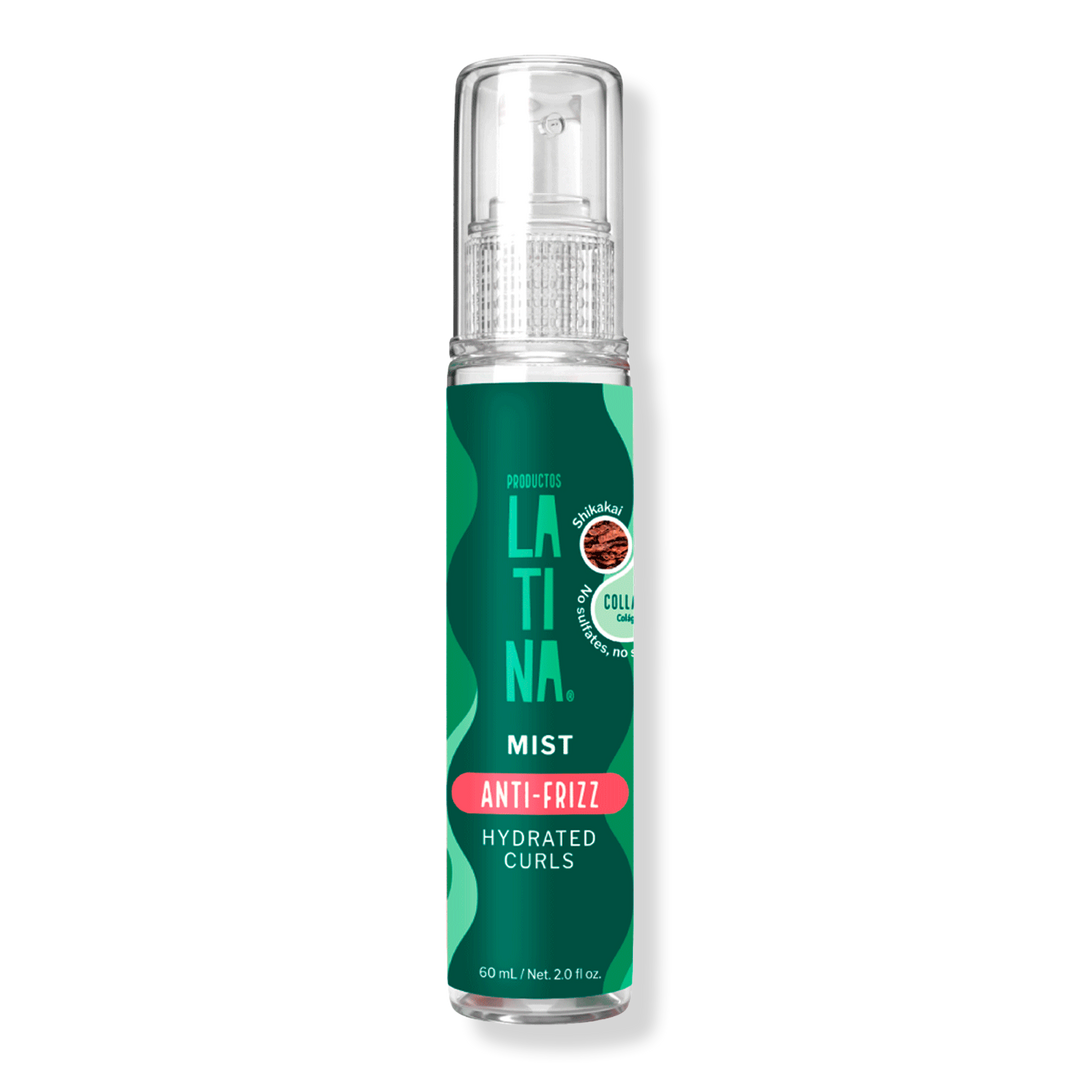
Productos LATINA Mist Anti-Frizz
A hydrating mist formulated with collagen and shikakai to define and refresh curls, providing shine and frizz control. Free from sulfates and silicones.
Sulfate-free
Paraben-free
Silicone-free
Frizz
Curly
Wavy
Optimized for Your Environment & Lifestyle
Nykaa
In stock
Recommended

Productos LATINA Mist Anti-Frizz
Productos LATINA
productos-latina-mist-anti-frizz
Hair Mist
10365007069477
Morning or Evening?
How often will you use this product?
Notes


Secure payment protection
Your Biodata Compatibility Analysis
Based on your 6 hair health indices and environmental factors
Poor Match
Significant incompatibilities
Growth Cycle Health Index
Hair Match
Hair Health Index Alignment
Optimal for OSI, SSI, DI, HSI
Ingredient Efficacy
Matching Ingredient Score
Environment Compatibility
Current UV, Air Quality & Humidity
Why This Works for Your Specific Profile
Damage Index:
Water Quality:
Hair:
Active Lifestyle:
Your Hair Profile Integration
Your Hair Archetype

Density Level

Washing Frequency

Shedding Level

Oil Level
Your Hair Health Indices
Oil Secretion (OSI)
Very low oil production
Scalp Sensitivity (SSI)
Very low sensitivity
Growth Rate (CMR)
Poor metabolism rate
Damage Index (DI)
Minimal damage
Hair Strength (HSI)
Very weak strength
Softness Index (SI)
Significant improvement needed
Water & Environmental Integration

Water:


Expected Results & Timeline
Key Highlights

What is it?
Hair Mist with 3 key ingredients

Who Is It For
Adults, All genders

Budget
Rs. 979.57 - Rs. 1,959.14

Timeline
Instant
Why You’ll Love It

What Does It Help With?
Frizz, Dryness, Dullness

Best for
Curly and wavy hair types seeking frizz control and hydration

Features
Hydrates, Defines curls, Adds shine, Frizz control, Free from sulfates and silicones

Checks
Sustainable Packaging
Ingredients Overview
Ingredients List
Deionized Water, Polyquaternium-6, Hydroxyethyl Urea, PEG-6 Caprylic/Capric Glycerides, PPG-5-Ceteth-20, Aqua (and) Glycerin (and) Acacia Concinna Fruit Extract (Shikakai) Water (and) Acetamide MEA (and) Hydrolyzed Keratin (and) Panthenol (and) Glycerin (and) Sorbitol (and) Sodium Cocoyl Collagen Amino Acids (and) Cocoyl Sarcosine (and) Wheat Germ Acid (and) Triticum Vulgare Germ Oil (and) Polysorbate 20 (and) Linoleic Acid (and) Linolenic Acid (and) Tocopherol (and) Simmondsia Chinensis (Jojoba) Seed Oil (and) Tocopheryl Acetate (and) Polysorbate 80 (and) Hydrolyzed Glycosaminoglycans, Isopentyldiol, Quaternium-22, Phenoxyethanol, Caprylyl Glycol, Decylene Glycol, Tetrasodium EDTA, Green 5 (CI 61570), Yellow 5 (CI 19140), Choco Orange Fragrance.
Key Ingredients
Shikakai, Collagen, Vitamin C
Ingredients Details
Caprylyl Glycol
Common Name(s): 1,2-octanediol,octanediol,sensiva sc 50
CAS Number: 1117-86-8
DESCRIPTION
What It Does: Provides the most potent antimicrobial diol activity alongside skin feel enhancement.
Why It's Used: Premium antimicrobial diol — caprylyl glycol's c8 chain provides the strongest membrane-disrupting antimicrobial activity of common diol preservative boosters with unique skin-feel enhancement.
How It Works: C8 1,2-diol: c8 chain length provides strongest bacterial and fungal membrane disruption of common diols. emollient skin feel improvement from c8 chain length interaction with skin surface. active at lower concentrations than shorter-chain diols. synergistic with ethylhexylglycerin.
Typically Found In: Natural preservation systems,skin feel enhancement
TECHNICAL DETAILS
Primary Category: Functional ingredient – antimicrobial humectant
Secondary Functions: Skin conditioning
Application Areas:

Facial Skincare

Body Care
Hair Care
Beard Care
Color Cosmetics (Makeup)
Dietary/Oral Supplements
Typical Concentration Range: 0.1%–1%
SOURCING & ETHICS
Vegan Status: Yes – synthetic
Halal Status: Yes
Source Notes: Commercially produced for cosmetic use. verify vegan/halal status with supplier.
SKIN COMPATIBILITY
Irritancy Rating: 1/5 – very low
Comedogenicity Rating: 0/5 – non-comedogenic
Sensitivity Concerns: Well-tolerated by most skin types.
Safe for Sensitive Skin: Yes
SAFETY & COMPATIBILITY
Safety Profile: Good safety profile at recommended concentrations. ewg score: 1–2.
Works Well With: Standard skincare actives
Avoid Combining With: No known significant incompatibilities
SCIENTIFIC NOTE
Caprylyl glycol's antimicrobial potency follows the chain-length dependent membrane activity of fatty acids: c8 is the optimal chain length for membrane disruption (same as caprylic acid's antimicrobial optimum), providing maximum membrane integration without the skin sensitisation associated with longer chain lengths. this chain-length pharmacophore relationship is why c8 > c6 > c5 in diol antimicrobial potency despite identical head group chemistry.
Last Verified: Cosing database,schülke sensiva sc 50 technical data,cir safety assessment
Primary Sources: 2026-03-12
Collagen
Common Name(s): Collagen
DESCRIPTION
What It Does: Delivers targeted skin-conditioning or bioactive benefits through a specific mechanism of action suited to the formulation's intended purpose.
Why It's Used: Specialty actives address specific skin concerns through targeted molecular mechanisms, providing efficacy beyond what base formulation ingredients alone can achieve.
How It Works: The bioactive compound interacts with specific molecular targets in skin cells or the extracellular matrix — enzymes, receptors, structural proteins, or signaling molecules — triggering beneficial biological responses.
Typically Found In: Serums,treatments,moisturizers,specialty products
TECHNICAL DETAILS
Primary Category: Specialty actives
Secondary Functions: Skin-conditioning,anti-aging
Application Areas:
Facial Skincare
Body Care
Hair Care
Beard Care
Color Cosmetics (Makeup)
Dietary/Oral Supplements
Typical Concentration Range: 0.01–5%
SOURCING & ETHICS
Vegan Status: No
Halal Status: Conditional
Source Notes: Contains animal-derived components (collagen...); not suitable for vegan formulations.
SKIN COMPATIBILITY
Irritancy Rating: 1
Comedogenicity Rating: 0
Sensitivity Concerns: Low sensitization potential at recommended use concentrations.
Safe for Sensitive Skin: Conditional
SAFETY & COMPATIBILITY
Safety Profile: Well-characterized cosmetic ingredient with established safety profile. generally non-irritating at typical use concentrations. suitable for leave-on and rinse-off cosmetics.
Works Well With: Niacinamide,hyaluronic acid,vitamin c,peptides
Avoid Combining With: Incompatible with oxidizing agents; check ph stability
SCIENTIFIC NOTE
Specialty actives typically work through enzyme inhibition (e.g., tyrosinase inhibition for brightening, mmp inhibition for anti-aging), receptor activation (e.g., retinoid receptors, ppar-γ for barrier genes), or transcription factor modulation (e.g., nrf2 for antioxidant gene upregulation). structure-activity relationships determine potency and selectivity.
Last Verified: Cosing eu database; pcpc cosmetic ingredient safety reviews; ingredient-specific safety and efficacy literature
Primary Sources: 2025-01-15
Decylene Glycol
Common Name(s): Decylene glycol,cosmetic active,functional ingredient
CAS Number: N/a
DESCRIPTION
What It Does: Delivers characteristic cosmetic function at recommended use concentration.
Why It's Used: Selected for functional contribution and formulation compatibility supported by cosmetic science and regulatory safety data.
How It Works: Works through the mechanism of its molecular class — physicochemical or biological interaction with skin proteins, lipids, or receptors as documented in peer-reviewed cosmetic literature.
Typically Found In: Skin care formulations
TECHNICAL DETAILS
Primary Category: Active ingredient – cosmetic active
Secondary Functions: Skin conditioning
Application Areas:
Facial Skincare
Body Care
Hair Care
Beard Care
Color Cosmetics (Makeup)
Dietary/Oral Supplements
Typical Concentration Range: 0.1%–10%
SOURCING & ETHICS
Vegan Status: Conditional
Halal Status: Yes
Source Notes: Commercially produced for cosmetic use. verify vegan/halal status with supplier.
SKIN COMPATIBILITY
Irritancy Rating: 1/5 – very low
Comedogenicity Rating: 0/5 – non-comedogenic
Sensitivity Concerns: Well-tolerated by most skin types.
Safe for Sensitive Skin: Yes
SAFETY & COMPATIBILITY
Safety Profile: Good safety profile at recommended concentrations. ewg score: 1–2.
Works Well With: Standard skincare actives
Avoid Combining With: No known significant incompatibilities
SCIENTIFIC NOTE
Decylene glycol has an established safety and efficacy profile within the cosmetic regulatory framework at standard use concentrations.
Last Verified: Cosing database,decylene glycol technical literature
Primary Sources: 2026-03-12
Hydroxyethyl Urea
Common Name(s): 2-hydroxyethylurea,hydrovance
CAS Number: 2078-71-9
DESCRIPTION
What It Does: Provides exceptional moisture retention with mild keratolytic action softening rough, dry skin.
Why It's Used: Used as a gentler, more formulation-stable alternative to urea in moisturizers and treatments where urea's irritation or formulation limitations are concerns.
How It Works: The hydroxyethyl group improves aqueous stability vs urea while maintaining hydrogen bond donation/acceptance for water retention. mild keratolytic activity from urea moiety softens stratum corneum without significant irritation.
Typically Found In: Intensive moisturizers,keratolytic treatments,body lotions,foot care
TECHNICAL DETAILS
Primary Category: Functional ingredient – urea derivative humectant
Secondary Functions: Keratolytic,superior humectant,skin softening
Application Areas:
Facial Skincare
Body Care
Hair Care
Beard Care
Color Cosmetics (Makeup)
Dietary/Oral Supplements
Typical Concentration Range: 2%–10%
SOURCING & ETHICS
Vegan Status: Yes – synthetic
Halal Status: Yes
Source Notes: Synthetic or naturally derived. excellent aqueous solubility.
SKIN COMPATIBILITY
Irritancy Rating: 1/5 – very low
Comedogenicity Rating: 0/5 – non-comedogenic
Sensitivity Concerns: Non-irritating; suitable for all skin types.
Safe for Sensitive Skin: Yes
SAFETY & COMPATIBILITY
Safety Profile: Excellent safety profile. better tolerated than high-concentration urea. ewg score: 1.
Works Well With: Ceramides,emollients,occlusives,glycerin,hyaluronic acid
Avoid Combining With: No significant incompatibilities
SCIENTIFIC NOTE
Hydroxyethyl modification significantly improves urea's aqueous stability (preventing hydrolysis to ammonia and co2) while the urea moiety retains hydrogen bond-forming capacity for superior water retention. superior formulation stability vs urea at equivalent concentrations.
Last Verified: Cosing database,cir safety assessment,loden urea review
Primary Sources: 2026-03-12
Personalized Usage Instructions
How to Use
Step 1
Apply the desired amount to your hair to rehydrate it and refresh your hairstyle
Step 2
Store in a cool, dry place
Step 3
Avoid contact with eyes
Step 4
Discontinue use if irritation occurs
Step 5
Do not ingest
Step 1
Keep out of reach of children
Medical Chemicals

Protein/Moisture
- Moisture
pH Level
- Acidic

Porosity Taget
- Normal Porosity
Customized for Your Profile
Scalp Condtions
Sensitive Scalp, Dry Scalp
Climate Suitability
Humid, Dry
Clinical Claims
None
Frequency
Apply the desired amount to your hair to rehydrate it and refresh your hairstyle. Store in a cool, dry place. Avoid contact with eyes. Discontinue use if irritation occurs. Do not ingest. Keep out of reach of children.
Product Information

Sustainable Packaging
