

Peach & Lily
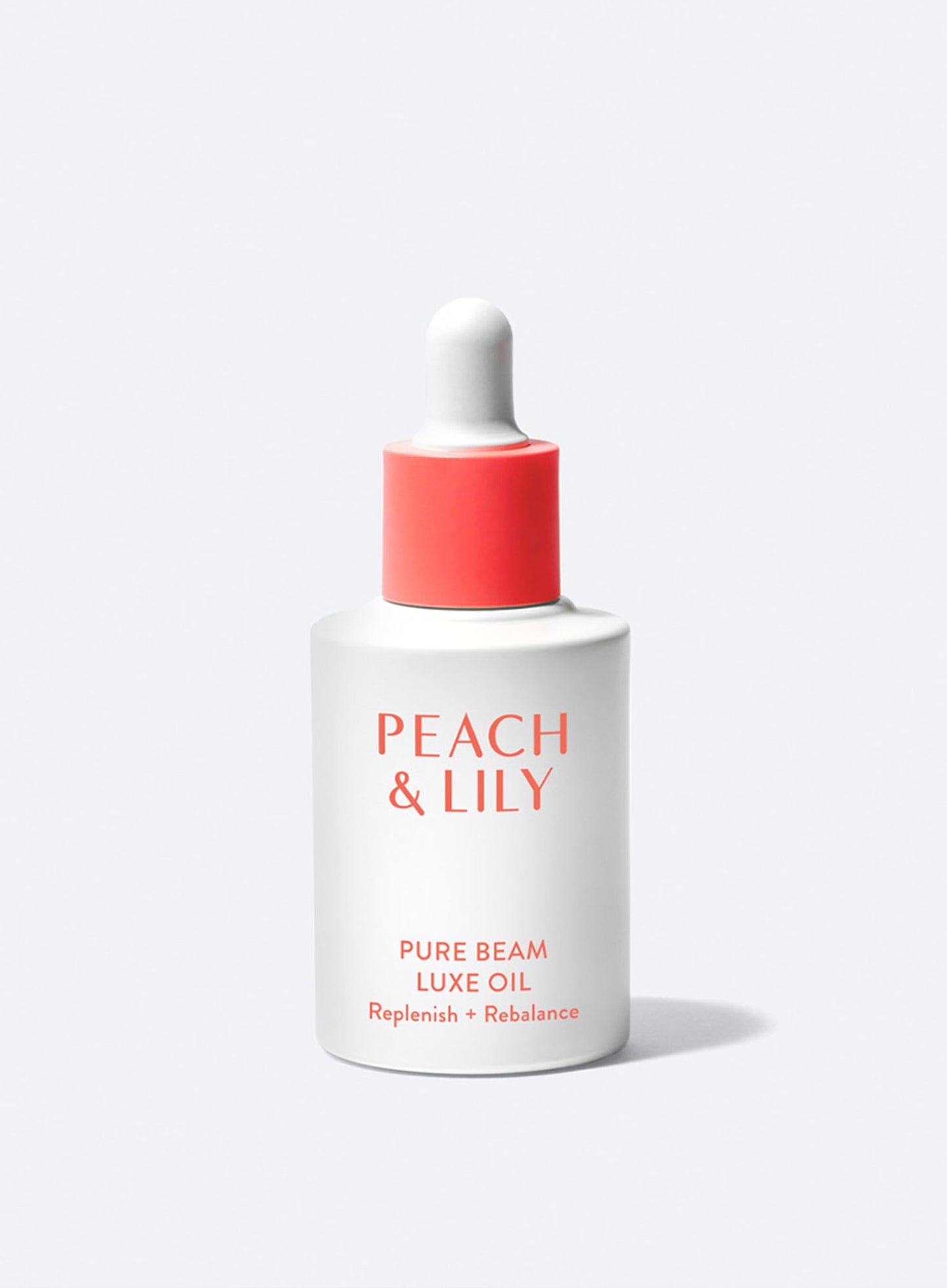
Pure Beam Luxe Oil

Pure Beam Luxe Oil
Peach & Lily
pure-beam-luxe-oil
Face Oil
9784821350693
Morning or Evening?
How often will you use this product?
Notes


Highlights
WHAT IS IT?
100% natural plant-based facial oil
FEATURES
Cold-pressed oil treatment, hydrates, nourishes, fights free-radical damage, supports skin's protective lipid barrier
BEST FOR
combination
CHECKS
Gluten-free
Who Is It For?
All Skin TypesWhat Does It Help With?
Hydration Anti-aging Acne Dryness Dullness Firmness Oiliness Redness SensitivityBudget
Mid-range ($30-$75)How To Use
Which routine should it be used in?
Instructions:
Key Information


What Peach & Lily Says
Product Description:
A luxurious glow for all skin types. Indulge in our luxe, cold-pressed oil treatment for soft, supple skin. A 100% natural, plant-based blend of grapeseed, jojoba seed, and sea buckthorn oil powerfully hydrates, nourishes, and fights signs of free-radical damage. Rich in vital fatty acids and antioxidants, it supports skin's protective lipid barrier for a balanced, radiant look.
About the Brand:
Ingredients Overview
Ingredients List
Simmondsia-Chinensis-Jojoba-Seed-Oil,Squalane,Tocopherol,Vitis-Vinifera-Grape-Seed-Oil,Camellia-Japonica-Seed-Oil,Hippophae-Rhamnoides-Oil,Olus-Oil
Key Ingredients
Jojoba Seed Oil, Squalane, Grapeseed Oil, Sea Buckthorn Oil
Ingredients Details
Camellia Japonica Seed Oil
Common Name(s): Camellia japonica seed oil
DESCRIPTION
What It Does: Nourishes and softens skin through its balanced fatty acid profile, while antioxidant compounds protect against oxidative skin damage.
Why It's Used: Plant oils provide physiologically compatible lipid structures that integrate into the skin barrier and deliver fat-soluble antioxidants directly to skin cells.
How It Works: Fatty acids integrate into stratum corneum lipid lamellae, reinforcing the lipid barrier. antioxidants (tocopherols, carotenoids, polyphenols) neutralize ros through electron donation or singlet oxygen quenching.
Typically Found In: Face oils,serums,moisturizers,hair treatments,body oils
TECHNICAL DETAILS
Primary Category: Plant oils
Secondary Functions: Emollient,antioxidant
Application Areas:

Facial Skincare
Body Care
Hair Care

Beard Care
Color Cosmetics (Makeup)
Dietary/Oral Supplements
Typical Concentration Range: 0.5–30%
SOURCING & ETHICS
Vegan Status: Yes
Halal Status: Yes
Source Notes: Cold-pressed or solvent-extracted plant oil; no animal components.
SKIN COMPATIBILITY
Irritancy Rating: 1
Comedogenicity Rating: 2
Sensitivity Concerns: Low sensitization potential at recommended use concentrations.
Safe for Sensitive Skin: Yes
SAFETY & COMPATIBILITY
Safety Profile: Well-characterized cosmetic ingredient with established safety profile. generally non-irritating at typical use concentrations. suitable for leave-on and rinse-off cosmetics.
Works Well With: Vitamin e,ceramides,other plant oils,squalane
Avoid Combining With: Strong oxidizers (accelerate rancidity)
SCIENTIFIC NOTE
Vegetable oils are triglyceride matrices where the fatty acid composition determines skin compatibility, barrier function, and comedogenicity. oleic acid-rich oils (>60%) soften barrier lipids and enhance penetration; linoleic acid-rich oils reinforce ceramide-poor stratum corneum; saturated fatty acid-rich oils provide occlusion without skin penetration.
Last Verified: Cosing eu database; pcpc cosmetic ingredient safety reviews; aocs plant oil composition databases; fatty acid pharmacology reviews
Primary Sources: 2025-01-15
Hippophae Rhamnoides Oil
Common Name(s): Sea buckthorn oil,sea buckthorn berry oil,hippophaë rhamnoides fruit oil
DESCRIPTION
What It Does: Intensely nourishes and repairs skin with one of nature's richest sources of omega-7 and carotenoids.
Why It's Used: Sea buckthorn berry oil is extraordinary: the pulp oil (distinct from seed oil) contains the highest natural concentration of palmitoleic acid (c16:1, omega-7, 25-40%), beta-carotene (~300 mg/100g), and vitamin e tocotrienols of any plant source.
How It Works: Palmitoleic acid (c16:1 omega-7, 25-40%) mimics skin's natural sebum fatty acids; beta-carotene provides potent antioxidant protection; tocotrienols and tocopherols provide vitamin e activity; lycopene, zeaxanthin, and other carotenoids provide additional antioxidant defense.
Typically Found In: Anti-aging serums,skin repair products,carotenoid-rich formulas,premium natural skin care
TECHNICAL DETAILS
Primary Category: Active ingredient – botanical
Secondary Functions: Emollient,antioxidant,skin repair,anti-aging
Application Areas:
Facial Skincare
Body Care
Hair Care
Beard Care
Color Cosmetics (Makeup)
Dietary/Oral Supplements
Typical Concentration Range: 0.1%–5%
SOURCING & ETHICS
Vegan Status: Yes
Halal Status: Yes
Source Notes: Cold-pressed from hippophaë rhamnoides berries; himalayan/siberian native; natural plant origin.
SKIN COMPATIBILITY
Irritancy Rating: 1/5 – very low
Comedogenicity Rating: 1/5 – low
Sensitivity Concerns: Generally well tolerated; may impart orange/yellow color from carotenoids at higher concentrations.
Safe for Sensitive Skin: Yes
SAFETY & COMPATIBILITY
Safety Profile: Excellent safety profile. ewg score: 1.
Works Well With: Rosehip oil,vitamin c,vitamin e,other carotenoid oils
Avoid Combining With: High carotenoid content causes intense orange color — use at low concentrations to avoid discoloration
SCIENTIFIC NOTE
Sea buckthorn pulp oil is among the world's most nutritionally dense plant oils; beta-carotene content (~300 mg/100g) is among the highest of any natural oil; distinctive omega-7 (palmitoleic) profile supports skin repair; known as 'liquid gold' in natural cosmetics.
Last Verified: Cosing database,inci dictionary
Primary Sources: 2026-03-28
Olus Oil
Common Name(s): Olus oil,olus oil,botanical oil/lipid,emollient efa source
CAS Number: N/a
DESCRIPTION
What It Does: Provides emollient conditioning from sc-compatible fatty acids and sterols with the lipid profile of olus oil determining barrier repair and skin feel properties.
Why It's Used: Olus oil is selected for the distinctive lipid profile of olus oil — the specific efa and sterol composition determines spreading speed, occlusion level, and sc barrier integration properties unique to this botanical source.
How It Works: Botanical lipid: fatty acid triglycerides → sc barrier emolliency; phytosterols → sc barrier lipid integration; efa → ceramide precursor; sterol esters → enhanced sc penetration.
Typically Found In: Skin care,barrier repair
TECHNICAL DETAILS
Primary Category: Active ingredient – antioxidant
Secondary Functions: Free radical scavenging,anti-aging
Application Areas:
Facial Skincare
Body Care
Hair Care
Beard Care
Color Cosmetics (Makeup)
Dietary/Oral Supplements
Typical Concentration Range: 0.5%–30%
SOURCING & ETHICS
Vegan Status: Conditional
Halal Status: Conditional
Source Notes: Plant-derived extract or synthetic.
SKIN COMPATIBILITY
Irritancy Rating: 1/5 – very low
Comedogenicity Rating: 0/5 – non-comedogenic
Sensitivity Concerns: Non-irritating; well-tolerated.
Safe for Sensitive Skin: Yes
SAFETY & COMPATIBILITY
Safety Profile: Excellent safety profile. ewg score: 1.
Works Well With: Vitamin c,vitamin e,ferulic acid,spf,other antioxidants
Avoid Combining With: No significant incompatibilities
SCIENTIFIC NOTE
Efa and sterol content should be verified — oxidative rancidity raises free radical load rather than reducing it.
Last Verified: Cosing database,olus oil botanical lipid review
Primary Sources: 2026-03-22
Simmondsia Chinensis (jojoba) Seed Oil
Common Name(s): Simmondsia chinensis (jojoba) seed oil,botanical oil,phytochemical active
CAS Number: N/a
DESCRIPTION
What It Does: Provides antioxidant protection from reactive oxygen species, reduces inflammatory cytokine production in skin, and conditions skin through the plant's phytochemical complex.
Why It's Used: Natural origin narrative, traditional use heritage, and multi-functional phytochemical profile supporting concurrent skin care claims from one ingredient.
How It Works: Polyphenols, terpenoids, and alkaloids scavenge ros via h• donation, inhibit nf-kb or cox-2 inflammatory pathways, and interact with skin surface proteins for conditioning.
Typically Found In: Botanical skin care,natural products
TECHNICAL DETAILS
Primary Category: Active ingredient – antioxidant
Secondary Functions: Free radical scavenging,anti-aging
Application Areas:
Facial Skincare
Body Care
Hair Care
Beard Care
Color Cosmetics (Makeup)
Dietary/Oral Supplements
Typical Concentration Range: 0.1%–10%
SOURCING & ETHICS
Vegan Status: Conditional
Halal Status: Yes
Source Notes: Plant-derived extract or synthetic.
SKIN COMPATIBILITY
Irritancy Rating: 1/5 – very low
Comedogenicity Rating: 0/5 – non-comedogenic
Sensitivity Concerns: Non-irritating; well-tolerated.
Safe for Sensitive Skin: Yes
SAFETY & COMPATIBILITY
Safety Profile: Excellent safety profile. ewg score: 1.
Works Well With: Vitamin c,vitamin e,ferulic acid,spf,other antioxidants
Avoid Combining With: No significant incompatibilities
SCIENTIFIC NOTE
Plant secondary metabolites evolved as photoprotectants and antimicrobials — mechanisms directly applicable to cosmetic antioxidant and anti-inflammatory activity in human skin.
Last Verified: Cosing database,simmondsia chinensis (jojoba) seed botanical review
Primary Sources: 2026-03-12
