

Pure Fiji
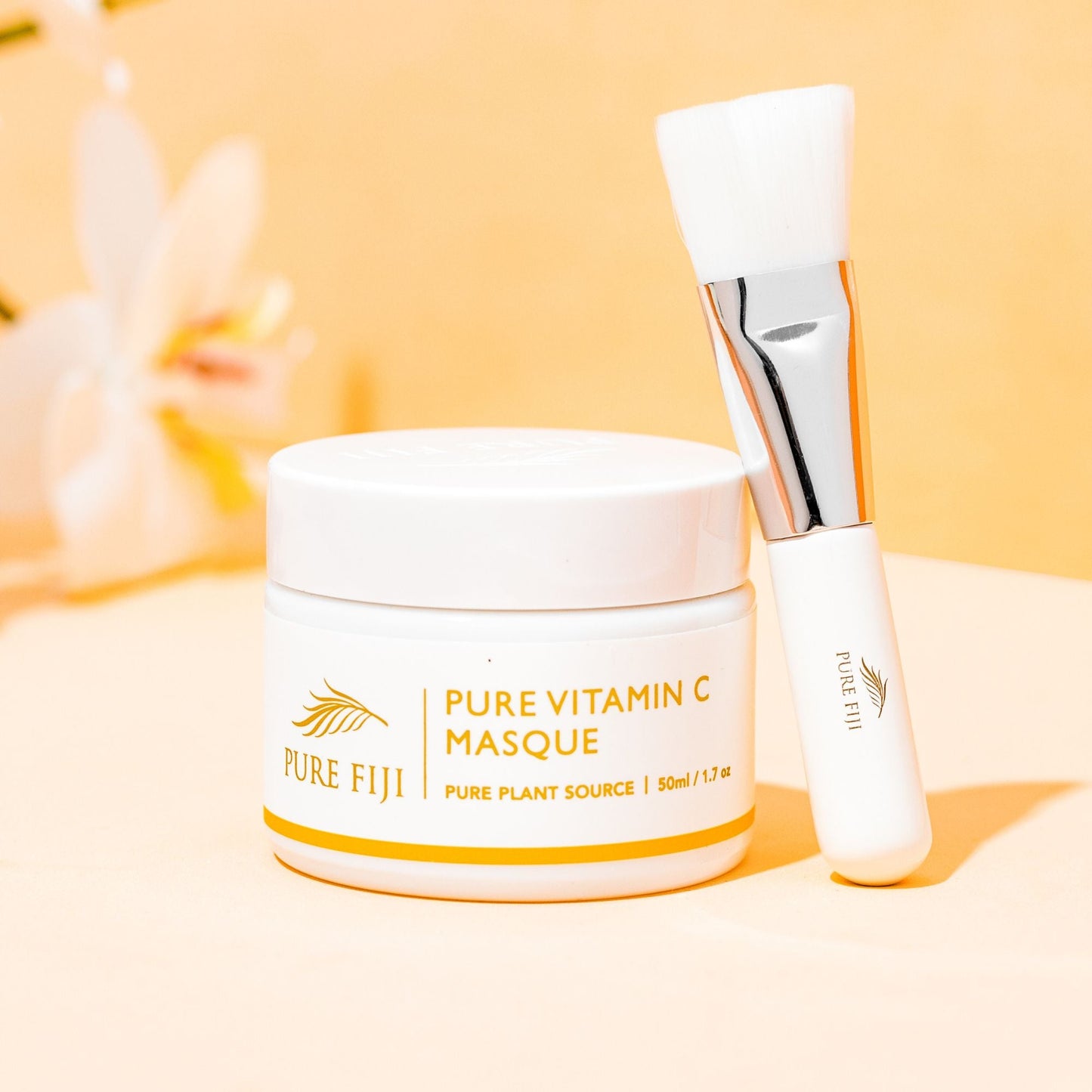
Pure Vitamin C Masque (1.7oz/50ml)

Pure Vitamin C Masque (1.7oz/50ml)
Pure Fiji
pure-vitamin-c-masque-1-7oz-50ml
Face Mask
9706861429029
Morning or Evening?
How often will you use this product?
Notes


Highlights
WHAT IS IT?
Vitamin C face mask
FEATURES
Rich in antioxidants, strengthens collagen, protects skin, increases luminosity and radiance, minimizes appearance of pores and fine lines
BEST FOR
All skin types
CHECKS
Free of parabens, phthalates, phenoxyethanol, sulfates, artifical colors, synthetics, PEGs, GMOs
Who Is It For?
Adults Both Women And MenWhat Does It Help With?
Brightening Anti-aging Protecting SkinBudget
Mid-rangeHow To Use
Which routine should it be used in?
Instructions:
Key Information


What Pure Fiji Says
Product Description:
Get glowing with this powerful Vitamin C treatment masque which is supercharged with pure Vitamin C, Kakadu plum and Lime extracts. These Vitamin C powerhouses are rich in antioxidants strengthening collagen and protecting skin while dramatically increasing luminosity and radiance. The appearance of pores, fine lines and wrinkles are minimized and skin is left smooth and glowing.
About the Brand:
Ingredients Overview
Ingredients List
Water (Aqua), Glycerine, Ascorbyl Tetraisopalmitate (Vitamin C), Terminalia Ferdinandiana (Kakaduplum) Fruit Extract, Citrus Aurantifolia (Lime) Fruit Extract, Terminalia Ferdinandiana (Kakaduplum) Oil, Frangrance, Cocos nucifera (coconut) Oil, Carbomer, Phenoxyethanol, Chlorphenesin, Caprylyl Glycol, Alcohol
Key Ingredients
Vitamin C, Kakadu plum extract, Lime extract, Coconut oil
Ingredients Details
Ascorbyl Tetraisopalmitate Vitamin C
Common Name(s): Ascorbyl tetraisopalmitate vitamin c
DESCRIPTION
What It Does: Neutralizes free radicals, supports collagen biosynthesis, and inhibits melanin overproduction for brightened, protected, and younger-looking skin.
Why It's Used: Vitamins support fundamental enzymatic and antioxidant processes in skin cells; topical delivery addresses localized deficiencies and enhances concentrations beyond systemic levels.
How It Works: The vitamin pharmacophore donates electrons to free radicals, chelates metal ion pro-oxidants, and serves as a cofactor for skin enzymes (e.g., prolyl hydroxylase for collagen synthesis), providing multi-mechanism skin protection.
Typically Found In: Serums,moisturizers,eye creams,sunscreens
TECHNICAL DETAILS
Primary Category: Vitamin derivatives
Secondary Functions: Antioxidant,brightening
Application Areas:

Facial Skincare

Body Care
Hair Care
Beard Care
Color Cosmetics (Makeup)
Dietary/Oral Supplements
Typical Concentration Range: 0.1–20%
SOURCING & ETHICS
Vegan Status: Yes
Halal Status: Yes
Source Notes: Synthetic vitamin derivative; no animal components.
SKIN COMPATIBILITY
Irritancy Rating: 1899-12-31 00:00:00 -0800
Sensitivity Concerns: Low sensitization potential at recommended use concentrations.
Safe for Sensitive Skin: Yes
SAFETY & COMPATIBILITY
Safety Profile: Well-characterized cosmetic ingredient with established safety profile. generally non-irritating at typical use concentrations. suitable for leave-on and rinse-off cosmetics.
Works Well With: Other antioxidants,ferulic acid,hyaluronic acid
Avoid Combining With: Incompatible oxidizing agents; check ph stability
SCIENTIFIC NOTE
Vitamin derivatives in cosmetics function as prodrugs: esterase enzymes in skin cleave the ester bond to release the free vitamin acid or alcohol. the rate of release depends on the ester chain length and branching (log p), with shorter chain esters hydrolyzing faster. free vitamin concentration in skin determines efficacy, making ester hydrolysis rate a critical formulation parameter.
Last Verified: Cosing eu database; pcpc cosmetic ingredient safety reviews; ingredient-specific safety and efficacy literature
Primary Sources: 2025-01-15
Carbomer
Common Name(s): Carbopol,polyacrylic acid,carboxyvinyl polymer
DESCRIPTION
What It Does: Provides transparent gel textures and thickening at very low concentrations via ph-responsive swelling.
Why It's Used: The most widely used gel thickener – provides crystal-clear, stable gels at concentrations as low as 0.1-0.5% with ph-controlled viscosity.
How It Works: Highly crosslinked polyacrylic acid remains tightly coiled at acidic ph. neutralization with naoh or triethanolamine ionizes carboxylic groups causing electrostatic repulsion that unfolds and swells the polymer coils, dramatically increasing viscosity. concentration-dependent thickening.
Typically Found In: Gels,serums,emulsions,sunscreens
TECHNICAL DETAILS
Primary Category: Functional ingredient – polyacrylic acid thickener
Secondary Functions: Skin conditioning
Application Areas:
Facial Skincare
Body Care
Hair Care
Beard Care
Color Cosmetics (Makeup)
Dietary/Oral Supplements
Typical Concentration Range: 0.1%–2%
SOURCING & ETHICS
Vegan Status: Yes – synthetic
Halal Status: Yes
Source Notes: Commercially produced for cosmetic use. verify vegan/halal status with supplier.
SKIN COMPATIBILITY
Irritancy Rating: 1/5 – very low
Comedogenicity Rating: 0/5 – non-comedogenic
Sensitivity Concerns: Well-tolerated by most skin types.
Safe for Sensitive Skin: Yes
SAFETY & COMPATIBILITY
Safety Profile: Good safety profile at recommended concentrations. ewg score: 1–2.
Works Well With: Standard skincare actives
Avoid Combining With: No known significant incompatibilities
SCIENTIFIC NOTE
Carbomer's ph-responsive swelling mechanism provides an elegant formulation control tool: a neutralized gel can be liquefied by ph reduction (adding acid) and re-thickened by reneutralization. this reversible rheology control allows two-phase products that mix on application without the need for mechanical emulsification.
Last Verified: Cosing database,cir safety assessment
Primary Sources: 2026-03-12
Citrus Aurantifolia Lime Fruit Extract
Common Name(s): Citrus aurantifolia lime fruit extract extract
DESCRIPTION
What It Does: Provides antioxidant protection, soothing anti-inflammatory effects, and skin-conditioning benefits through plant-derived polyphenols and phytochemicals.
Why It's Used: Plant extracts concentrate bioactive phytochemicals evolved for environmental protection — uv, microbial, and oxidative stressors — that translate to skin benefits.
How It Works: Polyphenols (flavonoids, phenolic acids) inhibit nf-κb-mediated inflammatory signaling, scavenge reactive oxygen species through electron donation, and chelate pro-oxidant metal ions to reduce oxidative skin damage.
Typically Found In: Serums,toners,moisturizers,masks,essences
TECHNICAL DETAILS
Primary Category: Botanical extracts
Secondary Functions: Antioxidant,anti-inflammatory
Application Areas:
Facial Skincare
Body Care
Hair Care
Beard Care
Color Cosmetics (Makeup)
Dietary/Oral Supplements
Typical Concentration Range: 0.1–10%
SOURCING & ETHICS
Vegan Status: Yes
Halal Status: Yes
Source Notes: Plant-derived extract; no animal components.
SKIN COMPATIBILITY
Irritancy Rating: 1899-12-31 00:00:00 -0800
Sensitivity Concerns: Low sensitization potential at recommended use concentrations.
Safe for Sensitive Skin: Yes
SAFETY & COMPATIBILITY
Safety Profile: Well-characterized cosmetic ingredient with established safety profile. generally non-irritating at typical use concentrations. suitable for leave-on and rinse-off cosmetics.
Works Well With: Niacinamide,hyaluronic acid,vitamin c,ceramides
Avoid Combining With: Strong oxidizing agents
SCIENTIFIC NOTE
Plant secondary metabolites (flavonoids, terpenes, phenolic acids) are biosynthesized as defense compounds against uv, herbivores, and pathogens. their anti-inflammatory activity typically derives from competitive inhibition of cox-2 and 5-lox enzymes (ic50 1–50 µm), while antioxidant activity involves single electron transfer (set) and hydrogen atom transfer (hat) mechanisms with structure-dependent rate constants.
Last Verified: Cosing eu database; pcpc cosmetic ingredient safety reviews; phytochemical and ethnobotanical literature
Primary Sources: 2025-01-15
Cocos Nucifera (coconut) Oil
Common Name(s): Cocos nucifera (coconut) oil,cosmetic active,functional ingredient
CAS Number: N/a
DESCRIPTION
What It Does: Delivers characteristic cosmetic function — skin conditioning, protection, preservation, or active biological benefit — at recommended use concentration.
Why It's Used: Selected for its functional contribution and formulation compatibility — supported by cosmetic science literature and regulatory safety assessment.
How It Works: Works through the mechanism of its molecular class — physicochemical interaction with the formulation or biological interaction with skin proteins, lipids, or receptors as documented in peer-reviewed literature.
Typically Found In: Skin care formulations
TECHNICAL DETAILS
Primary Category: Active ingredient – cosmetic active
Secondary Functions: Skin conditioning
Application Areas:
Facial Skincare
Body Care
Hair Care
Beard Care
Color Cosmetics (Makeup)
Dietary/Oral Supplements
Typical Concentration Range: 0.1%–10%
SOURCING & ETHICS
Vegan Status: Conditional
Halal Status: Yes
Source Notes: Commercially produced for cosmetic use. verify vegan/halal status with supplier.
SKIN COMPATIBILITY
Irritancy Rating: 1/5 – very low
Comedogenicity Rating: 0/5 – non-comedogenic
Sensitivity Concerns: Well-tolerated by most skin types.
Safe for Sensitive Skin: Yes
SAFETY & COMPATIBILITY
Safety Profile: Good safety profile at recommended concentrations. ewg score: 1–2.
Works Well With: Standard skincare actives
Avoid Combining With: No known significant incompatibilities
SCIENTIFIC NOTE
Cocos nucifera (coconut) oil delivers documented functional benefit with an established safety profile within the cosmetic regulatory framework (cosing eu, cir usa).
Last Verified: Cosing database,cocos nucifera (coconut) oil technical literature
Primary Sources: 2026-03-12
