

Pureology
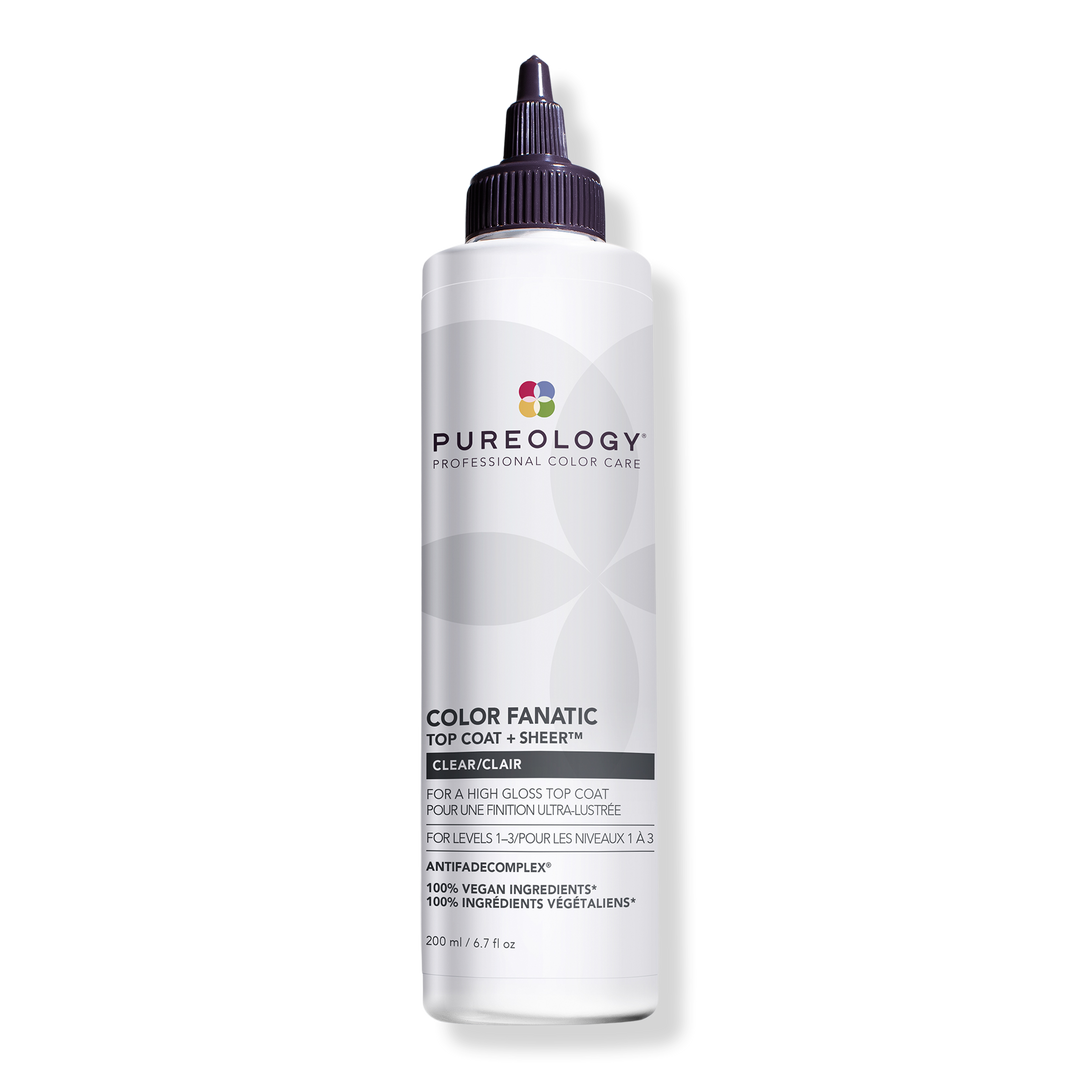
Pureology Color Fanatic Top Coat Clear Hair Gloss
A high-gloss clear topcoat that restores shine and vibrancy, leaving hair soft and silky for beautifully reflective hair color.
Sulfate-free
Paraben-free
Color-safe
Vegan
Dullness
Color Fading
Optimized for Your Environment & Lifestyle
Nykaa
In stock
Recommended

Pureology Color Fanatic Top Coat Clear Hair Gloss
Pureology
pureology-color-fanatic-top-coat-clear-hair-gloss
Hair Gloss
10355416695077
Morning or Evening?
How often will you use this product?
Notes


Secure payment protection
Your Biodata Compatibility Analysis
Based on your 6 hair health indices and environmental factors
Poor Match
Significant incompatibilities
Growth Cycle Health Index
Hair Match
Hair Health Index Alignment
Optimal for OSI, SSI, DI, HSI
Ingredient Efficacy
Matching Ingredient Score
Environment Compatibility
Current UV, Air Quality & Humidity
Why This Works for Your Specific Profile
Damage Index:
Very healthy or severely damaged hair falls outside optimal treatment parameters
Water Quality:
No curl pattern-specific conflicts
Hair:
No porosity-specific conflicts
Active Lifestyle:
Activity levels outside optimal range affect product performance and maintenance requirements
Your Hair Profile Integration
Your Hair Archetype

Density Level

Washing Frequency

Shedding Level

Oil Level
Your Hair Health Indices
Oil Secretion (OSI)
Very low oil production
Scalp Sensitivity (SSI)
Very low sensitivity
Growth Rate (CMR)
Poor metabolism rate
Damage Index (DI)
Minimal damage
Hair Strength (HSI)
Very weak strength
Softness Index (SI)
Significant improvement needed
Water & Environmental Integration

Water:


Expected Results & Timeline
Key Highlights

What is it?
Hair gloss with 21 ingredients

Who Is It For
Adults

Budget
Rs. 3,521.96 - Rs. 7,043.92

Timeline
Immediate results in 5 minutes
Why You’ll Love It

What Does It Help With?
Dullness, Color Fading

Best for
Color-treated hair

Features
Adds shine & reflective finish, Softens hair, Restores color vibrancy

Checks
Vegan, Sulfate-free, Paraben-free
Ingredients Overview
Ingredients List
aqua-water, cetearyl-alcohol, brassicamidopropyl-dimethylamine, cocos-nucifera-oil-coconut-oil, tartaric-acid, parfum-fragrance, sodium-hydroxide, octyldodecanol, caprylyl-glycol, salicylic-acid, glyceryl-stearate, tocopherol, camellia-oleifera-seed-oil, butylene-glycol, linalool, helianthus-annuus-seed-extract-sunflower-seed-extract, benzyl-alcohol, benzophenone-4, geraniol, avena-sativa-kernel-extract-oat-kernel-extract, citric-acid, xanthan-gum, sodium-benzoate, potassium-sorbate
Key Ingredients
oat-milk, camellia-oil
Ingredients Details
Benzophenone-4
Common Name(s): Benzophenone-4
DESCRIPTION
What It Does: Absorbs or reflects uv radiation, preventing uv-induced dna damage, photo-oxidative stress, and premature skin aging.
Why It's Used: Uv filters are the active ingredients in sun protection — without them, formulations cannot make spf claims or prevent solar-induced skin damage.
How It Works: The uv-absorbing chromophore undergoes photoexcitation by uv photons, then dissipates the absorbed energy through thermal relaxation (chemical filters) or photon scattering/reflection (physical filters), preventing photon penetration to skin cells.
Typically Found In: Sunscreens,moisturizers with spf,foundations with spf
TECHNICAL DETAILS
Primary Category: Uv filters
Secondary Functions: Skin-protecting
Application Areas:

Facial Skincare

Body Care
Hair Care
Beard Care
Color Cosmetics (Makeup)
Dietary/Oral Supplements
Typical Concentration Range: 0.5–25% (within regulatory limits)
SOURCING & ETHICS
Vegan Status: Yes
Halal Status: Yes
Source Notes: Synthetic uv filter; no animal components.
SKIN COMPATIBILITY
Irritancy Rating: 1
Comedogenicity Rating: 0
Sensitivity Concerns: Contact allergy to uv filters occurs in approximately 1–3% of the general population; patch testing recommended for those with known photosensitivity.
Safe for Sensitive Skin: Yes
SAFETY & COMPATIBILITY
Safety Profile: Regulatory approval required per market (eu annex vi, fda otc monograph, etc.). generally non-irritating at approved concentrations.
Works Well With: Other uv filters,antioxidants,emollients
Avoid Combining With: Incompatible filter combinations (photodegradation); check regulatory approvals per region
SCIENTIFIC NOTE
Uv filters operate through two mechanisms: organic/chemical filters absorb uv photons through electronic excitation (π→π* transitions in conjugated systems), then dissipate energy via thermal relaxation; inorganic/physical filters (tio2, zno) scatter and reflect photons through mie scattering (particle size 50–300 nm) and band gap absorption. spf is measured in vivo (iso 24444) as the ratio of minimal erythema doses with and without sunscreen.
Last Verified: 2025-01-15
Primary Sources: Cosing eu database; pcpc cosmetic ingredient safety reviews; eu cosmetics regulation annex vi; iso 24444 (in vivo spf testing)
Geraniol
Common Name(s): (e)-3,7-dimethyl-2,6-octadien-1-ol,geranyl alcohol
CAS Number: 106-24-1
DESCRIPTION
What It Does: Provides fresh rose-geranium floral scent with antimicrobial activity.
Why It's Used: The rose fragrance terpene – geraniol defines the fresh, sweet rose-geranium note found in more than 60 essential oils and is essential for recreating natural floral fragrance profiles.
How It Works: Monoterpene alcohol inhibits bacterial membrane integrity for antimicrobial activity. activates trpv1 for anti-nociception. inhibits nf-kb for anti-inflammatory activity. antioxidant via allylic radical scavenging.
Typically Found In: Rose-scented products,floral fragrances,natural cosmetics
TECHNICAL DETAILS
Primary Category: Fragrance component – acyclic monoterpene alcohol
Secondary Functions: Skin conditioning
Application Areas:
Facial Skincare
Body Care
Hair Care
Beard Care
Color Cosmetics (Makeup)
Dietary/Oral Supplements
Typical Concentration Range: 0.001%–1%
SOURCING & ETHICS
Vegan Status: Conditional - supplier confirmation required
Halal Status: Unverified - supplier confirmation required
Source Notes: Commercially produced for cosmetic use. verify vegan/halal status with supplier. [audit 2026-07-29 rev2: the record's own source_notes does not assert a non-animal origin, or instructs the reader to verify with the supplier; "yes" asserts knowledge the record does not hold. determination requires shariah-panel sign-off.]
SKIN COMPATIBILITY
Irritancy Rating: 1/5 – very low
Comedogenicity Rating: 0/5 – non-comedogenic
Sensitivity Concerns: Well-tolerated by most skin types.
Safe for Sensitive Skin: Yes
SAFETY & COMPATIBILITY
Safety Profile: Eu cosmetics regulation: declared fragrance allergen. ifra guidelines apply.
Works Well With: Standard skincare actives
Avoid Combining With: No known significant incompatibilities
SCIENTIFIC NOTE
Geraniol's isomers (geraniol, nerol, citronellol) provide subtly different scent characters despite identical molecular formulae (c10h18o): geraniol provides the sweet, fresh rose note while its z-isomer nerol has a more delicate, neroli-like character. these isomeric scent differences arise from different spatial presentation of the hydroxyl and double bond groups to the olfactory receptor – demonstrating the extraordinary structural sensitivity of olfactory perception.
Last Verified: 2026-03-12
Primary Sources: Cosing database,ifra standards
Linalool
Common Name(s): 3,7-dimethyl-1,6-octadien-3-ol,linalyl alcohol
CAS Number: 78-70-6
DESCRIPTION
What It Does: Provides the most common natural floral-citrus fragrance note with additional anti-inflammatory properties.
Why It's Used: The most abundant fragrance terpene in nature – linalool forms the primary scent character of lavender, responsible for lavender's documented aromatherapy calming effects.
How It Works: Monoterpene alcohol activates gaba-a receptors for anti-anxiety activity (same receptor as benzodiazepines). inhibits glutamate-induced excitotoxicity. antimicrobial via membrane disruption. anti-inflammatory via nf-kb inhibition.
Typically Found In: Virtually all fragranced cosmetics
TECHNICAL DETAILS
Primary Category: Fragrance component – tertiary terpene alcohol
Secondary Functions: Skin conditioning
Application Areas:
Facial Skincare
Body Care
Hair Care
Beard Care
Color Cosmetics (Makeup)
Dietary/Oral Supplements
Typical Concentration Range: 0.001%–3%
SOURCING & ETHICS
Vegan Status: Conditional - supplier confirmation required
Halal Status: Unverified - supplier confirmation required
Source Notes: Commercially produced for cosmetic use. verify vegan/halal status with supplier. [audit 2026-07-29 rev2: the record's own source_notes does not assert a non-animal origin, or instructs the reader to verify with the supplier; "yes" asserts knowledge the record does not hold. determination requires shariah-panel sign-off.]
SKIN COMPATIBILITY
Irritancy Rating: 1/5 – very low
Comedogenicity Rating: 0/5 – non-comedogenic
Sensitivity Concerns: Well-tolerated by most skin types.
Safe for Sensitive Skin: Yes
SAFETY & COMPATIBILITY
Safety Profile: Eu cosmetics regulation: declared fragrance allergen on label when >0.001% (leave-on) or >0.01% (rinse-off). ifra guidelines apply.
Works Well With: Standard skincare actives
Avoid Combining With: No known significant incompatibilities
SCIENTIFIC NOTE
Linalool's gaba-a receptor activation provides a pharmacological basis for lavender aromatherapy's documented anxiolytic effects. the same receptor modulation used by benzodiazepine drugs (such as diazepam) is activated by inhaled linalool vapor, providing receptor-mediated calming without the tolerance and dependence associated with pharmaceutical gaba-a modulators.
Last Verified: 2026-03-12
Primary Sources: Cosing database,ifra standards,elisabetsky et al. linalool gaba study
Octyldodecanol
Common Name(s): 2-octyldodecanol,eutanol g,c20 branched alcohol
CAS Number: 5333-42-6
DESCRIPTION
What It Does: Provides elegant dry-touch emolliency with excellent solubilisation for active ingredients.
Why It's Used: Premium emollient solvent — octyldodecanol's branched c20 structure provides a uniquely dry, elegant emollient character with exceptional compatibility for challenging actives.
How It Works: Branched c20 fatty alcohol provides dry, non-greasy emolliency. excellent solvent for fat-soluble vitamins, retinoids, uv filters, and flavour compounds. lower viscosity than longer-chain fatty alcohols for elegant application. very good spreading coefficient for uniform application.
Typically Found In: Premium skincare,sunscreens,vitamin delivery systems
TECHNICAL DETAILS
Primary Category: Functional ingredient – emollient
Secondary Functions: Barrier sealing,softening
Application Areas:
Facial Skincare
Body Care
Hair Care
Beard Care
Color Cosmetics (Makeup)
Dietary/Oral Supplements
Typical Concentration Range: 1%–20%
SOURCING & ETHICS
Vegan Status: Conditional - supplier confirmation required
Halal Status: Unverified - supplier confirmation required
Source Notes: Plant-derived, synthetic or animal-derived. verify source. [audit 2026-07-29 rev2: the record's own source_notes does not assert a non-animal origin, or instructs the reader to verify with the supplier; "yes" asserts knowledge the record does not hold. determination requires shariah-panel sign-off.]
SKIN COMPATIBILITY
Irritancy Rating: 1/5 – very low
Comedogenicity Rating: 1/5 – low; formulation-dependent
Sensitivity Concerns: Non-irritating.
Safe for Sensitive Skin: Yes
SAFETY & COMPATIBILITY
Safety Profile: Excellent safety profile. ewg score: 1.
Works Well With: Humectants,ceramides,actives as carrier
Avoid Combining With: No significant incompatibilities
SCIENTIFIC NOTE
Octyldodecanol is produced via the guerbet reaction — a base-catalysed self-condensation of two c10 alcohol molecules (decanol) yielding the branched c20 2-octyldodecanol. this reaction produces a highly branched structure that prevents crystallisation (liquid at room temperature), providing liquid-state emolliency with a completely different tactile profile than the waxy feel of linear c20 fatty alcohols.
Last Verified: 2026-03-12
Primary Sources: Cosing database,cir safety assessment
Personalized Usage Instructions
How to Use
Step 1
Shampoo with your go-to Pureology haircare, & rinse
Step 2
Remove excess water from hair
Step 3
Twist open nozzle applicator and gently squeeze product onto hair in sections from the front to back of head
Step 4
Move down hair in a zig-zag direction, gently squeezing product focusing on mid-lengths to ends
Step 5
Comb evenly throughout hair for saturation
Step 1
Wait 5 minutes
Step 2
Rinse thoroughly
Step 3
Use of a conditioner or mask is optional
Medical Chemicals

Protein/Moisture
- Moisture
pH Level
- Acidic

Porosity Taget
- High Porosity
Customized for Your Profile
Scalp Condtions
pH Balanced
Climate Suitability
Humid, Dry, UV Protection
Clinical Claims
Frequency
Shampoo with your go-to Pureology haircare, & rinse. Remove excess water from hair. Twist open nozzle applicator and gently squeeze product onto hair in sections from the front to back of head. Move down hair in a zig-zag direction, gently squeezing product focusing on mid-lengths to ends. Comb evenly throughout hair for saturation. Wait 5 minutes. Rinse thoroughly. Use of a conditioner or mask is optional.
Product Information

Vegan
Sulfate-free
Paraben-free