

Nykaa E retail limited
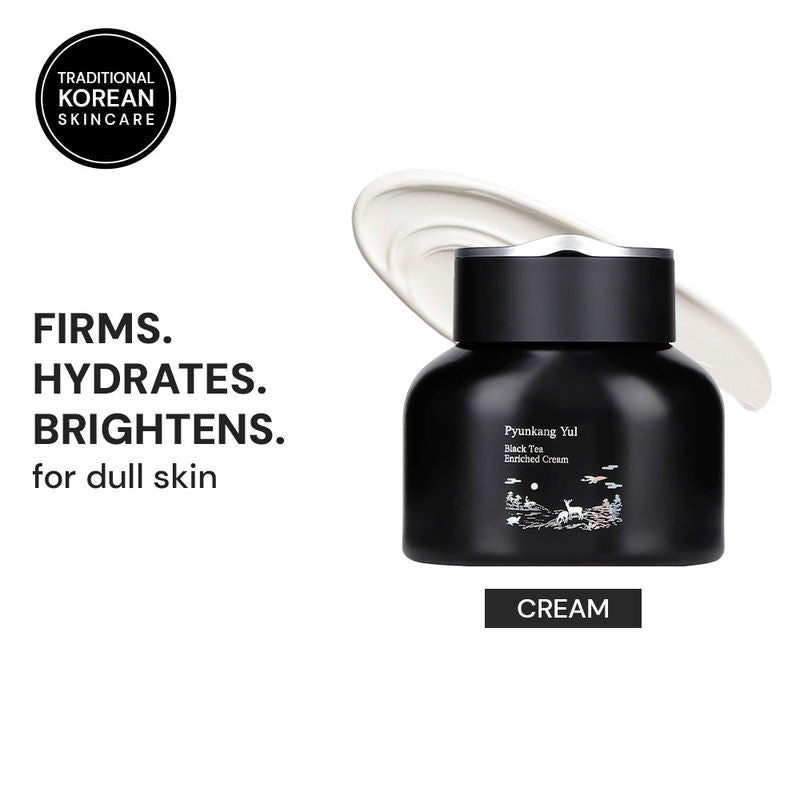
Pyunkang Yul Black Tea Enriched Cream

Pyunkang Yul Black Tea Enriched Cream
Nykaa E retail limited
pyunkang-yul-black-tea-enriched-cream
Moisturize
10084741677349
Morning or Evening?
How often will you use this product?
Notes


Highlights
WHAT IS IT?
Face Moisturizer, contains multiple key ingredients
FEATURES
Wrinkle-lifting, Skin brightening, Deep nourishment, zero-irritation, fragrance and color free
BEST FOR
sensitive
CHECKS
fragrances, colors
Who Is It For?
No Specific Age Or Gender MentionedWhat Does It Help With?
Aging Skin Fine Lines Dull SkinBudget
Premium ($76-$150)How To Use
Which routine should it be used in?
Instructions:
Key Information

What Nykaa E retail limited Says
Product Description:
The Black Tea Enriched Cream revitalizes aging skin with a powerful blend of ginseng, rich in saponins and polyphenols, Acetyl Hexapeptide-8, and adenosine. It offers multiple benefits such as wrinkle-lifting, skin brightening with seaberry extract, deep nourishment from beta-glucan and macadamia seed oil, and a firm moisture barrier with five types of hyaluronic acid and three ceramides. Certified as zero-irritation and free from fragrances and colors, it's suitable for sensitive skin and is particularly recommended for dull, aging skin worried about fine lines. Enhanced results are achieved when used with Pyunkang Yul Black Tea Toner and Black Tea Serum. Key ingredients include antioxidant-rich kombucha, fermented for 7 to 30 days. The cream's moisturizing and dense formula absorbs refreshingly into the skin, replenishing it with rich nutrients.
About the Brand:
Ingredients Overview
Ingredients List
Water,Glycerin,Butylene-Glycol,Pentaerythrityl-Tetraethylhexanoate,Hydrogenated-Poly(C6-14-Olefin),Hydrogenated-Olive-Oil-Lauryl-Esters,Diisostearyl-Malate,Behenyl-Alcohol,Niacinamide,Polyglyceryl-3-Methylglucose-Distearate,Cetearyl-Alcohol,Diphenylsiloxy-Phenyl-Trimethicone,Simethicone,Polyglyceryl-3-Distearate,Sodium-Acrylate/Sodium-Acryloyldimethyl-Taurate-Copolymer,Glyceryl-Stearate,Polyisobutene,Caprylyl-Glycol,Euphorbia-Cerifera-(Candelilla)-Wax,Pentylene-Glycol,Hydroxyacetophenone,Camellia-Sinensis-Leaf-Extract,Caprylic/Capric-Triglyceride,Cetyl-Ethylhexanoate,Butyrospermum-Parkii-(Shea)-Butter,Dipropylene-Glycol,Ethylhexyl-Palmitate,Glyceryl-Stearate-Citrate,Ethylhexylglycerin,Sodium-Methyl-Stearoyl-Taurate,Sorbitan-Oleate,Caprylyl/Capryl-Glucoside,Adenosine,Disodium-EDTA,Hydrogenated-Lecithin,Tocopherol,Methylpropanediol,Panthenol,Hippophae-Rhamnoides-Fruit-Extract,Maltodextrin,Caramel,1,2-Hexanediol,Biota-Orientalis-Leaf-Extract,Cnidium-Officinale-Root-Extract,Eclipta-Prostrata-Extract,Macadamia-Ternifolia-Seed-Oil,Paeonia-Lactiflora-Root-Extract,Panax-Ginseng-Root-Extract,Poria-Cocos-Extract,Polygonum-Multiflorum-Root-Extract,Phytosteryl/Behenyl/Octyldodecyl-Lauroyl-Glutamate,Scrophularia-Buergeriana-Extract,Scutellaria-Baicalensis-Root-Extract,Phellodendron-Amurense-Bark-Extract,Piper-Methysticum-Root-Extract,Gardenia-Florida-Fruit-Extract,Cholesterol,Coptis-Japonica-Extract,Brassica-Campestris-(Rapeseed)-Sterols,Acetyl-Hexapeptide-8,Fructose,Glucose,Centella-Asiatica-Extract,Sodium-Hyaluronate,Saccharomyces-Ferment-Filtrate,Polyglyceryl-10-Oleate,Potassium-Cetyl-Phosphate,Ceramide-NP,Beta-Glucan,Hydrolyzed-Hyaluronic-Acid,Hydroxypropyltrimonium-Hyaluronate,Sodium-Hyaluronate-Crosspolymer,Madecassoside,Madecassic-Acid,Sodium-Acetylated-Hyaluronate,Asiaticoside,Asiatic-Acid,Ceramide-NS,Ceramide-EOP
Key Ingredients
ginseng,saponins,polyphenols,Acetyl-Hexapeptide-8,adenosine,seaberry-extract,beta-glucan,macadamia-seed-oil,hyaluronic-acid,ceramides,kombucha
Ingredients Details
1-2-hexanediol
Common Name(s): 1-2-hexanediol,cosmetic active,functional ingredient
CAS Number: N/a
DESCRIPTION
What It Does: Delivers characteristic cosmetic function at recommended use concentration.
Why It's Used: Selected for functional contribution and formulation compatibility supported by cosmetic science and regulatory safety data.
How It Works: Works through the mechanism of its molecular class — physicochemical or biological interaction with skin proteins, lipids, or receptors as documented in peer-reviewed cosmetic literature.
Typically Found In: Skin care formulations
TECHNICAL DETAILS
Primary Category: Active ingredient – cosmetic active
Secondary Functions: Skin conditioning
Application Areas:

Facial Skincare

Body Care
Hair Care
Beard Care
Color Cosmetics (Makeup)
Dietary/Oral Supplements
Typical Concentration Range: 0.1%–10%
SOURCING & ETHICS
Vegan Status: Conditional
Halal Status: Yes
Source Notes: Commercially produced for cosmetic use. verify vegan/halal status with supplier.
SKIN COMPATIBILITY
Irritancy Rating: 1/5 – very low
Comedogenicity Rating: 0/5 – non-comedogenic
Sensitivity Concerns: Well-tolerated by most skin types.
Safe for Sensitive Skin: Yes
SAFETY & COMPATIBILITY
Safety Profile: Good safety profile at recommended concentrations. ewg score: 1–2.
Works Well With: Standard skincare actives
Avoid Combining With: No known significant incompatibilities
SCIENTIFIC NOTE
1-2-hexanediol has an established safety and efficacy profile within the cosmetic regulatory framework at standard use concentrations.
Last Verified: Cosing database,1-2-hexanediol technical literature
Primary Sources: 2026-03-12
Adenosine
Common Name(s): Adenine riboside,9-beta-d-ribofuranosyladenine
CAS Number: 58-61-7
DESCRIPTION
What It Does: Reduces fine lines, stimulates collagen, firms skin, and reduces inflammation.
Why It's Used: Fda-recognized anti-wrinkle active with multi-action collagen stimulation + wrinkle reduction + anti-inflammatory efficacy.
How It Works: Activates adenosine a2a receptors on fibroblasts stimulating collagen type i. also activates pka pathway promoting atp production and reducing inflammatory cytokines.
Typically Found In: Anti-aging serums,wrinkle treatments,korean skincare
TECHNICAL DETAILS
Primary Category: Active ingredient – purine nucleoside / anti-aging
Secondary Functions: Collagen stimulation,anti-inflammatory,cell energy
Application Areas:
Facial Skincare
Body Care
Hair Care
Beard Care
Color Cosmetics (Makeup)
Dietary/Oral Supplements
Typical Concentration Range: 0.04%–0.1%
SOURCING & ETHICS
Vegan Status: Yes – synthetically produced
Halal Status: Yes
Source Notes: Synthetically produced for cosmetic use.
SKIN COMPATIBILITY
Irritancy Rating: 1/5 – very low
Comedogenicity Rating: 0/5 – non-comedogenic
Sensitivity Concerns: Non-irritating; excellent tolerability.
Safe for Sensitive Skin: Yes
SAFETY & COMPATIBILITY
Safety Profile: Excellent safety profile. fda-recognized as safe and effective anti-wrinkle ingredient. ewg score: 1.
Works Well With: Other b vitamins,niacinamide,antioxidant complexes
Avoid Combining With: No significant incompatibilities
SCIENTIFIC NOTE
A 2002 clinical study demonstrated 0.04% adenosine cream significantly reduced wrinkle depth and increased skin elasticity after 4 weeks. fda recognition requires controlled clinical trial evidence.
Last Verified: Cosing database,adenosine anti-aging clinical data,fda otc anti-wrinkle monograph
Primary Sources: 2026-03-12
Caramel
Common Name(s): Caramel colour,natural brown,e150
CAS Number: 8028-89-5
DESCRIPTION
What It Does: Provides natural warm-brown colour from heat-treated sugar for natural cosmetics.
Why It's Used: Natural brown colorant with food-grade safety credentials for clean beauty formulations requiring warm brown or amber shades.
How It Works: Complex mixture of pyranose-ring condensation products from heat-treated sugars. 5-hmf and melanoidin polymers provide brown colour. ph-stable in acidic formulations. soluble in water and lower alcohols.
Typically Found In: Natural cosmetics,bronzers,hair products
TECHNICAL DETAILS
Primary Category: Colorant – natural brown dye
Secondary Functions: Skin conditioning
Application Areas:
Facial Skincare
Body Care
Hair Care
Beard Care
Color Cosmetics (Makeup)
Dietary/Oral Supplements
Typical Concentration Range: 0.01%–5%
SOURCING & ETHICS
Vegan Status: Yes – from sucrose, glucose (plant sugars)
Halal Status: Yes
Source Notes: Commercially produced for cosmetic use. verify vegan/halal status with supplier.
SKIN COMPATIBILITY
Irritancy Rating: 1/5 – very low
Comedogenicity Rating: 0/5 – non-comedogenic
Sensitivity Concerns: Well-tolerated by most skin types.
Safe for Sensitive Skin: Yes
SAFETY & COMPATIBILITY
Safety Profile: Good safety profile at recommended concentrations. ewg score: 1–2.
Works Well With: Standard skincare actives
Avoid Combining With: No known significant incompatibilities
SCIENTIFIC NOTE
Caramel's colour develops through the maillard reaction between reducing sugars and amino acids at elevated temperatures, creating a complex mixture of coloured polymer (melanoidin) and small molecule chromophores. unlike single-compound dyes with defined absorption spectra, caramel's broad-spectrum absorption from multiple chromophores provides a naturally warm, complex brown impossible to replicate with a single synthetic dye.
Last Verified: Cosing database,fda 21 cfr color additives
Primary Sources: 2026-03-12
Ethylhexylglycerin
Common Name(s): Octylglycerin,2-ethylhexyl glycerol ether,sensiva sc 10
CAS Number: 70445-33-9
DESCRIPTION
What It Does: Provides antimicrobial skin conditioning with deodorant activity and preservation system enhancement.
Why It's Used: Multifunctional clean beauty preservation active — ethylhexylglycerin provides antimicrobial, deodorant, and skin conditioning in a single ingredient accepted in most natural cosmetic certification schemes.
How It Works: Glycerol ether provides antimicrobial via bacterial membrane phospholipid disruption. deodorant activity via reduction of underarm lipase enzyme activity (similar mechanism to triethyl citrate). skin conditioning from glycerol humectant component. synergistic with phenoxyethanol and diols.
Typically Found In: Natural preservation systems,deodorants,skin conditioning products
TECHNICAL DETAILS
Primary Category: Functional ingredient – antimicrobial glycerol ether
Secondary Functions: Skin conditioning
Application Areas:
Facial Skincare
Body Care
Hair Care
Beard Care
Color Cosmetics (Makeup)
Dietary/Oral Supplements
Typical Concentration Range: 0.1%–0.5%
SOURCING & ETHICS
Vegan Status: Yes – synthetic
Halal Status: Yes
Source Notes: Commercially produced for cosmetic use. verify vegan/halal status with supplier.
SKIN COMPATIBILITY
Irritancy Rating: 1/5 – very low
Comedogenicity Rating: 0/5 – non-comedogenic
Sensitivity Concerns: Well-tolerated by most skin types.
Safe for Sensitive Skin: Yes
SAFETY & COMPATIBILITY
Safety Profile: Good safety profile at recommended concentrations. ewg score: 1–2.
Works Well With: Standard skincare actives
Avoid Combining With: No known significant incompatibilities
SCIENTIFIC NOTE
Ethylhexylglycerin's deodorant mechanism is pharmacologically identical to triethyl citrate: both inhibit skin surface microbial lipase enzymes that convert odourless triglycerides to odorous free fatty acids. the glycerol ether structure of ethylhexylglycerin, combined with the 2-ethylhexyl chain, provides lipase inhibition similar to ester-based lipase inhibitors from a different chemical class.
Last Verified: Cosing database,schülke sensiva sc 10 technical data,cir safety assessment
Primary Sources: 2026-03-12
