

Tata Harper Skincare
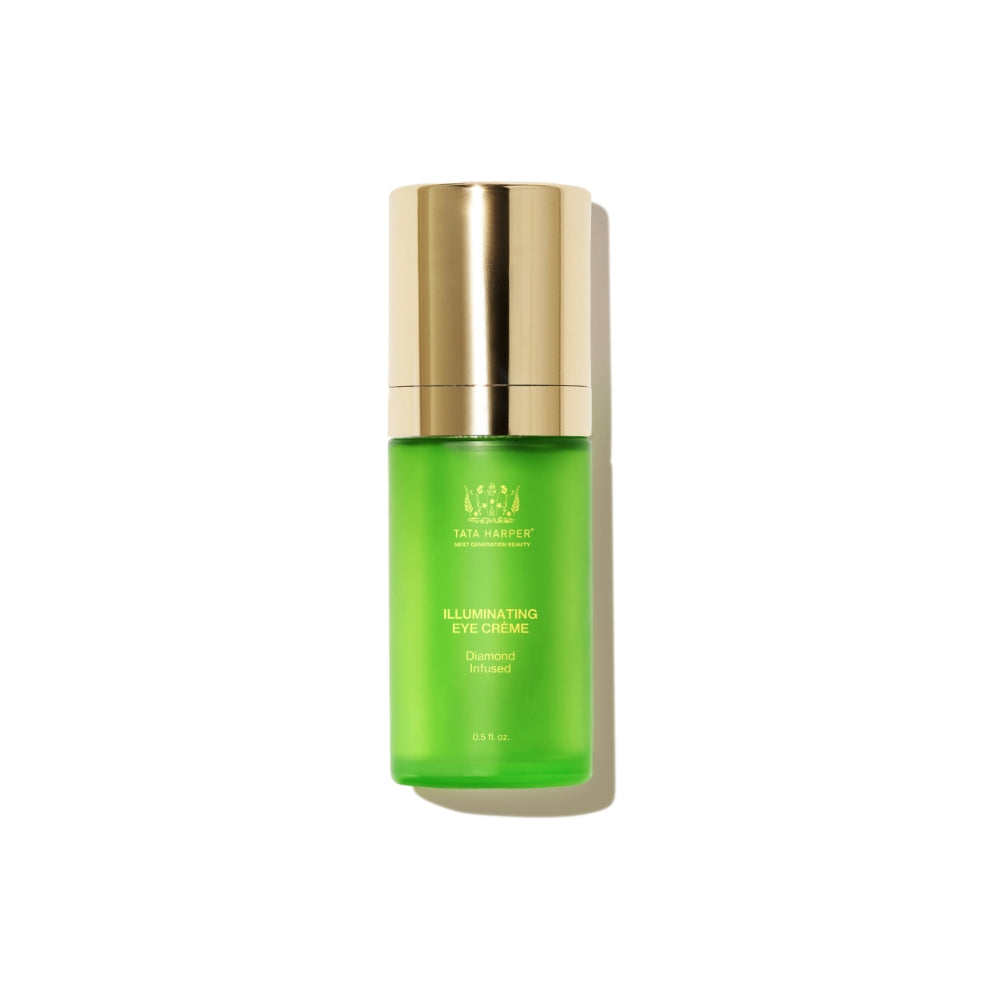
Refillable Illuminating Eye Crème

Refillable Illuminating Eye Crème
Tata Harper Skincare
refillable-illuminating-eye-creme
Eyecare
9784763318565
Morning or Evening?
How often will you use this product?
Notes


Highlights
WHAT IS IT?
Refillable age-defying eye treatment with diamond dust
FEATURES
Soft-focus luminescent highlighting effect, age-defying properties, refillable packaging
BEST FOR
dry
CHECKS
Free from harsh chemicals, synthetic chemicals, toxin, GMOs, fillers, artificial colors, artificial fragrances
Who Is It For?
Adults Concerned With Eye Area AgingWhat Does It Help With?
Fine Lines Dryness Dark CirclesBudget
Premium ($76-$150)How To Use
Which routine should it be used in?
Instructions:
Key Information


What Tata Harper Skincare Says
Product Description:
A refillable age-defying eye treatment made with real diamond dust for a soft-focus, luminescent highlighting effect. Best for fine lines, dryness, or dark circles.
About the Brand:
Ingredients Overview
Ingredients List
Hordeum Vulgare Leaf Juice*, Propanediol, Caprylic/Capric Triglyceride, Lavandula Angustifolia (Lavender) Flower/Leaf/Stem Water*, Shea Butter Ethyl Esters, Cetearyl Alcohol, Cocos Nucifera (Coconut) Fruit Extract, Leuconostoc Ferment Filtrate, Mica, Aqua/Water/Eau, Saccharide Isomerate, Titanium Dioxide (CI 77891), Cetearyl Olivate, Lactobacillus Ferment, Lactobacillus/Arundinaria Gigantea Ferment Filtrate, Mangifera Indica (Mango) Seed Butter, Silybum Marianum Ethyl Ester, Diamond Powder, Piper Cubeba Fruit Extract, Polygonum Fagopyrum Seed Extract, Salicornia Herbacea Extract, Hyaluronic Acid, Sodium Hyaluronate, Carthamus Tinctorius (Safflower) Oleosomes, Lavandula Stoechas Extract, Phoenix Dactylifera (Date) Seed Extract, Salix Alba (Willow) Bark Extract, Anthemis Nobilis (Chamomile) Flower Oil, Arnica Montana (Arnica) Extract*, Borago Officinalis (Borage) Leaf Extract*, Calendula Officinalis (Calendula) Flower Extract*, Helianthus Annuus (Sunflower) Seed Oil, Helichrysum Italicum Flower Oil*, Hydrogenated Vegetable Oil, Medicago Sativa (Alfalfa) Extract*, Michelia Alba Leaf Oil, Olea Europaea (Olive) Oil*, Phenethyl Alcohol, Rosa Damascena (Rose) Flower Oil, Rosmarinus Officinalis (Rosemary) Leaf Extract, Sambucus Nigra Fruit Extract, Spiraea Ulmaria (Meadowsweet) Extract*, Sorbitan Olivate, Cetearyl Glucoside, Sclerotium Gum, Cetyl Palmitate, Sorbitan Olivate, Sorbitan Palmitate, Iron Oxide (CI 77491), Sodium Phytate, Citric Acid, Sodium Citrate, Alcohol, Linalool, Citronellol, Limonene, Geraniol
Key Ingredients
diamond-dust
Ingredients Details
Caprylic/capric Triglyceride
Common Name(s): Mct oil,fractionated coconut oil,c8/c10 triglyceride
CAS Number: 73398-61-5
DESCRIPTION
What It Does: Lightweight, stable emollient that solubilizes oil-soluble actives for excellent delivery without greasy feel.
Why It's Used: Universal lightweight emollient base and solubilizer for oil-soluble actives in serums and low-viscosity formulations where mineral oil or petrolatum would be too heavy.
How It Works: Medium-chain length provides ideal balance of spreading coefficient, penetration rate, and barrier-sealing properties. excellent solubilizer for vitamin e, retinoids, and other lipophilic actives.
Typically Found In: Serums,facial oils,sunscreens,anti-aging products,hair products
TECHNICAL DETAILS
Primary Category: Active ingredient – medium-chain triglyceride emollient
Secondary Functions: Active solubilizer,spreading agent
Application Areas:

Facial Skincare
Body Care
Hair Care

Beard Care
Color Cosmetics (Makeup)
Dietary/Oral Supplements
Typical Concentration Range: 1%–50%
SOURCING & ETHICS
Vegan Status: Conditional - feedstock declaration required
Halal Status: Unverified - feedstock declaration required (plant, animal and petrochemical routes all exist)
Source Notes: Fractionated by hydrolysis and re-esterification of coconut oil. only c8 and c10 fatty acids retained. [audit 2026-07-29 rev2: origin-dependent: the same inci exists in plant, animal and petrochemical versions and the name does not discriminate. determination requires shariah-panel sign-off.]
SKIN COMPATIBILITY
Irritancy Rating: 1/5 – very low
Comedogenicity Rating: 1/5 – very low; medium-chain length generally non-comedogenic
Sensitivity Concerns: Non-irritating.
Safe for Sensitive Skin: Yes
SAFETY & COMPATIBILITY
Safety Profile: Excellent safety profile. ewg score: 1.
Works Well With: Humectants,ceramides,actives as carrier
Avoid Combining With: No significant incompatibilities
SCIENTIFIC NOTE
Mct oil's medium-chain length (c8/c10) provides superior oxidative stability vs longer polyunsaturated chains and better skin aesthetics (lighter, less greasy) vs longer chain emollients (c16/c18). excellent solubilizer for retinoic acid, tocopheryl esters, and other lipophilic actives.
Last Verified: 2026-03-12
Primary Sources: Cosing database,cir safety assessment,ewg skin deep
Cetearyl Alcohol
Common Name(s): Cetostearyl alcohol,c16-18 fatty alcohol
CAS Number: 8005-44-5
DESCRIPTION
What It Does: Provides fatty alcohol emulsification and thickening for stable, well-textured emulsions.
Why It's Used: The most widely used fatty alcohol in cosmetics – provides emulsification, thickening, and emolliency simultaneously from a single ingredient with excellent safety profile.
How It Works: Forms bilayer lamellar structures in water with emulsifiers creating a viscous structured network that thickens and stabilizes emulsions. fatty alcohol emolliency provides direct skin conditioning. bilayer formation reduces inter-droplet coalescence in emulsions.
Typically Found In: Creams,lotions,conditioners – virtually all emulsion products
TECHNICAL DETAILS
Primary Category: Functional ingredient – fatty alcohol emulsifier/thickener
Secondary Functions: Barrier sealing,softening
Application Areas:
Facial Skincare
Body Care
Hair Care
Beard Care
Color Cosmetics (Makeup)
Dietary/Oral Supplements
Typical Concentration Range: 1%–25%
SOURCING & ETHICS
Vegan Status: Yes - standard ethanol routes are non-animal; confirm denaturant origin
Halal Status: Conditional - ethanol production route and residual concentration; jurisdiction-dependent, refer to certifier stance
Source Notes: Plant-derived, synthetic or animal-derived. verify source. [audit 2026-07-29 rev2: ethanol pathway; determination depends on route, on whether the plant also produces beverage alcohol, and on residual concentration. determination requires shariah-panel sign-off.]
SKIN COMPATIBILITY
Irritancy Rating: 1/5 – very low
Comedogenicity Rating: 1/5 – low; formulation-dependent
Sensitivity Concerns: Non-irritating.
Safe for Sensitive Skin: Yes
SAFETY & COMPATIBILITY
Safety Profile: Excellent safety profile. ewg score: 1.
Works Well With: Humectants,ceramides,actives as carrier
Avoid Combining With: No significant incompatibilities
SCIENTIFIC NOTE
Cetearyl alcohol's ability to form lamellar liquid crystal structures ('krafft phases') with water and co-emulsifiers provides not only emulsion stability but also enhanced skin penetration via the lamellar skin barrier pathway. these crystalline structures can act as a reservoir for active ingredients, slowly releasing them as the lamellar structure melts on skin contact.
Last Verified: 2026-03-12
Primary Sources: Cosing database,cir safety assessment
Cocos Nucifera (coconut) Fruit Extract
Common Name(s): Cocos nucifera (coconut) fruit extract,botanical extract,phytochemical active
CAS Number: N/a
DESCRIPTION
What It Does: Provides antioxidant protection from reactive oxygen species, reduces inflammatory cytokine production in skin, and conditions skin surface through the plant's secondary metabolite complex.
Why It's Used: Chosen for its natural origin narrative, traditional use heritage, and multi-functional phytochemical profile that supports several concurrent skin care claims from one ingredient.
How It Works: Polyphenols, terpenoids, and alkaloids in the extract scavenge ros via hydrogen atom transfer, inhibit nf-kb or cox-2 inflammatory pathways, and interact with skin surface proteins for conditioning.
Typically Found In: Botanical skin care,natural products
TECHNICAL DETAILS
Primary Category: Active ingredient – antioxidant
Secondary Functions: Free radical scavenging,anti-aging
Application Areas:
Facial Skincare
Body Care
Hair Care
Beard Care
Color Cosmetics (Makeup)
Dietary/Oral Supplements
Typical Concentration Range: 0.1%–10%
SOURCING & ETHICS
Vegan Status: Yes
Halal Status: Yes
Source Notes: Plant-derived extract or synthetic.
SKIN COMPATIBILITY
Irritancy Rating: 1/5 – very low
Comedogenicity Rating: 0/5 – non-comedogenic
Sensitivity Concerns: Non-irritating; well-tolerated.
Safe for Sensitive Skin: Yes
SAFETY & COMPATIBILITY
Safety Profile: Excellent safety profile. ewg score: 1.
Works Well With: Vitamin c,vitamin e,ferulic acid,spf,other antioxidants
Avoid Combining With: No significant incompatibilities
SCIENTIFIC NOTE
Plant secondary metabolites evolved as uv photoprotectants and antimicrobial agents — mechanisms that directly translate to cosmetic antioxidant and anti-inflammatory activity in human skin.
Last Verified: 2026-03-12
Primary Sources: Cosing database,cocos nucifera (coconut) fruit extr botanical review
Hordeum Vulgare Leaf Juice
Common Name(s): Hordeum vulgare leaf juice,hordeum vulgare (barley) young leaf juice (barley grass) extract
DESCRIPTION
What It Does: Provides antioxidant,sod enzyme,chlorophyll,alkaline mineral rich and skin-conditioning activity from natural plant source.
Why It's Used: Used for its antioxidant,sod enzyme,chlorophyll,alkaline mineral rich activity derived from hordeum vulgare (barley); supports skin health and vitality.
How It Works: Bioactive compounds from hordeum vulgare (barley) young leaf juice (barley grass) — including polyphenols, flavonoids, and plant-specific phytochemicals — deliver antioxidant,sod enzyme,chlorophyll,alkaline mineral rich benefits.
Typically Found In: Green skin care,antioxidant products,detox formulas
TECHNICAL DETAILS
Primary Category: Active ingredient – botanical
Secondary Functions: Skin conditioning,antioxidant,botanical active
Application Areas:
Facial Skincare
Body Care
Hair Care
Beard Care
Color Cosmetics (Makeup)
Dietary/Oral Supplements
Typical Concentration Range: 0.1%–5%
SOURCING & ETHICS
Vegan Status: Conditional - supplier confirmation required
Halal Status: Unverified - supplier confirmation required
Source Notes: Extract from hordeum vulgare (barley); natural plant origin. [audit 2026-07-29 rev2: the record's own source_notes does not assert a non-animal origin, or instructs the reader to verify with the supplier; "yes" asserts knowledge the record does not hold. determination requires shariah-panel sign-off.]
SKIN COMPATIBILITY
Irritancy Rating: 1/5 – very low
Comedogenicity Rating: 0/5 – non-comedogenic
Sensitivity Concerns: Generally well tolerated; rare botanical sensitivity possible.
Safe for Sensitive Skin: Yes
SAFETY & COMPATIBILITY
Safety Profile: Good safety profile. ewg score: 1.
Works Well With: Other botanical extracts,antioxidants,humectants
Avoid Combining With: No significant incompatibilities
SCIENTIFIC NOTE
Barley leaf juice contains 2-o-giv — a barley-unique flavone with potent antioxidant activity — and sod enzyme; sod is among the most powerful natural antioxidant enzymes; young barley grass juice is used in both food supplements and cosmetics for its dense antioxidant content.
Last Verified: 2026-03-28
Primary Sources: Cosing database,inci dictionary