

Renee Cosmetics
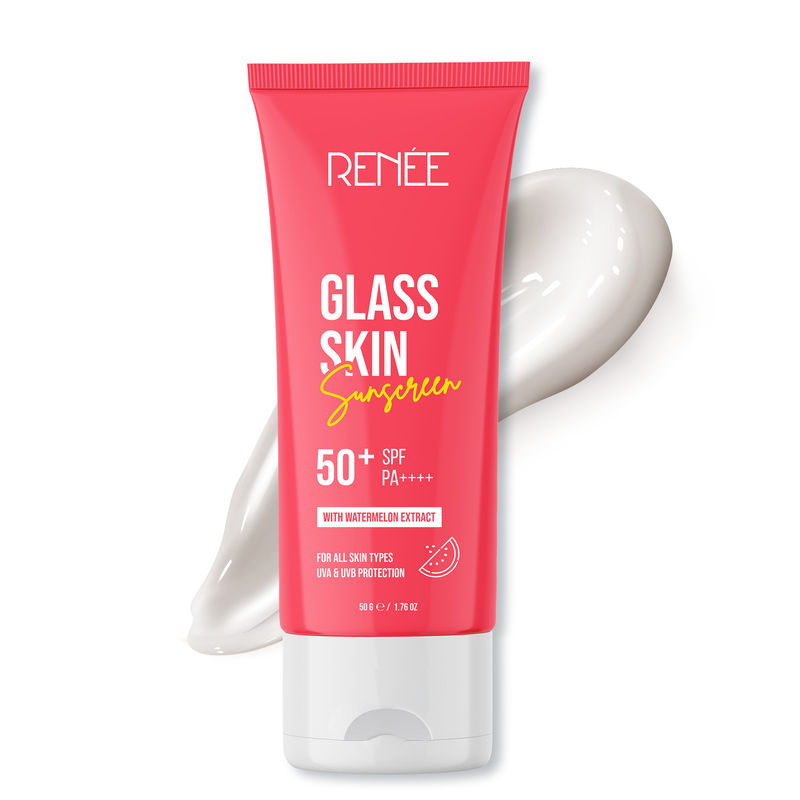
RENEE Glass Skin Gel Sunscreen with SPF 50+, Lightweight, Hydrating & Non-Sticky, Zero White Cast

RENEE Glass Skin Gel Sunscreen with SPF 50+, Lightweight, Hydrating & Non-Sticky, Zero White Cast
Renee Cosmetics
renee-glass-skin-gel-sunscreen-with-spf-50-lightweight-hydrating-non-sticky-zero-white-cast
Suncare
10084925440293
Morning or Evening?
How often will you use this product?
Notes


Highlights
WHAT IS IT?
Sunscreen, 50g
FEATURES
Provides UVA & UVB protection with SPF 50, Infused with Watermelon extract, Beet Root extract & Hyaluronic acid, Lightweight creamy-gel formula, Does not leave white cast
BEST FOR
sensitive
CHECKS
Doesn't leave white cast, Non-greasy
Who Is It For?
What Does It Help With?
Protection From Uv Damage Hydration Prevention Of Suntan Cooling SensationBudget
Affordable (under $30)How To Use
Which routine should it be used in?
Instructions:
Key Information


What Renee Cosmetics Says
Product Description:
Sun Block with a Melony-glow! Get all sun ready with RENEE Glass Sunscreen. Infused with a powerful blend of Watermelon extract, Beetroot extract & Hyaluronic acid, this sunscreen ensures protection from harmful UV rays along with providing much-needed hydration and instant refreshment. This lightweight, watery-cream formula ensures your skin is free from white caste and grease with every application. Say bye to suntan and add the burst of coolness to your skin with RENEE Glass Sunscreen
About the Brand:
Ingredients Overview
Ingredients List
aqua,ethylhexyl-methoxycinnamate,and-butyl-methoxydibenzoylmethane,and-benzophenone-3,and-phospholipids,and-1,3-butylene-glycol,isopropyl-myristate,glyceryl-stearate,and-peg-100-stearate,citrullus-lanatus-fruit-extract,palmitoyl-tripeptide-1,palmitoyl-tetrapeptide-7,1,3-propanediol,glyceryl-stearate,caprylic/capric-triglyceride,methylene-bis-benzotriazolyl-tetramethylbutylphenol,and-aqua,and-decyl-glucoside,and-propylene-glycol,and-xanthan-gum,glycerin,c15-19-alkane,phenoxyethanol,and-ethylhexylglycerin,cyclopentasiloxane,diethylamino-hydroxybenzoyl-hexyl-benzoate,sodium-hyaluronate,aloe-barbadensis-leaf-juice,sorbitan-stearate,and-sucrose-cocoate,tocopherol,sodium-lactate,acrylates/c10-30-alkyl-acrylate-crosspolymer,titanium-dioxide,perfume,oxothiazolidine,and-butylene-glycol,and-sodium-benzoate,menthol,triethanolamine,sodium-gluconate
Key Ingredients
Watermelon Extract, Beet Root Extract, Hyaluronic Acid
Ingredients Details
Cyclopentasiloxane
Common Name(s): Cyclopentasiloxane,cyclic volatile silicone,dry-touch carrier solvent
CAS Number: N/a
DESCRIPTION
What It Does: Provides a dry, weightless application vehicle that evaporates cleanly leaving actives and non-volatile silicones deposited on skin — eliminating the residual heaviness of conventional liquid carrier solvents.
Why It's Used: Cyclosiloxanes are the unique volatile silicone solvents that dissolve non-volatile silicones (dimethicone, cyclomethicone), organic uv filters, and lipophilic actives, providing the sensory-superior dry-touch application experience in premium formulations.
How It Works: Cyclosiloxane vapour pressure (d5 cyclopentasiloxane ~0.3 mmhg at 25°c) provides clean evaporation at body temperature. the cyclic ring structure provides lower boiling point than equivalent linear dimethicone, enabling faster evaporation while the ring conformation maintains the silicone's low surface energy for smooth application.
Typically Found In: Primers,antiperspirants,sunscreens
TECHNICAL DETAILS
Primary Category: Functional ingredient – emollient
Secondary Functions: Barrier sealing,softening
Application Areas:

Facial Skincare
Body Care
Hair Care

Beard Care
Color Cosmetics (Makeup)
Dietary/Oral Supplements
Typical Concentration Range: 1%–50%
SOURCING & ETHICS
Vegan Status: Yes
Halal Status: Yes
Source Notes: Plant-derived, synthetic or animal-derived. verify source.
SKIN COMPATIBILITY
Irritancy Rating: 1/5 – very low
Comedogenicity Rating: 1/5 – low; formulation-dependent
Sensitivity Concerns: Non-irritating.
Safe for Sensitive Skin: Yes
SAFETY & COMPATIBILITY
Safety Profile: Excellent safety profile. ewg score: 1.
Works Well With: Humectants,ceramides,actives as carrier
Avoid Combining With: No significant incompatibilities
SCIENTIFIC NOTE
Cyclopentasiloxane (d5) and cyclohexasiloxane (d6) are under eu regulatory review for potential environmental persistence (pbt assessment) — formulators should monitor eu regulation 2018/35 implementation for restrictions in wash-off products.
Last Verified: Cosing database,eu cyclosiloxane regulatory review
Primary Sources: 2026-03-12
Glycerin
Common Name(s): Glycerol,glycerine,1,2,3-propanetriol
CAS Number: 56-81-5
DESCRIPTION
What It Does: Glycerin pulls water from the environment and deeper skin layers into the outer skin layer (epidermis), boosting moisture levels and keeping skin soft, smooth, and plump.
Why It's Used: It is used in virtually every moisturizer, serum, and cleanser because it is highly effective at hydrating skin, is well-tolerated by all skin types, and enhances the texture and spreadability of formulations.
How It Works: As a humectant, glycerin forms hydrogen bonds with water molecules, trapping them in the skin. it also reinforces the skin barrier by integrating into lipid structures between skin cells.
Typically Found In: Moisturizers,serums,cleansers,toners,sheet masks,sunscreens,body lotions,shampoos,conditioners
TECHNICAL DETAILS
Primary Category: Humectant
Secondary Functions: Skin barrier support,emollient,solvent
Application Areas:
Facial Skincare
Body Care
Hair Care
Beard Care
Color Cosmetics (Makeup)
Dietary/Oral Supplements
Typical Concentration Range: 1%–30% (typical: 3–10%)
SOURCING & ETHICS
Vegan Status: Yes – plant-derived (coconut, soy, palm) or synthetic
Halal Status: Yes – when plant-derived or synthetic; verify source with supplier
Source Notes: Derived from plant oils via hydrolysis or saponification; synthetic versions also available. palm-derived glycerin carries sustainability concerns.
SKIN COMPATIBILITY
Irritancy Rating: 1/5 – very low; non-irritating at all standard concentrations
Comedogenicity Rating: 0/5 – non-comedogenic
Sensitivity Concerns: Extremely rare allergic reactions; generally safe for all skin types including sensitive and baby skin
Safe for Sensitive Skin: Yes
SAFETY & COMPATIBILITY
Safety Profile: Widely recognized as safe. ewg hazard score: 1. no significant concerns for irritation, sensitization, or toxicity at typical concentrations (up to 50%).
Works Well With: Hyaluronic acid,ceramides,niacinamide,panthenol,urea,peptides,retinol,ahas/bhas
Avoid Combining With: No known incompatibilities at standard concentrations
SCIENTIFIC NOTE
Glycerin is an endogenous skin component found naturally in the stratum corneum. aquaporin-3 channels in keratinocytes facilitate glycerin transport, making it integral to natural skin hydration pathways.
Last Verified: Cosing database,cir safety assessment,ewg skin deep,inci decoder
Primary Sources: 2026-03-12
Menthol
Common Name(s): L-menthol,peppermint camphor,(-)-menthol
CAS Number: 89-78-1
DESCRIPTION
What It Does: Activates trpm8 cold thermoreceptors for intense cooling sensation and analgesic activity.
Why It's Used: The most potent cosmetic cooling agent – direct trpm8 agonist providing cooling sensation without actual temperature reduction for refreshing and analgesic formulations.
How It Works: Potent trpm8 (menthol receptor/cold thermosensor) agonist – activation at room temperature mimics cold sensation without actual cooling. anti-pruritic via trpm8 activation competing with itch c-fiber signaling. antimicrobial via membrane disruption.
Typically Found In: Cooling products,scalp treatments,oral care,pain relief,foot care,after-sun
TECHNICAL DETAILS
Primary Category: Active ingredient – cooling sensory terpenoid
Secondary Functions: Redness reduction,anti-inflammatory,calming
Application Areas:
Facial Skincare
Body Care
Hair Care
Beard Care
Color Cosmetics (Makeup)
Dietary/Oral Supplements
Typical Concentration Range: 0.1%–2%
SOURCING & ETHICS
Vegan Status: Yes – from mentha piperita or synthetic
Halal Status: Yes
Source Notes: Plant-derived extract or synthetic.
SKIN COMPATIBILITY
Irritancy Rating: 2/5 – low to moderate; potential sensitizer
Comedogenicity Rating: 0/5 – non-comedogenic
Sensitivity Concerns: Non-irritating; ideal for reactive and sensitive skin.
Safe for Sensitive Skin: Avoid near eyes. use with caution at concentrations above 1% for sensitive skin.
SAFETY & COMPATIBILITY
Safety Profile: Eu max 4.5% (leave-on); regulations vary by application site. avoid on infants' face.
Works Well With: Ceramides,panthenol,allantoin,hyaluronic acid,centella asiatica
Avoid Combining With: No significant incompatibilities
SCIENTIFIC NOTE
Menthol's exceptional cooling potency stems from its ec50 for trpm8 activation of approximately 10μm (vs camphor's ec50 of ~5mm – 500× lower potency). this 500× potency advantage explains why even tiny concentrations of menthol provide intense cooling, while much higher concentrations of camphor are required for equivalent sensation.
Last Verified: Cosing database,mckemy et al. menthol trpm8 discovery,cir safety assessment
Primary Sources: 2026-03-12
Oxothiazolidine
Common Name(s): Oxothiazolidine
DESCRIPTION
What It Does: Delivers targeted skin-conditioning or bioactive benefits through a specific mechanism of action suited to the formulation's intended purpose.
Why It's Used: Specialty actives address specific skin concerns through targeted molecular mechanisms, providing efficacy beyond what base formulation ingredients alone can achieve.
How It Works: The bioactive compound interacts with specific molecular targets in skin cells or the extracellular matrix — enzymes, receptors, structural proteins, or signaling molecules — triggering beneficial biological responses.
Typically Found In: Serums,treatments,moisturizers,specialty products
TECHNICAL DETAILS
Primary Category: Specialty actives
Secondary Functions: Skin-conditioning,anti-aging
Application Areas:
Facial Skincare
Body Care
Hair Care
Beard Care
Color Cosmetics (Makeup)
Dietary/Oral Supplements
Typical Concentration Range: 0.01–5%
SOURCING & ETHICS
Vegan Status: Yes
Halal Status: Yes
Source Notes: Specialty active ingredient; check individual sourcing for vegan status.
SKIN COMPATIBILITY
Irritancy Rating: 1
Comedogenicity Rating: 0
Sensitivity Concerns: Low sensitization potential at recommended use concentrations.
Safe for Sensitive Skin: Yes
SAFETY & COMPATIBILITY
Safety Profile: Well-characterized cosmetic ingredient with established safety profile. generally non-irritating at typical use concentrations. suitable for leave-on and rinse-off cosmetics.
Works Well With: Niacinamide,hyaluronic acid,vitamin c,peptides
Avoid Combining With: Incompatible with oxidizing agents; check ph stability
SCIENTIFIC NOTE
Specialty actives typically work through enzyme inhibition (e.g., tyrosinase inhibition for brightening, mmp inhibition for anti-aging), receptor activation (e.g., retinoid receptors, ppar-γ for barrier genes), or transcription factor modulation (e.g., nrf2 for antioxidant gene upregulation). structure-activity relationships determine potency and selectivity.
Last Verified: Cosing eu database; pcpc cosmetic ingredient safety reviews; ingredient-specific safety and efficacy literature
Primary Sources: 2025-01-15
