

Nykaa E retail limited
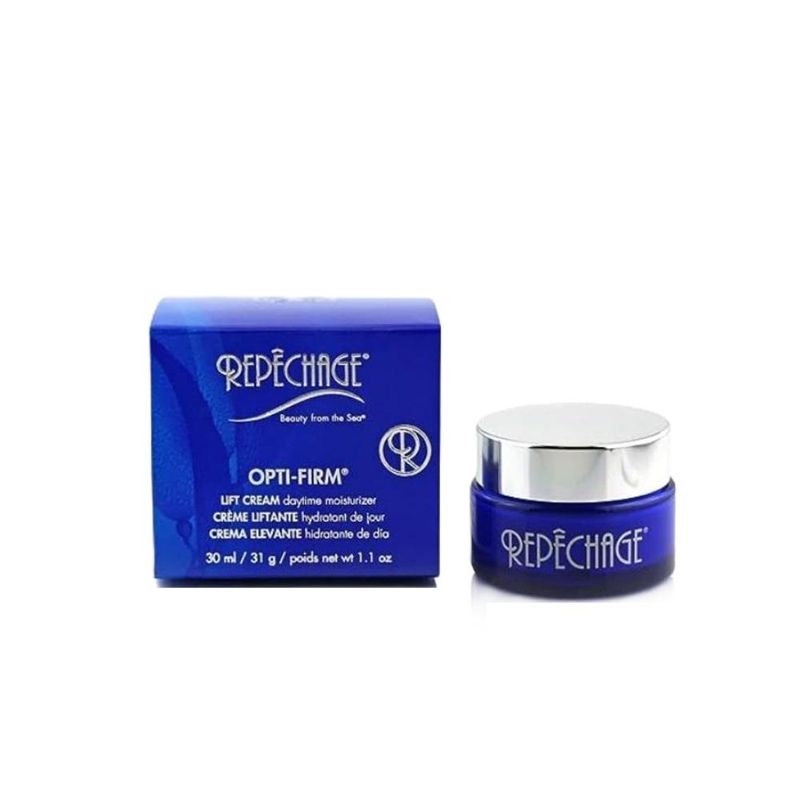
Repechage Opti-Firm Lift Face Cream

Repechage Opti-Firm Lift Face Cream
Nykaa E retail limited
repechage-opti-firm-lift-face-cream
Moisturize
10084850958629
Morning or Evening?
How often will you use this product?
Notes


Highlights
WHAT IS IT?
Daytime moisturizer cream with multiple active ingredients
FEATURES
Seaweed Infusion with Laminaria Digitata & Ulva Lactuca, Anti-Aging effects from Hyaluronic Acid, Vitamins E and C and marine bio-peptides, Natural smoothness from Salicylic Acid, Willow Bark, Aloe Vera; Mineral protection with Zinc Oxide; Paraben-free and cruelty-free; Hydrating and nourishing; Reduces visible signs of aging; Helps reduce fine lines and wrinkles
BEST FOR
dry
CHECKS
Parabens, Animal Testing
Who Is It For?
What Does It Help With?
Hydration Anti-aging Reduces Fine Lines And WrinklesBudget
Premium ($76-$150)How To Use
Which routine should it be used in?
Instructions:
Key Information


What Nykaa E retail limited Says
Product Description:
Experience the ultimate daytime skincare with our uplifting formula. Envelop your skin in luxury as moisturizing Laminaria Digitata and Ulva Lactuca Seaweed extracts, Hyaluronic Acid, and vitamins E and C work in harmony to reduce fine lines and wrinkles. This rich day cream, tailored for dry skin, features marine bio-peptides from Ulva Lactuca Seaweed, Laminaria Digitata Seaweed extract, and Salicylic Acid. Aloe Vera, Ginkgo Biloba, and Willow Bark extract provide deep hydration and smoothness. Apply daily for radiant results, either alone or under makeup. The cream boasts a mineral barrier with Zinc Oxide, ensuring skin protection. Say goodbye to parabens and animal testing - our cruelty-free formula is your ideal morning companion.
About the Brand:
Ingredients Overview
Ingredients List
Water/Aqua/Eau, Caprylic/Capric Triglyceride, Ethylhexyl Methoxycinnamate, Propanediol, Ethylhexyl Salicylate, Coco-Caprylate/Caprate, Aloe Barbadensis Leaf Juice Powder, Cetyl Alcohol, Glyceryl Stearate Se, Zinc Oxide, Polyhydroxystearic Acid, Butylene Glycol Dicaprylate/Dicaprate, Peg-100 Stearate, Glyceryl Stearate, Laminaria Digitata Extract, Glycerin, Butyrospermum Parkii (Shea) Butter, Squalane, Tocopheryl Acetate, Sodium Ascorbyl Phosphate, Salicylic Acid, Sodium Hyaluronate, Ulva Lactuca Extract, Salix Alba (Willow) Bark Extract, Ginkgo Biloba Leaf Extract, Sorbitan Stearate, Polymethylsilsesquioxane, Xanthan Gum, Carbomer, Potassium Sorbate, Sodium Benzoate, Citric Acid, Diazolidinyl Urea, Iodopropynyl Butylcarbamate, Phenoxyethanol, Ethylhexylglycerin, Sodium Hydroxide, Tetrasodium Glutamate Diacetate, Fragrance
Key Ingredients
Laminaria Digitata Extract, Ulva Lactuca Extract, Hyaluronic Acid, Salicylic Acid, Aloe Barbadensis Leaf Juice Powder, Vitamins E and C, Zinc Oxide
Ingredients Details
Aloe Barbadensis Leaf Juice Powder
Common Name(s): Aloe barbadensis leaf juice powder,cosmetic active,functional ingredient
CAS Number: N/a
DESCRIPTION
What It Does: Delivers characteristic cosmetic function — skin conditioning, protection, preservation, or active biological benefit — at recommended use concentration.
Why It's Used: Selected for its functional contribution and formulation compatibility — supported by cosmetic science literature and regulatory safety assessment.
How It Works: Works through the mechanism of its molecular class — physicochemical interaction with the formulation or biological interaction with skin proteins, lipids, or receptors as documented in peer-reviewed literature.
Typically Found In: Skin care formulations
TECHNICAL DETAILS
Primary Category: Active ingredient – cosmetic active
Secondary Functions: Skin conditioning
Application Areas:

Facial Skincare

Body Care
Hair Care
Beard Care
Color Cosmetics (Makeup)
Dietary/Oral Supplements
Typical Concentration Range: 0.1%–10%
SOURCING & ETHICS
Vegan Status: Conditional
Halal Status: Yes
Source Notes: Commercially produced for cosmetic use. verify vegan/halal status with supplier.
SKIN COMPATIBILITY
Irritancy Rating: 1/5 – very low
Comedogenicity Rating: 0/5 – non-comedogenic
Sensitivity Concerns: Well-tolerated by most skin types.
Safe for Sensitive Skin: Yes
SAFETY & COMPATIBILITY
Safety Profile: Good safety profile at recommended concentrations. ewg score: 1–2.
Works Well With: Standard skincare actives
Avoid Combining With: No known significant incompatibilities
SCIENTIFIC NOTE
Aloe barbadensis leaf juice powder delivers documented functional benefit with an established safety profile within the cosmetic regulatory framework (cosing eu, cir usa).
Last Verified: Cosing database,aloe barbadensis leaf juice powder technical literature
Primary Sources: 2026-03-12
Butylene Glycol Dicaprylate/dicaprate
Common Name(s): Butylene glycol dicaprylate/dicaprate
DESCRIPTION
What It Does: Smooths and softens skin by filling intercorneocyte spaces, reducing friction, and providing a pleasant aesthetic skin feel in formulations.
Why It's Used: Synthetic esters provide tailored aesthetic properties — spreadability, skin feel, volatility, refractive index — that natural oils alone cannot consistently deliver.
How It Works: The ester molecule fills microscopic surface irregularities between corneocytes, reducing coefficient of friction, reflecting light uniformly, and providing a lubrication layer that protects the skin surface.
Typically Found In: Moisturizers,sunscreens,color cosmetics,body lotions,lip products
TECHNICAL DETAILS
Primary Category: Synthetic emollients
Secondary Functions: Emollient
Application Areas:
Facial Skincare
Body Care
Hair Care
Beard Care
Color Cosmetics (Makeup)
Dietary/Oral Supplements
Typical Concentration Range: 1–20%
SOURCING & ETHICS
Vegan Status: Yes
Halal Status: Yes
Source Notes: Synthetically produced ester emollient; no animal components.
SKIN COMPATIBILITY
Irritancy Rating: 1
Comedogenicity Rating: 1
Sensitivity Concerns: Low sensitization potential at recommended use concentrations.
Safe for Sensitive Skin: Yes
SAFETY & COMPATIBILITY
Safety Profile: Well-characterized cosmetic ingredient with established safety profile. generally non-irritating at typical use concentrations. suitable for leave-on and rinse-off cosmetics.
Works Well With: Silicones,uv filters,other emollients
Avoid Combining With: Strongly alkaline conditions (risk of saponification of ester-type emollients)
SCIENTIFIC NOTE
The spreading coefficient of an emollient is governed by its surface tension, viscosity, and polarity. esters with branched alkyl chains (e.g., isopropyl, isostearyl) spread rapidly and leave a non-tacky film; linear long-chain esters provide more substantive moisturization. hlb value determines the preferred formulation system (w/o vs o/w emulsions).
Last Verified: Cosing eu database; pcpc cosmetic ingredient safety reviews; ingredient-specific safety and efficacy literature
Primary Sources: 2025-01-15
Caprylic/capric Triglyceride
Common Name(s): Mct oil,fractionated coconut oil,c8/c10 triglyceride
CAS Number: 73398-61-5
DESCRIPTION
What It Does: Lightweight, stable emollient that solubilizes oil-soluble actives for excellent delivery without greasy feel.
Why It's Used: Universal lightweight emollient base and solubilizer for oil-soluble actives in serums and low-viscosity formulations where mineral oil or petrolatum would be too heavy.
How It Works: Medium-chain length provides ideal balance of spreading coefficient, penetration rate, and barrier-sealing properties. excellent solubilizer for vitamin e, retinoids, and other lipophilic actives.
Typically Found In: Serums,facial oils,sunscreens,anti-aging products,hair products
TECHNICAL DETAILS
Primary Category: Active ingredient – medium-chain triglyceride emollient
Secondary Functions: Active solubilizer,spreading agent
Application Areas:
Facial Skincare
Body Care
Hair Care
Beard Care
Color Cosmetics (Makeup)
Dietary/Oral Supplements
Typical Concentration Range: 1%–50%
SOURCING & ETHICS
Vegan Status: Yes – from coconut/palm kernel oil
Halal Status: Yes
Source Notes: Fractionated by hydrolysis and re-esterification of coconut oil. only c8 and c10 fatty acids retained.
SKIN COMPATIBILITY
Irritancy Rating: 1/5 – very low
Comedogenicity Rating: 1/5 – very low; medium-chain length generally non-comedogenic
Sensitivity Concerns: Non-irritating.
Safe for Sensitive Skin: Yes
SAFETY & COMPATIBILITY
Safety Profile: Excellent safety profile. ewg score: 1.
Works Well With: Humectants,ceramides,actives as carrier
Avoid Combining With: No significant incompatibilities
SCIENTIFIC NOTE
Mct oil's medium-chain length (c8/c10) provides superior oxidative stability vs longer polyunsaturated chains and better skin aesthetics (lighter, less greasy) vs longer chain emollients (c16/c18). excellent solubilizer for retinoic acid, tocopheryl esters, and other lipophilic actives.
Last Verified: Cosing database,cir safety assessment,ewg skin deep
Primary Sources: 2026-03-12
Carbomer
Common Name(s): Carbopol,polyacrylic acid,carboxyvinyl polymer
DESCRIPTION
What It Does: Provides transparent gel textures and thickening at very low concentrations via ph-responsive swelling.
Why It's Used: The most widely used gel thickener – provides crystal-clear, stable gels at concentrations as low as 0.1-0.5% with ph-controlled viscosity.
How It Works: Highly crosslinked polyacrylic acid remains tightly coiled at acidic ph. neutralization with naoh or triethanolamine ionizes carboxylic groups causing electrostatic repulsion that unfolds and swells the polymer coils, dramatically increasing viscosity. concentration-dependent thickening.
Typically Found In: Gels,serums,emulsions,sunscreens
TECHNICAL DETAILS
Primary Category: Functional ingredient – polyacrylic acid thickener
Secondary Functions: Skin conditioning
Application Areas:
Facial Skincare
Body Care
Hair Care
Beard Care
Color Cosmetics (Makeup)
Dietary/Oral Supplements
Typical Concentration Range: 0.1%–2%
SOURCING & ETHICS
Vegan Status: Yes – synthetic
Halal Status: Yes
Source Notes: Commercially produced for cosmetic use. verify vegan/halal status with supplier.
SKIN COMPATIBILITY
Irritancy Rating: 1/5 – very low
Comedogenicity Rating: 0/5 – non-comedogenic
Sensitivity Concerns: Well-tolerated by most skin types.
Safe for Sensitive Skin: Yes
SAFETY & COMPATIBILITY
Safety Profile: Good safety profile at recommended concentrations. ewg score: 1–2.
Works Well With: Standard skincare actives
Avoid Combining With: No known significant incompatibilities
SCIENTIFIC NOTE
Carbomer's ph-responsive swelling mechanism provides an elegant formulation control tool: a neutralized gel can be liquefied by ph reduction (adding acid) and re-thickened by reneutralization. this reversible rheology control allows two-phase products that mix on application without the need for mechanical emulsification.
Last Verified: Cosing database,cir safety assessment
Primary Sources: 2026-03-12
