

Tata Harper Skincare
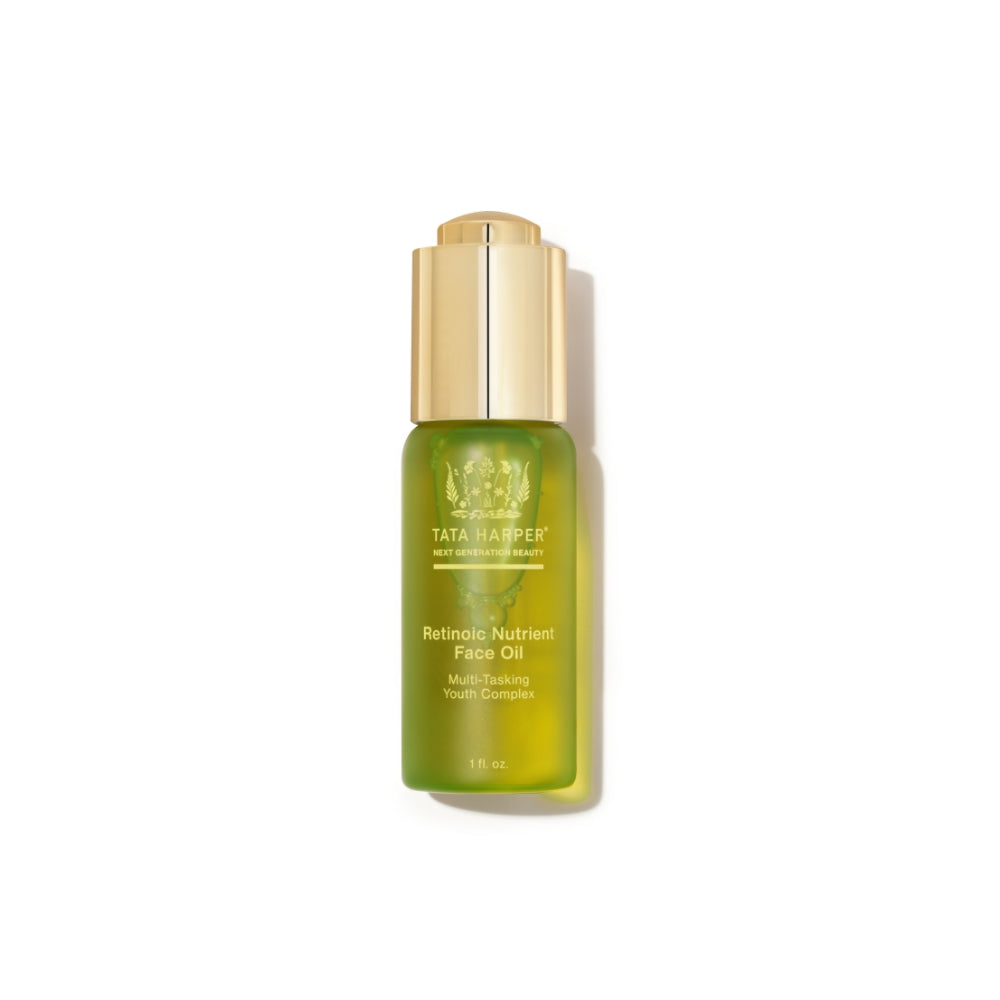
Retinoic Nutrient Face Oil

Retinoic Nutrient Face Oil
Tata Harper Skincare
retinoic-nutrient-face-oil
Face Oil
9784765317413
Morning or Evening?
How often will you use this product?
Notes


Highlights
WHAT IS IT?
Youth restoring face oil with botanical retinol alternatives
FEATURES
Reduces early wrinkles, contains omega fatty acids and skin superfoods, provides complete skin nourishment
BEST FOR
combination
CHECKS
Free from harsh chemicals, synthetic chemicals, toxin, GMOs, fillers, artificial colors, artificial fragrances
Who Is It For?
Adults Concerned With Early Signs Of AgingWhat Does It Help With?
Wrinkle Reduction Skin Nourishment Youthful AppearanceBudget
Professional (over $150)How To Use
Which routine should it be used in?
Instructions:
Key Information


What Tata Harper Skincare Says
Product Description:
This luxurious face oil is your youth restoring booster. Our multitasking complex reduces the look of early wrinkles with retinoic acid-like activity from next generation bioactive botanical retinol alternatives, while omega fatty acids and skin superfoods provide complete skin nourishment for youthful, healthy-looking skin.
About the Brand:
Ingredients Overview
Ingredients List
Rosa Rubiginosa Seed Oil*, Simmondsia Chinensis (Jojoba) Seed Oil*, Ethyl Palmate, Orbignya Oleifera (Babassu) Seed Oil, Rosa Canina (Rose Hip) Seed Extract*, Salvia Hispanica Seed Oil, Olea Europaea (Olive) Oil*, Daucus Carota Sativa Seed Oil, Hippophae Rhamnoides Seed Oil*, Oenothera Biennis (Evening Primrose) Oil*, Prunus Armeniaca (Apricot) Kernel Oil*, Prunus Domestica Seed Oil*, Linoleic Acid, Polycitronellol Acetate, Mauritia Flexuosa Fruit Oil, Sambucus Nigra Fruit Extract, Camellia Japonica Seed Oil, Camellia Oleifera Seed Oil*, Camellia Sinensis (Green Tea) Seed Oil*, Isosorbide Dicaprylate, Undecane, **Citrus Aurantium (Neroli) Peel Oil, Glyceryl Ricinoleate, Crithmum Maritimum Extract*, Bidens Pilosa Extract, Bisabolol, Gossypium Herbaceum (Cotton) Seed Oil, Linum Usitatissimum (Linseed) Seed Oil, Olea Europaea (Olive) Leaf Extract, Tilia Europaea (Linden) Leaf and Flower Extract*, Arnica Montana (Arnica) Extract*, Borago Officinalis (Borage) Leaf Extract*, Calendula Officinalis (Calendula) Flower Extract*, Medicago Sativa (Alfalfa) Extract*, Spiraea Ulmaria (Meadowsweet) Extract*, Rosmarinus Officinalis (Rosemary) Leaf Extract, Caprylic/Capric Triglyceride, Helianthus Annuus (Sunflower) Seed Oil, Linolenic Acid, Dimethyl Isosorbide, Tridecane, **Boswellia Carterii Oil*, **Lavandula Angustifolia (Lavender) Oil, **Pelargonium Graveolens (Geranium) Oil*, **Anthemis Nobilis (Chamomile) Flower Oil, **Cananga Odorata (Ylang Ylang) Flower Oil*, **Citrus Aurantium (Bergamot) Peel Oil, **Hyacinthus Orientalis Flower Extract, **Rosa Damascena (Rose) Flower Oil, Phenethyl Alcohol, Elaeis Guineensis (Palm) Oil, Tocopherol, Linalool, Limonene, Geraniol, Citronellol, Citral, Benzyl Alcohol, Benzyl Benzoate, Farnesol, Cinnamyl Alcohol, Benzyl Salicylate, Benzyl Cinnamate, Coumarin, Eugenol, Isoeugenol
Key Ingredients
botanical-retinol-alternatives, omega-fatty-acids
Ingredients Details
Daucus Carota Sativa Seed Oil
Common Name(s): Daucus carota sativa seed oil
DESCRIPTION
What It Does: Nourishes and softens skin through its balanced fatty acid profile, while antioxidant compounds protect against oxidative skin damage.
Why It's Used: Plant oils provide physiologically compatible lipid structures that integrate into the skin barrier and deliver fat-soluble antioxidants directly to skin cells.
How It Works: Fatty acids integrate into stratum corneum lipid lamellae, reinforcing the lipid barrier. antioxidants (tocopherols, carotenoids, polyphenols) neutralize ros through electron donation or singlet oxygen quenching.
Typically Found In: Face oils,serums,moisturizers,hair treatments,body oils
TECHNICAL DETAILS
Primary Category: Plant oils
Secondary Functions: Emollient,antioxidant
Application Areas:

Facial Skincare
Body Care
Hair Care

Beard Care
Color Cosmetics (Makeup)
Dietary/Oral Supplements
Typical Concentration Range: 0.5–30%
SOURCING & ETHICS
Vegan Status: Yes
Halal Status: Yes
Source Notes: Cold-pressed or solvent-extracted plant oil; no animal components.
SKIN COMPATIBILITY
Irritancy Rating: 1
Comedogenicity Rating: 2
Sensitivity Concerns: Low sensitization potential at recommended use concentrations.
Safe for Sensitive Skin: Yes
SAFETY & COMPATIBILITY
Safety Profile: Well-characterized cosmetic ingredient with established safety profile. generally non-irritating at typical use concentrations. suitable for leave-on and rinse-off cosmetics.
Works Well With: Vitamin e,ceramides,other plant oils,squalane
Avoid Combining With: Strong oxidizers (accelerate rancidity)
SCIENTIFIC NOTE
Vegetable oils are triglyceride matrices where the fatty acid composition determines skin compatibility, barrier function, and comedogenicity. oleic acid-rich oils (>60%) soften barrier lipids and enhance penetration; linoleic acid-rich oils reinforce ceramide-poor stratum corneum; saturated fatty acid-rich oils provide occlusion without skin penetration.
Last Verified: 2025-01-15
Primary Sources: Cosing eu database; pcpc cosmetic ingredient safety reviews; aocs plant oil composition databases; fatty acid pharmacology reviews
Ethyl Palmate
Common Name(s): Ethyl palmate,ethyl palmate,ethyl ester,simple ethanol ester emollient
CAS Number: N/a
DESCRIPTION
What It Does: Provides c16 palmitic fatty acid emolliency in the lightest possible ester format — ethyl esters have the lowest molecular weight of any ester class, providing maximum sc penetration with minimal occlusive film.
Why It's Used: Ethyl palmate is selected for the ethyl ester format — ethanol's c2 chain provides the lightest, most rapid-penetrating ester matrix for c16 palmitic fatty acid delivery, penetrating the sc faster than any other ester of the same acid.
How It Works: Ethyl ester: minimal steric bulk → maximum sc penetration rate; short ethyl chain → near-zero occlusion film; acid chain (c16 palmitic) → specific emollient and barrier repair properties.
Typically Found In: Light emollient formulas,serums
TECHNICAL DETAILS
Primary Category: Functional ingredient – emollient
Secondary Functions: Barrier sealing,softening
Application Areas:
Facial Skincare
Body Care
Hair Care
Beard Care
Color Cosmetics (Makeup)
Dietary/Oral Supplements
Typical Concentration Range: 1%–20%
SOURCING & ETHICS
Vegan Status: Conditional - supplier confirmation required
Halal Status: Unverified - supplier confirmation required
Source Notes: Plant-derived, synthetic or animal-derived. verify source. [audit 2026-07-29 rev2: the record's own source_notes does not assert a non-animal origin, or instructs the reader to verify with the supplier; "yes" asserts knowledge the record does not hold. determination requires shariah-panel sign-off.]
SKIN COMPATIBILITY
Irritancy Rating: 1/5 – very low
Comedogenicity Rating: 1/5 – low; formulation-dependent
Sensitivity Concerns: Non-irritating.
Safe for Sensitive Skin: Yes
SAFETY & COMPATIBILITY
Safety Profile: Excellent safety profile. ewg score: 1.
Works Well With: Humectants,ceramides,actives as carrier
Avoid Combining With: No significant incompatibilities
SCIENTIFIC NOTE
Ethyl esters penetrate sc faster than isopropyl or ethylhexyl esters of the same fatty acid — the minimal ethyl group provides the optimal sc diffusion rate for rapid-absorbing formulas.
Last Verified: 2026-03-22
Primary Sources: Cosing database,ethyl palmate ethyl ester emollient review
Hippophae Rhamnoides Seed Oil
Common Name(s): Hippophae rhamnoides seed oil
DESCRIPTION
What It Does: Nourishes and softens skin through its balanced fatty acid profile, while antioxidant compounds protect against oxidative skin damage.
Why It's Used: Plant oils provide physiologically compatible lipid structures that integrate into the skin barrier and deliver fat-soluble antioxidants directly to skin cells.
How It Works: Fatty acids integrate into stratum corneum lipid lamellae, reinforcing the lipid barrier. antioxidants (tocopherols, carotenoids, polyphenols) neutralize ros through electron donation or singlet oxygen quenching.
Typically Found In: Face oils,serums,moisturizers,hair treatments,body oils
TECHNICAL DETAILS
Primary Category: Plant oils
Secondary Functions: Emollient,antioxidant
Application Areas:
Facial Skincare
Body Care
Hair Care
Beard Care
Color Cosmetics (Makeup)
Dietary/Oral Supplements
Typical Concentration Range: 0.5–30%
SOURCING & ETHICS
Vegan Status: Yes
Halal Status: Yes
Source Notes: Cold-pressed or solvent-extracted plant oil; no animal components.
SKIN COMPATIBILITY
Irritancy Rating: 1
Comedogenicity Rating: 2
Sensitivity Concerns: Low sensitization potential at recommended use concentrations.
Safe for Sensitive Skin: Yes
SAFETY & COMPATIBILITY
Safety Profile: Well-characterized cosmetic ingredient with established safety profile. generally non-irritating at typical use concentrations. suitable for leave-on and rinse-off cosmetics.
Works Well With: Vitamin e,ceramides,other plant oils,squalane
Avoid Combining With: Strong oxidizers (accelerate rancidity)
SCIENTIFIC NOTE
Vegetable oils are triglyceride matrices where the fatty acid composition determines skin compatibility, barrier function, and comedogenicity. oleic acid-rich oils (>60%) soften barrier lipids and enhance penetration; linoleic acid-rich oils reinforce ceramide-poor stratum corneum; saturated fatty acid-rich oils provide occlusion without skin penetration.
Last Verified: 2025-01-15
Primary Sources: Cosing eu database; pcpc cosmetic ingredient safety reviews; aocs plant oil composition databases; fatty acid pharmacology reviews
Oenothera Biennis Evening Primrose Oil
Common Name(s): Oenothera biennis evening primrose oil oil
DESCRIPTION
What It Does: Nourishes and softens skin through its balanced fatty acid profile, while antioxidant compounds protect against oxidative skin damage.
Why It's Used: Plant oils provide physiologically compatible lipid structures that integrate into the skin barrier and deliver fat-soluble antioxidants directly to skin cells.
How It Works: Fatty acids integrate into stratum corneum lipid lamellae, reinforcing the lipid barrier. antioxidants (tocopherols, carotenoids, polyphenols) neutralize ros through electron donation or singlet oxygen quenching.
Typically Found In: Face oils,serums,moisturizers,hair treatments,body oils
TECHNICAL DETAILS
Primary Category: Plant oils
Secondary Functions: Emollient,antioxidant
Application Areas:
Facial Skincare
Body Care
Hair Care
Beard Care
Color Cosmetics (Makeup)
Dietary/Oral Supplements
Typical Concentration Range: 0.5–30%
SOURCING & ETHICS
Vegan Status: Yes
Halal Status: Yes
Source Notes: Cold-pressed or solvent-extracted plant oil; no animal components.
SKIN COMPATIBILITY
Irritancy Rating: 1899-12-31 00:00:00 -0800
Comedogenicity Rating: 2000-01-01 00:00:00 -0800
Sensitivity Concerns: Low sensitization potential at recommended use concentrations.
Safe for Sensitive Skin: Yes
SAFETY & COMPATIBILITY
Safety Profile: Well-characterized cosmetic ingredient with established safety profile. generally non-irritating at typical use concentrations. suitable for leave-on and rinse-off cosmetics.
Works Well With: Vitamin e,ceramides,other plant oils,squalane
Avoid Combining With: Strong oxidizers (accelerate rancidity)
SCIENTIFIC NOTE
Vegetable oils are triglyceride matrices where the fatty acid composition determines skin compatibility, barrier function, and comedogenicity. oleic acid-rich oils (>60%) soften barrier lipids and enhance penetration; linoleic acid-rich oils reinforce ceramide-poor stratum corneum; saturated fatty acid-rich oils provide occlusion without skin penetration.
Last Verified: 2025-01-15
Primary Sources: Cosing eu database; pcpc cosmetic ingredient safety reviews; aocs plant oil composition databases; fatty acid pharmacology reviews