

Dear, Klairs
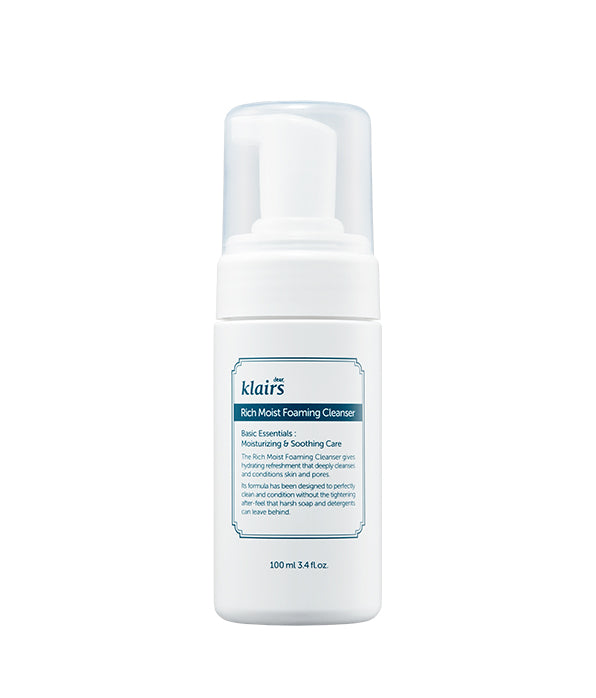
Rich Moist Foaming Cleanser

Rich Moist Foaming Cleanser
Dear, Klairs
rich-moist-foaming-cleanser
Cleanse
9706812604709
Morning or Evening?
How often will you use this product?
Notes


Highlights
WHAT IS IT?
A foaming facial cleanser
FEATURES
Gentle, abundant foam, removes impurities, leaves skin moist and smooth
BEST FOR
Sensitive skin
CHECKS
Free of alcohol, parabens, artifical colors, fragrances
Who Is It For?
Suitable For Adults Of All GendersWhat Does It Help With?
Cleansing Removing ImpuritiesBudget
AffordableHow To Use
Which routine should it be used in?
Instructions:
Key Information


What Dear, Klairs Says
Product Description:
This cleanser allows gentle facial wash with abundant foam. It effectively removes skin impurities and residues from your skin to be moist and smooth after cleansing.
About the Brand:
Ingredients Overview
Ingredients List
Aqua (Water), Sodium Lauroyl Sarcosinate, Glycerin, Propylene Glycol, Lauric Acid, Caprylic/Capric Triglyceride, Dimethyl Sulfone, Betaine, Stearic Acid, Glycyrrhiza Glabra (Licorice) Root Extract, Potassium Hydroxide, Chamaecyparis Obtusa Water, Ananas Sativus (Pineapple) Fruit Extract, Butylene Glycol, Chlorphenesin, Melaleuca Alternifolia (Tea Tree) Leaf Oil, Paeonia Suffruticosa Root Extract, Illicium Verum (Anise) Fruit Extract, Nelumbium Speciosum Flower Extract, Citrus Paradisi (Grapefruit) Fruit Extract, Scutellaria Baicalensis Root Extract, 1,2-Hexanediol, Capric Acid, Sodium Hyaluronate, Citric Acid, Panthenol, Pyridoxine HCl, Palmitic Acid, Arachidic Acid, Propanediol, Oleic Acid, Lysine HCl, Sodium Ascorbyl Phosphate, Acetyl Methionine, Theanine, Proline, Corchorus Olitorius Leaf Extract, Hibiscus Mutabilis Flower Extract, Linum Usitatissimum (Linseed) Seed Extract, Hibiscus Esculentus Fruit Extract, Arctium Lappa Root Extract, Apium Graveolens (Celery) Extract, Brassica Rapa (Turnip) Leaf Extract, Oryza Sativa (Rice) Bran Extract, Brassica Oleracea Capitata (Cabbage) Leaf Extract, Daucus Carota Sativa (Carrot) Root Extract, Brassica Oleracea Italica (Broccoli) Extract, Solanum Lycopersicum (Tomato) Fruit/Leaf/Stem Extract, Aloe Barbadensis Leaf Juice, Tocopheryl Acetate, Papain, Portulaca Oleracea Extract, Centella Asiatica Extract, Hydrolyzed Pea Protein, Phytosterols, Lecithin, Squalane, Olea Europaea (Olive) Fruit Oil, Beta-Glucan, Ceramide NP, Butyrospermum Parkii (Shea) Butter, Panax Ginseng Callus Culture Extract
Key Ingredients
Glycerin, Licorice Root Extract, Tea Tree Leaf Oil, Sodium Hyaluronate, Panthenol, Aloe Barbadensis Leaf Juice, Centella Asiatica Extract
Ingredients Details
Betaine
Common Name(s): Trimethylglycine,tmg,natural betaine
CAS Number: 107-43-7
DESCRIPTION
What It Does: Provides osmoprotective humectant conditioning with anti-irritant and mild foam-boosting activity.
Why It's Used: Natural-origin multifunctional osmolyte from sugar beet providing hydration, anti-irritancy, and conditioning in virtually every cosmetic category.
How It Works: Quaternary ammonium betaine provides zwitterionic character for water binding via ionic hydration. osmoprotective function at 100–500mm as compatible solute protecting cells from osmotic stress. reduces surfactant irritation by competing with sls for protein binding sites. mild foam enhancement.
Typically Found In: Virtually all categories — moisturisers, shampoos, cleansers
TECHNICAL DETAILS
Primary Category: Functional ingredient – humectant
Secondary Functions: Tewl reduction,skin plumping
Application Areas:

Facial Skincare
Body Care
Hair Care

Beard Care
Color Cosmetics (Makeup)
Dietary/Oral Supplements
Typical Concentration Range: 0.5%–10%
SOURCING & ETHICS
Vegan Status: Conditional - feedstock declaration required
Halal Status: Unverified - feedstock declaration required (plant, animal and petrochemical routes all exist)
Source Notes: Synthetic or naturally derived. excellent aqueous solubility. [audit 2026-07-29 rev2: origin-dependent: the same inci exists in plant, animal and petrochemical versions and the name does not discriminate. determination requires shariah-panel sign-off.]
SKIN COMPATIBILITY
Irritancy Rating: 1/5 – very low
Comedogenicity Rating: 0/5 – non-comedogenic
Sensitivity Concerns: Non-irritating; suitable for all skin types.
Safe for Sensitive Skin: Yes
SAFETY & COMPATIBILITY
Safety Profile: Excellent safety profile. ewg score: 1.
Works Well With: Ceramides,emollients,occlusives,glycerin,hyaluronic acid
Avoid Combining With: No significant incompatibilities
SCIENTIFIC NOTE
Betaine's anti-irritant mechanism for surfactant systems involves competitive protein protection: betaine at high concentrations preferentially interacts with skin proteins, occupying binding sites that would otherwise be occupied by surfactant molecules causing protein denaturation. this competition reduces available protein binding for irritating surfactants, explaining betaine's well-documented ability to reduce sls irritation when co-formulated.
Last Verified: 2026-03-12
Primary Sources: Cosing database,craig betaine osmoprotective review,cir safety assessment
Caprylic/capric Triglyceride
Common Name(s): Mct oil,fractionated coconut oil,c8/c10 triglyceride
CAS Number: 73398-61-5
DESCRIPTION
What It Does: Lightweight, stable emollient that solubilizes oil-soluble actives for excellent delivery without greasy feel.
Why It's Used: Universal lightweight emollient base and solubilizer for oil-soluble actives in serums and low-viscosity formulations where mineral oil or petrolatum would be too heavy.
How It Works: Medium-chain length provides ideal balance of spreading coefficient, penetration rate, and barrier-sealing properties. excellent solubilizer for vitamin e, retinoids, and other lipophilic actives.
Typically Found In: Serums,facial oils,sunscreens,anti-aging products,hair products
TECHNICAL DETAILS
Primary Category: Active ingredient – medium-chain triglyceride emollient
Secondary Functions: Active solubilizer,spreading agent
Application Areas:
Facial Skincare
Body Care
Hair Care
Beard Care
Color Cosmetics (Makeup)
Dietary/Oral Supplements
Typical Concentration Range: 1%–50%
SOURCING & ETHICS
Vegan Status: Conditional - feedstock declaration required
Halal Status: Unverified - feedstock declaration required (plant, animal and petrochemical routes all exist)
Source Notes: Fractionated by hydrolysis and re-esterification of coconut oil. only c8 and c10 fatty acids retained. [audit 2026-07-29 rev2: origin-dependent: the same inci exists in plant, animal and petrochemical versions and the name does not discriminate. determination requires shariah-panel sign-off.]
SKIN COMPATIBILITY
Irritancy Rating: 1/5 – very low
Comedogenicity Rating: 1/5 – very low; medium-chain length generally non-comedogenic
Sensitivity Concerns: Non-irritating.
Safe for Sensitive Skin: Yes
SAFETY & COMPATIBILITY
Safety Profile: Excellent safety profile. ewg score: 1.
Works Well With: Humectants,ceramides,actives as carrier
Avoid Combining With: No significant incompatibilities
SCIENTIFIC NOTE
Mct oil's medium-chain length (c8/c10) provides superior oxidative stability vs longer polyunsaturated chains and better skin aesthetics (lighter, less greasy) vs longer chain emollients (c16/c18). excellent solubilizer for retinoic acid, tocopheryl esters, and other lipophilic actives.
Last Verified: 2026-03-12
Primary Sources: Cosing database,cir safety assessment,ewg skin deep
Dimethyl Sulfone
Common Name(s): Msm,organic sulfur,anti-inflammatory sulfur
CAS Number: 67-71-0
DESCRIPTION
What It Does: Provides anti-inflammatory organic sulfur for skin strengthening from msm.
Why It's Used: Bioavailable organic sulfur anti-inflammatory — msm provides the sulfur required for keratin disulfide bonding and collagen sulfur amino acids alongside anti-inflammatory activity, making it a functional sulfur supplement for both structural skin proteins and inflammatory skin conditions.
How It Works: (ch3)2so2: highly bioavailable sulfur. anti-inflammatory: nf-kb inhibition + oxidative stress reduction. keratin: disulfide bond sulfur source. collagen: methionine + cysteine content. anti-acne: anti-inflammatory + antimicrobial. oral supplement: joint pain, anti-inflammatory. topical: skin brightening + anti-inflammatory.
Typically Found In: Anti-inflammatory skin care,strengthening products
TECHNICAL DETAILS
Primary Category: Active ingredient – cosmetic active
Secondary Functions: Skin conditioning
Application Areas:
Facial Skincare
Body Care
Hair Care
Beard Care
Color Cosmetics (Makeup)
Dietary/Oral Supplements
Typical Concentration Range: 1%–10%
SOURCING & ETHICS
Vegan Status: Conditional - supplier confirmation required
Halal Status: Unverified - supplier confirmation required
Source Notes: Commercially produced for cosmetic use. verify vegan/halal status with supplier. [audit 2026-07-29 rev2: the record's own source_notes does not assert a non-animal origin, or instructs the reader to verify with the supplier; "yes" asserts knowledge the record does not hold. determination requires shariah-panel sign-off.]
SKIN COMPATIBILITY
Irritancy Rating: 1/5 – very low
Comedogenicity Rating: 0/5 – non-comedogenic
Sensitivity Concerns: Well-tolerated by most skin types.
Safe for Sensitive Skin: Yes
SAFETY & COMPATIBILITY
Safety Profile: Good safety profile at recommended concentrations. ewg score: 1–2.
Works Well With: Standard skincare actives
Avoid Combining With: No known significant incompatibilities
SCIENTIFIC NOTE
Msm sulfur bioavailability: msm's dimethyl sulfone form provides sulfur without the digestive hydrogen sulfide issues of inorganic sulfates. topically, msm penetrates sc readily from low mw (94 da) + high oil-water partition compatibility, delivering sulfur to dermis for keratin/collagen synthesis cofactor function. this combination of sc penetration + sulfur bioavailability makes msm the most practical topical sulfur supplement.
Last Verified: 2026-03-12
Primary Sources: Cosing database,msm anti-inflammatory review
Glycerin
Common Name(s): Glycerol,glycerine,1,2,3-propanetriol
CAS Number: 56-81-5
DESCRIPTION
What It Does: Glycerin pulls water from the environment and deeper skin layers into the outer skin layer (epidermis), boosting moisture levels and keeping skin soft, smooth, and plump.
Why It's Used: It is used in virtually every moisturizer, serum, and cleanser because it is highly effective at hydrating skin, is well-tolerated by all skin types, and enhances the texture and spreadability of formulations.
How It Works: As a humectant, glycerin forms hydrogen bonds with water molecules, trapping them in the skin. it also reinforces the skin barrier by integrating into lipid structures between skin cells.
Typically Found In: Moisturizers,serums,cleansers,toners,sheet masks,sunscreens,body lotions,shampoos,conditioners
TECHNICAL DETAILS
Primary Category: Humectant
Secondary Functions: Skin barrier support,emollient,solvent
Application Areas:
Facial Skincare
Body Care
Hair Care
Beard Care
Color Cosmetics (Makeup)
Dietary/Oral Supplements
Typical Concentration Range: 1%–30% (typical: 3–10%)
SOURCING & ETHICS
Vegan Status: Conditional - feedstock declaration required
Halal Status: Unverified - feedstock declaration required (plant, animal and petrochemical routes all exist)
Source Notes: Derived from plant oils via hydrolysis or saponification; synthetic versions also available. palm-derived glycerin carries sustainability concerns. [audit 2026-07-29 rev2: origin-dependent: the same inci exists in plant, animal and petrochemical versions and the name does not discriminate. determination requires shariah-panel sign-off.]
SKIN COMPATIBILITY
Irritancy Rating: 1/5 – very low; non-irritating at all standard concentrations
Comedogenicity Rating: 0/5 – non-comedogenic
Sensitivity Concerns: Extremely rare allergic reactions; generally safe for all skin types including sensitive and baby skin
Safe for Sensitive Skin: Yes
SAFETY & COMPATIBILITY
Safety Profile: Widely recognized as safe. ewg hazard score: 1. no significant concerns for irritation, sensitization, or toxicity at typical concentrations (up to 50%).
Works Well With: Hyaluronic acid,ceramides,niacinamide,panthenol,urea,peptides,retinol,ahas/bhas
Avoid Combining With: No known incompatibilities at standard concentrations
SCIENTIFIC NOTE
Glycerin is an endogenous skin component found naturally in the stratum corneum. aquaporin-3 channels in keratinocytes facilitate glycerin transport, making it integral to natural skin hydration pathways.
Last Verified: 2026-03-12
Primary Sources: Cosing database,cir safety assessment,ewg skin deep,inci decoder