

Richfeel
Richfeel Aloe Moisturizer-Lightweight & Hydrating, Non-Sticky, Absorbs Instantly, For All Skin Types

Richfeel Aloe Moisturizer-Lightweight & Hydrating, Non-Sticky, Absorbs Instantly, For All Skin Types
Richfeel
richfeel-aloe-moisturizer-lightweight-hydrating-non-sticky-absorbs-instantly-for-all-skin-types
Moisturize
10085068833061
Morning or Evening?
How often will you use this product?
Notes


Highlights
WHAT IS IT?
Moisturizer with natural ingredients
FEATURES
Lightweight, hydrating, non-sticky, absorbs instantly, suitable for all skin types, deeply hydrates, makes skin soft and supple, nourishes skin, improves radiance and glow, non-greasy
BEST FOR
normal
CHECKS
Who Is It For?
All Genders All AgesWhat Does It Help With?
Hydration Nourishment Softness Suppleness Glow Healthy Skin AppearanceBudget
Affordable (under $30)How To Use
Which routine should it be used in?
Instructions:
Key Information


What Richfeel Says
Product Description:
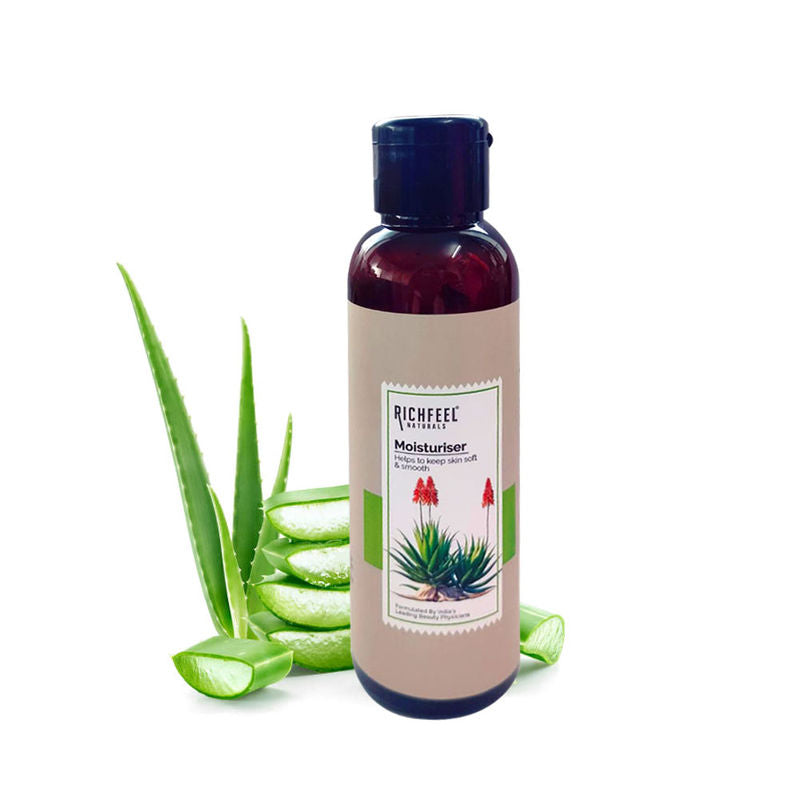
Moisturise your skin with Richfeel Moisturiser. Richfeel Moisturiser light based moisturiser and can be used during the day or night. It hydrates the skin deeply. Made with natural ingredients. Makes your skin soft and supple. Nourishes the skin, making it look healthy. It makes your skin glowing and radiant. It is a non-greasy moisturiser. Richfeel Moisturiser will moisturise your skin for long hours.
About the Brand:
Ingredients Overview
Ingredients List
Light Liquid Paraffin, Stearic Acid, Glycerin, Propylene Glycol, Polysorbate 60, Aloe Barbadensis (aloe) Leaf Juice
Key Ingredients
Ingredients Details
Glycerin
Common Name(s): Glycerol,glycerine,1,2,3-propanetriol
CAS Number: 56-81-5
DESCRIPTION
What It Does: Glycerin pulls water from the environment and deeper skin layers into the outer skin layer (epidermis), boosting moisture levels and keeping skin soft, smooth, and plump.
Why It's Used: It is used in virtually every moisturizer, serum, and cleanser because it is highly effective at hydrating skin, is well-tolerated by all skin types, and enhances the texture and spreadability of formulations.
How It Works: As a humectant, glycerin forms hydrogen bonds with water molecules, trapping them in the skin. it also reinforces the skin barrier by integrating into lipid structures between skin cells.
Typically Found In: Moisturizers,serums,cleansers,toners,sheet masks,sunscreens,body lotions,shampoos,conditioners
TECHNICAL DETAILS
Primary Category: Humectant
Secondary Functions: Skin barrier support,emollient,solvent
Application Areas:

Facial Skincare
Body Care
Hair Care
Beard Care

Color Cosmetics (Makeup)
Dietary/Oral Supplements
Typical Concentration Range: 1%–30% (typical: 3–10%)
SOURCING & ETHICS
Vegan Status: Yes – plant-derived (coconut, soy, palm) or synthetic
Halal Status: Yes – when plant-derived or synthetic; verify source with supplier
Source Notes: Derived from plant oils via hydrolysis or saponification; synthetic versions also available. palm-derived glycerin carries sustainability concerns.
SKIN COMPATIBILITY
Irritancy Rating: 1/5 – very low; non-irritating at all standard concentrations
Comedogenicity Rating: 0/5 – non-comedogenic
Sensitivity Concerns: Extremely rare allergic reactions; generally safe for all skin types including sensitive and baby skin
Safe for Sensitive Skin: Yes
SAFETY & COMPATIBILITY
Safety Profile: Widely recognized as safe. ewg hazard score: 1. no significant concerns for irritation, sensitization, or toxicity at typical concentrations (up to 50%).
Works Well With: Hyaluronic acid,ceramides,niacinamide,panthenol,urea,peptides,retinol,ahas/bhas
Avoid Combining With: No known incompatibilities at standard concentrations
SCIENTIFIC NOTE
Glycerin is an endogenous skin component found naturally in the stratum corneum. aquaporin-3 channels in keratinocytes facilitate glycerin transport, making it integral to natural skin hydration pathways.
Last Verified: Cosing database,cir safety assessment,ewg skin deep,inci decoder
Primary Sources: 2026-03-12
Polysorbate 60
Common Name(s): Polysorbate nonionic emulsifier,sorbitan ester ethoxylate,oil solubiliser
CAS Number: N/a
DESCRIPTION
What It Does: Emulsifies oils into water-based formulations, solubilises lipophilic fragrance and active ingredients in aqueous systems, and provides gentle foaming surfactancy in mild cleansers.
Why It's Used: Polysorbates are fda-approved food emulsifiers (gras) providing an exceptional safety documentation base for cosmetic use, and their high hlb (14–17) makes them highly efficient o/w emulsifiers at low concentrations.
How It Works: Sorbitan ring + 20–80 mol ethylene oxide + fatty acid provides amphiphilic block structure. high hlb (polysorbate 20: hlb 16.7; polysorbate 80: hlb 15.0) positions them at the o/w interface with the peo chain extending into the water phase forming steric emulsion stabilisation. cmc ~0.01–0.1 mm enables efficient solubilisation at low concentrations.
Typically Found In: Emulsions,fragrance solubilisation,cleansers
TECHNICAL DETAILS
Primary Category: Active ingredient – cosmetic active
Secondary Functions: Skin conditioning
Application Areas:
Facial Skincare
Body Care
Hair Care
Beard Care
Color Cosmetics (Makeup)
Dietary/Oral Supplements
Typical Concentration Range: 0.5%–10%
SOURCING & ETHICS
Vegan Status: Yes
Halal Status: Yes
Source Notes: Commercially produced for cosmetic use. verify vegan/halal status with supplier.
SKIN COMPATIBILITY
Irritancy Rating: 1/5 – very low
Comedogenicity Rating: 0/5 – non-comedogenic
Sensitivity Concerns: Well-tolerated by most skin types.
Safe for Sensitive Skin: Yes
SAFETY & COMPATIBILITY
Safety Profile: Good safety profile at recommended concentrations. ewg score: 1–2.
Works Well With: Standard skincare actives
Avoid Combining With: No known significant incompatibilities
SCIENTIFIC NOTE
Polysorbate number (20, 40, 60, 80) indicates the fatty acid chain: 20 = laurate (c12); 40 = palmitate (c16); 60 = stearate (c18:0); 80 = oleate (c18:1). the oleate chain of polysorbate 80 provides better cold stability from the cis double bond preventing crystallisation at refrigerator temperatures.
Last Verified: Cosing database,polysorbate sorbitan ethoxylate emulsifier review
Primary Sources: 2026-03-12
Propylene Glycol
Common Name(s): 1,2-propanediol,pdg,propane-1,2-diol
CAS Number: 57-55-6
DESCRIPTION
What It Does: Provides humectant hydration alongside solubilization of water-soluble actives and preservation boosting.
Why It's Used: Multi-function glycol for comprehensive formulation utility: hydration, solubilization, and preservation in a single cost-effective ingredient.
How It Works: Two hydroxyl groups provide water binding for humectant activity. propylene backbone provides solvent capacity for both polar and moderately non-polar actives. antimicrobial activity via membrane disruption enhancing preservative systems.
Typically Found In: Moisturizers,serums,toners,almost all aqueous formulations
TECHNICAL DETAILS
Primary Category: Functional ingredient – glycol humectant / solvent
Secondary Functions: Tewl reduction,skin plumping
Application Areas:
Facial Skincare
Body Care
Hair Care
Beard Care
Color Cosmetics (Makeup)
Dietary/Oral Supplements
Typical Concentration Range: 1%–15%
SOURCING & ETHICS
Vegan Status: Yes – from propylene oxide (petrochemical) or bio-based (corn fermentation)
Halal Status: Yes
Source Notes: Synthetic or naturally derived. excellent aqueous solubility.
SKIN COMPATIBILITY
Irritancy Rating: 2/5 – low to moderate; potential sensitizer in sensitive individuals at high concentrations
Comedogenicity Rating: 0/5 – non-comedogenic
Sensitivity Concerns: Non-irritating; suitable for all skin types.
Safe for Sensitive Skin: Yes
SAFETY & COMPATIBILITY
Safety Profile: Well-established safety profile. ewg score: 3. bio-based pg available from corn fermentation.
Works Well With: Ceramides,emollients,occlusives,glycerin,hyaluronic acid
Avoid Combining With: No significant incompatibilities
SCIENTIFIC NOTE
Propylene glycol's dual polarity (two hydroxyl groups + propylene hydrocarbon backbone) enables dissolution of ingredients spanning a wide hydrophilicity range – from highly polar actives (amino acids, glycerin) to moderately lipophilic actives (salicylic acid, retinol). this broad solubility range makes it uniquely versatile as a cosmetic solvent.
Last Verified: Cosing database,cir safety assessment
Primary Sources: 2026-03-12
Stearic Acid
Common Name(s): Octadecanoic acid,n-octadecanoic acid,stearinsaure
CAS Number: 57-11-4
DESCRIPTION
What It Does: Provides fatty acid thickening and emolliency with soap-forming emulsification when neutralized.
Why It's Used: Classic cosmetic fatty acid used in virtually all cream and lotion formulations for thickening, emolliency, and opacification.
How It Works: Forms metal soaps (sodium stearate, potassium stearate) on reaction with alkalis for self-emulsification. crystallizes in lamellar networks for thickening. waxy solid provides opacification. low-viscosity melt above 69°c for easy processing.
Typically Found In: Creams,soaps,cleansers,emulsions – foundational ingredient
TECHNICAL DETAILS
Primary Category: Functional ingredient – c18 saturated fatty acid
Secondary Functions: Barrier sealing,softening
Application Areas:
Facial Skincare
Body Care
Hair Care
Beard Care
Color Cosmetics (Makeup)
Dietary/Oral Supplements
Typical Concentration Range: 1%–15%
SOURCING & ETHICS
Vegan Status: Yes – from vegetable (palm, shea, soy stearin)
Halal Status: Yes
Source Notes: Plant-derived, synthetic or animal-derived. verify source.
SKIN COMPATIBILITY
Irritancy Rating: 1/5 – very low
Comedogenicity Rating: 2/5 – low
Sensitivity Concerns: Non-irritating.
Safe for Sensitive Skin: Yes
SAFETY & COMPATIBILITY
Safety Profile: Excellent safety profile. ewg score: 1.
Works Well With: Humectants,ceramides,actives as carrier
Avoid Combining With: No significant incompatibilities
SCIENTIFIC NOTE
Stearic acid's dual role as both an emulsifier precursor (when saponified to sodium stearate soap) and an emollient (as unmodified fatty acid) is unique among cosmetic fatty acids. in soap-based cleansers, stearic acid is intentionally partially saponified to create a balanced system: excess stearic acid provides skin-conditioning emolliency while the sodium stearate provides surfactancy – the chemical basis for 'superfatted' soaps.
Last Verified: Cosing database,cir safety assessment
Primary Sources: 2026-03-12
