

RiRe
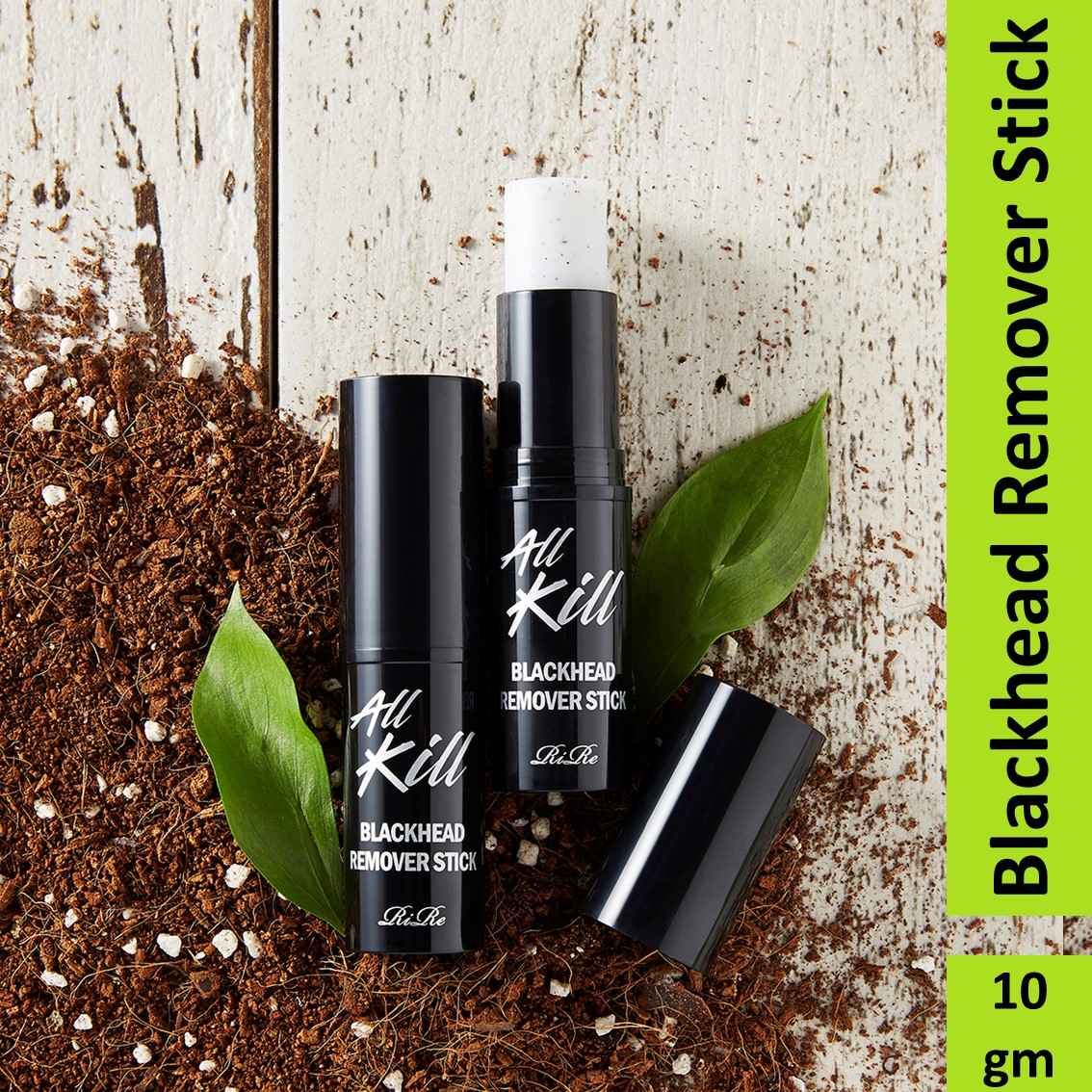
RiRe All Kill Blackhead Remover Stick, 10 gm

RiRe All Kill Blackhead Remover Stick, 10 gm
RiRe
rire-all-kill-blackhead-remover-stick-10-gm
Exfoliation
10084847485221
Morning or Evening?
How often will you use this product?
Notes


Highlights
WHAT IS IT?
Blackhead remover stick; ingredient count not specified
FEATURES
Easy to use; removes blackheads, whiteheads, and dead skin cells; cleans and smooths pores; contains natural extracts to smooth and moisturize skin
BEST FOR
normal
CHECKS
Who Is It For?
What Does It Help With?
Blackhead Removal Pore Cleansing Dead Skin Cell Removal Skin Smoothing MoisturizingBudget
Affordable (under $30)How To Use
Which routine should it be used in?
Instructions:
Key Information

What RiRe Says
Product Description:
Easy, fast, convenient to use: All you have to do is to rub it on skin in circular motion to remove blackheads, whiteheads, and dead skin cells. This stick helps you keep clean and soft skin by removing impurities buried deep in pores. Because this stick contains natural extracs, it helps skin smooth and get moist.
About the Brand:
Ingredients Overview
Ingredients List
Water, Sodium Stearate (surfactant/cleansing, emulsifying, viscosity controlling), Propylene Glycol (moisturizer/humectant, solvent, viscosity controlling), Propanediol (solvent, moisturizer/humectant), Bis-PEG-18 Methyl Ether Dimethyl Silane (emollient, moisturizer/humectant, surfactant/cleansing), Silica (viscosity controlling, absorbent/mattifier), Microcrystalline Cellulose, 1,2-Hexanediol (solvent), Polysorbate 20 (emulsifying, surfactant/cleansing), Bentonite, Sodium Hyaluronate, Phenoxyethanol (preservative), Charcoal Powder, ♦️Fragrance, Oryza Sativa (Rice) Extract, Glycine Max (Soybean) Seed Extract, Sesamum Indicum (Sesame) Seed Extract, Butylene Glycol (moisturizer/humectant, solvent, viscosity controlling), Aloe Arborescens Leaf Extract, Melaleuca Alternifolia (Tea Tree) Extract, Chamomilla Recutita (Matricaria) Extract, ♦️Lavandula Angustifolia (Lavender) Extract, Ethylhexylglycerin (preservative, deodorant)
Key Ingredients
natural extracts
Ingredients Details
Aloe Arborescens Leaf Extract
Common Name(s): Aloe arborescens leaf extract,aloe arborescens leaf extract,botanical extract,phytochemical active
CAS Number: N/a
DESCRIPTION
What It Does: Provides antioxidant protection from polyphenol radical scavenging, anti-inflammatory activity from terpenoid nf-kb/cox inhibition, and multi-active skin conditioning.
Why It's Used: Aloe arborescens leaf extract is selected for the characteristic secondary metabolite signature of aloe arborescens — whether polyphenols, terpenoids, alkaloids, or polysaccharides, the phytochemical profile provides antioxidant, anti-inflammatory, or skin conditioning benefits specific to this botanical species.
How It Works: Polyphenol catechol groups donate h-atoms to ros scavenging (rate constants 10⁶-10⁹ m⁻¹s⁻¹); terpenoids inhibit iκb kinase; flavonoids compete at cox-1/2; alkaloids modulate specific receptors.
Typically Found In: Botanical skin care
TECHNICAL DETAILS
Primary Category: Active ingredient – antioxidant
Secondary Functions: Free radical scavenging,anti-aging
Application Areas:

Facial Skincare
Body Care

Hair Care
Beard Care
Color Cosmetics (Makeup)
Dietary/Oral Supplements
Typical Concentration Range: 0.1%–10%
SOURCING & ETHICS
Vegan Status: Conditional - supplier confirmation required
Halal Status: Conditional - basis not stated in source record; supplier origin confirmation required to determine what evidence applies
Source Notes: Plant-derived extract or synthetic. [audit 2026-07-29 rev2: status downgraded on audit. determination requires shariah-panel sign-off.]
SKIN COMPATIBILITY
Irritancy Rating: 1/5 – very low
Comedogenicity Rating: 0/5 – non-comedogenic
Sensitivity Concerns: Non-irritating; well-tolerated.
Safe for Sensitive Skin: Yes
SAFETY & COMPATIBILITY
Safety Profile: Excellent safety profile. ewg score: 1.
Works Well With: Vitamin c,vitamin e,ferulic acid,spf,other antioxidants
Avoid Combining With: No significant incompatibilities
SCIENTIFIC NOTE
Standardise to active marker compounds for consistent bioactivity — field-grown material varies 3-10× in secondary metabolite content.
Last Verified: 2026-03-22
Primary Sources: Cosing database,aloe arborescens leaf extract botanical extract review
Bentonite
Common Name(s): Montmorillonite,volcanic ash clay,swelling clay
CAS Number: 1302-78-9
DESCRIPTION
What It Does: Provides thixotropic clay gellation and deep oil absorption from swelling smectite clay.
Why It's Used: Strongest adsorbing clay for deep cleansing masks – bentonite's high cation exchange capacity and swelling capacity provide the deepest oil and toxin adsorption of common cosmetic clays.
How It Works: Montmorillonite 2:1 layered silicate swells up to 15× in water via interlayer water absorption. very high cation exchange capacity (cec: 80-150 meq/100g) provides exceptional adsorption of cations, oils, and toxins. thixotropic gel provides 'mask that hardens' sensory experience.
Typically Found In: Clay masks,deep cleansing products,detoxifying formulas
TECHNICAL DETAILS
Primary Category: Functional ingredient – swelling clay mineral
Secondary Functions: Skin conditioning
Application Areas:
Facial Skincare
Body Care
Hair Care
Beard Care
Color Cosmetics (Makeup)
Dietary/Oral Supplements
Typical Concentration Range: 1%–25%
SOURCING & ETHICS
Vegan Status: Conditional - supplier confirmation required
Halal Status: Unverified - supplier confirmation required
Source Notes: Commercially produced for cosmetic use. verify vegan/halal status with supplier. [audit 2026-07-29 rev2: the record's own source_notes does not assert a non-animal origin, or instructs the reader to verify with the supplier; "yes" asserts knowledge the record does not hold. determination requires shariah-panel sign-off.]
SKIN COMPATIBILITY
Irritancy Rating: 1/5 – very low
Comedogenicity Rating: 0/5 – non-comedogenic
Sensitivity Concerns: Well-tolerated by most skin types.
Safe for Sensitive Skin: Yes
SAFETY & COMPATIBILITY
Safety Profile: Good safety profile at recommended concentrations. ewg score: 1–2.
Works Well With: Standard skincare actives
Avoid Combining With: No known significant incompatibilities
SCIENTIFIC NOTE
Bentonite's extraordinary swelling (up to 15× dry volume) arises from its 2:1 layer structure: sodium bentonite's inter-layer sodium cations attract very thick water shells, forcing the silicate layers apart by electrostatic repulsion. calcium bentonite swells only 2-3× by comparison, explaining why sodium-exchanged bentonite is the industrial standard for swelling applications.
Last Verified: 2026-03-12
Primary Sources: Cosing database,cir safety assessment
Charcoal Powder
Common Name(s): Activated charcoal/fuller's earth,pore cleansing adsorbent,detoxifying clay
CAS Number: N/a
DESCRIPTION
What It Does: Physically adsorbs excess sebum, environmental pollution particulates, and skin surface impurities into the porous structure, purifies pores during mask application, and provides the 'detox' pore-drawing action validated by the visible sebum and debris transfer to the mask on removal.
Why It's Used: Provides genuine documented high-capacity physical adsorption — not a marketing claim but a measurable adsorbent capacity. activated charcoal's ~2000 m²/g surface area adsorbs sebum lipids and particulate pollutants through van der waals forces at concentrations no clay or silica alternative can match.
How It Works: Activated charcoal's turbostratic graphite structure (disordered graphene layers) provides pore sizes of 0.5–50 nm covering micro, meso, and macro pore ranges. sebum lipids adsorb into mesopores (2–50 nm) via van der waals forces; pollutant pahs adsorb via π-π stacking with graphene rings; the high-capacity adsorption drives equilibrium-driven partitioning from pore to charcoal surface.
Typically Found In: Charcoal masks,pore purifying,detox
TECHNICAL DETAILS
Primary Category: Active ingredient – mineral / metal active
Secondary Functions: Antimicrobial,sebum regulation,antioxidant enzyme cofactor
Application Areas:
Facial Skincare
Body Care
Hair Care
Beard Care
Color Cosmetics (Makeup)
Dietary/Oral Supplements
Typical Concentration Range: 5%–30%
SOURCING & ETHICS
Vegan Status: Yes
Halal Status: Yes
Source Notes: Mineral/inorganic compound. cosmetic or pharmaceutical grade.
SKIN COMPATIBILITY
Irritancy Rating: 1/5 – very low
Comedogenicity Rating: 0/5 – non-comedogenic
Sensitivity Concerns: Non-irritating at recommended concentrations.
Safe for Sensitive Skin: Yes at recommended concentrations
SAFETY & COMPATIBILITY
Safety Profile: Excellent safety profile at cosmetic concentrations. ewg score: 1–2.
Works Well With: Niacinamide,salicylic acid,other actives
Avoid Combining With: No significant incompatibilities at standard concentrations
SCIENTIFIC NOTE
Activated charcoal's adsorption capacity (1–3 g sebum/g charcoal) significantly exceeds kaolin clay (~0.5 g/g) and bentonite (~0.8 g/g) — the higher porosity-to-mass ratio from carbonisation providing the most efficient sebum adsorption per gram of any cosmetic adsorbent.
Last Verified: 2026-03-12
Primary Sources: Cosing database,activated charcoal pore adsorption capacity review
Microcrystalline Cellulose
Common Name(s): Natural or modified biopolymer thickener,rheology modifier,film-former
CAS Number: N/a
DESCRIPTION
What It Does: Builds aqueous viscosity through polymer chain entanglement above the overlap concentration, forms conditioning films on skin and hair, and stabilises suspensions through yield stress.
Why It's Used: Natural biopolymer thickeners provide elegant formulation sensory without the tight ph requirements of synthetic carbomers — preferred in shampoos and conditioners where broad ph tolerance and natural origin are both required.
How It Works: Polysaccharide chains above overlap concentration c* entangle forming a viscoelastic network — viscosity scales as c^4.7 above c*, providing steep concentration-viscosity dependence. chemical modification (hydroxypropyl, hydroxyethyl) increases water solubility and cold-processability of otherwise difficult-to-dissolve natural polysaccharides.
Typically Found In: Shampoos,conditioners,gels
TECHNICAL DETAILS
Primary Category: Active ingredient – cosmetic active
Secondary Functions: Skin conditioning
Application Areas:
Facial Skincare
Body Care
Hair Care
Beard Care
Color Cosmetics (Makeup)
Dietary/Oral Supplements
Typical Concentration Range: 0.1%–5%
SOURCING & ETHICS
Vegan Status: Conditional - supplier confirmation required
Halal Status: Unverified - supplier confirmation required
Source Notes: Commercially produced for cosmetic use. verify vegan/halal status with supplier. [audit 2026-07-29 rev2: the record's own source_notes does not assert a non-animal origin, or instructs the reader to verify with the supplier; "yes" asserts knowledge the record does not hold. determination requires shariah-panel sign-off.]
SKIN COMPATIBILITY
Irritancy Rating: 1/5 – very low
Comedogenicity Rating: 0/5 – non-comedogenic
Sensitivity Concerns: Well-tolerated by most skin types.
Safe for Sensitive Skin: Yes
SAFETY & COMPATIBILITY
Safety Profile: Good safety profile at recommended concentrations. ewg score: 1–2.
Works Well With: Standard skincare actives
Avoid Combining With: No known significant incompatibilities
SCIENTIFIC NOTE
Biopolymer thickeners are sensitive to electrolyte concentration — high salt levels screen polymer charge interactions reducing viscosity. formulation salt content must be accounted for when selecting polymer concentration for target viscosity.
Last Verified: 2026-03-12
Primary Sources: Cosing database,microcrystalline cellulose biopolymer thickener review