

Rivona Naturals
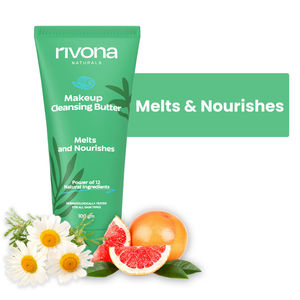
Rivona Naturals Makeup Cleansing Butter | Coconut Oil + Jojoba Oil | Gentle Makeup Remover Enriched with 12 Active herbs |All Skin types |100 gm

Rivona Naturals Makeup Cleansing Butter | Coconut Oil + Jojoba Oil | Gentle Makeup Remover Enriched with 12 Active herbs |All Skin types |100 gm
Rivona Naturals
rivona-naturals-makeup-cleansing-butter-coconut-oil-jojoba-oil-gentle-makeup-remover-enriched-with-12-active-herbs-all-skin-types-100-gm
Cleanse
10085488263461
Morning or Evening?
How often will you use this product?
Notes


Highlights
WHAT IS IT?
Makeup Cleansing Butter enriched with 12 Active Herbs
FEATURES
Removes makeup with ease, Nourishing properties with Coconut Oil and Jojoba Oil, Gentle cleansing with Chamomile and Green Tea Extract, Intense hydration, Antioxidant-rich with Grapefruit, Pomegranate and Kiwi Seed Extract, Skin rejuvenation with Gotu Kola and Papaya Fruit Extract
BEST FOR
sensitive
CHECKS
No Harmful Chemicals, Paraben Free, Phthalate Free
Who Is It For?
All Skin Types UnisexWhat Does It Help With?
Makeup Removal Nourishment Hydration Skin Soothing Protection From Environmental Damage Skin RejuvenationBudget
Affordable (under $30)How To Use
Which routine should it be used in?
Instructions:
Key Information


What Rivona Naturals Says
Product Description:
Makeup Cleansing Butter enriched with the goodness of 12 Active Herbs Coconut Oil Jojoba Oil Grapefruit Extract Green Tea Extract Chamomile Extract Papaya Fruit Extract Noni Fruit Extract Kiwi Seed Extract Shea Butter Witch Hazel Extract Pomegranate Extract and Gotu Kola Extract which:
• REMOVES MAKEUP WITH EASE: This Cleansing Butter Effectively Melts Away Makeup, Including Stubborn And Waterproof Products, Without Stripping The Skin Of Its Natural Moisture.
• NOURISHING PROPERTIES: The Combination of Coconut Oil, Jojoba Oil, and Various Fruit and Plant Extracts Provides Nourishment to the Skin, Leaving It Feeling Soft, Supple, and Rejuvenated.
• GENTLE CLEANSING: The Presence Of Chamomile Extract And Green Tea Extract Helps To Soothe And Calm The Skin, Making It Suitable For Sensitive Skin Types And Reducing The Risk Of Irritation.
• INTENSE HYDRATION: The Moisturizing Properties Of Coconut Oil And Jojoba Oil Help To Hydrate And Replenish The Skin, Preventing Dryness And Maintaining A Healthy Moisture Balance.
• ANTIOXIDANT-RICH: Grapefruit Extract, Pomegranate Extract, And Kiwi Seed Extract Are Rich In Antioxidants, Which Help To Protect The Skin From Environmental Damage And Promote A Youthful Appearance.
• SKIN REJUVENATION: The Presence Of Gotu Kola Extract And Papaya Fruit Extract Aids In Promoting Skin Rejuvenation, Improving The Overall Texture And Appearance Of The Complexion.
• CLAIMS: Dermatologically tested, Cruelty Free, Paraben Free, Phthalate Free, Vegan, pH Balanced, No Harmful Chemicals
About the Brand:
Ingredients Overview
Ingredients List
coconut-oil,jojoba-oil,grapefruit-extract,green-tea-extract,chamomile-extract,papaya-fruit-extract,noni-fruit-extract,kiwi-seed-extract,shea-butter,witch-hazel-extract,pomegranate-extract,gotu-kola-extract
Key Ingredients
Coconut Oil,Jojoba Oil,Grapefruit Extract,Green Tea Extract,Chamomile Extract,Papaya Fruit Extract,Noni Fruit Extract,Kiwi Seed Extract,Shea Butter,Witch Hazel Extract,Pomegranate Extract,Gotu Kola Extract
Ingredients Details
Coconut Oil
Common Name(s): Coconut oil,botanical oil,phytochemical active
CAS Number: N/a
DESCRIPTION
What It Does: Provides antioxidant protection from reactive oxygen species, reduces inflammatory cytokine production in skin, and conditions skin through the plant's phytochemical complex.
Why It's Used: Natural origin narrative, traditional use heritage, and multi-functional phytochemical profile supporting concurrent skin care claims from one ingredient.
How It Works: Polyphenols, terpenoids, and alkaloids scavenge ros via h• donation, inhibit nf-kb or cox-2 inflammatory pathways, and interact with skin surface proteins for conditioning.
Typically Found In: Botanical skin care,natural products
TECHNICAL DETAILS
Primary Category: Active ingredient – antioxidant
Secondary Functions: Free radical scavenging,anti-aging
Application Areas:

Facial Skincare
Body Care

Hair Care
Beard Care
Color Cosmetics (Makeup)
Dietary/Oral Supplements
Typical Concentration Range: 0.1%–10%
SOURCING & ETHICS
Vegan Status: Conditional - supplier confirmation required
Halal Status: Yes
Source Notes: Plant-derived extract or synthetic. [audit 2026-07-29 rev2: status downgraded on audit. determination requires shariah-panel sign-off.]
SKIN COMPATIBILITY
Irritancy Rating: 1/5 – very low
Comedogenicity Rating: 0/5 – non-comedogenic
Sensitivity Concerns: Non-irritating; well-tolerated.
Safe for Sensitive Skin: Yes
SAFETY & COMPATIBILITY
Safety Profile: Excellent safety profile. ewg score: 1.
Works Well With: Vitamin c,vitamin e,ferulic acid,spf,other antioxidants
Avoid Combining With: No significant incompatibilities
SCIENTIFIC NOTE
Plant secondary metabolites evolved as photoprotectants and antimicrobials — mechanisms directly applicable to cosmetic antioxidant and anti-inflammatory activity in human skin.
Last Verified: 2026-03-12
Primary Sources: Cosing database,coconut oil botanical review
Gotu Kola Extract
Common Name(s): Gotu kola extract extract
DESCRIPTION
What It Does: Provides antioxidant protection, soothing anti-inflammatory effects, and skin-conditioning benefits through plant-derived polyphenols and phytochemicals.
Why It's Used: Plant extracts concentrate bioactive phytochemicals evolved for environmental protection — uv, microbial, and oxidative stressors — that translate to skin benefits.
How It Works: Polyphenols (flavonoids, phenolic acids) inhibit nf-κb-mediated inflammatory signaling, scavenge reactive oxygen species through electron donation, and chelate pro-oxidant metal ions to reduce oxidative skin damage.
Typically Found In: Serums,toners,moisturizers,masks,essences
TECHNICAL DETAILS
Primary Category: Botanical extracts
Secondary Functions: Antioxidant,anti-inflammatory
Application Areas:
Facial Skincare
Body Care
Hair Care
Beard Care
Color Cosmetics (Makeup)
Dietary/Oral Supplements
Typical Concentration Range: 0.1–10%
SOURCING & ETHICS
Vegan Status: Yes
Halal Status: Yes
Source Notes: Plant-derived extract; no animal components.
SKIN COMPATIBILITY
Irritancy Rating: 1899-12-31 00:00:00 -0800
Sensitivity Concerns: Low sensitization potential at recommended use concentrations.
Safe for Sensitive Skin: Yes
SAFETY & COMPATIBILITY
Safety Profile: Well-characterized cosmetic ingredient with established safety profile. generally non-irritating at typical use concentrations. suitable for leave-on and rinse-off cosmetics.
Works Well With: Niacinamide,hyaluronic acid,vitamin c,ceramides
Avoid Combining With: Strong oxidizing agents
SCIENTIFIC NOTE
Plant secondary metabolites (flavonoids, terpenes, phenolic acids) are biosynthesized as defense compounds against uv, herbivores, and pathogens. their anti-inflammatory activity typically derives from competitive inhibition of cox-2 and 5-lox enzymes (ic50 1–50 µm), while antioxidant activity involves single electron transfer (set) and hydrogen atom transfer (hat) mechanisms with structure-dependent rate constants.
Last Verified: 2025-01-15
Primary Sources: Cosing eu database; pcpc cosmetic ingredient safety reviews; phytochemical and ethnobotanical literature
Jojoba Oil
Common Name(s): Jojoba oil,jojoba seed oil
CAS Number: 61789-91-1
DESCRIPTION
What It Does: Provides sebum-identical emolliency with outstanding oxidative stability and non-comedogenic profile.
Why It's Used: The most sebum-compatible plant oil – its wax ester composition mimics human sebum for superior skin compatibility across all skin types including oily and acne-prone.
How It Works: Liquid wax ester composition (primarily c20:1 and c22:1 wax esters) provides exceptional molecular mimicry of human sebum wax esters. regulates sebum production via negative feedback to sebaceous glands. remarkable oxidative stability from fully unsaturated wax ester structure vs polyunsaturated triglycerides.
Typically Found In: Facial oils,hair oils,serums,body care,lip care,virtually all product categories
TECHNICAL DETAILS
Primary Category: Functional ingredient – emollient
Secondary Functions: Sebum balancing,oxidative stability,non-comedogenic
Application Areas:
Facial Skincare
Body Care
Hair Care
Beard Care
Color Cosmetics (Makeup)
Dietary/Oral Supplements
Typical Concentration Range: 1%–100%
SOURCING & ETHICS
Vegan Status: Yes – from simmondsia chinensis (jojoba) seeds
Halal Status: Yes
Source Notes: Cold-pressed from jojoba seeds. among the most oxidation-stable plant oils (shelf life 5+ years). desert-grown, drought-resistant crop.
SKIN COMPATIBILITY
Irritancy Rating: 1/5 – very low
Comedogenicity Rating: 0/5 – non-comedogenic; sebum-identical composition
Sensitivity Concerns: Non-irritating.
Safe for Sensitive Skin: Yes
SAFETY & COMPATIBILITY
Safety Profile: Excellent safety profile. ewg score: 1.
Works Well With: Humectants,ceramides,actives as carrier
Avoid Combining With: No significant incompatibilities
SCIENTIFIC NOTE
Jojoba oil's wax ester composition is uniquely different from all other plant oils (which are triglycerides). human sebum contains approximately 25% wax esters – the proportion matched by jojoba. this structural identity explains jojoba's superior skin and hair compatibility versus conventional triglyceride oils.
Last Verified: 2026-03-12
Primary Sources: Cosing database,gad et al. jojoba review,cir safety assessment
Pomegranate Extract
Common Name(s): Pomegranate extract,punica extract,pomegranate polyphenol
CAS Number: 84929-27-1
DESCRIPTION
What It Does: Provides punicalagin-based exceptional antioxidant activity with anti-inflammatory and skin regeneration benefits.
Why It's Used: Highest-orac common fruit extract – punicalagins provide unmatched antioxidant activity alongside oestrogenic urolithins for anti-aging and barrier support.
How It Works: Punicalagins a and b (2x the antioxidant power of red wine) provide orac value ~10,000 μmol te/g. metabolized to urolithins by skin microbiome – urolithin a activates mitophagy for cellular anti-aging. ellagic acid inhibits tyrosinase for brightening. mild estrogenic activity via urolithin phytoestrogens.
Typically Found In: Premium antioxidant products,brightening formulas,anti-aging serums
TECHNICAL DETAILS
Primary Category: Active ingredient – antioxidant
Secondary Functions: Punicalagin orac,urolithin mitophagy
Application Areas:
Facial Skincare
Body Care
Hair Care
Beard Care
Color Cosmetics (Makeup)
Dietary/Oral Supplements
Typical Concentration Range: 0.1%–5%
SOURCING & ETHICS
Vegan Status: Yes – from punica granatum fruit
Halal Status: Yes
Source Notes: Plant-derived extract or synthetic.
SKIN COMPATIBILITY
Irritancy Rating: 1/5 – very low
Comedogenicity Rating: 0/5 – non-comedogenic
Sensitivity Concerns: Non-irritating; well-tolerated.
Safe for Sensitive Skin: Yes
SAFETY & COMPATIBILITY
Safety Profile: Excellent safety profile. ewg score: 1.
Works Well With: Vitamin c,vitamin e,ferulic acid,spf,other antioxidants
Avoid Combining With: No significant incompatibilities
SCIENTIFIC NOTE
Pomegranate punicalagin's conversion to urolithin a by skin microbiome represents a remarkable prebiotic-probiotic relationship: the skin's resident bacteria metabolize the polyphenol precursor to create the bioactive urolithin that activates mitophagy (cellular mitochondrial quality control). this microbiome-dependent bioactivation means the same punicalagin extract has different anti-aging potency across individuals depending on their microbiome composition.
Last Verified: 2026-03-12
Primary Sources: Cosing database,seeram et al. pomegranate punicalagin review