

Riyo Herbs
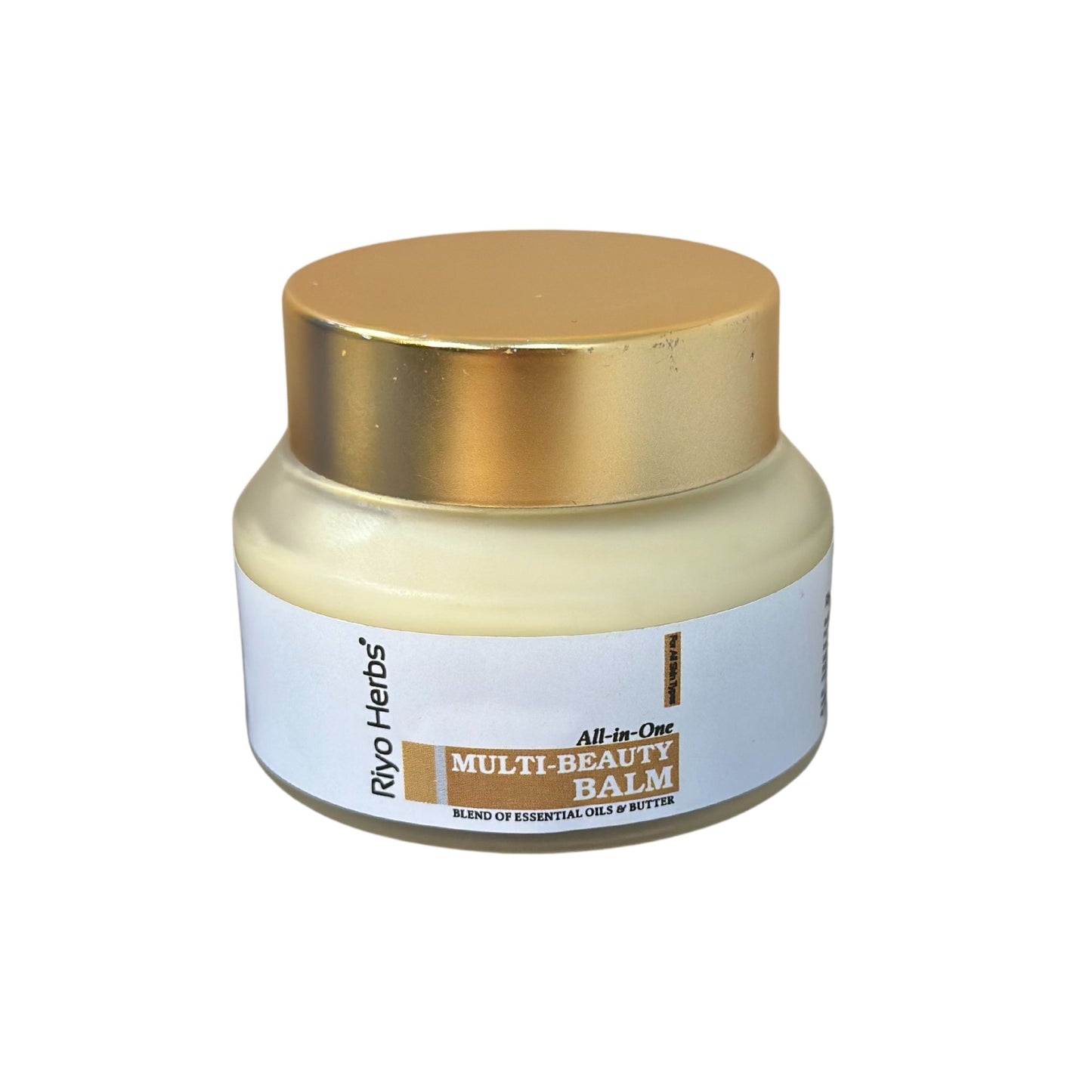
Riyo Herbs All In One Multi Beauty Balm

Riyo Herbs All In One Multi Beauty Balm
Riyo Herbs
riyo-herbs-all-in-one-multi-beauty-balm
Moisturize
10084878385445
Morning or Evening?
How often will you use this product?
Notes


Highlights
WHAT IS IT?
Multi Beauty Balm with essential oils and butters
FEATURES
All-in-one wonder; Infused with essential oil and butter; Provides deep hydration; Suitable for all skin types; GMP certified; FDA approved; cruelty-free; paraben-free
BEST FOR
dry
CHECKS
sulfate-free, paraben-free
Who Is It For?
Gender-neutral All AgesWhat Does It Help With?
Softening And Moisturizing Dry Skin Cuticle Care Dry Chapped Lips Promotes Elasticity Deep Hydration Radiant GlowBudget
Mid-range ($30-$75)How To Use
Which routine should it be used in?
Instructions:
Key Information


What Riyo Herbs Says
Product Description:
Indulge in Riyo Herbs' All-in-One Multi Beauty Balm, a skincare savior for every need. This versatile balm is your go-to solution for softening and moisturizing dry skin across the face and body. Whether for dry, chapped lips, cuticle care, or as a nighttime beauty balm, this balm is an essential must-have for your daily travels. This luxurious fusion nurtures, soothes, and rejuvenates, promoting elasticity, deep hydration, and a radiant glow, making it a must-have for your daily beauty ritual.
About the Brand:
Ingredients Overview
Ingredients List
Aqua, Astrocaryum-Tucuma-Seed-Butter, Xylitylglucoside, Anhydroxylitol, Xylitol, Natural-Betaine, Niacinamide, Psoralea-Corylifolia-Seed-Oil, Simmondsia-Chinensis-Seed-Oil, Cetearyl-Olivate, Sorbitan-Olivate, Candelilla-Wax, Theobroma-Cacao-Butter, Vitellaria-Paradoxa, Mangifera-Indica-Seed-Butter, Beeswax, Caprylic/Capric-Triglyceride, Ricinus-Communis-Seed-Oil, Squalene, Ethyl-Olivate, Olea-Europaea-Leaf-Extract, Prunus-Dulcis-Oil, Citrus-Aurantium-Bergamia-Fruit-Oil, Salvia-Rosmarinus-Oil, Lavandula-Oil, Cedrus-Atlantica-Bark-Oil, Jasminum-Officinale-Flower-Oil
Key Ingredients
Astrocaryum Tucuma Seed Butter, Niacinamide, Psoralea Corylifolia Seed Oil (Bakuchiol), Simmondsia Chinensis Seed Oil (Jojoba), Vitellaria Paradoxa (Shea Butter)
Ingredients Details
Anhydroxylitol
Common Name(s): Anhydroxylitol,cosmetic active,functional ingredient
CAS Number: N/a
DESCRIPTION
What It Does: Delivers characteristic cosmetic function at recommended use concentration.
Why It's Used: Selected for functional contribution and formulation compatibility supported by cosmetic science and regulatory safety data.
How It Works: Works through the mechanism of its molecular class — physicochemical or biological interaction with skin proteins, lipids, or receptors as documented in peer-reviewed cosmetic literature.
Typically Found In: Skin care formulations
TECHNICAL DETAILS
Primary Category: Active ingredient – cosmetic active
Secondary Functions: Skin conditioning
Application Areas:

Facial Skincare

Body Care
Hair Care
Beard Care
Color Cosmetics (Makeup)
Dietary/Oral Supplements
Typical Concentration Range: 0.1%–10%
SOURCING & ETHICS
Vegan Status: Conditional
Halal Status: Yes
Source Notes: Commercially produced for cosmetic use. verify vegan/halal status with supplier.
SKIN COMPATIBILITY
Irritancy Rating: 1/5 – very low
Comedogenicity Rating: 0/5 – non-comedogenic
Sensitivity Concerns: Well-tolerated by most skin types.
Safe for Sensitive Skin: Yes
SAFETY & COMPATIBILITY
Safety Profile: Good safety profile at recommended concentrations. ewg score: 1–2.
Works Well With: Standard skincare actives
Avoid Combining With: No known significant incompatibilities
SCIENTIFIC NOTE
Anhydroxylitol has an established safety and efficacy profile within the cosmetic regulatory framework at standard use concentrations.
Last Verified: Cosing database,anhydroxylitol technical literature
Primary Sources: 2026-03-12
Beeswax
Common Name(s): Cera alba (white),cera flava (yellow),apis mellifera wax
CAS Number: 8012-89-3
DESCRIPTION
What It Does: Provides natural wax structure and emolliency for cosmetic texture and lip balm applications.
Why It's Used: The original cosmetic wax – provides natural, hard-texture structure for lip balms, sticks, and creams with emollient skin conditioning.
How It Works: Complex mixture of esters (wax esters), hydrocarbons (hentriacontane), and fatty acids provides semi-crystalline structure. melting point 62-65°c enables stable solid products. emulsifying capacity from free cerotic acid content.
Typically Found In: Lip balms,cosmetic sticks,creams,natural cosmetics
TECHNICAL DETAILS
Primary Category: Functional ingredient – natural wax
Secondary Functions: Natural wax structure,occlusive conditioning
Application Areas:
Facial Skincare
Body Care
Hair Care
Beard Care
Color Cosmetics (Makeup)
Dietary/Oral Supplements
Typical Concentration Range: 2%–30%
SOURCING & ETHICS
Vegan Status: No – honeybee-derived
Halal Status: Conditional – animal-derived; verify halal certification
Source Notes: Plant-derived, synthetic or animal-derived. verify source.
SKIN COMPATIBILITY
Irritancy Rating: 1/5 – very low
Comedogenicity Rating: 1/5 – low; formulation-dependent
Sensitivity Concerns: Non-irritating.
Safe for Sensitive Skin: Yes
SAFETY & COMPATIBILITY
Safety Profile: Excellent safety profile. ewg score: 1.
Works Well With: Humectants,ceramides,actives as carrier
Avoid Combining With: No significant incompatibilities
SCIENTIFIC NOTE
Beeswax's multi-component wax ester composition (myricyl palmitate as primary component) provides a unique crystalline structure that gives lip balms and cosmetic sticks their characteristic 'dragée' glide – different from synthetic wax esters that lack this crystalline lattice diversity.
Last Verified: Cosing database,cir safety assessment
Primary Sources: 2026-03-12
Niacinamide
Common Name(s): Vitamin b3,nicotinamide,pyridine-3-carboxamide
CAS Number: 98-92-0
DESCRIPTION
What It Does: Niacinamide strengthens the skin barrier, reduces visible pore size, regulates sebum production, fades dark spots, and improves skin texture and tone.
Why It's Used: It is used because it addresses multiple skin concerns at once without irritation, making it suitable for all skin types. it is stable in formulations and pairs well with most other actives.
How It Works: Niacinamide inhibits the transfer of melanosomes (pigment packets) to skin cells, reducing hyperpigmentation. it also stimulates ceramide synthesis to strengthen the skin barrier and reduces inflammation by modulating cytokine activity.
Typically Found In: Serums,moisturizers,toners,cleansers,eye creams,sunscreens,primers
TECHNICAL DETAILS
Primary Category: Active ingredient – vitamin
Secondary Functions: Barrier repair,brightening,anti-inflammatory
Application Areas:
Facial Skincare
Body Care
Hair Care
Beard Care
Color Cosmetics (Makeup)
Dietary/Oral Supplements
Typical Concentration Range: 2%–10% (typical: 5%; higher concentrations may cause flushing in some individuals)
SOURCING & ETHICS
Vegan Status: Yes – synthetically produced
Halal Status: Yes – synthetic origin
Source Notes: Commercially produced via synthesis from nicotinic acid or 3-cyanopyridine. no animal-derived sources used in cosmetic-grade niacinamide.
SKIN COMPATIBILITY
Irritancy Rating: 1/5 – very low; concentrations above 10% may cause temporary flushing in sensitive individuals
Comedogenicity Rating: 0/5 – non-comedogenic
Sensitivity Concerns: At concentrations >10%, some users experience niacin flush (transient redness/tingling). generally very well-tolerated.
Safe for Sensitive Skin: Yes – one of the best-tolerated actives for sensitive skin
SAFETY & COMPATIBILITY
Safety Profile: Extensively studied and considered very safe. ewg hazard score: 1. no significant systemic toxicity concerns at topical concentrations.
Works Well With: Retinol,peptides,ahas/bhas,hyaluronic acid,ceramides,zinc,vitamin c,spf
Avoid Combining With: High concentrations of vitamin c (ascorbic acid) may theoretically convert to niacin – use at different times if using pure l-ascorbic acid above 15%
SCIENTIFIC NOTE
Niacinamide is a precursor to nad+ and nadp+, coenzymes vital to cellular energy metabolism. its benefits for dna repair and mitochondrial function make it a key ingredient in anti-aging strategies.
Last Verified: Cosing database,cir safety assessment,ewg skin deep,pubmed clinical studies
Primary Sources: 2026-03-12
Squalene
Common Name(s): Squalane,endogenous skin lipid,lightweight non-comedogenic emollient
CAS Number: N/a
DESCRIPTION
What It Does: Provides lightweight, fast-absorbing emolliency without comedogenicity — integrating into sc lipid bilayers, reducing tewl, and restoring sebum squalene depleted by aging and uv exposure.
Why It's Used: Uniquely produced by human sebaceous glands — squalane/squalene is the only conventional emollient with truly endogenous human origin, explaining zero comedogenicity and zero sensitisation potential.
How It Works: The branched, isoprenoid (2,6,10,15,19,23-hexamethyltetracosane) structure of squalane provides excellent sc integration through chain-length compatibility with sc lipids while the methyl branching prevents the tight packing that causes comedogenicity in straight-chain fatty acids.
Typically Found In: All skin types,facial oils,acne-safe
TECHNICAL DETAILS
Primary Category: Functional ingredient – emollient
Secondary Functions: Barrier sealing,softening
Application Areas:
Facial Skincare
Body Care
Hair Care
Beard Care
Color Cosmetics (Makeup)
Dietary/Oral Supplements
Typical Concentration Range: 1%–100%
SOURCING & ETHICS
Vegan Status: Conditional
Halal Status: Yes
Source Notes: Plant-derived, synthetic or animal-derived. verify source.
SKIN COMPATIBILITY
Irritancy Rating: 1/5 – very low
Comedogenicity Rating: 1/5 – low; formulation-dependent
Sensitivity Concerns: Non-irritating.
Safe for Sensitive Skin: Yes
SAFETY & COMPATIBILITY
Safety Profile: Excellent safety profile. ewg score: 1.
Works Well With: Humectants,ceramides,actives as carrier
Avoid Combining With: No significant incompatibilities
SCIENTIFIC NOTE
Sustainable squalane is now exclusively derived from olive oil (olea europaea) unsaponifiables by hydrogenation of plant squalene, replacing the shark liver oil source — cosmos approved from plant-derived sources.
Last Verified: Cosing database,squalane endogenous lipid non-comedogenic review
Primary Sources: 2026-03-12
