

Nykaa E retail limited
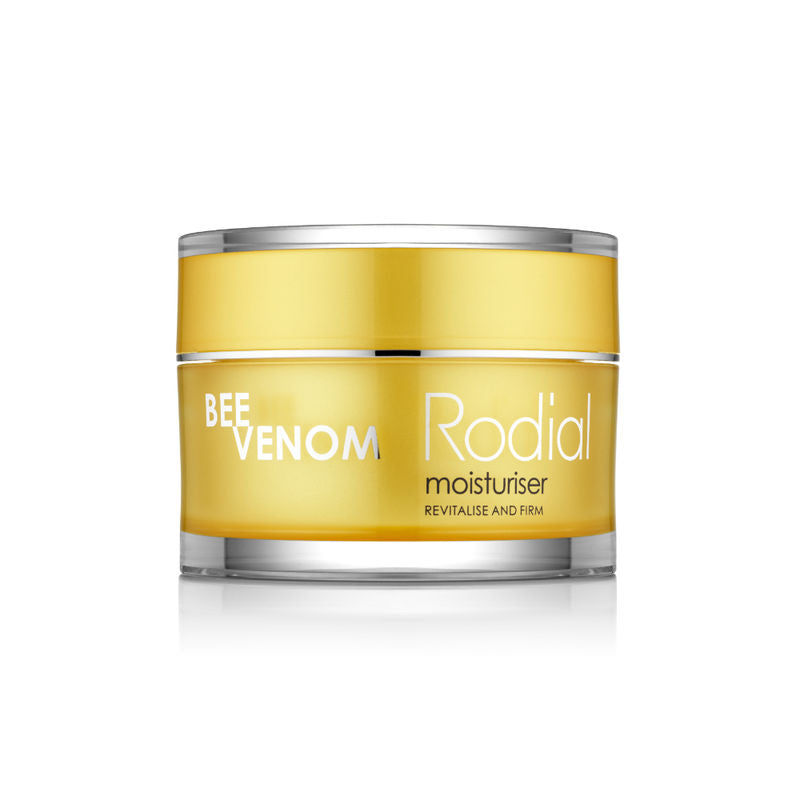
Rodial Bee Venom Anti-Aging Moisturizer-Firming & Repairing Skin Barrier with Vit C & Cyclopeptides

Rodial Bee Venom Anti-Aging Moisturizer-Firming & Repairing Skin Barrier with Vit C & Cyclopeptides
Nykaa E retail limited
rodial-bee-venom-anti-aging-moisturizer-firming-repairing-skin-barrier-with-vit-c-cyclopeptides
Moisturize
10084796530981
Morning or Evening?
How often will you use this product?
Notes


Highlights
WHAT IS IT?
Anti-aging moisturizer with key ingredients bee venom, Vitamin C and peptides
FEATURES
Plumps and smoothes fine lines and wrinkles, promotes even skin tone and corrects sun damage, long-lasting hydration and moisturizing, revitalizes skin and rebuilds skin barrier, suitable for dry, normal, and combination skin
BEST FOR
dry
CHECKS
Does not contain parabens (implied - not stated explicitly), alcohol (contains alcohol), fragrance (contains parfum), sulfates (not stated), silicones (not stated)
Who Is It For?
No Specific Age Or Gender MentionedWhat Does It Help With?
Anti-aging Improves Skin Elasticity Smooths Fine Lines And Wrinkles Evens Skin Tone Hydrates SkinBudget
Premium ($76-$150)How To Use
Which routine should it be used in?
Instructions:
Key Information


What Nykaa E retail limited Says
Product Description:
The revolutionary bee venom moisturizer is an advanced formula that revitalizes and renews for naturally younger-looking skin. Working in synergy with complex plant extracts to visibly improve skin tone and elasticity, bee venom helps to smooth and plump out fine lines and wrinkles by controlling muscle contractions in the face and helps increase blood circulation in treated areas. Also contains cyclopeptide-5, a next-generation skincare peptide that restores and increases skin elasticity and firmness to help prevent signs of aging. Juvinity encourages aging cells to behave younger by reactivating the production of collagen, making this the premium anti-aging cream. Features: Bee Venom: Plumps and smoothes fine lines and wrinkles. Vitamin C: Promotes more even skin tone and corrects sun damage. Sodium Hyaluronate: Long-lasting hydration and moisturising. P-Cell: Revitalizes the skin and rebuilds the skin barrier. Suitable for: Dry, normal, and combination skin. About the Brand: Rodial is a hi-tech, innovative skincare and complexion brand founded in 1999 by entrepreneur and former beauty editor Maria Hatzistefanis. They create targeted products that deliver instant and long-lasting benefits: their results-focused products are loved and used by customers and high-profile names around the world and have been for the last 25 years.
About the Brand:
Ingredients Overview
Ingredients List
aqua-water-eau,isoamyl-laurate,butyrospermum-parkii-shea-butter,glycerin,oryza-sativa-rice-bran-oil,glyceryl-behenate,octyldodecanol,squalane,caprylic-capric-triglyceride,cetyl-alcohol,glyceryl-stearate,adipic-acid-neopentyl-glycol-crosspolymer,cetearyl-alcohol,phenoxyethanol,peg-75-stearate,alcohol,isoamyl-cocoate,ascorbyl-tetraisopalmitate,ceteth-20,steareth-20,lecithin,polyacrylamide,xanthan-gum,ectoin,capsicum-annuum-fruit-meristematic-cell,parfum-fragrance,ethylhexylglycerin,c13-14-isoparaffin,disodium-edta,sodium-hyaluronate,tocopherol,geranylgeranylisopropanol,helianthus-annuus-sunflower-seed-oil,laureth-7,triethanolamine,citric-acid,alpha-isomethyl-ionone,hydroxycitronellal,limonene,citronellol,sodium-benzoate,potassium-sorbate,beta-carotene,cyclotetrapeptide-24-aminocyclohexane-carboxylate,daucus-carota-sativa-carrot-root-extract,daucus-carota-sativa-carrot-seed-oil,ascorbyl-palmitate,bee-venom
Key Ingredients
Bee Venom Melittin Peptide, Hyaluronic Acid, Juvinity, P-Cell, Vitamin C
Ingredients Details
Alcohol
Common Name(s): Alcohol,cosmetic active,functional ingredient
CAS Number: N/a
DESCRIPTION
What It Does: Delivers characteristic cosmetic function at recommended use concentration.
Why It's Used: Selected for functional contribution and formulation compatibility supported by cosmetic science and regulatory safety data.
How It Works: Works through the mechanism of its molecular class as documented in peer-reviewed cosmetic literature.
Typically Found In: Skin care formulations
TECHNICAL DETAILS
Primary Category: Active ingredient – cosmetic active
Secondary Functions: Skin conditioning
Application Areas:

Facial Skincare

Body Care
Hair Care
Beard Care
Color Cosmetics (Makeup)
Dietary/Oral Supplements
Typical Concentration Range: 0.1%–10%
SOURCING & ETHICS
Vegan Status: Conditional
Halal Status: Yes
Source Notes: Commercially produced for cosmetic use. verify vegan/halal status with supplier.
SKIN COMPATIBILITY
Irritancy Rating: 1/5 – very low
Comedogenicity Rating: 0/5 – non-comedogenic
Sensitivity Concerns: Well-tolerated by most skin types.
Safe for Sensitive Skin: Yes
SAFETY & COMPATIBILITY
Safety Profile: Good safety profile at recommended concentrations. ewg score: 1–2.
Works Well With: Standard skincare actives
Avoid Combining With: No known significant incompatibilities
SCIENTIFIC NOTE
Alcohol has an established safety profile within the cosmetic regulatory framework at standard use concentrations.
Last Verified: Cosing database,alcohol technical literature
Primary Sources: 2026-03-12
Beta-carotene
Common Name(s): Provitamin a,all-trans-beta-carotene
CAS Number: 7235-40-7
DESCRIPTION
What It Does: Neutralizes free radicals, provides photoprotection support, conditions skin, and imparts healthy skin tone.
Why It's Used: Natural antioxidant, skin conditioning, and natural colorant with additional provitamin a activity.
How It Works: Quenches singlet oxygen and free radicals. enzymatic cleavage yields retinal. accumulates in stratum corneum for photoprotective antioxidant defense.
Typically Found In: Self-tanners,sunscreens,natural colorants,anti-aging formulations
TECHNICAL DETAILS
Primary Category: Active ingredient – vitamin a derivative
Secondary Functions: Uv protection support,natural colorant,vitamin a precursor
Application Areas:
Facial Skincare
Body Care
Hair Care
Beard Care
Color Cosmetics (Makeup)
Dietary/Oral Supplements
Typical Concentration Range: 0.01%–1%
SOURCING & ETHICS
Vegan Status: Yes – plant-derived or fermentation
Halal Status: Yes
Source Notes: Derived from dunaliella salina algae, carrot oil, or synthesized. algae-derived most sustainable.
SKIN COMPATIBILITY
Irritancy Rating: 1/5 – very low
Comedogenicity Rating: 0/5 – non-comedogenic
Sensitivity Concerns: Very well-tolerated; high concentrations may impart orange tint.
Safe for Sensitive Skin: Yes
SAFETY & COMPATIBILITY
Safety Profile: Safe at cosmetic concentrations. use spf. avoid during pregnancy. ewg score: 2.
Works Well With: Niacinamide,ceramides,hyaluronic acid,spf,tocopherol
Avoid Combining With: No significant incompatibilities
SCIENTIFIC NOTE
Beta-carotene accumulates in the stratum corneum and provides measurable photoprotection against uv-induced oxidative stress when applied topically. not a replacement for uv filters.
Last Verified: Cosing database,cir safety assessment,stahl & sies carotenoid review
Primary Sources: 2026-03-12
Ceteth-20
Common Name(s): Ceteth-20,cosmetic active,established formulation ingredient
CAS Number: N/a
DESCRIPTION
What It Does: Ceteth-20 contributes its primary cosmetic function to formulations — improving skin feel, stability, performance, or delivering a specific active benefit depending on its chemical class and concentration level.
Why It's Used: Formulators choose ceteth-20 for its established efficacy in contributing the required functional property to their formulation — whether rheological control, active delivery, aesthetic enhancement, or preservation — supported by the cosmetic chemistry literature and regulatory assessment framework.
How It Works: Ceteth-20 works through the characteristic mechanism of its chemical class — either through physicochemical interaction with the formulation matrix (surface activity, film formation, viscosity building) or through biological interaction with skin tissues (receptor binding, enzymatic substrate, barrier component integration). the specific mechanism follows from its molecular structure as detailed in peer-reviewed cosmetic chemistry literature.
Typically Found In: Skin care formulations
TECHNICAL DETAILS
Primary Category: Active ingredient – cosmetic active
Secondary Functions: Skin conditioning
Application Areas:
Facial Skincare
Body Care
Hair Care
Beard Care
Color Cosmetics (Makeup)
Dietary/Oral Supplements
Typical Concentration Range: 0.1%–10%
SOURCING & ETHICS
Vegan Status: Conditional
Halal Status: Yes
Source Notes: Commercially produced for cosmetic use. verify vegan/halal status with supplier.
SKIN COMPATIBILITY
Irritancy Rating: 1/5 – very low
Comedogenicity Rating: 0/5 – non-comedogenic
Sensitivity Concerns: Well-tolerated by most skin types.
Safe for Sensitive Skin: Yes
SAFETY & COMPATIBILITY
Safety Profile: Good safety profile at recommended concentrations. ewg score: 1–2.
Works Well With: Standard skincare actives
Avoid Combining With: No known significant incompatibilities
SCIENTIFIC NOTE
Ceteth-20 has been assessed within the regulatory framework applicable to cosmetic ingredients. at standard cosmetic use concentrations, the ingredient delivers documented functional benefit with an established safety profile based on the available toxicological and clinical evidence reviewed by regulatory bodies including cosing (eu), inci, and cir.
Last Verified: Cosing database,ceteth-20 technical literature
Primary Sources: 2026-03-12
Citronellol
Common Name(s): (r)-3,7-dimethyl-6-octen-1-ol,rhodinol
CAS Number: 106-22-9
DESCRIPTION
What It Does: Provides soft, lasting rose-floral fragrance note.
Why It's Used: Essential rose fragrance monoterpene for lasting smooth floral notes in high-quality perfumery and cosmetic fragrances.
How It Works: Allylic alcohol monoterpene provides fixative property in fragrance blends. good skin substantivity for lasting scent. softer, rounder rose note vs geraniol's fresher character. natural in rose otto at 18-34%.
Typically Found In: Rose perfumes,floral fragrances,luxury skincare
TECHNICAL DETAILS
Primary Category: Fragrance component – monoterpene alcohol
Secondary Functions: Skin conditioning
Application Areas:
Facial Skincare
Body Care
Hair Care
Beard Care
Color Cosmetics (Makeup)
Dietary/Oral Supplements
Typical Concentration Range: 0.001%–1%
SOURCING & ETHICS
Vegan Status: Yes – from rose, geranium, citronella oils
Halal Status: Yes
Source Notes: Commercially produced for cosmetic use. verify vegan/halal status with supplier.
SKIN COMPATIBILITY
Irritancy Rating: 1/5 – very low
Comedogenicity Rating: 0/5 – non-comedogenic
Sensitivity Concerns: Well-tolerated by most skin types.
Safe for Sensitive Skin: Yes
SAFETY & COMPATIBILITY
Safety Profile: Eu cosmetics regulation: declared fragrance allergen. ifra guidelines apply.
Works Well With: Standard skincare actives
Avoid Combining With: No known significant incompatibilities
SCIENTIFIC NOTE
Citronellol's r-enantiomer (natural) vs s-enantiomer (synthetic) provide meaningfully different scent character – a remarkable demonstration of chiral scent discrimination by olfactory receptors. the (r) form provides the characteristic rose note while the (s) form has a distinctly different, less pleasant character. this enantiomeric scent difference means that the biological handedness of naturally-sourced vs racemic synthetic citronellol produces perceptibly different fragrance quality.
Last Verified: Cosing database,ifra standards
Primary Sources: 2026-03-12
