

Nykaa E retail limited
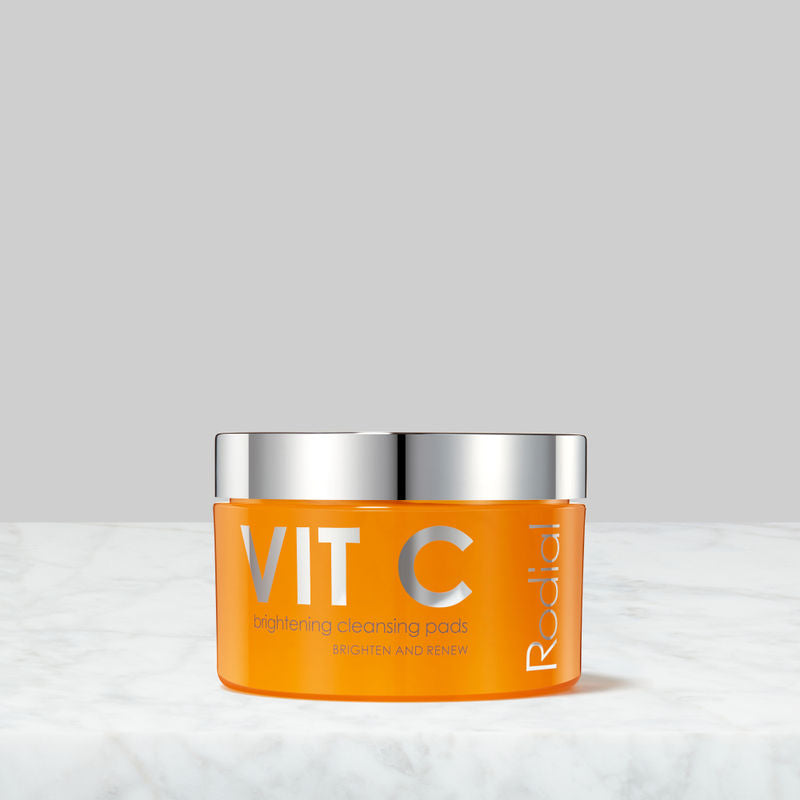
Rodial Vit C Cleansing Pads-Exfoliating, Firming & Glow-Boosting with Fruit AHAs & Salicylic Acid

Rodial Vit C Cleansing Pads-Exfoliating, Firming & Glow-Boosting with Fruit AHAs & Salicylic Acid
Nykaa E retail limited
rodial-vit-c-cleansing-pads-exfoliating-firming-glow-boosting-with-fruit-ahas-salicylic-acid
Serum
10085044584741
Morning or Evening?
How often will you use this product?
Notes


Highlights
WHAT IS IT?
Brightening cleansing pads with vitamin C, salicylic acid and fruit AHAs (3 key ingredients)
FEATURES
Brightens and purifies dull complexion, exfoliates and rejuvenates skin with fruit AHAs, tightens pores, firms and tones skin, smooths and retexturizes skin via lactic and glycolic acid, suitable for all skin types
BEST FOR
normal
CHECKS
Does not contain information for Vegan, Paraben-Free, Sulfate-Free, Alcohol-Free, Fragrance-Free etc., product contains fragrance and alcohol
Who Is It For?
All Genders No Specific Age Range MentionedWhat Does It Help With?
Dull Skin Uneven Texture Large Pores Signs Of Aging Skin Firmness And ToneBudget
Premium ($76-$150)How To Use
Which routine should it be used in?
Instructions:
Key Information


What Nykaa E retail limited Says
Product Description:
Give skin a shot of glow serum while resurfacing and retexturizing the canvas of the face with these cleansing pads that brighten skin. These brightening pads will transform the skin with a blend of vitamin C to brighten and purify dull-looking complexions, fruit AHA acids to exfoliate and rejuvenate the skin, and salicylic acid to tighten pores while firming and toning the skin. Each pad is infused with your daily dose of brightening fruit acids to retexturize and renew the complexion. Sweep over the skin morning and night for a dose of glow-enhancing vitamin C. Features: Vitamin C helps to transform dull skin for youthful-looking radiance, Salicylic acid and fruit acid complex work together to help to tighten pores and retexturize the complexion, Lactic and glycolic acid help to smooth and retexturize the skin through exfoliation. Suitable for all skin types.
About the Brand:
Ingredients Overview
Ingredients List
Aqua-(Water), Propylene-Glycol, Bis-PEG-18-Methyl-Ether-Dimethyl-Silane, Sodium-Lactate, Glycolic-Acid, Citrus-Sinensis-(Orange)-Fruit-Extract, Lactic-Acid, Phenoxyethanol, Ethyl-Ascorbic-Acid, Salicylic-Acid, Disodium-EDTA, Ethylhexylglycerin, Parfum-(Fragrance), Alcohol-Denat., Ananas-Sativus-(Pineapple)-Fruit-Extract, Passiflora-Quadrangularis-Fruit-Extract, Vitis-Vinifera-(Grape)-Fruit-Extract, Sodium-Sulfite, Punica-Granatum-(Pomegranate)-Extract, Limonene, Linalool
Key Ingredients
Vitamin C, Salicylic Acid, Fruit Acid Complex (Lactic Acid, Glycolic Acid)
Ingredients Details
Ethylhexylglycerin
Common Name(s): Octylglycerin,2-ethylhexyl glycerol ether,sensiva sc 10
CAS Number: 70445-33-9
DESCRIPTION
What It Does: Provides antimicrobial skin conditioning with deodorant activity and preservation system enhancement.
Why It's Used: Multifunctional clean beauty preservation active — ethylhexylglycerin provides antimicrobial, deodorant, and skin conditioning in a single ingredient accepted in most natural cosmetic certification schemes.
How It Works: Glycerol ether provides antimicrobial via bacterial membrane phospholipid disruption. deodorant activity via reduction of underarm lipase enzyme activity (similar mechanism to triethyl citrate). skin conditioning from glycerol humectant component. synergistic with phenoxyethanol and diols.
Typically Found In: Natural preservation systems,deodorants,skin conditioning products
TECHNICAL DETAILS
Primary Category: Functional ingredient – antimicrobial glycerol ether
Secondary Functions: Skin conditioning
Application Areas:

Facial Skincare

Body Care
Hair Care
Beard Care
Color Cosmetics (Makeup)
Dietary/Oral Supplements
Typical Concentration Range: 0.1%–0.5%
SOURCING & ETHICS
Vegan Status: Yes – synthetic
Halal Status: Yes
Source Notes: Commercially produced for cosmetic use. verify vegan/halal status with supplier.
SKIN COMPATIBILITY
Irritancy Rating: 1/5 – very low
Comedogenicity Rating: 0/5 – non-comedogenic
Sensitivity Concerns: Well-tolerated by most skin types.
Safe for Sensitive Skin: Yes
SAFETY & COMPATIBILITY
Safety Profile: Good safety profile at recommended concentrations. ewg score: 1–2.
Works Well With: Standard skincare actives
Avoid Combining With: No known significant incompatibilities
SCIENTIFIC NOTE
Ethylhexylglycerin's deodorant mechanism is pharmacologically identical to triethyl citrate: both inhibit skin surface microbial lipase enzymes that convert odourless triglycerides to odorous free fatty acids. the glycerol ether structure of ethylhexylglycerin, combined with the 2-ethylhexyl chain, provides lipase inhibition similar to ester-based lipase inhibitors from a different chemical class.
Last Verified: Cosing database,schülke sensiva sc 10 technical data,cir safety assessment
Primary Sources: 2026-03-12
Limonene
Common Name(s): D-limonene,(r)-limonene,dipentene
CAS Number: 5989-27-5
DESCRIPTION
What It Does: Provides the defining fresh citrus fragrance note alongside solvent and antimicrobial properties.
Why It's Used: The citrus industry's primary fragrance compound and the most abundant terpene in essential oils – limonene provides the clean, universally appealing fresh citrus scent character.
How It Works: D-limonene activates trpv1 mildly at high concentrations. antimicrobial via membrane disruption. solvent for oils and lipophilic compounds. cleaning via emulsification of lipid soils.
Typically Found In: Citrus-scented products,cleaning products,fragrance compounds
TECHNICAL DETAILS
Primary Category: Fragrance component – cyclic monoterpene
Secondary Functions: Skin conditioning
Application Areas:
Facial Skincare
Body Care
Hair Care
Beard Care
Color Cosmetics (Makeup)
Dietary/Oral Supplements
Typical Concentration Range: 0.001%–3%
SOURCING & ETHICS
Vegan Status: Yes – from citrus peel essential oils
Halal Status: Yes
Source Notes: Commercially produced for cosmetic use. verify vegan/halal status with supplier.
SKIN COMPATIBILITY
Irritancy Rating: 1/5 – very low
Comedogenicity Rating: 0/5 – non-comedogenic
Sensitivity Concerns: Well-tolerated by most skin types.
Safe for Sensitive Skin: Yes
SAFETY & COMPATIBILITY
Safety Profile: Eu cosmetics regulation: declared fragrance allergen. oxidises to sensitising compounds (limonene hydroperoxides) on air exposure – use with antioxidant stabilisers. ifra guidelines apply.
Works Well With: Standard skincare actives
Avoid Combining With: No known significant incompatibilities
SCIENTIFIC NOTE
Limonene's sensitisation risk arises not from limonene itself but from its autooxidation products (limonene-1,2-epoxide and limonene hydroperoxides) formed on air exposure. fresh limonene has low sensitisation potential, but air-oxidised limonene's hydroperoxide products are potent skin sensitisers. this explains why oxidation-stabilised formulations (with bht or other antioxidants) are required to manage limonene safety.
Last Verified: Cosing database,ifra standards,bråred christensson et al. limonene oxidation study
Primary Sources: 2026-03-12
Linalool
Common Name(s): 3,7-dimethyl-1,6-octadien-3-ol,linalyl alcohol
CAS Number: 78-70-6
DESCRIPTION
What It Does: Provides the most common natural floral-citrus fragrance note with additional anti-inflammatory properties.
Why It's Used: The most abundant fragrance terpene in nature – linalool forms the primary scent character of lavender, responsible for lavender's documented aromatherapy calming effects.
How It Works: Monoterpene alcohol activates gaba-a receptors for anti-anxiety activity (same receptor as benzodiazepines). inhibits glutamate-induced excitotoxicity. antimicrobial via membrane disruption. anti-inflammatory via nf-kb inhibition.
Typically Found In: Virtually all fragranced cosmetics
TECHNICAL DETAILS
Primary Category: Fragrance component – tertiary terpene alcohol
Secondary Functions: Skin conditioning
Application Areas:
Facial Skincare
Body Care
Hair Care
Beard Care
Color Cosmetics (Makeup)
Dietary/Oral Supplements
Typical Concentration Range: 0.001%–3%
SOURCING & ETHICS
Vegan Status: Yes – from lavender, coriander, bergamot
Halal Status: Yes
Source Notes: Commercially produced for cosmetic use. verify vegan/halal status with supplier.
SKIN COMPATIBILITY
Irritancy Rating: 1/5 – very low
Comedogenicity Rating: 0/5 – non-comedogenic
Sensitivity Concerns: Well-tolerated by most skin types.
Safe for Sensitive Skin: Yes
SAFETY & COMPATIBILITY
Safety Profile: Eu cosmetics regulation: declared fragrance allergen on label when >0.001% (leave-on) or >0.01% (rinse-off). ifra guidelines apply.
Works Well With: Standard skincare actives
Avoid Combining With: No known significant incompatibilities
SCIENTIFIC NOTE
Linalool's gaba-a receptor activation provides a pharmacological basis for lavender aromatherapy's documented anxiolytic effects. the same receptor modulation used by benzodiazepine drugs (such as diazepam) is activated by inhaled linalool vapor, providing receptor-mediated calming without the tolerance and dependence associated with pharmaceutical gaba-a modulators.
Last Verified: Cosing database,ifra standards,elisabetsky et al. linalool gaba study
Primary Sources: 2026-03-12
Phenoxyethanol
Common Name(s): 2-phenoxyethanol,rose ether,ethylene glycol monophenyl ether
CAS Number: 122-99-6
DESCRIPTION
What It Does: Prevents microbial contamination and spoilage in cosmetic formulations.
Why It's Used: The benchmark cosmetic preservative – eu-permitted up to 1%, effective against virtually all cosmetically relevant microorganisms, and excellent tolerability.
How It Works: Phenol ring provides broad antimicrobial activity via disruption of bacterial and fungal cell membranes and inhibition of enzymatic activity. effective against gram-positive and gram-negative bacteria, yeasts (candida), and molds (aspergillus). activity ph range: 3-9.
Typically Found In: All cosmetic formulations as primary preservative
TECHNICAL DETAILS
Primary Category: Functional ingredient – broad-spectrum preservative
Secondary Functions: Skin conditioning
Application Areas:
Facial Skincare
Body Care
Hair Care
Beard Care
Color Cosmetics (Makeup)
Dietary/Oral Supplements
Typical Concentration Range: 0.1%–1% (eu max 1%)
SOURCING & ETHICS
Vegan Status: Yes – synthetic
Halal Status: Yes
Source Notes: Commercially produced for cosmetic use. verify vegan/halal status with supplier.
SKIN COMPATIBILITY
Irritancy Rating: 1/5 – very low
Comedogenicity Rating: 0/5 – non-comedogenic
Sensitivity Concerns: Well-tolerated by most skin types.
Safe for Sensitive Skin: Yes
SAFETY & COMPATIBILITY
Safety Profile: Eu cosmetics regulation max 1%. sccs assessed as safe at ≤1%. avoid use around eyes in baby products per some country regulations. ewg score: 4.
Works Well With: Standard skincare actives
Avoid Combining With: No known significant incompatibilities
SCIENTIFIC NOTE
Phenoxyethanol's widespread adoption as the primary cosmetic preservative followed the phaseout of parabens from many formulations in the 2000s-2010s. despite having a comparable or better safety profile to parabens, it is often cited in 'free-from' formulations – a consumer perception issue rather than a scientific safety concern.
Last Verified: Cosing database,sccs opinion on phenoxyethanol,cir safety assessment
Primary Sources: 2026-03-12
