

Apsara Skin Care
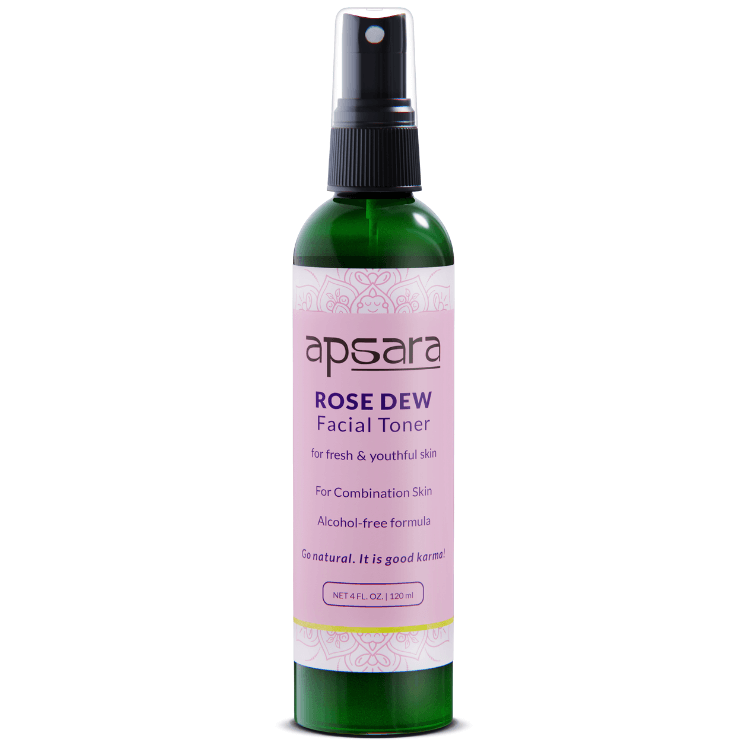
Rose Dew Natural Face Toner for Combination Skin

Rose Dew Natural Face Toner for Combination Skin
Apsara Skin Care
rose-dew-natural-face-toner-for-combination-skin
Tone
9706844913957
Morning or Evening?
How often will you use this product?
Notes


Highlights
WHAT IS IT?
Natural face toner
FEATURES
Alcohol-free, Made with pure rosewater, Balances combination skin, Minimizes appearance of open pores, Reduces excess oiliness in T-zone
BEST FOR
Combination skin
CHECKS
Free of harsh chemicals, parabens, sulfates
Who Is It For?
Adults Both Men And WomenWhat Does It Help With?
Balancing Combination Skin Reducing Open Pores Controlling Excess OilBudget
Mid-rangeHow To Use
Which routine should it be used in?
Instructions:
Key Information


What Apsara Skin Care Says
Product Description:
This natural face toner is supercharged with a potent blend of all Ayurvedic ingredients to help combination skin find its balance & happy middle. It is free of alcohol, which can irritate the skin and increase dryness. This combination skin face toner is made with pure rosewater instead to balance combination skin. Regular usage of this face toner can help minimize the look of open pores, reduce excess oiliness of the T-Zone, and help the drier areas retain more moisture.
About the Brand:
Ingredients Overview
Ingredients List
Aloe barbadensis (Aloe) Organic Leaf Juice, Rosa damascena (Rose) Flower Water, Glycerin, Phenoxyethanol, Tetrasodium glutamate diacetate, Polysorbate-20, Pelargonium graveolens (Geranium) EO, Vetveria zizanoides (Vetiver) EO, Rosa centifolia (Rose) EO, Eucalyptus globulus (Eucalyptus) EO.
Key Ingredients
Rosewater, Eucalyptus
Ingredients Details
Glycerin
Common Name(s): Glycerol,glycerine,1,2,3-propanetriol
CAS Number: 56-81-5
DESCRIPTION
What It Does: Glycerin pulls water from the environment and deeper skin layers into the outer skin layer (epidermis), boosting moisture levels and keeping skin soft, smooth, and plump.
Why It's Used: It is used in virtually every moisturizer, serum, and cleanser because it is highly effective at hydrating skin, is well-tolerated by all skin types, and enhances the texture and spreadability of formulations.
How It Works: As a humectant, glycerin forms hydrogen bonds with water molecules, trapping them in the skin. it also reinforces the skin barrier by integrating into lipid structures between skin cells.
Typically Found In: Moisturizers,serums,cleansers,toners,sheet masks,sunscreens,body lotions,shampoos,conditioners
TECHNICAL DETAILS
Primary Category: Humectant
Secondary Functions: Skin barrier support,emollient,solvent
Application Areas:

Facial Skincare
Body Care
Hair Care
Beard Care

Color Cosmetics (Makeup)
Dietary/Oral Supplements
Typical Concentration Range: 1%–30% (typical: 3–10%)
SOURCING & ETHICS
Vegan Status: Yes – plant-derived (coconut, soy, palm) or synthetic
Halal Status: Yes – when plant-derived or synthetic; verify source with supplier
Source Notes: Derived from plant oils via hydrolysis or saponification; synthetic versions also available. palm-derived glycerin carries sustainability concerns.
SKIN COMPATIBILITY
Irritancy Rating: 1/5 – very low; non-irritating at all standard concentrations
Comedogenicity Rating: 0/5 – non-comedogenic
Sensitivity Concerns: Extremely rare allergic reactions; generally safe for all skin types including sensitive and baby skin
Safe for Sensitive Skin: Yes
SAFETY & COMPATIBILITY
Safety Profile: Widely recognized as safe. ewg hazard score: 1. no significant concerns for irritation, sensitization, or toxicity at typical concentrations (up to 50%).
Works Well With: Hyaluronic acid,ceramides,niacinamide,panthenol,urea,peptides,retinol,ahas/bhas
Avoid Combining With: No known incompatibilities at standard concentrations
SCIENTIFIC NOTE
Glycerin is an endogenous skin component found naturally in the stratum corneum. aquaporin-3 channels in keratinocytes facilitate glycerin transport, making it integral to natural skin hydration pathways.
Last Verified: Cosing database,cir safety assessment,ewg skin deep,inci decoder
Primary Sources: 2026-03-12
Phenoxyethanol
Common Name(s): 2-phenoxyethanol,rose ether,ethylene glycol monophenyl ether
CAS Number: 122-99-6
DESCRIPTION
What It Does: Prevents microbial contamination and spoilage in cosmetic formulations.
Why It's Used: The benchmark cosmetic preservative – eu-permitted up to 1%, effective against virtually all cosmetically relevant microorganisms, and excellent tolerability.
How It Works: Phenol ring provides broad antimicrobial activity via disruption of bacterial and fungal cell membranes and inhibition of enzymatic activity. effective against gram-positive and gram-negative bacteria, yeasts (candida), and molds (aspergillus). activity ph range: 3-9.
Typically Found In: All cosmetic formulations as primary preservative
TECHNICAL DETAILS
Primary Category: Functional ingredient – broad-spectrum preservative
Secondary Functions: Skin conditioning
Application Areas:
Facial Skincare
Body Care
Hair Care
Beard Care
Color Cosmetics (Makeup)
Dietary/Oral Supplements
Typical Concentration Range: 0.1%–1% (eu max 1%)
SOURCING & ETHICS
Vegan Status: Yes – synthetic
Halal Status: Yes
Source Notes: Commercially produced for cosmetic use. verify vegan/halal status with supplier.
SKIN COMPATIBILITY
Irritancy Rating: 1/5 – very low
Comedogenicity Rating: 0/5 – non-comedogenic
Sensitivity Concerns: Well-tolerated by most skin types.
Safe for Sensitive Skin: Yes
SAFETY & COMPATIBILITY
Safety Profile: Eu cosmetics regulation max 1%. sccs assessed as safe at ≤1%. avoid use around eyes in baby products per some country regulations. ewg score: 4.
Works Well With: Standard skincare actives
Avoid Combining With: No known significant incompatibilities
SCIENTIFIC NOTE
Phenoxyethanol's widespread adoption as the primary cosmetic preservative followed the phaseout of parabens from many formulations in the 2000s-2010s. despite having a comparable or better safety profile to parabens, it is often cited in 'free-from' formulations – a consumer perception issue rather than a scientific safety concern.
Last Verified: Cosing database,sccs opinion on phenoxyethanol,cir safety assessment
Primary Sources: 2026-03-12
Polysorbate 20
Common Name(s): Tween 20,poe(20) sorbitan monolaurate
CAS Number: 9005-64-5
DESCRIPTION
What It Does: Solubilizes fragrance oils and other lipophilic ingredients into water-based formulations.
Why It's Used: Standard fragrance solubilizer for water-based formulations – the industry standard for incorporating oil-soluble fragrances and actives into aqueous systems without separate oil phase.
How It Works: Hlb ~16.7 provides strong solubilization capacity for oils in water. laurate (c12) chain provides milder skin interaction than higher-hlb polysorbates. polyoxyethylene chains (20 eo units) provide high water solubility. effective solubilizer at 3-4:1 polysorbate:fragrance ratio.
Typically Found In: Toners,micellar waters,fragrance-containing aqueous products
TECHNICAL DETAILS
Primary Category: Functional ingredient – sorbitan ester emulsifier/solubilizer
Secondary Functions: Skin conditioning
Application Areas:
Facial Skincare
Body Care
Hair Care
Beard Care
Color Cosmetics (Makeup)
Dietary/Oral Supplements
Typical Concentration Range: 0.5%–5%
SOURCING & ETHICS
Vegan Status: Conditional – sorbitol from plant, peg from petroleum
Halal Status: Yes
Source Notes: Commercially produced for cosmetic use. verify vegan/halal status with supplier.
SKIN COMPATIBILITY
Irritancy Rating: 1/5 – very low
Comedogenicity Rating: 0/5 – non-comedogenic
Sensitivity Concerns: Well-tolerated by most skin types.
Safe for Sensitive Skin: Yes
SAFETY & COMPATIBILITY
Safety Profile: Same peg 1,4-dioxane concern as all peg compounds. quality-grade ps-20 should be tested for impurities.
Works Well With: Standard skincare actives
Avoid Combining With: No known significant incompatibilities
SCIENTIFIC NOTE
Polysorbate 20's optimal solubilization ratio (3-4 parts ps-20 per part fragrance oil) is lower than expected from pure hlb theory. this efficiency arises from polysorbate's formation of very small, stable oil-in-water microemulsions (droplets <50nm) rather than conventional emulsions, providing optically clear, thermodynamically stable fragrance incorporation that conventional emulsifiers cannot achieve.
Last Verified: Cosing database,cir safety assessment
Primary Sources: 2026-03-12
Tetrasodium Glutamate Diacetate
Common Name(s): Mineral salt,ionic strength modifier,skin mineralising agent
CAS Number: N/a
DESCRIPTION
What It Does: Provides mineral ion delivery to skin, modulates formulation ionic strength for viscosity and stability optimisation, and supports skin enzyme activity through essential mineral cofactor supplementation.
Why It's Used: Mineral salts are essential formulation ph and ionic strength adjusters — magnesium sulfate specifically provides the mg²⁺ ions that activate transglutaminase crosslinking during sc cornification, supporting barrier formation.
How It Works: Ionic dissociation in aqueous formulation provides free ions that modulate polymer viscosity (ionic strength reduces charge-based thickener swelling), provide mineral nutrition to skin enzymes (ca²⁺ for transglutaminase, mg²⁺ for mgatp phosphotransferases), and adjust osmolality for skin-surface tonicity matching.
Typically Found In: All formulations,mineral skin care
TECHNICAL DETAILS
Primary Category: Active ingredient – mineral / metal active
Secondary Functions: Antimicrobial,sebum regulation,antioxidant enzyme cofactor
Application Areas:
Facial Skincare
Body Care
Hair Care
Beard Care
Color Cosmetics (Makeup)
Dietary/Oral Supplements
Typical Concentration Range: 0.01%–5%
SOURCING & ETHICS
Vegan Status: Yes – mineral
Halal Status: Yes
Source Notes: Mineral/inorganic compound. cosmetic or pharmaceutical grade.
SKIN COMPATIBILITY
Irritancy Rating: 1/5 – very low
Comedogenicity Rating: 0/5 – non-comedogenic
Sensitivity Concerns: Non-irritating at recommended concentrations.
Safe for Sensitive Skin: Yes at recommended concentrations
SAFETY & COMPATIBILITY
Safety Profile: Excellent safety profile at cosmetic concentrations. ewg score: 1–2.
Works Well With: Niacinamide,salicylic acid,other actives
Avoid Combining With: No significant incompatibilities at standard concentrations
SCIENTIFIC NOTE
Mg²⁺ and ca²⁺ are essential cofactors for the sc cornification process — ca²⁺ specifically drives the ca²⁺ gradient across the epidermis (high in outer sc, low in basal layer) that regulates keratinocyte differentiation through ca²⁺-calmodulin signalling.
Last Verified: Cosing database,tetrasodium glutamate diacetate mineral salt formulation review
Primary Sources: 2026-03-12
