

SAFI
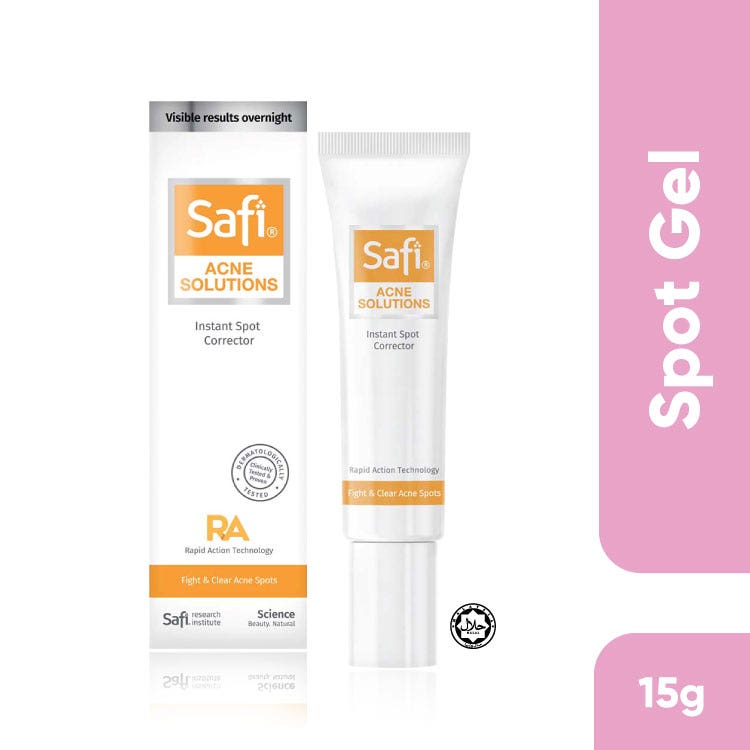
Safi Acne Solution Intensive Spot Corrective Gel 15G

Safi Acne Solution Intensive Spot Corrective Gel 15G
SAFI
safi-acne-solution-intensive-spot-corrective-gel-15g
Serum
10084872388901
Morning or Evening?
How often will you use this product?
Notes


Highlights
WHAT IS IT?
Spot Corrective Gel with AHA, BHA and Neem, 21 ingredients
FEATURES
Rapid Action Technology, exfoliates dead skin, promotes skin renewal, penetrates deep into pores, controls sebum, removes impurities, minimizes scarring, soothes irritated skin
BEST FOR
sensitive
CHECKS
No parabens, no alcohol, no sulfates mentioned
Who Is It For?
What Does It Help With?
Acne Redness Scars Damaged Skin Excess Sebum Clogged PoresBudget
Affordable (under $30)How To Use
Which routine should it be used in?
Instructions:
Key Information


What SAFI Says
Product Description:
Intensively fight & subsides acne, heals scars & damaged skin. Proven to fight P. acne bacteria to soothe redness & calm irritated skin. Rapid Action Technology is infusion formula of AHA, BHA & Neem that prevents new formation of acne leaving skin smooth and blemish free. AHA – Exfoliates dead skin and promotes skin renewal leaving skin brighter. BHA – Penetrate deep into pores, controls sebum & removes impurities that clogs up pores. Neem – Contains properties that minimize scarring, soothes and leaves skin free from irritant
About the Brand:
Ingredients Overview
Ingredients List
Water,Panthenol,Lactic Acid,Butylene Glycol,Aminomethyl-Propanol,Salicylic-acid,Methylpropanediol,Xanthan-Gum,Ethyl-Ascorbic-Acid,Polysorbate-20,Dextrin,Polydextrose,Glycerin,Amylopectin,Niacinamide,Dimethicone,Lecithin,Sclerotium-Gum,Pullulan,Ethylhexylglycerin,Disodium-EDTA,Asiaticoside,Madecassic-Acid,Asiatic-Acid,Melia-Azadirachta-Neem-Leaf-Extract,Mandelic-Acid,Phenoxyethanol
Key Ingredients
AHA (Lactic Acid, Mandelic Acid), BHA (Salicylic acid), Neem Leaf Extract, Niacinamide, Panthenol
Ingredients Details
Amylopectin
Common Name(s): Amylopectin,cosmetic active,functional ingredient
CAS Number: N/a
DESCRIPTION
What It Does: Delivers characteristic cosmetic function at recommended use concentration.
Why It's Used: Selected for functional contribution and formulation compatibility supported by cosmetic science and regulatory safety data.
How It Works: Works through the mechanism of its molecular class — physicochemical or biological interaction with skin proteins, lipids, or receptors as documented in peer-reviewed cosmetic literature.
Typically Found In: Skin care formulations
TECHNICAL DETAILS
Primary Category: Active ingredient – cosmetic active
Secondary Functions: Skin conditioning
Application Areas:

Facial Skincare

Body Care
Hair Care
Beard Care
Color Cosmetics (Makeup)
Dietary/Oral Supplements
Typical Concentration Range: 0.1%–10%
SOURCING & ETHICS
Vegan Status: Conditional - supplier confirmation required
Halal Status: Unverified - supplier confirmation required
Source Notes: Commercially produced for cosmetic use. verify vegan/halal status with supplier. [audit 2026-07-29 rev2: the record's own source_notes does not assert a non-animal origin, or instructs the reader to verify with the supplier; "yes" asserts knowledge the record does not hold. determination requires shariah-panel sign-off.]
SKIN COMPATIBILITY
Irritancy Rating: 1/5 – very low
Comedogenicity Rating: 0/5 – non-comedogenic
Sensitivity Concerns: Well-tolerated by most skin types.
Safe for Sensitive Skin: Yes
SAFETY & COMPATIBILITY
Safety Profile: Good safety profile at recommended concentrations. ewg score: 1–2.
Works Well With: Standard skincare actives
Avoid Combining With: No known significant incompatibilities
SCIENTIFIC NOTE
Amylopectin has an established safety and efficacy profile within the cosmetic regulatory framework at standard use concentrations.
Last Verified: 2026-03-12
Primary Sources: Cosing database,amylopectin technical literature
Asiaticoside
Common Name(s): Centella asiatica glycoside,asiaticoside b
CAS Number: 16830-15-2
DESCRIPTION
What It Does: Accelerates wound healing and reduces scar formation through fibroblast activation and collagen synthesis stimulation.
Why It's Used: Clinically proven scar reduction and wound healing active – the compound behind centella's legendary wound healing reputation.
How It Works: Promotes fibroblast proliferation and collagen synthesis via tgf-β independent mechanism (distinct from madecassoside). also inhibits hyaluronidase protecting extracellular matrix. antimicrobial activity supports wound healing environment.
Typically Found In: Post-surgical products,scar treatments,wound healing formulations
TECHNICAL DETAILS
Primary Category: Active ingredient – soothing / anti-inflammatory
Secondary Functions: Scar reduction,wound healing,collagen stimulation
Application Areas:
Facial Skincare
Body Care
Hair Care
Beard Care
Color Cosmetics (Makeup)
Dietary/Oral Supplements
Typical Concentration Range: 0.01%–2%
SOURCING & ETHICS
Vegan Status: Conditional - supplier confirmation required
Halal Status: Unverified - supplier confirmation required
Source Notes: Extracted from centella asiatica aerial parts alongside madecassoside, asiatic acid, and madecassic acid. [audit 2026-07-29 rev2: status downgraded on audit. determination requires shariah-panel sign-off.]
SKIN COMPATIBILITY
Irritancy Rating: 1/5 – very low
Comedogenicity Rating: 0/5 – non-comedogenic
Sensitivity Concerns: Non-irritating; ideal for reactive and sensitive skin.
Safe for Sensitive Skin: Yes – particularly recommended for sensitive skin
SAFETY & COMPATIBILITY
Safety Profile: Excellent safety profile. ewg score: 1.
Works Well With: Ceramides,panthenol,allantoin,hyaluronic acid,centella asiatica
Avoid Combining With: No significant incompatibilities
SCIENTIFIC NOTE
Asiaticoside's mechanism of wound healing involves release of aglycone asiatic acid after hydrolysis by skin beta-glucosidases. the glycoside form provides better stratum corneum penetration than the hydrophobic aglycone, acting as a prodrug for the active asiatic acid at the wound healing site.
Last Verified:
Butylene Glycol
Common Name(s): 1,3-butanediol,bg,1,3-butylene glycol
CAS Number: 107-88-0
DESCRIPTION
What It Does: Provides humectant hydration and active ingredient solubilization with excellent skin feel.
Why It's Used: Preferred glycol humectant in premium and k-beauty formulations for superior skin feel vs propylene glycol with equivalent functionality.
How It Works: Two hydroxyl groups at 1,3-positions provide water binding and solvent activity. better tolerated than propylene glycol with minimal sensitization risk. 4-carbon backbone provides slightly greater hydrophobic character enabling dissolution of less polar actives vs pg.
Typically Found In: Toners,essences,serums,k-beauty formulas
TECHNICAL DETAILS
Primary Category: Functional ingredient – glycol humectant
Secondary Functions: Tewl reduction,skin plumping
Application Areas:
Facial Skincare
Body Care
Hair Care
Beard Care
Color Cosmetics (Makeup)
Dietary/Oral Supplements
Typical Concentration Range: 1%–10%
SOURCING & ETHICS
Vegan Status: Yes – synthetic
Halal Status: Yes
Source Notes: Synthetic or naturally derived. excellent aqueous solubility.
SKIN COMPATIBILITY
Irritancy Rating: 1/5 – very low
Comedogenicity Rating: 0/5 – non-comedogenic
Sensitivity Concerns: Non-irritating; suitable for all skin types.
Safe for Sensitive Skin: Yes
SAFETY & COMPATIBILITY
Safety Profile: Excellent safety profile. ewg score: 1.
Works Well With: Ceramides,emollients,occlusives,glycerin,hyaluronic acid
Avoid Combining With: No significant incompatibilities
SCIENTIFIC NOTE
K-beauty's preference for butylene glycol over propylene glycol is driven by two factors: bg's superior skin feel (less tacky than pg's higher viscosity) and its lower sensitization potential (1,3-bg has better spatial distribution of hydroxyl groups that reduces protein interaction vs pg's 1,2-position oh groups).
Last Verified: 2026-03-12
Primary Sources: Cosing database,cir safety assessment
Dextrin
Common Name(s): Dextrin,cosmetic active,functional ingredient
CAS Number: N/a
DESCRIPTION
What It Does: Delivers characteristic cosmetic function at recommended use concentration.
Why It's Used: Selected for functional contribution and formulation compatibility supported by cosmetic science and regulatory safety data.
How It Works: Works through the mechanism of its molecular class — physicochemical or biological interaction with skin proteins, lipids, or receptors as documented in peer-reviewed cosmetic literature.
Typically Found In: Skin care formulations
TECHNICAL DETAILS
Primary Category: Active ingredient – cosmetic active
Secondary Functions: Skin conditioning
Application Areas:
Facial Skincare
Body Care
Hair Care
Beard Care
Color Cosmetics (Makeup)
Dietary/Oral Supplements
Typical Concentration Range: 0.1%–10%
SOURCING & ETHICS
Vegan Status: Conditional - supplier confirmation required
Halal Status: Unverified - supplier confirmation required
Source Notes: Commercially produced for cosmetic use. verify vegan/halal status with supplier. [audit 2026-07-29 rev2: the record's own source_notes does not assert a non-animal origin, or instructs the reader to verify with the supplier; "yes" asserts knowledge the record does not hold. determination requires shariah-panel sign-off.]
SKIN COMPATIBILITY
Irritancy Rating: 1/5 – very low
Comedogenicity Rating: 0/5 – non-comedogenic
Sensitivity Concerns: Well-tolerated by most skin types.
Safe for Sensitive Skin: Yes
SAFETY & COMPATIBILITY
Safety Profile: Good safety profile at recommended concentrations. ewg score: 1–2.
Works Well With: Standard skincare actives
Avoid Combining With: No known significant incompatibilities
SCIENTIFIC NOTE
Dextrin has an established safety and efficacy profile within the cosmetic regulatory framework at standard use concentrations.
Last Verified: 2026-03-12
Primary Sources: Cosing database,dextrin technical literature