

SAFI
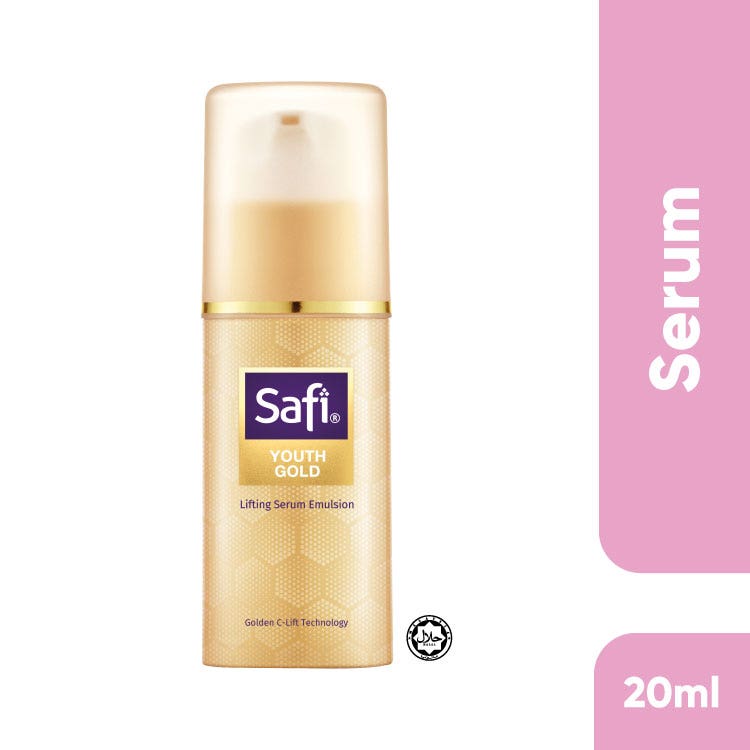
Safi Rania Gold Serum Konsentrasi Plus 20Ml

Safi Rania Gold Serum Konsentrasi Plus 20Ml
SAFI
safi-rania-gold-serum-konsentrasi-plus-20ml
Serum
10084767727909
Morning or Evening?
How often will you use this product?
Notes


Highlights
WHAT IS IT?
Serum with 24 ingredients
FEATURES
Non-oily texture, fast absorbing, treats skin cells internally, boosts collagen production, helps even out skin tone
BEST FOR
sensitive
CHECKS
Does not contain mineral oil or parabens (inferred from fragrance-free and preservative info absent but fragrance present, cautious to only exclude proven absent ingredients)
Who Is It For?
What Does It Help With?
Anti-aging Skin Tone Evening Collagen ProductionBudget
Mid-range ($30-$75)How To Use
Which routine should it be used in?
Instructions:
Key Information


What SAFI Says
Product Description:
Non-oily and lightweight water-based serum emulsion enriched with Niacinamide and Anti-Aging Peptides
About the Brand:
Ingredients Overview
Ingredients List
Water, Dimethicone, Cyclopentasiloxane, Cyclohexasiloxane, Dimethicone Crosspolymer, Dimethicone/ Vinyl Dimethicone Crosspolymer, Niacinamide, Palmitoyl Tripeptide-5, Glycerin, PEG/PPG-18/18 Dimethicone, Sodium Polyacrylate, Trideceth-6, Arachidyl Glucoside, Acetyl Heptapeptide-9, Colloidal Gold, Methyl Methacrylate Crosspolymer, Xanthan Gum, Mica, Carnosine, Disodium EDTA, Pearl Powder, Fragrance, Phenoxyethanol, Chlorphenesin, CI 77891, Cl 77491
Key Ingredients
Niacinamide, Palmitoyl Tripeptide-5, Acetyl Heptapeptide-9, Colloidal Gold
Ingredients Details
Acetyl Heptapeptide-9
Common Name(s): Acetyl heptapeptide-9,acetyl heptapeptide-9,cosmetic functional ingredient,established active
CAS Number: N/a
DESCRIPTION
What It Does: Provides the characteristic cosmetic function of its ingredient class through molecular chemistry at recommended use concentration.
Why It's Used: Acetyl heptapeptide-9 is selected for the specific functional properties of its molecular class — the chemical architecture of acetyl heptapeptide-9 delivers the required cosmetic performance through documented interactions with skin biology and formulation matrix.
How It Works: Functional groups interact with formulation components and skin through h-bonding, ionic association, surface adsorption, or receptor activity as appropriate to the molecular class.
Typically Found In: Cosmetic formulations
TECHNICAL DETAILS
Primary Category: Active ingredient – cosmetic active
Secondary Functions: Skin conditioning
Application Areas:

Facial Skincare

Body Care
Hair Care
Beard Care
Color Cosmetics (Makeup)
Dietary/Oral Supplements
Typical Concentration Range: 0.1%–10%
SOURCING & ETHICS
Vegan Status: Conditional - supplier confirmation required
Halal Status: Unverified - supplier confirmation required
Source Notes: Commercially produced for cosmetic use. verify vegan/halal status with supplier. [audit 2026-07-29 rev2: the record's own source_notes does not assert a non-animal origin, or instructs the reader to verify with the supplier; "yes" asserts knowledge the record does not hold. determination requires shariah-panel sign-off.]
SKIN COMPATIBILITY
Irritancy Rating: 1/5 – very low
Comedogenicity Rating: 0/5 – non-comedogenic
Sensitivity Concerns: Well-tolerated by most skin types.
Safe for Sensitive Skin: Yes
SAFETY & COMPATIBILITY
Safety Profile: Good safety profile at recommended concentrations. ewg score: 1–2.
Works Well With: Standard skincare actives
Avoid Combining With: No known significant incompatibilities
SCIENTIFIC NOTE
Safety documented in cosing at standard formulation concentrations.
Last Verified: 2026-03-22
Primary Sources: Cosing database,acetyl heptapeptide-9 technical review
Arachidyl Glucoside
Common Name(s): C20 glucoside,arachidyl alkyl glucoside
CAS Number: N/a
DESCRIPTION
What It Does: Provides long-chain glucoside emulsification with premium skin feel for natural-certified products.
Why It's Used: Premium long-chain apg emulsifier providing superior skin feel and elegance compared to shorter-chain glucoside emulsifiers in natural-certified luxury formulations.
How It Works: C20 chain length provides effective o/w emulsification with rich emollient feel from long-chain fatty alcohol backbone. glucose head group provides natural-certification compatibility. better substantivity than shorter-chain glucoside emulsifiers. excellent skin tolerance.
Typically Found In: Premium natural cosmetics,luxury clean beauty
TECHNICAL DETAILS
Primary Category: Functional ingredient – long-chain glucoside emulsifier
Secondary Functions: Skin conditioning
Application Areas:
Facial Skincare
Body Care
Hair Care
Beard Care
Color Cosmetics (Makeup)
Dietary/Oral Supplements
Typical Concentration Range: 1%–5%
SOURCING & ETHICS
Vegan Status: Conditional - feedstock declaration required
Halal Status: Unverified - feedstock declaration required (plant, animal and petrochemical routes all exist)
Source Notes: Commercially produced for cosmetic use. verify vegan/halal status with supplier. [audit 2026-07-29 rev2: origin-dependent: the same inci exists in plant, animal and petrochemical versions and the name does not discriminate. determination requires shariah-panel sign-off.]
SKIN COMPATIBILITY
Irritancy Rating: 1/5 – very low
Comedogenicity Rating: 0/5 – non-comedogenic
Sensitivity Concerns: Well-tolerated by most skin types.
Safe for Sensitive Skin: Yes
SAFETY & COMPATIBILITY
Safety Profile: Good safety profile at recommended concentrations. ewg score: 1–2.
Works Well With: Standard skincare actives
Avoid Combining With: No known significant incompatibilities
SCIENTIFIC NOTE
The progression from c8 (caprylic) to c12 (lauryl) to c16 (cetyl) to c20 (arachidyl) in alkyl glucoside emulsifiers provides incrementally richer, more emollient skin feel from longer hydrophobic chain. c20 arachidyl glucoside provides the richest emollient character of common glucoside emulsifiers — positioning it for premium luxury formulations despite higher cost.
Last Verified: 2026-03-12
Primary Sources: Cosing database,cir safety assessment
Carnosine
Common Name(s): Beta-alanyl-l-histidine,n-beta-alanyl-l-histidine dipeptide
CAS Number: 305-84-0
DESCRIPTION
What It Does: Provides anti-glycation and anti-carbonylation activity protecting collagen from glycation-induced crosslinking.
Why It's Used: Natural anti-age dipeptide targeting glycation — complementary to antioxidant-only anti-aging strategies with documented collagen protection.
How It Works: Histidine imidazole chelates cu²⁺ for antioxidant metal chelation. beta-alanine traps reactive carbonyl species (glycating aldehydes). quenches 4-hydroxynonenal (hne) protein carbonylation. anti-glycation via competing with lysine residues.
Typically Found In: Anti-aging serums,anti-glycation products,longevity skincare
TECHNICAL DETAILS
Primary Category: Active ingredient – antioxidant
Secondary Functions: Free radical scavenging,anti-aging
Application Areas:
Facial Skincare
Body Care
Hair Care
Beard Care
Color Cosmetics (Makeup)
Dietary/Oral Supplements
Typical Concentration Range: 0.5%–5%
SOURCING & ETHICS
Vegan Status: Conditional - feedstock declaration required
Halal Status: Unverified - feedstock declaration required (plant, animal and petrochemical routes all exist)
Source Notes: Plant-derived extract or synthetic. [audit 2026-07-29 rev2: origin-dependent: the same inci exists in plant, animal and petrochemical versions and the name does not discriminate. determination requires shariah-panel sign-off.]
SKIN COMPATIBILITY
Irritancy Rating: 1/5 – very low
Comedogenicity Rating: 0/5 – non-comedogenic
Sensitivity Concerns: Non-irritating; well-tolerated.
Safe for Sensitive Skin: Yes
SAFETY & COMPATIBILITY
Safety Profile: Excellent safety profile. ewg score: 1.
Works Well With: Vitamin c,vitamin e,ferulic acid,spf,other antioxidants
Avoid Combining With: No significant incompatibilities
SCIENTIFIC NOTE
Carnosine's anti-glycation mechanism is sacrificial carbonyl trapping: reactive carbonyl species (methylglyoxal, glyoxal) that would normally glycate collagen lysines are instead captured by carnosine's free amino groups — carnosine acts as a sacrificial protector for collagen, being consumed in the process of preventing more damaging collagen glycation.
Last Verified: 2026-03-12
Primary Sources: Cosing database,guiotto et al. carnosine anti-glycation review
Chlorphenesin
Common Name(s): 3-(4-chlorophenoxy)-1,2-propanediol,globacid
CAS Number: 104-29-0
DESCRIPTION
What It Does: Provides gram-negative focused preservation complementary to phenoxyethanol for comprehensive spectrum coverage.
Why It's Used: Phenoxyethanol complement — chlorphenesin's gram-negative and antifungal coverage complements phenoxyethanol's gram-positive activity for full-spectrum preservation at lower individual concentrations.
How It Works: 4-chlorophenol ether glycol disrupts bacterial and fungal membranes. strong gram-negative activity (pseudomonas, e. coli). good candida antifungal activity. used with phenoxyethanol for synergistic broad-spectrum coverage. ph stable 3-9.
Typically Found In: Comprehensive preservation systems,baby products (low concentration)
TECHNICAL DETAILS
Primary Category: Functional ingredient – glycerol ether preservative
Secondary Functions: Skin conditioning
Application Areas:
Facial Skincare
Body Care
Hair Care
Beard Care
Color Cosmetics (Makeup)
Dietary/Oral Supplements
Typical Concentration Range: 0.1%–0.3%
SOURCING & ETHICS
Vegan Status: Conditional - supplier confirmation required
Halal Status: Unverified - supplier confirmation required
Source Notes: Commercially produced for cosmetic use. verify vegan/halal status with supplier. [audit 2026-07-29 rev2: the record's own source_notes does not assert a non-animal origin, or instructs the reader to verify with the supplier; "yes" asserts knowledge the record does not hold. determination requires shariah-panel sign-off.]
SKIN COMPATIBILITY
Irritancy Rating: 1/5 – very low
Comedogenicity Rating: 0/5 – non-comedogenic
Sensitivity Concerns: Well-tolerated by most skin types.
Safe for Sensitive Skin: Yes
SAFETY & COMPATIBILITY
Safety Profile: Eu max 0.3% cosmetics. good safety profile. synergistic combination with phenoxyethanol (0.3% pe + 0.1% chlorphenesin often equivalent to 1% pe alone).
Works Well With: Standard skincare actives
Avoid Combining With: No known significant incompatibilities
SCIENTIFIC NOTE
Chlorphenesin + phenoxyethanol synergy operates through a classic spectrum-filling combination: phenoxyethanol provides strong gram-positive antimicrobial activity while chlorphenesin provides gram-negative and antifungal coverage. the combination's minimum inhibitory concentration sum is subadditive (provides equivalent preservation at combined concentrations below what either alone would require) — textbook pharmacological synergy enabling lower total preservative load.
Last Verified: 2026-03-12
Primary Sources: Cosing database,eu preservative annex v,cir safety assessment