

SANCTUS
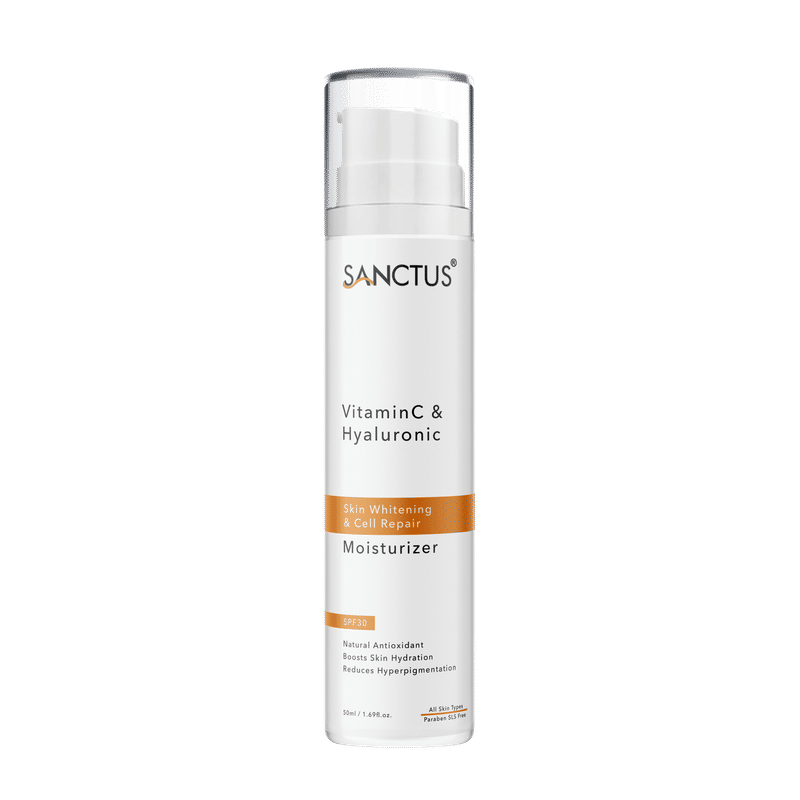
SANCTUS Hyaluronic & Vitamin C Oil-Free Face Moisturizer SPF 30

SANCTUS Hyaluronic & Vitamin C Oil-Free Face Moisturizer SPF 30
SANCTUS
sanctus-hyaluronic-vitamin-c-oil-free-face-moisturizer-spf-30
Moisturize
10084925735205
Morning or Evening?
How often will you use this product?
Notes


Highlights
WHAT IS IT?
Face Moisturizer with active ingredients count 19
FEATURES
Skin brightening, antioxidant, hydrates skin, improves skin texture, vegan, paraben-free, cruelty-free
BEST FOR
normal
CHECKS
Parabens
Who Is It For?
What Does It Help With?
Natural Glow Anti-aging Hydration Smoothens Fine Lines And WrinklesBudget
Affordable (under $30)How To Use
Which routine should it be used in?
Instructions:
Key Information


What SANCTUS Says
Product Description:
Sanctus Vitamin C and Hyaluronic Acid Skin Moisturizer is an effective way of enhancing the skin health. The vitamin C is a skin booster and helps to keep the skin naturally glowing. Hyaluronic acid is a miracle ingredient that keeps the skin hydrated, plump, and youthful. Features: Skin brightening: Moisturizer that induces the natural glow for the skin. Acts as an antioxidant for skin: It controls the aging effects of skin. Hydrates the skin: Vitamin C helps to keep the skin hydrated and moisturized. Improves skin texture: Smoothens out fine lines and wrinkles. This product is vegan, paraben-free, and cruelty-free.
About the Brand:
Ingredients Overview
Ingredients List
ashwagandha-ark-india-ginseng-withania-somnifera,mulethi-ark-liquorice-ext-glycyrrhiza-glabra,white-sandalwood-oil-santalum-album,aqua,sodium-gluconate,polyglyceryl-2-stearate,glyceryl-stearate-(and)-stearyl-alcohol,amps-hema-crosspolymer,c13-15-alkane,coco-glucoside,emulsifying-wax,isopropyl-myristate,hydroxyethyl-urea,natural-betaine,xylitol,jojoba-oil,tocopheryl-acetate,cyclomethicone,dimethicone-blend,sodium-hyaluronate,vegetable-glycerine,sodium-pca,kojic-dipalmitate,niacinamide,phenoxyethanol
Key Ingredients
Ashwagandha Ark, Mulethi Ark, White Sandalwood Oil, Sodium Hyaluronate, Niacinamide, Kojic Dipalmitate
Ingredients Details
Coco-glucoside
Common Name(s): Coconut glucoside,apg c8-c16
CAS Number: 68515-73-1
DESCRIPTION
What It Does: Provides gentle, natural-origin cleansing with good foam from mixed coconut chain alkyl glucosides.
Why It's Used: Widely used natural surfactant for green beauty formulations requiring good foam performance with natural-origin and mild credentials.
How It Works: Mixed c8-c16 fatty alcohol chain lengths from coconut provide broader foam stability than single-chain glucosides. non-ionic glucoside headgroup provides mildness. better detergency and rinsing than individual chain-length apgs due to mixed chain distribution.
Typically Found In: Natural shampoos,body washes,facial cleansers
TECHNICAL DETAILS
Primary Category: Functional ingredient – coconut alkyl glucoside
Secondary Functions: Skin conditioning
Application Areas:

Facial Skincare
Body Care
Hair Care

Beard Care
Color Cosmetics (Makeup)
Dietary/Oral Supplements
Typical Concentration Range: 2%–20%
SOURCING & ETHICS
Vegan Status: Yes – from coconut fatty alcohols and glucose
Halal Status: Yes
Source Notes: Commercially produced for cosmetic use. verify vegan/halal status with supplier.
SKIN COMPATIBILITY
Irritancy Rating: 1/5 – very low
Comedogenicity Rating: 0/5 – non-comedogenic
Sensitivity Concerns: Well-tolerated by most skin types.
Safe for Sensitive Skin: Yes
SAFETY & COMPATIBILITY
Safety Profile: Good safety profile at recommended concentrations. ewg score: 1–2.
Works Well With: Standard skincare actives
Avoid Combining With: No known significant incompatibilities
SCIENTIFIC NOTE
Coco-glucoside's natural chain length distribution (c8-c16) provides synergistic surfactant effects where different chain lengths optimize different properties: shorter chains provide initial foam burst, longer chains provide foam stability and soil removal, creating better overall performance than any single chain length alone.
Last Verified: Cosing database,cir safety assessment
Primary Sources: 2026-03-12
Cyclomethicone
Common Name(s): Cyclomethicone,cyclic volatile silicone,dry-touch carrier solvent
CAS Number: N/a
DESCRIPTION
What It Does: Provides a dry, weightless application vehicle that evaporates cleanly leaving actives and non-volatile silicones deposited on skin — eliminating the residual heaviness of conventional liquid carrier solvents.
Why It's Used: Cyclosiloxanes are the unique volatile silicone solvents that dissolve non-volatile silicones (dimethicone, cyclomethicone), organic uv filters, and lipophilic actives, providing the sensory-superior dry-touch application experience in premium formulations.
How It Works: Cyclosiloxane vapour pressure (d5 cyclopentasiloxane ~0.3 mmhg at 25°c) provides clean evaporation at body temperature. the cyclic ring structure provides lower boiling point than equivalent linear dimethicone, enabling faster evaporation while the ring conformation maintains the silicone's low surface energy for smooth application.
Typically Found In: Primers,antiperspirants,sunscreens
TECHNICAL DETAILS
Primary Category: Functional ingredient – emollient
Secondary Functions: Barrier sealing,softening
Application Areas:
Facial Skincare
Body Care
Hair Care
Beard Care
Color Cosmetics (Makeup)
Dietary/Oral Supplements
Typical Concentration Range: 1%–50%
SOURCING & ETHICS
Vegan Status: Yes
Halal Status: Yes
Source Notes: Plant-derived, synthetic or animal-derived. verify source.
SKIN COMPATIBILITY
Irritancy Rating: 1/5 – very low
Comedogenicity Rating: 1/5 – low; formulation-dependent
Sensitivity Concerns: Non-irritating.
Safe for Sensitive Skin: Yes
SAFETY & COMPATIBILITY
Safety Profile: Excellent safety profile. ewg score: 1.
Works Well With: Humectants,ceramides,actives as carrier
Avoid Combining With: No significant incompatibilities
SCIENTIFIC NOTE
Cyclopentasiloxane (d5) and cyclohexasiloxane (d6) are under eu regulatory review for potential environmental persistence (pbt assessment) — formulators should monitor eu regulation 2018/35 implementation for restrictions in wash-off products.
Last Verified: Cosing database,eu cyclosiloxane regulatory review
Primary Sources: 2026-03-12
Niacinamide
Common Name(s): Vitamin b3,nicotinamide,pyridine-3-carboxamide
CAS Number: 98-92-0
DESCRIPTION
What It Does: Niacinamide strengthens the skin barrier, reduces visible pore size, regulates sebum production, fades dark spots, and improves skin texture and tone.
Why It's Used: It is used because it addresses multiple skin concerns at once without irritation, making it suitable for all skin types. it is stable in formulations and pairs well with most other actives.
How It Works: Niacinamide inhibits the transfer of melanosomes (pigment packets) to skin cells, reducing hyperpigmentation. it also stimulates ceramide synthesis to strengthen the skin barrier and reduces inflammation by modulating cytokine activity.
Typically Found In: Serums,moisturizers,toners,cleansers,eye creams,sunscreens,primers
TECHNICAL DETAILS
Primary Category: Active ingredient – vitamin
Secondary Functions: Barrier repair,brightening,anti-inflammatory
Application Areas:
Facial Skincare
Body Care
Hair Care
Beard Care
Color Cosmetics (Makeup)
Dietary/Oral Supplements
Typical Concentration Range: 2%–10% (typical: 5%; higher concentrations may cause flushing in some individuals)
SOURCING & ETHICS
Vegan Status: Yes – synthetically produced
Halal Status: Yes – synthetic origin
Source Notes: Commercially produced via synthesis from nicotinic acid or 3-cyanopyridine. no animal-derived sources used in cosmetic-grade niacinamide.
SKIN COMPATIBILITY
Irritancy Rating: 1/5 – very low; concentrations above 10% may cause temporary flushing in sensitive individuals
Comedogenicity Rating: 0/5 – non-comedogenic
Sensitivity Concerns: At concentrations >10%, some users experience niacin flush (transient redness/tingling). generally very well-tolerated.
Safe for Sensitive Skin: Yes – one of the best-tolerated actives for sensitive skin
SAFETY & COMPATIBILITY
Safety Profile: Extensively studied and considered very safe. ewg hazard score: 1. no significant systemic toxicity concerns at topical concentrations.
Works Well With: Retinol,peptides,ahas/bhas,hyaluronic acid,ceramides,zinc,vitamin c,spf
Avoid Combining With: High concentrations of vitamin c (ascorbic acid) may theoretically convert to niacin – use at different times if using pure l-ascorbic acid above 15%
SCIENTIFIC NOTE
Niacinamide is a precursor to nad+ and nadp+, coenzymes vital to cellular energy metabolism. its benefits for dna repair and mitochondrial function make it a key ingredient in anti-aging strategies.
Last Verified: Cosing database,cir safety assessment,ewg skin deep,pubmed clinical studies
Primary Sources: 2026-03-12
Phenoxyethanol
Common Name(s): 2-phenoxyethanol,rose ether,ethylene glycol monophenyl ether
CAS Number: 122-99-6
DESCRIPTION
What It Does: Prevents microbial contamination and spoilage in cosmetic formulations.
Why It's Used: The benchmark cosmetic preservative – eu-permitted up to 1%, effective against virtually all cosmetically relevant microorganisms, and excellent tolerability.
How It Works: Phenol ring provides broad antimicrobial activity via disruption of bacterial and fungal cell membranes and inhibition of enzymatic activity. effective against gram-positive and gram-negative bacteria, yeasts (candida), and molds (aspergillus). activity ph range: 3-9.
Typically Found In: All cosmetic formulations as primary preservative
TECHNICAL DETAILS
Primary Category: Functional ingredient – broad-spectrum preservative
Secondary Functions: Skin conditioning
Application Areas:
Facial Skincare
Body Care
Hair Care
Beard Care
Color Cosmetics (Makeup)
Dietary/Oral Supplements
Typical Concentration Range: 0.1%–1% (eu max 1%)
SOURCING & ETHICS
Vegan Status: Yes – synthetic
Halal Status: Yes
Source Notes: Commercially produced for cosmetic use. verify vegan/halal status with supplier.
SKIN COMPATIBILITY
Irritancy Rating: 1/5 – very low
Comedogenicity Rating: 0/5 – non-comedogenic
Sensitivity Concerns: Well-tolerated by most skin types.
Safe for Sensitive Skin: Yes
SAFETY & COMPATIBILITY
Safety Profile: Eu cosmetics regulation max 1%. sccs assessed as safe at ≤1%. avoid use around eyes in baby products per some country regulations. ewg score: 4.
Works Well With: Standard skincare actives
Avoid Combining With: No known significant incompatibilities
SCIENTIFIC NOTE
Phenoxyethanol's widespread adoption as the primary cosmetic preservative followed the phaseout of parabens from many formulations in the 2000s-2010s. despite having a comparable or better safety profile to parabens, it is often cited in 'free-from' formulations – a consumer perception issue rather than a scientific safety concern.
Last Verified: Cosing database,sccs opinion on phenoxyethanol,cir safety assessment
Primary Sources: 2026-03-12
