

Earth Harbor Naturals
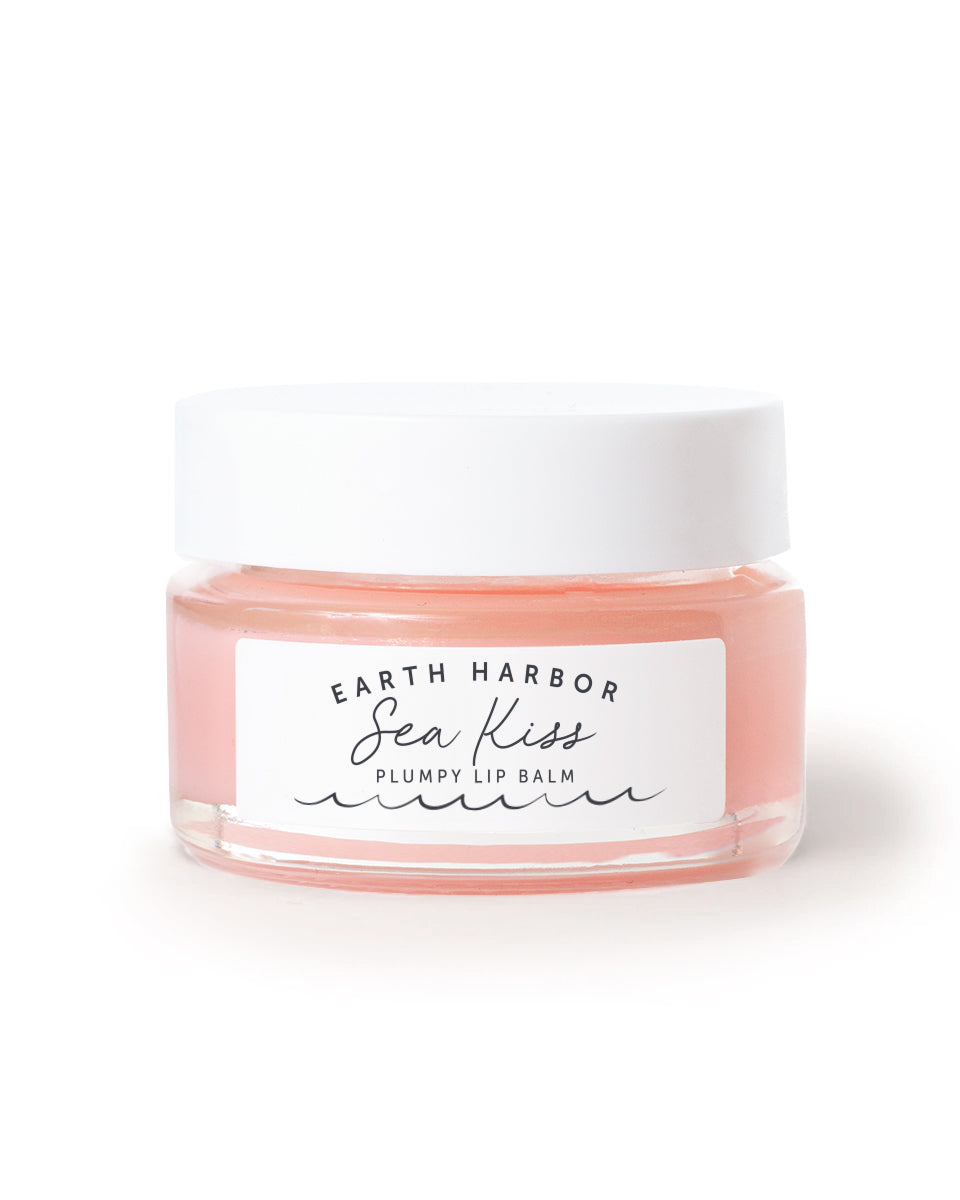
SEA KISS Plumpy Lip Balm

SEA KISS Plumpy Lip Balm
Earth Harbor Naturals
sea-kiss-plumpy-lip-balm
Lip care
9818335215909
Morning or Evening?
How often will you use this product?
Notes


Highlights
WHAT IS IT?
Lip balm with 29 natural ingredients
FEATURES
Plant-based, Food-grade, pH Optimized, Zero-waste, Small batch made
BEST FOR
dry
CHECKS
No Nasty Synthetics, No Gluten Added, No Soy Added, No Fillers
Who Is It For?
All Ages And GendersWhat Does It Help With?
Moisture Dry + Cracked Lips Plumpness Softness Fine LinesBudget
Affordable (under $30)How To Use
Which routine should it be used in?
Instructions:
Key Information


What Earth Harbor Naturals Says
Product Description:
A daily, melt-in lip treatment for plump softness without stickiness. Lips emerge smooth and supple, kissed by long-lasting moisture and hydrating actives. Protect + repair dry and damaged lips with a sheer, subtly glossy finish.
About the Brand:
Ingredients Overview
Ingredients List
triisostearin, cucumis-melo-seed-oil, ricinus-communis-seed-oil, dimer-dilinoleate, helianthus-annuus-seed-wax, polyhydroxystearic-acid, butyrospermum-parkii-butter, simmondsia-chinensis-seed-oil, squalane, opuntia-coccinellifera-flower-extract
Key Ingredients
Seaweed, Prickly Pear, Agave, Melon Oil, Shea Butter, Squalane, Evening Primrose, Vitamin E
Ingredients Details
Butyrospermum Parkii Butter
Common Name(s): Butyrospermum parkii butter,botanical carrier oil,emollient fatty acid delivery
CAS Number: N/a
DESCRIPTION
What It Does: Softens and conditions skin by integrating into sc lipid bilayers, delivers essential fatty acids (oleic, linoleic, linolenic) for barrier lipid synthesis, and provides rich, non-stripping moisturisation.
Why It's Used: Natural carrier oils provide the closest compositional match to endogenous sc lipids, delivering emolliency through genuine barrier integration rather than simple surface occlusion.
How It Works: Fatty acid triglycerides partition into sc lipid bilayers — oleic acid (c18:1) provides fluid, emollient integration; linoleic acid (c18:2) acts as essential ceramide precursor; saturated fatty acids provide more occlusive barrier reinforcement.
Typically Found In: Moisturisers,facial oils,natural skin care
TECHNICAL DETAILS
Primary Category: Functional ingredient – emollient
Secondary Functions: Barrier sealing,softening
Application Areas:

Facial Skincare
Body Care
Hair Care

Beard Care
Color Cosmetics (Makeup)
Dietary/Oral Supplements
Typical Concentration Range: 1%–100%
SOURCING & ETHICS
Vegan Status: Conditional
Halal Status: Yes
Source Notes: Plant-derived, synthetic or animal-derived. verify source.
SKIN COMPATIBILITY
Irritancy Rating: 1/5 – very low
Comedogenicity Rating: 1/5 – low; formulation-dependent
Sensitivity Concerns: Non-irritating.
Safe for Sensitive Skin: Yes
SAFETY & COMPATIBILITY
Safety Profile: Excellent safety profile. ewg score: 1.
Works Well With: Humectants,ceramides,actives as carrier
Avoid Combining With: No significant incompatibilities
SCIENTIFIC NOTE
Essential fatty acids — linoleic (c18:2, n-6) and α-linolenic (c18:3, n-3) acids — cannot be synthesised by the body; topical delivery through carrier oils provides direct substrate for ceramide and eicosanoid biosynthesis in the epidermis.
Last Verified: Cosing database,butyrospermum parkii butter carrier oil botanical review
Primary Sources: 2026-03-12
Cucumis Melo Seed Oil
Common Name(s): Cucumis melo seed oil,cucumis melo seed oil,essential oil,concentrated volatile plant extract
CAS Number: N/a
DESCRIPTION
What It Does: Provides aromatic fragrance from volatile terpenoid constituents alongside bioactive skin activity — the same mono and sesquiterpene compounds providing both olfactory benefit and pharmacological activity at cosmetic use concentrations.
Why It's Used: Essential oils provide authentic aromatherapy narrative with genuine bioactive chemistry — concentrated terpenoid profiles delivering documented biological activity alongside fragrance function.
How It Works: Steam distillation concentrates volatile secondary metabolites. antimicrobial activity from terpenoid membrane disruption (phenols: thymol, carvacrol; monoterpene alcohols: terpinen-4-ol, linalool). anti-inflammatory from sesquiterpene nf-kb inhibition. antioxidant from phenylpropanoid radical donation. eu allergen monitoring required for individual components.
Typically Found In: Aromatherapy,natural fragrance,bioactive care
TECHNICAL DETAILS
Primary Category: Active ingredient – antioxidant
Secondary Functions: Free radical scavenging,anti-aging
Application Areas:
Facial Skincare
Body Care
Hair Care
Beard Care
Color Cosmetics (Makeup)
Dietary/Oral Supplements
Typical Concentration Range: 0.01%–2%
SOURCING & ETHICS
Vegan Status: Yes
Halal Status: Yes
Source Notes: Plant-derived extract or synthetic.
SKIN COMPATIBILITY
Irritancy Rating: 1/5 – very low
Comedogenicity Rating: 0/5 – non-comedogenic
Sensitivity Concerns: Non-irritating; well-tolerated.
Safe for Sensitive Skin: Yes
SAFETY & COMPATIBILITY
Safety Profile: Excellent safety profile. ewg score: 1.
Works Well With: Vitamin c,vitamin e,ferulic acid,spf,other antioxidants
Avoid Combining With: No significant incompatibilities
SCIENTIFIC NOTE
Ifra sets category-specific maximum use levels for each essential oil based on qra of sensitising terpenoid components. auto-oxidation of terpene constituents increases sensitisation risk in aged/improperly stored oils — antioxidant stabilisation and freshness dating recommended.
Last Verified: Cosing database,ifra standards,cucumis melo seed oil essential oil review
Primary Sources: 2026-03-22
Helianthus Annuus Seed Wax
Common Name(s): Helianthus annuus seed wax
DESCRIPTION
What It Does: Provides antioxidant protection, soothing anti-inflammatory effects, and skin-conditioning benefits through plant-derived polyphenols and phytochemicals.
Why It's Used: Plant extracts concentrate bioactive phytochemicals evolved for environmental protection — uv, microbial, and oxidative stressors — that translate to skin benefits.
How It Works: Polyphenols (flavonoids, phenolic acids) inhibit nf-κb-mediated inflammatory signaling, scavenge reactive oxygen species through electron donation, and chelate pro-oxidant metal ions to reduce oxidative skin damage.
Typically Found In: Lipsticks,balms,creams,deodorants
TECHNICAL DETAILS
Primary Category: Waxes
Secondary Functions: Emollient,film former
Application Areas:
Facial Skincare
Body Care
Hair Care
Beard Care
Color Cosmetics (Makeup)
Dietary/Oral Supplements
Typical Concentration Range: 1–40%
SOURCING & ETHICS
Vegan Status: Yes
Halal Status: Yes
Source Notes: Plant-derived or synthetic wax; check source for vegan status.
SKIN COMPATIBILITY
Irritancy Rating: 1
Comedogenicity Rating: 1
Sensitivity Concerns: Low sensitization potential at recommended use concentrations.
Safe for Sensitive Skin: Yes
SAFETY & COMPATIBILITY
Safety Profile: Well-characterized cosmetic ingredient with established safety profile. generally non-irritating at typical use concentrations. suitable for leave-on and rinse-off cosmetics.
Works Well With: Other waxes,emollients,pigments
Avoid Combining With: Strongly alkaline conditions
SCIENTIFIC NOTE
Plant secondary metabolites (flavonoids, terpenes, phenolic acids) are biosynthesized as defense compounds against uv, herbivores, and pathogens. their anti-inflammatory activity typically derives from competitive inhibition of cox-2 and 5-lox enzymes (ic50 1–50 µm), while antioxidant activity involves single electron transfer (set) and hydrogen atom transfer (hat) mechanisms with structure-dependent rate constants.
Last Verified: Cosing eu database; pcpc cosmetic ingredient safety reviews; ingredient-specific safety and efficacy literature
Primary Sources: 2025-01-15
Opuntia Coccinellifera Flower Extract
Common Name(s): Opuntia coccinellifera flower extract,opuntia coccinellifera flower extract,botanical extract,phytochemical active
CAS Number: N/a
DESCRIPTION
What It Does: Provides antioxidant protection from polyphenol radical scavenging, anti-inflammatory activity from terpenoid nf-kb/cox pathway inhibition, and skin conditioning from the secondary metabolite complex.
Why It's Used: Opuntia coccinellifera flower extract is selected for the characteristic secondary metabolite signature of opuntia coccinellifera — whether polyphenols, terpenoids, alkaloids, or polysaccharides, the phytochemical profile provides antioxidant, anti-inflammatory, or skin conditioning benefits specific to this botanical species.
How It Works: Polyphenol catechol h-atom donation for ros scavenging (10⁶-10⁹ m⁻¹s⁻¹); terpenoids inhibit iκb kinase; flavonoids compete at cox-1/2; alkaloids modulate specific receptor targets.
Typically Found In: Botanical skin care
TECHNICAL DETAILS
Primary Category: Active ingredient – antioxidant
Secondary Functions: Free radical scavenging,anti-aging
Application Areas:
Facial Skincare
Body Care
Hair Care
Beard Care
Color Cosmetics (Makeup)
Dietary/Oral Supplements
Typical Concentration Range: 0.1%–10%
SOURCING & ETHICS
Vegan Status: Conditional
Halal Status: Conditional
Source Notes: Plant-derived extract or synthetic.
SKIN COMPATIBILITY
Irritancy Rating: 1/5 – very low
Comedogenicity Rating: 0/5 – non-comedogenic
Sensitivity Concerns: Non-irritating; well-tolerated.
Safe for Sensitive Skin: Yes
SAFETY & COMPATIBILITY
Safety Profile: Excellent safety profile. ewg score: 1.
Works Well With: Vitamin c,vitamin e,ferulic acid,spf,other antioxidants
Avoid Combining With: No significant incompatibilities
SCIENTIFIC NOTE
Standardise to marker compounds for consistent bioactivity — field-grown material varies 3-10× in secondary metabolite content.
Last Verified: Cosing database,opuntia coccinellifera flower extra botanical extract review
Primary Sources: 2026-03-22
