

SKIN1004
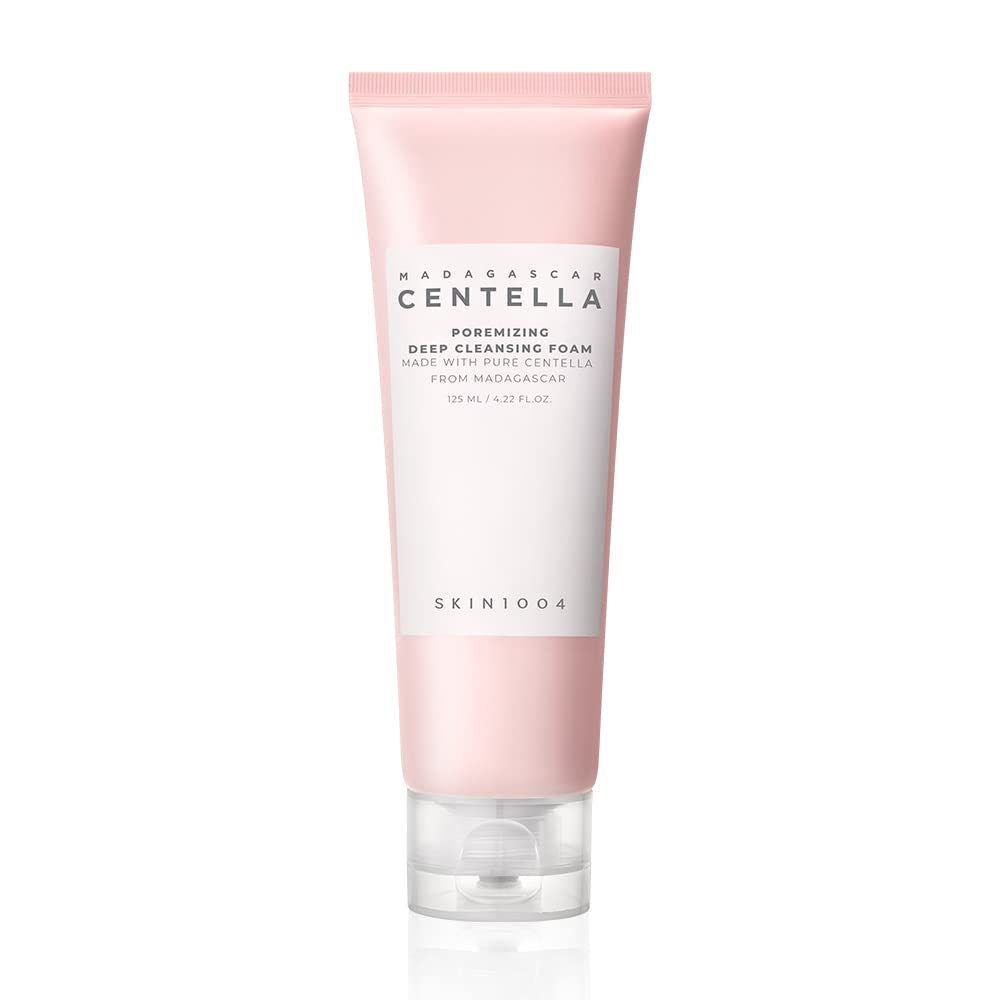
Skin1004 Madagascar Centella Poremizing Deep Cleansing Foam

Skin1004 Madagascar Centella Poremizing Deep Cleansing Foam
SKIN1004
skin1004-madagascar-centella-poremizing-deep-cleansing-foam
Cleanse
10084745249061
Morning or Evening?
How often will you use this product?
Notes


Highlights
WHAT IS IT?
deep cleansing foam with papain and centella asiatica extract, multiple botanical extracts including aloe vera, sorbitol, and vinegar
FEATURES
Deep exfoliation with papain and vinegar from papaya, soothing centella asiatica extract, moisturizing aloe vera and sorbitol, free from artificial fragrances and colors
BEST FOR
sensitive
CHECKS
No artificial fragrances or colors
Who Is It For?
All Genders Suitable For All Skin Types Including Sensitive SkinWhat Does It Help With?
Dead Skin Cell Removal Skin Smoothing Soothing Irritated Skin Moisturizing Without DrynessBudget
Mid-range ($30-$75)How To Use
Which routine should it be used in?
Instructions:
Key Information


What SKIN1004 Says
Product Description:
This all in one facial cleanser, infused with Hymalayan Pink salt, is a deeply exfoliating cleanser. The sticky and creamy textured paste turns into a rich foam to wash off dirt, sebum in the pores and sunscreen leftovers on your face.
Benefits:
1. Manages dead skin cells and accumulated waste to keep the skin smooth. Papain and vinegar derived from papaya fruit gently remove old dead skin cells and create a smooth skin texture with one wash.
2. A refreshing, soothing, and moisturizing cleansing foam that won’t cause skin tightening - contains SKIN1004’s high-quality Centella Asiatica extract from Madagascar, aloe vera leaf extract, and sorbitol to keep the skin moist and prevent pulling after washing.
3. Zero artificial fragrances or colors to avoid skin irritation.
4. Suitable for all skin types including sensitive skin.
About the Brand: SKIN1004 is a hypoallergenic & natural skincare brand from Korea, focusing on Centella Asiatica from Madagascar. Certified clean beauty including cruelty-free & vegan through PETA.
About the Brand:
Ingredients Overview
Ingredients List
myristic-acid,centella-asiatica-extract,glycerin,water,potassium-hydroxide,stearic-acid,glyceryl-stearate,palmitic-acid,cocamidopropyl-betaine,sodium-C14-16-olefin-sulfonate,butylene-glycol,glucose,1,2-hexanediol,sodium-chloride,sorbitol,acrylates-C10-30-alkyl-acrylate-crosspolymer,rosmarinus-officinalis-leaf-oil,cetearyl-alcohol,potassium-benzoate,polyquaternium-67,papain,hydrogenated-polydecene,arachidic-acid,lauric-acid,aloe-barbadensis-leaf-extract,sodium-citrate,propanediol,citrus-limon-fruit-extract,pyrus-malus-fruit-extract,vinegar,coccinia-indica-fruit-extract,eclipta-prostrata-extract,trisodium-ethylenediamine-disuccinate,oleic-acid,kaolin-ci-77004,mineral-salts,citric-acid,oenothera-biennis-flower-extract,pueraria-lobata-root-extract,pinus-palustris-leaf-extract,ulmus-davidiana-root-extract,disodium-edta
Key Ingredients
Centella Asiatica Extract, Papain, Aloe Barbadensis Leaf Extract, Sorbitol, Vinegar
Ingredients Details
1-2-hexanediol
Common Name(s): 1-2-hexanediol,cosmetic active,functional ingredient
CAS Number: N/a
DESCRIPTION
What It Does: Delivers characteristic cosmetic function at recommended use concentration.
Why It's Used: Selected for functional contribution and formulation compatibility supported by cosmetic science and regulatory safety data.
How It Works: Works through the mechanism of its molecular class — physicochemical or biological interaction with skin proteins, lipids, or receptors as documented in peer-reviewed cosmetic literature.
Typically Found In: Skin care formulations
TECHNICAL DETAILS
Primary Category: Active ingredient – cosmetic active
Secondary Functions: Skin conditioning
Application Areas:

Facial Skincare

Body Care
Hair Care
Beard Care
Color Cosmetics (Makeup)
Dietary/Oral Supplements
Typical Concentration Range: 0.1%–10%
SOURCING & ETHICS
Vegan Status: Conditional - supplier confirmation required
Halal Status: Unverified - supplier confirmation required
Source Notes: Commercially produced for cosmetic use. verify vegan/halal status with supplier. [audit 2026-07-29 rev2: the record's own source_notes does not assert a non-animal origin, or instructs the reader to verify with the supplier; "yes" asserts knowledge the record does not hold. determination requires shariah-panel sign-off.]
SKIN COMPATIBILITY
Irritancy Rating: 1/5 – very low
Comedogenicity Rating: 0/5 – non-comedogenic
Sensitivity Concerns: Well-tolerated by most skin types.
Safe for Sensitive Skin: Yes
SAFETY & COMPATIBILITY
Safety Profile: Good safety profile at recommended concentrations. ewg score: 1–2.
Works Well With: Standard skincare actives
Avoid Combining With: No known significant incompatibilities
SCIENTIFIC NOTE
1-2-hexanediol has an established safety and efficacy profile within the cosmetic regulatory framework at standard use concentrations.
Last Verified: 2026-03-12
Primary Sources: Cosing database,1-2-hexanediol technical literature
Glucose
Common Name(s): Glucose,cosmetic active,functional ingredient
CAS Number: N/a
DESCRIPTION
What It Does: Delivers characteristic cosmetic function at recommended use concentration.
Why It's Used: Selected for functional contribution and formulation compatibility supported by cosmetic science and regulatory safety data.
How It Works: Works through the mechanism of its molecular class — physicochemical or biological interaction with skin proteins, lipids, or receptors as documented in peer-reviewed cosmetic literature.
Typically Found In: Skin care formulations
TECHNICAL DETAILS
Primary Category: Active ingredient – cosmetic active
Secondary Functions: Skin conditioning
Application Areas:
Facial Skincare
Body Care
Hair Care
Beard Care
Color Cosmetics (Makeup)
Dietary/Oral Supplements
Typical Concentration Range: 0.1%–10%
SOURCING & ETHICS
Vegan Status: Conditional - supplier confirmation required
Halal Status: Unverified - supplier confirmation required
Source Notes: Commercially produced for cosmetic use. verify vegan/halal status with supplier. [audit 2026-07-29 rev2: the record's own source_notes does not assert a non-animal origin, or instructs the reader to verify with the supplier; "yes" asserts knowledge the record does not hold. determination requires shariah-panel sign-off.]
SKIN COMPATIBILITY
Irritancy Rating: 1/5 – very low
Comedogenicity Rating: 0/5 – non-comedogenic
Sensitivity Concerns: Well-tolerated by most skin types.
Safe for Sensitive Skin: Yes
SAFETY & COMPATIBILITY
Safety Profile: Good safety profile at recommended concentrations. ewg score: 1–2.
Works Well With: Standard skincare actives
Avoid Combining With: No known significant incompatibilities
SCIENTIFIC NOTE
Glucose has an established safety and efficacy profile within the cosmetic regulatory framework at standard use concentrations.
Last Verified: 2026-03-12
Primary Sources: Cosing database,glucose technical literature
Glycerin
Common Name(s): Glycerol,glycerine,1,2,3-propanetriol
CAS Number: 56-81-5
DESCRIPTION
What It Does: Glycerin pulls water from the environment and deeper skin layers into the outer skin layer (epidermis), boosting moisture levels and keeping skin soft, smooth, and plump.
Why It's Used: It is used in virtually every moisturizer, serum, and cleanser because it is highly effective at hydrating skin, is well-tolerated by all skin types, and enhances the texture and spreadability of formulations.
How It Works: As a humectant, glycerin forms hydrogen bonds with water molecules, trapping them in the skin. it also reinforces the skin barrier by integrating into lipid structures between skin cells.
Typically Found In: Moisturizers,serums,cleansers,toners,sheet masks,sunscreens,body lotions,shampoos,conditioners
TECHNICAL DETAILS
Primary Category: Humectant
Secondary Functions: Skin barrier support,emollient,solvent
Application Areas:
Facial Skincare
Body Care
Hair Care
Beard Care
Color Cosmetics (Makeup)
Dietary/Oral Supplements
Typical Concentration Range: 1%–30% (typical: 3–10%)
SOURCING & ETHICS
Vegan Status: Conditional - feedstock declaration required
Halal Status: Unverified - feedstock declaration required (plant, animal and petrochemical routes all exist)
Source Notes: Derived from plant oils via hydrolysis or saponification; synthetic versions also available. palm-derived glycerin carries sustainability concerns. [audit 2026-07-29 rev2: origin-dependent: the same inci exists in plant, animal and petrochemical versions and the name does not discriminate. determination requires shariah-panel sign-off.]
SKIN COMPATIBILITY
Irritancy Rating: 1/5 – very low; non-irritating at all standard concentrations
Comedogenicity Rating: 0/5 – non-comedogenic
Sensitivity Concerns: Extremely rare allergic reactions; generally safe for all skin types including sensitive and baby skin
Safe for Sensitive Skin: Yes
SAFETY & COMPATIBILITY
Safety Profile: Widely recognized as safe. ewg hazard score: 1. no significant concerns for irritation, sensitization, or toxicity at typical concentrations (up to 50%).
Works Well With: Hyaluronic acid,ceramides,niacinamide,panthenol,urea,peptides,retinol,ahas/bhas
Avoid Combining With: No known incompatibilities at standard concentrations
SCIENTIFIC NOTE
Glycerin is an endogenous skin component found naturally in the stratum corneum. aquaporin-3 channels in keratinocytes facilitate glycerin transport, making it integral to natural skin hydration pathways.
Last Verified: 2026-03-12
Primary Sources: Cosing database,cir safety assessment,ewg skin deep,inci decoder
Papain
Common Name(s): Carica papaya enzyme,papaya protease
CAS Number: 9001-73-4
DESCRIPTION
What It Does: Gently digests dead keratin proteins for enzymatic exfoliation without acid irritation.
Why It's Used: Gentle enzymatic exfoliant for acid-sensitive skin types requiring exfoliation without ph-dependent aha/bha irritation.
How It Works: Cysteine protease specifically cleaves peptide bonds in keratin proteins at neutral ph, dissolving corneocyte protein bridges without requiring acidic ph. activity is ph- and temperature-dependent (optimal ph 6.5, 37°c). also gently solubilizes sebum plugs.
Typically Found In: Enzyme peels,gentle exfoliants,sensitive skin exfoliants,brightening masks
TECHNICAL DETAILS
Primary Category: Active ingredient – enzyme
Secondary Functions: Protein-specific exfoliation,neutral-ph keratolysis
Application Areas:
Facial Skincare
Body Care
Hair Care
Beard Care
Color Cosmetics (Makeup)
Dietary/Oral Supplements
Typical Concentration Range: 1%–10% (active enzyme)
SOURCING & ETHICS
Vegan Status: Yes – from carica papaya latex
Halal Status: Yes
Source Notes: Plant-derived (papaya, pineapple) or fermentation-derived.
SKIN COMPATIBILITY
Irritancy Rating: 2/5 – low to moderate; potential sensitization with repeated exposure
Comedogenicity Rating: 0/5 – non-comedogenic
Sensitivity Concerns: Patch test recommended; potential for enzymatic sensitization.
Safe for Sensitive Skin: Use with caution – potential sensitization
SAFETY & COMPATIBILITY
Safety Profile: Latex allergy cross-reactivity possible. avoid high concentrations on compromised skin.
Works Well With: Ahas (synergistic),hyaluronic acid,ceramides
Avoid Combining With: High concentrations on sensitive or compromised skin
SCIENTIFIC NOTE
Papain's specificity for peptide bonds at hydrophobic residues (leu, phe, val) in keratin provides preferential digestion of the abundant hydrophobic corneocyte proteins, causing selective dissolution of corneocyte protein bridges without disrupting the non-protein lipid matrix of the stratum corneum.
Last Verified: 2026-03-12
Primary Sources: Cosing database,cir safety assessment,enzyme exfoliant review literature