

Skinella
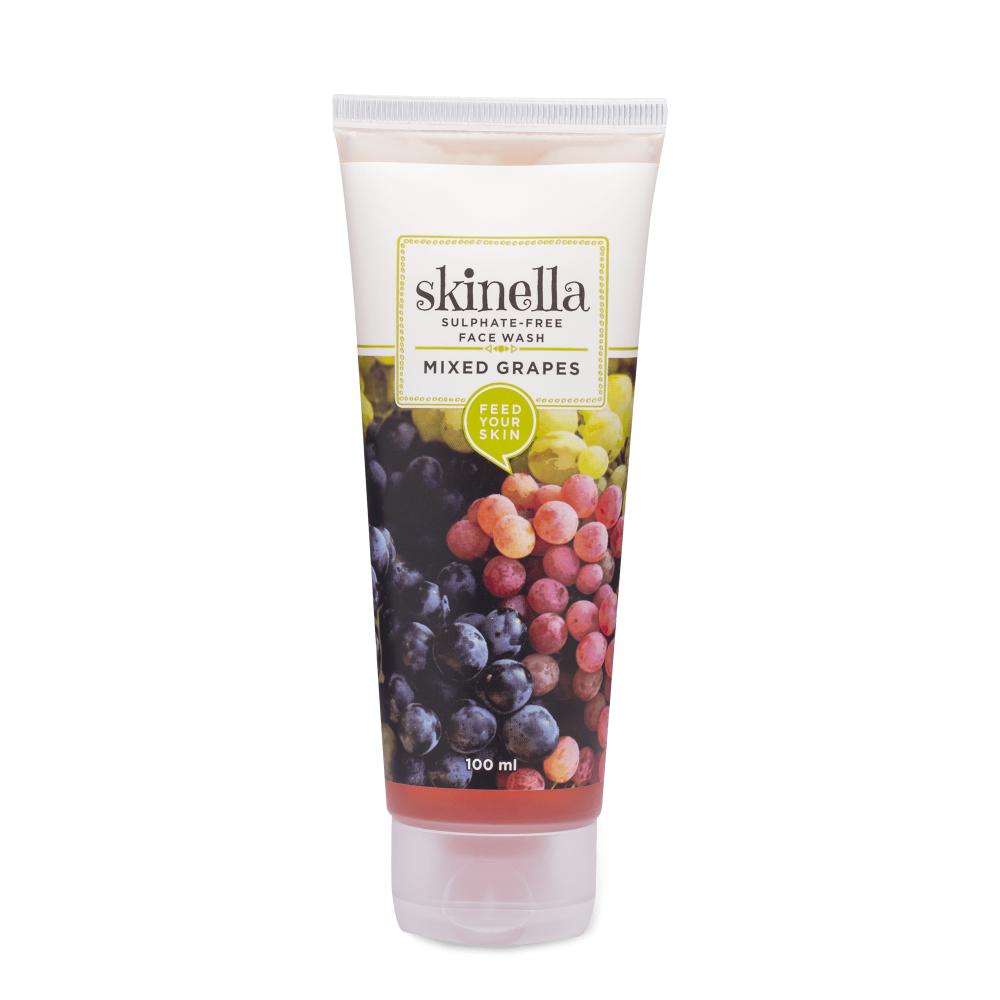
Skinella Mixed Grapes Sulphate Free Face Wash Gel

Skinella Mixed Grapes Sulphate Free Face Wash Gel
Skinella
skinella-mixed-grapes-sulphate-free-face-wash-gel
Cleanse
10084928258341
Morning or Evening?
How often will you use this product?
Notes


Highlights
WHAT IS IT?
Face Wash with multiple grape extracts
FEATURES
Gentle Cleanse,Sulphate-Free,Enriched With Mixed Grape Extracts To Hydrate And Revitalize Skin,Brightens Complexion,Suitable For All Skin Types,Vegan,Cruelty-Free
BEST FOR
all skin types
CHECKS
Contains No Sulfates
Who Is It For?
Girls Between 15 And 25 Years OldWhat Does It Help With?
Hydration Brightening Youthful Complexion Cleansing Refreshing SkinBudget
Affordable (under $30)How To Use
Which routine should it be used in?
Instructions:
Key Information


What Skinella Says
Product Description:
Experience The Nourishing Benefits Of A Face Wash Infused With The Goodness Of Red, Black, And Green Grapes, Designed To Elevate Your Skincare Routine. This Luxurious Formula Is Rich In Antioxidants, Which Help To Cleanse, Brighten, And Refresh Your Skin After Every Wash. Grapes Are Known For Their Hydrating Properties And Ability To Promote A More Youthful Complexion, Making This Face Wash An Essential Addition To Your Daily Regimen. Free From Sulfates, Skinella Gel Face Wash Effectively Removes Dirt And Impurities Without Disturbing Your Skin’S Natural Oil Balance. This Means You Can Enjoy A Thorough Cleanse Without The Worry Of Dryness Or Irritation. The Result Is Smooth, Clear, And Moisturized Skin That Feels Refreshed And Revitalized. Ideal For All Skin Types, This Face Wash Can Be Used Daily To Maintain Your Skin’S Health And Radiance.
About the Brand:
Ingredients Overview
Ingredients List
Aqua,Disodium-Cocoamphodiacetate,Cocamidopropyl-Betaine,Cocoamido-Propyl-Hydroxy-Sultaine,Olivamidopropyl-Betaine,Propanediol,Betaine,Sorbeth-230-Tetraoleate,Decyl-Glucoside,Sorbitan-Laurate,Peg-40-Hydrogenated-Castor-Oil,Phenoxyethanol,Sodium-Gluconate,Vitis-Vinifera-Fruit-Meristem-Cell-Culture,Vitis-Vinifera-(Grape)-Fruit-Extract,Vitis-Labrusca-L-(Grape)-Extract,Folia-Vitis-Vinifera-(Grape)-Extract,Vitis-Amurensis-(Grapes)-Extract,Iodopropynyl-Butylcarbamate,Ci-42090,Ci-14720
Key Ingredients
Vitis Vinifera Fruit Meristem Cell Culture, Vitis Vinifera (Grape) Fruit Extract, Vitis Labrusca L. (Grape) Extract, Folia Vitis Vinifera (Grape) Extract, Vitis Amurensis (Grapes) Extract
Ingredients Details
Betaine
Common Name(s): Trimethylglycine,tmg,natural betaine
CAS Number: 107-43-7
DESCRIPTION
What It Does: Provides osmoprotective humectant conditioning with anti-irritant and mild foam-boosting activity.
Why It's Used: Natural-origin multifunctional osmolyte from sugar beet providing hydration, anti-irritancy, and conditioning in virtually every cosmetic category.
How It Works: Quaternary ammonium betaine provides zwitterionic character for water binding via ionic hydration. osmoprotective function at 100–500mm as compatible solute protecting cells from osmotic stress. reduces surfactant irritation by competing with sls for protein binding sites. mild foam enhancement.
Typically Found In: Virtually all categories — moisturisers, shampoos, cleansers
TECHNICAL DETAILS
Primary Category: Functional ingredient – humectant
Secondary Functions: Tewl reduction,skin plumping
Application Areas:

Facial Skincare
Body Care
Hair Care

Beard Care
Color Cosmetics (Makeup)
Dietary/Oral Supplements
Typical Concentration Range: 0.5%–10%
SOURCING & ETHICS
Vegan Status: Conditional - feedstock declaration required
Halal Status: Unverified - feedstock declaration required (plant, animal and petrochemical routes all exist)
Source Notes: Synthetic or naturally derived. excellent aqueous solubility. [audit 2026-07-29 rev2: origin-dependent: the same inci exists in plant, animal and petrochemical versions and the name does not discriminate. determination requires shariah-panel sign-off.]
SKIN COMPATIBILITY
Irritancy Rating: 1/5 – very low
Comedogenicity Rating: 0/5 – non-comedogenic
Sensitivity Concerns: Non-irritating; suitable for all skin types.
Safe for Sensitive Skin: Yes
SAFETY & COMPATIBILITY
Safety Profile: Excellent safety profile. ewg score: 1.
Works Well With: Ceramides,emollients,occlusives,glycerin,hyaluronic acid
Avoid Combining With: No significant incompatibilities
SCIENTIFIC NOTE
Betaine's anti-irritant mechanism for surfactant systems involves competitive protein protection: betaine at high concentrations preferentially interacts with skin proteins, occupying binding sites that would otherwise be occupied by surfactant molecules causing protein denaturation. this competition reduces available protein binding for irritating surfactants, explaining betaine's well-documented ability to reduce sls irritation when co-formulated.
Last Verified: 2026-03-12
Primary Sources: Cosing database,craig betaine osmoprotective review,cir safety assessment
Phenoxyethanol
Common Name(s): 2-phenoxyethanol,rose ether,ethylene glycol monophenyl ether
CAS Number: 122-99-6
DESCRIPTION
What It Does: Prevents microbial contamination and spoilage in cosmetic formulations.
Why It's Used: The benchmark cosmetic preservative – eu-permitted up to 1%, effective against virtually all cosmetically relevant microorganisms, and excellent tolerability.
How It Works: Phenol ring provides broad antimicrobial activity via disruption of bacterial and fungal cell membranes and inhibition of enzymatic activity. effective against gram-positive and gram-negative bacteria, yeasts (candida), and molds (aspergillus). activity ph range: 3-9.
Typically Found In: All cosmetic formulations as primary preservative
TECHNICAL DETAILS
Primary Category: Functional ingredient – broad-spectrum preservative
Secondary Functions: Skin conditioning
Application Areas:
Facial Skincare
Body Care
Hair Care
Beard Care
Color Cosmetics (Makeup)
Dietary/Oral Supplements
Typical Concentration Range: 0.1%–1% (eu max 1%)
SOURCING & ETHICS
Vegan Status: Conditional - supplier confirmation required
Halal Status: Unverified - supplier confirmation required
Source Notes: Commercially produced for cosmetic use. verify vegan/halal status with supplier. [audit 2026-07-29 rev2: the record's own source_notes does not assert a non-animal origin, or instructs the reader to verify with the supplier; "yes" asserts knowledge the record does not hold. determination requires shariah-panel sign-off.]
SKIN COMPATIBILITY
Irritancy Rating: 1/5 – very low
Comedogenicity Rating: 0/5 – non-comedogenic
Sensitivity Concerns: Well-tolerated by most skin types.
Safe for Sensitive Skin: Yes
SAFETY & COMPATIBILITY
Safety Profile: Eu cosmetics regulation max 1%. sccs assessed as safe at ≤1%. avoid use around eyes in baby products per some country regulations. ewg score: 4.
Works Well With: Standard skincare actives
Avoid Combining With: No known significant incompatibilities
SCIENTIFIC NOTE
Phenoxyethanol's widespread adoption as the primary cosmetic preservative followed the phaseout of parabens from many formulations in the 2000s-2010s. despite having a comparable or better safety profile to parabens, it is often cited in 'free-from' formulations – a consumer perception issue rather than a scientific safety concern.
Last Verified:
Propanediol
Common Name(s): 1,3-propanediol,zemea,bio-propanediol
CAS Number: 504-63-2
DESCRIPTION
What It Does: Provides humectant and solvent functionality from sustainable corn-based fermentation.
Why It's Used: Bio-based propylene glycol alternative from renewable corn — propanediol provides equivalent functionality to propylene glycol with sustainable renewable feedstock and superior skin feel.
How It Works: Two oh groups provide humectant water binding. excellent solvent for fragrances, actives, and preservatives. mild antimicrobial from diol structure for preservative system boosting. renew corn fermentation origin (dupont zemea process). better skin feel than propylene glycol — less sticky.
Typically Found In: Virtually all cosmetic categories as pg alternative
TECHNICAL DETAILS
Primary Category: Functional ingredient – humectant
Secondary Functions: Tewl reduction,skin plumping
Application Areas:
Facial Skincare
Body Care
Hair Care
Beard Care
Color Cosmetics (Makeup)
Dietary/Oral Supplements
Typical Concentration Range: 1%–20%
SOURCING & ETHICS
Vegan Status: Yes – from corn sugar fermentation
Halal Status: Yes
Source Notes: Synthetic or naturally derived. excellent aqueous solubility.
SKIN COMPATIBILITY
Irritancy Rating: 1/5 – very low
Comedogenicity Rating: 0/5 – non-comedogenic
Sensitivity Concerns: Non-irritating; suitable for all skin types.
Safe for Sensitive Skin: Yes
SAFETY & COMPATIBILITY
Safety Profile: Excellent safety profile. ewg score: 1.
Works Well With: Ceramides,emollients,occlusives,glycerin,hyaluronic acid
Avoid Combining With: No significant incompatibilities
SCIENTIFIC NOTE
Propanediol's dupont tate & lyle bio products 'zemea' process ferments corn sugar to 1,3-propanediol using engineered e. coli — one of the first commercially viable bio-fermentation routes to a cosmetic diol previously made only from petroleum. the renewable route produces chemically identical 1,3-propanediol while reducing carbon footprint by approximately 40% vs petrochemical synthesis.
Last Verified: 2026-03-12
Primary Sources: Cosing database,dupont tate & lyle zemea technical data,cir safety assessment