

Skinfood
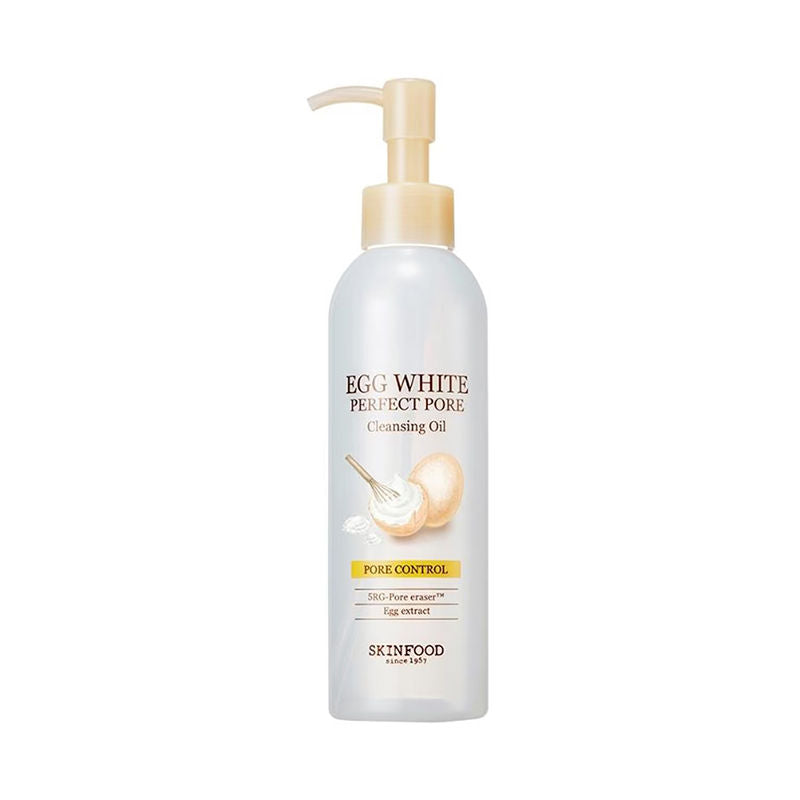
Skinfood Egg White Perfect Pore Cleansing Oil

Skinfood Egg White Perfect Pore Cleansing Oil
Skinfood
skinfood-egg-white-perfect-pore-cleansing-oil
Cleanse
10085052154149
Morning or Evening?
How often will you use this product?
Notes


Highlights
WHAT IS IT?
Cleansing oil with multiple natural extracts
FEATURES
Lightweight, removes stubborn makeup, purifies pores, enriched with egg yolk extract and olive oil, food-based skincare
BEST FOR
oily
CHECKS
Does not specifically list exclusions in description, but likely no heavy oils or pore-clogging agents
Who Is It For?
People With Super Oily Skin Visible Enlarged Pores And Exposure To Microdust; Gender Not Specified; Age Not SpecifiedWhat Does It Help With?
Removes Stubborn Makeup Purifies Pores Controls Sebum Production Combats Pore-clogging ImpuritiesBudget
Mid-range ($30-$75)How To Use
Which routine should it be used in?
Instructions:
Key Information


What Skinfood Says
Product Description:
SKINFOOD Egg White Perfect Pore Cleansing Oil is a lightweight cleansing oil that effectively removes stubborn makeup and purifies the pores, leaving the skin feeling fresh and soft. Features: Egg white pore cleansing oil that effectively purifies the pores, enriched with the goodness of egg yolk extract and olive oil, lightweight cleansing oil helps remove dirt and stubborn makeup, food-based skincare solution for healthy, beautiful skin. About the Range: Good for super oily skin, excessive sebum production, pore-clogging impurities, effective against microdust and visible enlarged pores. About the Brand: SKINFOOD roots in food philosophy using high quality food ingredients for healthy skin.
About the Brand:
Ingredients Overview
Ingredients List
Ethylhexyl-Palmitate,PEG-20-Glyceryl-Triisostearate,Isopropyl-Myristate,Caprylic/Capric-Triglyceride,C12-15-Alkyl-Benzoate,Pentaerythrityl-Tetraisostearate,Cetyl-Ethylhexanoate,PEG-10-Isostearate,Sorbeth-30-Tetraoleate,Pentaerythrityl-Tetraethylhexanoate,Bis-Ethoxydiglycol-Cyclohexane-1,4-Dicarboxylate,Water,Fragrance,Olea-Europaea-(Olive)-Fruit-Oil,Macadamia-Ternifolia-Seed-Oil,Helianthus-Annuus-(Sunflower)-Seed-Oil,Egg-Yolk-Extract,Albumen-Extract,Butylene-Glycol,Polysorbate-80,Phenoxyethanol,Solanum-Lycopersicum-(Tomato)-Fruit-Extract,Oleth-7,Glycyrrhiza-Glabra-(Licorice)-Root-Extract,Daucus-Carota-Sativa-(Carrot)-Root-Extract,Camellia-Sinensis-Leaf-Extract,Centella-Asiatica-Extract,Salicylic-Acid,Sulfur,Tocopherol,Butylphenyl-Methylpropional,Linalool,Hydroxycitronellal
Key Ingredients
Egg yolk extract, olive oil, salicylic acid, sulfur, licorice root extract
Ingredients Details
Fragrance
Common Name(s): Fragrance ingredient,eu allergen or aromatic component,olfactory/flavour
CAS Number: N/a
DESCRIPTION
What It Does: Provides the complete fragrance profile contributing to product sensory experience and consumer appeal.
Why It's Used: Fragrance is a major consumer purchase driver — up to 70% of consumers make purchasing decisions partially based on product scent.
How It Works: Fragrance blends interact with olfactory receptors providing the sensory profile — complex mixtures activate multiple receptor types for rich, multidimensional scent experiences.
Typically Found In: All fragrance products
TECHNICAL DETAILS
Primary Category: Active ingredient – cosmetic active
Secondary Functions: Skin conditioning
Application Areas:

Facial Skincare

Body Care
Hair Care
Beard Care
Color Cosmetics (Makeup)
Dietary/Oral Supplements
Typical Concentration Range: Standard use levels
SOURCING & ETHICS
Vegan Status: Conditional
Halal Status: Yes
Source Notes: Commercially produced for cosmetic use. verify vegan/halal status with supplier.
SKIN COMPATIBILITY
Irritancy Rating: 1/5 – very low
Comedogenicity Rating: 0/5 – non-comedogenic
Sensitivity Concerns: Well-tolerated by most skin types.
Safe for Sensitive Skin: Yes
SAFETY & COMPATIBILITY
Safety Profile: Good safety profile at recommended concentrations. ewg score: 1–2.
Works Well With: Standard skincare actives
Avoid Combining With: No known significant incompatibilities
SCIENTIFIC NOTE
Ifra guidelines set usage limits for fragrance ingredients based on skin sensitisation and phototoxicity assessment for each application category.
Last Verified: Eu regulation 1223/2009 annex iii,ifra standards,fragrance allergen declaration requirements
Primary Sources: 2026-03-12
Hydroxycitronellal
Common Name(s): Hydroxycitronellal,cosmetic active,functional ingredient
CAS Number: N/a
DESCRIPTION
What It Does: Delivers characteristic cosmetic function at recommended use concentration.
Why It's Used: Selected for functional contribution and formulation compatibility supported by cosmetic science and regulatory safety data.
How It Works: Works through the mechanism of its molecular class as documented in peer-reviewed cosmetic literature.
Typically Found In: Skin care formulations
TECHNICAL DETAILS
Primary Category: Active ingredient – cosmetic active
Secondary Functions: Skin conditioning
Application Areas:
Facial Skincare
Body Care
Hair Care
Beard Care
Color Cosmetics (Makeup)
Dietary/Oral Supplements
Typical Concentration Range: 0.1%–10%
SOURCING & ETHICS
Vegan Status: Conditional
Halal Status: Yes
Source Notes: Commercially produced for cosmetic use. verify vegan/halal status with supplier.
SKIN COMPATIBILITY
Irritancy Rating: 1/5 – very low
Comedogenicity Rating: 0/5 – non-comedogenic
Sensitivity Concerns: Well-tolerated by most skin types.
Safe for Sensitive Skin: Yes
SAFETY & COMPATIBILITY
Safety Profile: Good safety profile at recommended concentrations. ewg score: 1–2.
Works Well With: Standard skincare actives
Avoid Combining With: No known significant incompatibilities
SCIENTIFIC NOTE
Hydroxycitronellal has an established safety profile within the cosmetic regulatory framework at standard use concentrations.
Last Verified: Cosing database,hydroxycitronellal technical literature
Primary Sources: 2026-03-12
Linalool
Common Name(s): 3,7-dimethyl-1,6-octadien-3-ol,linalyl alcohol
CAS Number: 78-70-6
DESCRIPTION
What It Does: Provides the most common natural floral-citrus fragrance note with additional anti-inflammatory properties.
Why It's Used: The most abundant fragrance terpene in nature – linalool forms the primary scent character of lavender, responsible for lavender's documented aromatherapy calming effects.
How It Works: Monoterpene alcohol activates gaba-a receptors for anti-anxiety activity (same receptor as benzodiazepines). inhibits glutamate-induced excitotoxicity. antimicrobial via membrane disruption. anti-inflammatory via nf-kb inhibition.
Typically Found In: Virtually all fragranced cosmetics
TECHNICAL DETAILS
Primary Category: Fragrance component – tertiary terpene alcohol
Secondary Functions: Skin conditioning
Application Areas:
Facial Skincare
Body Care
Hair Care
Beard Care
Color Cosmetics (Makeup)
Dietary/Oral Supplements
Typical Concentration Range: 0.001%–3%
SOURCING & ETHICS
Vegan Status: Yes – from lavender, coriander, bergamot
Halal Status: Yes
Source Notes: Commercially produced for cosmetic use. verify vegan/halal status with supplier.
SKIN COMPATIBILITY
Irritancy Rating: 1/5 – very low
Comedogenicity Rating: 0/5 – non-comedogenic
Sensitivity Concerns: Well-tolerated by most skin types.
Safe for Sensitive Skin: Yes
SAFETY & COMPATIBILITY
Safety Profile: Eu cosmetics regulation: declared fragrance allergen on label when >0.001% (leave-on) or >0.01% (rinse-off). ifra guidelines apply.
Works Well With: Standard skincare actives
Avoid Combining With: No known significant incompatibilities
SCIENTIFIC NOTE
Linalool's gaba-a receptor activation provides a pharmacological basis for lavender aromatherapy's documented anxiolytic effects. the same receptor modulation used by benzodiazepine drugs (such as diazepam) is activated by inhaled linalool vapor, providing receptor-mediated calming without the tolerance and dependence associated with pharmaceutical gaba-a modulators.
Last Verified: Cosing database,ifra standards,elisabetsky et al. linalool gaba study
Primary Sources: 2026-03-12
Oleth-7
Common Name(s): Oleth-7,oleth-7,peg-7 oleyl ether,oleyl alcohol ethoxylate 7eo
CAS Number: 9004-98-2
DESCRIPTION
What It Does: Stabilizes oil-in-water emulsions while conditioning the skin. the oleyl (olive-like) lipid tail stays liquid at skin temperature, giving a smooth, non-waxy feel.
Why It's Used: Oleth-7 is selected for hlb ~10 balanced o/w emulsification from 7-eo ethoxylation of c18:1 oleyl alcohol — the cis-9 double bond in the oleyl tail prevents crystallization at skin temperature, providing a fluid, non-waxy skin feel that is absent from saturated alkyl ethoxylate emulsifiers at equivalent hlb.
How It Works: 7-eo chain → hydrophilic water binding; oleyl c18:1 cis tail → oil phase anchoring; cis-double bond → liquid at room temperature → non-waxy skin feel; hlb ~10 → o/w emulsion interface stabilization.
Typically Found In: Moisturizers,emulsions,cleansers
TECHNICAL DETAILS
Primary Category: Functional ingredient – emulsifier
Secondary Functions: Skin conditioning,solubilizing
Application Areas:
Facial Skincare
Body Care
Hair Care
Beard Care
Color Cosmetics (Makeup)
Dietary/Oral Supplements
Typical Concentration Range: 0.5%–5%
SOURCING & ETHICS
Vegan Status: Conditional
Halal Status: Yes
Source Notes: Oleyl alcohol from plant (olive, rapeseed) or marine source; eo from petrochemical.
SKIN COMPATIBILITY
Irritancy Rating: 1/5 – very low
Comedogenicity Rating: 1/5 – low; oleyl-related
Sensitivity Concerns: Generally well tolerated. ethoxylate residuals may cause mild sensitivity in highly reactive individuals.
Safe for Sensitive Skin: Yes
SAFETY & COMPATIBILITY
Safety Profile: Good safety profile. ewg score: 1–2.
Works Well With: Emollients,humectants,fatty alcohols
Avoid Combining With: No significant incompatibilities
SCIENTIFIC NOTE
Oleyl-derived ethoxylates remain characteristically liquid at room temperature — the cis-9 double bond kink prevents crystalline packing that causes waxy residue in saturated alkyl ethoxylates (ceteth, steareth series) at equivalent eo chain length.
Last Verified: Cosing database,oleth-7 peg emulsifier review
Primary Sources: 2026-03-27
