

Nykaa E retail limited
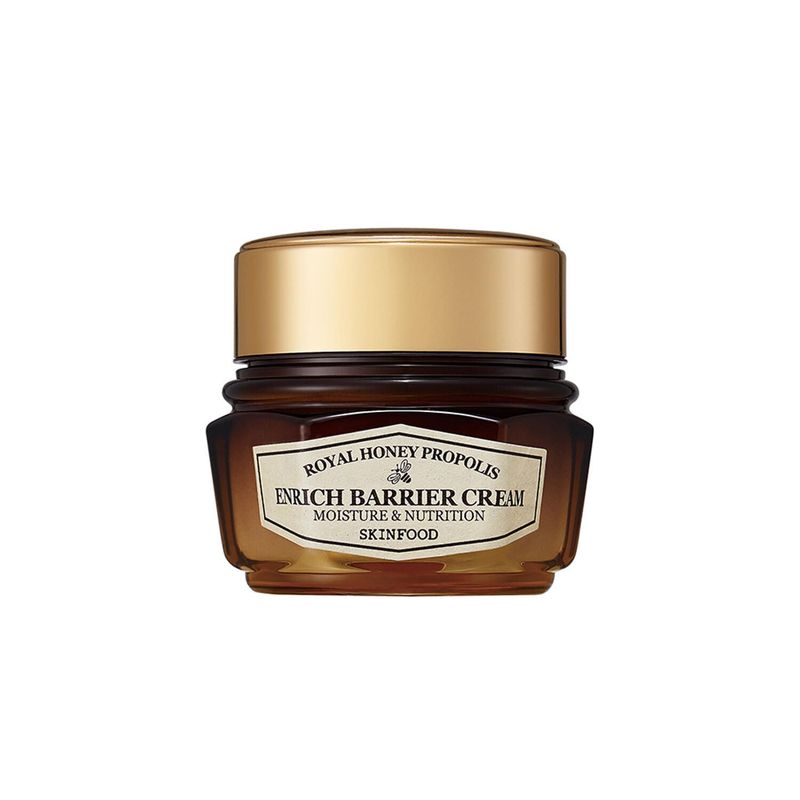
Skinfood Royal Honey Propolis Enrich Barrier Cream

Skinfood Royal Honey Propolis Enrich Barrier Cream
Nykaa E retail limited
skinfood-royal-honey-propolis-enrich-barrier-cream
Moisturize
10084746035493
Morning or Evening?
How often will you use this product?
Notes


Highlights
WHAT IS IT?
Face moisturizer cream with propolis, royal jelly and honey extracts
FEATURES
Moisturizing, Anti-aging, Strengthens the skin barrier
BEST FOR
dry
CHECKS
No artificial preservatives mentioned, palm oil derivatives and silicones present
Who Is It For?
All Skin Types Especially Normal To Dry SkinWhat Does It Help With?
Hydrates Soothes Strengthens Skin Barrier Reduces Irritation From Environment And Mask-wearingBudget
Premium ($76-$150)How To Use
Which routine should it be used in?
Instructions:
Key Information


What Nykaa E retail limited Says
Product Description:
This Hydrating Cream contains intensified propolis extract and cera-grin complex to strengthen your skin barrier. This Korean moisturizer is perfect for creating a seamless refreshed layer of skin with a highly dense, firm, and soft texture. Also, it decreases irritation caused by external aggressors, such as dry weather, temperature fluctuations, and prolonged mask-wearing. This is a dense and firm cream that melts on the skin, leaving a moisturizing film that locks in hydration. This propolis extract strengthens the skin barrier, calms inflamed skin and has antioxidant effects. Therefore, it hydrates and soothes the skin. Furthermore, the royal jelly and honey extracts also enhance these benefits. All in all, this cream promotes moist, healthy, and radiant skin. It is indicated for all skin types but is especially suited for normal to dry skin.
About the Brand:
Ingredients Overview
Ingredients List
Propolis-Extract,Water,Hydrogenated-Olive-Oil-Lauryl-Esters,Honey-Extract,Royal-Jelly-Extract,Caprylic/Capric-Triglyceride,Cetearyl-Alcohol,Butyrospermum-Parkii-(Shea)-Butter,Polyglyceryl-3-Methylglucose-Distearate,Cyclohexasiloxane,Glycerin,Cetearyl-Glucoside,Glyceryl-Stearate-Se,Palmitic-Acid,Ammonium-Acryloyldimethyltaurate/Vp-Copolymer,Panthenol,Stearic-Acid,Ethylhexylglycerin,Cetearyl-Olivate,Diphenylsiloxy-Phenyl-Trimethicone,Hydrogenated-Lecithin,C12-16-Alcohols,Sorbitan-Olivate,1,2-Hexanediol,Ceramide-Np,Lactobacillus-Ferment,Saccharomyces-Ferment,Dimethicone/Vinyl-Dimethicone-Crosspolymer,Phytosteryl/Octyldodecyl-Lauroyl-Glutamate,Cetyl-Alcohol,Stearyl-Alcohol,Butylene-Glycol,Citrus-Tangerina-(Tangerine)-Peel-Oil,Sodium-Phytate,Citrus-Aurantium-Bergamia-(Bergamot)-Fruit-Oil,Pelargonium-Graveolens-Flower-Oil,Boswellia-Carterii-Oil,Octyldodecanol,Lavandula-Angustifolia-(Lavender)-Oil,Citrus-Limon-(Lemon)-Peel-Oil,Xanthan-Gum,Glyceryl-Citrate/Lactate/Linoleate/Oleate,Rosmarinus-Officinalis-(Rosemary)-Leaf-Oil,Hydroxyethyl-Acrylate/Sodium-Acryloyldimethyl-Taurate-Copolymer,Glyceryl-Oleate,Eucalyptus-Globulus-Leaf-Oil,Cananga-Odorata-Flower-Oil,Cinnamomum-Zeylanicum-Bark-Oil,Glucose,Glycolipids,Glycosphingolipids,Tocopherol
Key Ingredients
Propolis Extract, Royal Jelly Extract, Honey Extract, Ceramide NP
Ingredients Details
1-2-hexanediol
Common Name(s): 1-2-hexanediol,cosmetic active,functional ingredient
CAS Number: N/a
DESCRIPTION
What It Does: Delivers characteristic cosmetic function at recommended use concentration.
Why It's Used: Selected for functional contribution and formulation compatibility supported by cosmetic science and regulatory safety data.
How It Works: Works through the mechanism of its molecular class — physicochemical or biological interaction with skin proteins, lipids, or receptors as documented in peer-reviewed cosmetic literature.
Typically Found In: Skin care formulations
TECHNICAL DETAILS
Primary Category: Active ingredient – cosmetic active
Secondary Functions: Skin conditioning
Application Areas:

Facial Skincare

Body Care
Hair Care
Beard Care
Color Cosmetics (Makeup)
Dietary/Oral Supplements
Typical Concentration Range: 0.1%–10%
SOURCING & ETHICS
Vegan Status: Conditional
Halal Status: Yes
Source Notes: Commercially produced for cosmetic use. verify vegan/halal status with supplier.
SKIN COMPATIBILITY
Irritancy Rating: 1/5 – very low
Comedogenicity Rating: 0/5 – non-comedogenic
Sensitivity Concerns: Well-tolerated by most skin types.
Safe for Sensitive Skin: Yes
SAFETY & COMPATIBILITY
Safety Profile: Good safety profile at recommended concentrations. ewg score: 1–2.
Works Well With: Standard skincare actives
Avoid Combining With: No known significant incompatibilities
SCIENTIFIC NOTE
1-2-hexanediol has an established safety and efficacy profile within the cosmetic regulatory framework at standard use concentrations.
Last Verified: Cosing database,1-2-hexanediol technical literature
Primary Sources: 2026-03-12
Cyclohexasiloxane
Common Name(s): D6,cyclomethicone d6,hexamethylcyclotrisiloxane
CAS Number: 540-97-6
DESCRIPTION
What It Does: Provides volatile silicone delivery with longer contact time than d5 for extended active delivery.
Why It's Used: Longer-evaporation volatile silicone for formulations requiring extended delivery contact time vs d5's rapid evaporation.
How It Works: Larger ring (6 silicone units) provides lower vapor pressure than d5 (5 units). slower evaporation rate (2-3× longer than d5) provides extended delivery window. same dry-touch after complete evaporation.
Typically Found In: Longer-duration volatile vehicles,serum formulations
TECHNICAL DETAILS
Primary Category: Functional ingredient – volatile cyclic silicone
Secondary Functions: Skin conditioning
Application Areas:
Facial Skincare
Body Care
Hair Care
Beard Care
Color Cosmetics (Makeup)
Dietary/Oral Supplements
Typical Concentration Range: 1%–30%
SOURCING & ETHICS
Vegan Status: Yes – synthetic
Halal Status: Yes
Source Notes: Commercially produced for cosmetic use. verify vegan/halal status with supplier.
SKIN COMPATIBILITY
Irritancy Rating: 1/5 – very low
Comedogenicity Rating: 0/5 – non-comedogenic
Sensitivity Concerns: Well-tolerated by most skin types.
Safe for Sensitive Skin: Yes
SAFETY & COMPATIBILITY
Safety Profile: Eu restrictions on d5 do not apply to d6 – d6 may be used in rinse-off products without restriction.
Works Well With: Standard skincare actives
Avoid Combining With: No known significant incompatibilities
SCIENTIFIC NOTE
The different evaporation rates of d4 (methylcyclosiloxane), d5, and d6 provide formulators with a toolkit of volatile silicone delivery windows: d4 evaporates in ~1 minute, d5 in ~5 minutes, d6 in ~15 minutes. blending these provides precisely tunable evaporation kinetics for specific delivery timing requirements.
Last Verified: Cosing database,dow silicone technical data,cir safety assessment
Primary Sources: 2026-03-12
Ethylhexylglycerin
Common Name(s): Octylglycerin,2-ethylhexyl glycerol ether,sensiva sc 10
CAS Number: 70445-33-9
DESCRIPTION
What It Does: Provides antimicrobial skin conditioning with deodorant activity and preservation system enhancement.
Why It's Used: Multifunctional clean beauty preservation active — ethylhexylglycerin provides antimicrobial, deodorant, and skin conditioning in a single ingredient accepted in most natural cosmetic certification schemes.
How It Works: Glycerol ether provides antimicrobial via bacterial membrane phospholipid disruption. deodorant activity via reduction of underarm lipase enzyme activity (similar mechanism to triethyl citrate). skin conditioning from glycerol humectant component. synergistic with phenoxyethanol and diols.
Typically Found In: Natural preservation systems,deodorants,skin conditioning products
TECHNICAL DETAILS
Primary Category: Functional ingredient – antimicrobial glycerol ether
Secondary Functions: Skin conditioning
Application Areas:
Facial Skincare
Body Care
Hair Care
Beard Care
Color Cosmetics (Makeup)
Dietary/Oral Supplements
Typical Concentration Range: 0.1%–0.5%
SOURCING & ETHICS
Vegan Status: Yes – synthetic
Halal Status: Yes
Source Notes: Commercially produced for cosmetic use. verify vegan/halal status with supplier.
SKIN COMPATIBILITY
Irritancy Rating: 1/5 – very low
Comedogenicity Rating: 0/5 – non-comedogenic
Sensitivity Concerns: Well-tolerated by most skin types.
Safe for Sensitive Skin: Yes
SAFETY & COMPATIBILITY
Safety Profile: Good safety profile at recommended concentrations. ewg score: 1–2.
Works Well With: Standard skincare actives
Avoid Combining With: No known significant incompatibilities
SCIENTIFIC NOTE
Ethylhexylglycerin's deodorant mechanism is pharmacologically identical to triethyl citrate: both inhibit skin surface microbial lipase enzymes that convert odourless triglycerides to odorous free fatty acids. the glycerol ether structure of ethylhexylglycerin, combined with the 2-ethylhexyl chain, provides lipase inhibition similar to ester-based lipase inhibitors from a different chemical class.
Last Verified: Cosing database,schülke sensiva sc 10 technical data,cir safety assessment
Primary Sources: 2026-03-12
Glucose
Common Name(s): Glucose,cosmetic active,functional ingredient
CAS Number: N/a
DESCRIPTION
What It Does: Delivers characteristic cosmetic function at recommended use concentration.
Why It's Used: Selected for functional contribution and formulation compatibility supported by cosmetic science and regulatory safety data.
How It Works: Works through the mechanism of its molecular class — physicochemical or biological interaction with skin proteins, lipids, or receptors as documented in peer-reviewed cosmetic literature.
Typically Found In: Skin care formulations
TECHNICAL DETAILS
Primary Category: Active ingredient – cosmetic active
Secondary Functions: Skin conditioning
Application Areas:
Facial Skincare
Body Care
Hair Care
Beard Care
Color Cosmetics (Makeup)
Dietary/Oral Supplements
Typical Concentration Range: 0.1%–10%
SOURCING & ETHICS
Vegan Status: Conditional
Halal Status: Yes
Source Notes: Commercially produced for cosmetic use. verify vegan/halal status with supplier.
SKIN COMPATIBILITY
Irritancy Rating: 1/5 – very low
Comedogenicity Rating: 0/5 – non-comedogenic
Sensitivity Concerns: Well-tolerated by most skin types.
Safe for Sensitive Skin: Yes
SAFETY & COMPATIBILITY
Safety Profile: Good safety profile at recommended concentrations. ewg score: 1–2.
Works Well With: Standard skincare actives
Avoid Combining With: No known significant incompatibilities
SCIENTIFIC NOTE
Glucose has an established safety and efficacy profile within the cosmetic regulatory framework at standard use concentrations.
Last Verified: Cosing database,glucose technical literature
Primary Sources: 2026-03-12
