

SKINTIFIC
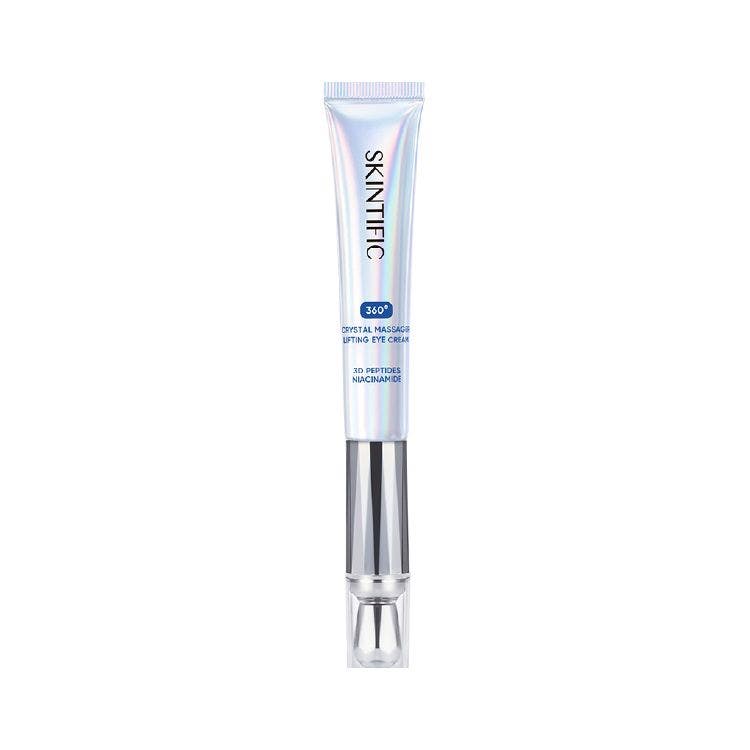
Skintific 360 Crystal Massager Lifting Eye Cream 20G

Skintific 360 Crystal Massager Lifting Eye Cream 20G
SKINTIFIC
skintific-360-crystal-massager-lifting-eye-cream-20g
Eyecare
10084707303717
Morning or Evening?
How often will you use this product?
Notes


Highlights
WHAT IS IT?
Eye Cream with multiple peptides and niacinamide
FEATURES
Unique Germany Lift-Tech with 184 gilded Crystal Surface, 12000 mini vibrations, improves absorption, reduces fine lines, wrinkles, puffiness, dark circles, contains 3D Peptides Complex and niacinamide
BEST FOR
sensitive
CHECKS
Does not contain parabens (implied, no mention), safe for pregnant and breastfeeding, external use only
Who Is It For?
All Skin Types Safe For Pregnant And Breastfeeding Women Gender Not SpecifiedWhat Does It Help With?
Fades Dark Circles Reduces Puffy Eyes Decreases Brown Discoloration Reduces Fine Lines And WrinklesBudget
Premium ($76-$150)How To Use
Which routine should it be used in?
Instructions:
Key Information


What SKINTIFIC Says
Product Description:
SKINTIFIC 360 Crystal Massager Lifting Eye Cream is able to fade dark circles on the under-eye area and decrease the appearance of puffy eyes and brown discolouration on the undereye due to its antioxidant properties. SKINTIFIC 360 Crystal Massager Lifting Eye Cream owns the unique germany Lift-Tech, with 184 gilded Crystal Surface and 12000/mini vibrations in 360angles, which helps improve absorption and is more effective to reduce visible fine lines and dark circles. With 3D Peptides Complex and niacinamide, this product visibly reduces fine lines, wrinkles, puffiness, and dark circles.
About the Brand:
Ingredients Overview
Ingredients List
AQUA, MARIS AQUA, PROPANEDIOL, COCO-CAPRYLATE/CAPRATE, GLYCERIN, CYCLOPENTASILOXANE, CETYL ALCOHOL, ERYTHRITOL, DIMETHICONE, LIMNANTHES-ALBA-MEADOWFOAM-SEED-OIL, CYCLOHEXASILOXANE, GLYCERYL-STEARATE, HYDROXYACETOPHENONE, 1,2-HEXANEDIOL, TOCOPHERYL-ACETATE, PHYTOSTERYL/OCTYLDODECYL-LAUROYL-GLUTAMATE, PEG-75-STEARATE, AMMONIUM-ACRYLOYLDIMETHYLTAURATE/VP-COPOLYMER, STEARETH-20, CETETH-20, BUTYLENE-GLYCOL, PALMITOYL-PENTAPEPTIDE-4, DIPEPTIDE-DIAMINOBUTYROYL-BENZYLAMIDE-DIACETATE, ACETYL-TETRAPEPTIDE-5, NIACINAMIDE, CAFFEINE, XANTHAN-GUM, TREHALOSE, SOPHORA-FLAVESCENS-ROOT-EXTRACT, CARBOMER, CERAMIDE-NP, TOCOPHEROL, ARGININE, CERAMIDE-NS/CERAMIDE-NG, CERAMIDE-AS, CERAMIDE-EOP, CERAMIDE-AP, DENDROBIUM-NOBILE-STEM-EXTRACT, PENTYLENE-GLYCOL, SODIUM-HYALURONATE, PENTAERYTHRITYL-TETRA-DI-T-BUTYL, HYDROXYHYDROCINNAMATE, OPHIOPOGON-JAPONICUS-ROOT-EXTRACT, OPUNTIA-FICUS-INDICA-STEM-EXTRACT, ALOE-BARBADENSIS-LEAF-EXTRACT, PARFUM, DISODIUM-EDTA, LYCIUM-BARBARUM-FRUIT-EXTRACT, ECHINACEA-PURPUREA-EXTRACT, PALMARIA-PALMATA-EXTRACT, POLYSORBATE-20, HYDROGENATED-LECITHIN
Key Ingredients
3D Peptides Complex, niacinamide, caffeine
Ingredients Details
1-2-hexanediol
Common Name(s): 1-2-hexanediol,cosmetic active,functional ingredient
CAS Number: N/a
DESCRIPTION
What It Does: Delivers characteristic cosmetic function at recommended use concentration.
Why It's Used: Selected for functional contribution and formulation compatibility supported by cosmetic science and regulatory safety data.
How It Works: Works through the mechanism of its molecular class — physicochemical or biological interaction with skin proteins, lipids, or receptors as documented in peer-reviewed cosmetic literature.
Typically Found In: Skin care formulations
TECHNICAL DETAILS
Primary Category: Active ingredient – cosmetic active
Secondary Functions: Skin conditioning
Application Areas:

Facial Skincare

Body Care
Hair Care
Beard Care
Color Cosmetics (Makeup)
Dietary/Oral Supplements
Typical Concentration Range: 0.1%–10%
SOURCING & ETHICS
Vegan Status: Conditional - supplier confirmation required
Halal Status: Unverified - supplier confirmation required
Source Notes: Commercially produced for cosmetic use. verify vegan/halal status with supplier. [audit 2026-07-29 rev2: the record's own source_notes does not assert a non-animal origin, or instructs the reader to verify with the supplier; "yes" asserts knowledge the record does not hold. determination requires shariah-panel sign-off.]
SKIN COMPATIBILITY
Irritancy Rating: 1/5 – very low
Comedogenicity Rating: 0/5 – non-comedogenic
Sensitivity Concerns: Well-tolerated by most skin types.
Safe for Sensitive Skin: Yes
SAFETY & COMPATIBILITY
Safety Profile: Good safety profile at recommended concentrations. ewg score: 1–2.
Works Well With: Standard skincare actives
Avoid Combining With: No known significant incompatibilities
SCIENTIFIC NOTE
1-2-hexanediol has an established safety and efficacy profile within the cosmetic regulatory framework at standard use concentrations.
Last Verified: 2026-03-12
Primary Sources: Cosing database,1-2-hexanediol technical literature
Arginine
Common Name(s): L-arginine,2-amino-5-guanidinopentanoic acid
CAS Number: 74-79-3
DESCRIPTION
What It Does: Conditions skin, attracts moisture, supports wound healing, and improves microcirculation via no synthesis.
Why It's Used: Multi-functional amino acid for skin hydration, conditioning, and wound healing in peptide and nmf formulations.
How It Works: Guanidinium group binds water (humectant). substrate for nitric oxide synthase (enos) producing nitric oxide that vasodilates capillaries improving skin nutrition. stimulates fibroblast proliferation for wound healing.
Typically Found In: Anti-aging serums,wound healing products,nmf moisturizers,scalp treatments
TECHNICAL DETAILS
Primary Category: Active ingredient – amino acid
Secondary Functions: Wound healing,microcirculation,nmf component
Application Areas:
Facial Skincare
Body Care
Hair Care
Beard Care
Color Cosmetics (Makeup)
Dietary/Oral Supplements
Typical Concentration Range: 0.5%–5%
SOURCING & ETHICS
Vegan Status: Conditional - feedstock declaration required
Halal Status: Unverified - feedstock declaration required (plant, animal and petrochemical routes all exist)
Source Notes: Fermentation-derived or synthetic. natural skin component. [audit 2026-07-29 rev2: origin-dependent: the same inci exists in plant, animal and petrochemical versions and the name does not discriminate. determination requires shariah-panel sign-off.]
SKIN COMPATIBILITY
Irritancy Rating: 1/5 – very low
Comedogenicity Rating: 0/5 – non-comedogenic
Sensitivity Concerns: Non-irritating; endogenous skin molecule.
Safe for Sensitive Skin: Yes
SAFETY & COMPATIBILITY
Safety Profile: Excellent safety profile. natural skin nmf component. ewg score: 1.
Works Well With: Hyaluronic acid,ceramides,peptides,other amino acids
Avoid Combining With: No significant incompatibilities
SCIENTIFIC NOTE
Arginine is a conditionally essential amino acid in wound healing where local demand exceeds synthesis capacity. topical arginine provides the nos substrate locally for no-mediated vasodilation and immune cell function in healing tissue.
Last Verified: 2026-03-12
Primary Sources: Cosing database,cir safety assessment,witte & barbul arginine wound healing review
Caffeine
Common Name(s): Caffeine,methylxanthine anti-cellulite,antioxidant vasoactive
CAS Number: N/a
DESCRIPTION
What It Does: Stimulates lipolysis in adipocytes by inhibiting phosphodiesterase (preventing camp breakdown), reduces eye puffiness through vasoconstriction of periorbital capillaries, and provides antioxidant dna repair stimulation for photoprotective benefit.
Why It's Used: The only cosmetic active with a well-defined mechanism for anti-cellulite claims — phosphodiesterase inhibition elevating adipocyte camp is the documented biochemical pathway, providing mechanism-based efficacy substantiation superior to most slimming actives.
How It Works: Caffeine inhibits phosphodiesterase (pde3, pde4) preventing camp hydrolysis → elevated camp activates protein kinase a → phosphorylates hormone-sensitive lipase → lipolysis of triglycerides in adipocytes. for eye puffiness: caffeine's adenosine receptor antagonism reduces prostaglandin-mediated capillary dilation in periorbital tissue, reducing fluid accumulation.
Typically Found In: Anti-cellulite,eye creams,antioxidant products
TECHNICAL DETAILS
Primary Category: Active ingredient – antioxidant
Secondary Functions: Free radical scavenging,anti-aging
Application Areas:
Facial Skincare
Body Care
Hair Care
Beard Care
Color Cosmetics (Makeup)
Dietary/Oral Supplements
Typical Concentration Range: 0.1%–3%
SOURCING & ETHICS
Vegan Status: Conditional - supplier confirmation required
Halal Status: Unverified - supplier confirmation required
Source Notes: Plant-derived extract or synthetic. [audit 2026-07-29 rev2: status downgraded on audit. determination requires shariah-panel sign-off.]
SKIN COMPATIBILITY
Irritancy Rating: 1/5 – very low
Comedogenicity Rating: 0/5 – non-comedogenic
Sensitivity Concerns: Non-irritating; well-tolerated.
Safe for Sensitive Skin: Yes
SAFETY & COMPATIBILITY
Safety Profile: Excellent safety profile. ewg score: 1.
Works Well With: Vitamin c,vitamin e,ferulic acid,spf,other antioxidants
Avoid Combining With: No significant incompatibilities
SCIENTIFIC NOTE
Caffeine has one of the highest sc penetration rates of any cosmetic active (logp -0.07, mw 194 da) — the combination of small size and moderate logp providing excellent aqueous solubility with sufficient sc lipid partitioning for effective transdermal delivery to adipose tissue.
Last Verified: 2026-03-12
Primary Sources: Cosing database,caffeine pde inhibitor anti-cellulite lipolysis review
Carbomer
Common Name(s): Carbopol,polyacrylic acid,carboxyvinyl polymer
DESCRIPTION
What It Does: Provides transparent gel textures and thickening at very low concentrations via ph-responsive swelling.
Why It's Used: The most widely used gel thickener – provides crystal-clear, stable gels at concentrations as low as 0.1-0.5% with ph-controlled viscosity.
How It Works: Highly crosslinked polyacrylic acid remains tightly coiled at acidic ph. neutralization with naoh or triethanolamine ionizes carboxylic groups causing electrostatic repulsion that unfolds and swells the polymer coils, dramatically increasing viscosity. concentration-dependent thickening.
Typically Found In: Gels,serums,emulsions,sunscreens
TECHNICAL DETAILS
Primary Category: Functional ingredient – polyacrylic acid thickener
Secondary Functions: Skin conditioning
Application Areas:
Facial Skincare
Body Care
Hair Care
Beard Care
Color Cosmetics (Makeup)
Dietary/Oral Supplements
Typical Concentration Range: 0.1%–2%
SOURCING & ETHICS
Vegan Status: Conditional - supplier confirmation required
Halal Status: Unverified - supplier confirmation required
Source Notes: Commercially produced for cosmetic use. verify vegan/halal status with supplier. [audit 2026-07-29 rev2: the record's own source_notes does not assert a non-animal origin, or instructs the reader to verify with the supplier; "yes" asserts knowledge the record does not hold. determination requires shariah-panel sign-off.]
SKIN COMPATIBILITY
Irritancy Rating: 1/5 – very low
Comedogenicity Rating: 0/5 – non-comedogenic
Sensitivity Concerns: Well-tolerated by most skin types.
Safe for Sensitive Skin: Yes
SAFETY & COMPATIBILITY
Safety Profile: Good safety profile at recommended concentrations. ewg score: 1–2.
Works Well With: Standard skincare actives
Avoid Combining With: No known significant incompatibilities
SCIENTIFIC NOTE
Carbomer's ph-responsive swelling mechanism provides an elegant formulation control tool: a neutralized gel can be liquefied by ph reduction (adding acid) and re-thickened by reneutralization. this reversible rheology control allows two-phase products that mix on application without the need for mechanical emulsification.
Last Verified: 2026-03-12
Primary Sources: Cosing database,cir safety assessment