

Nykaa E retail limited
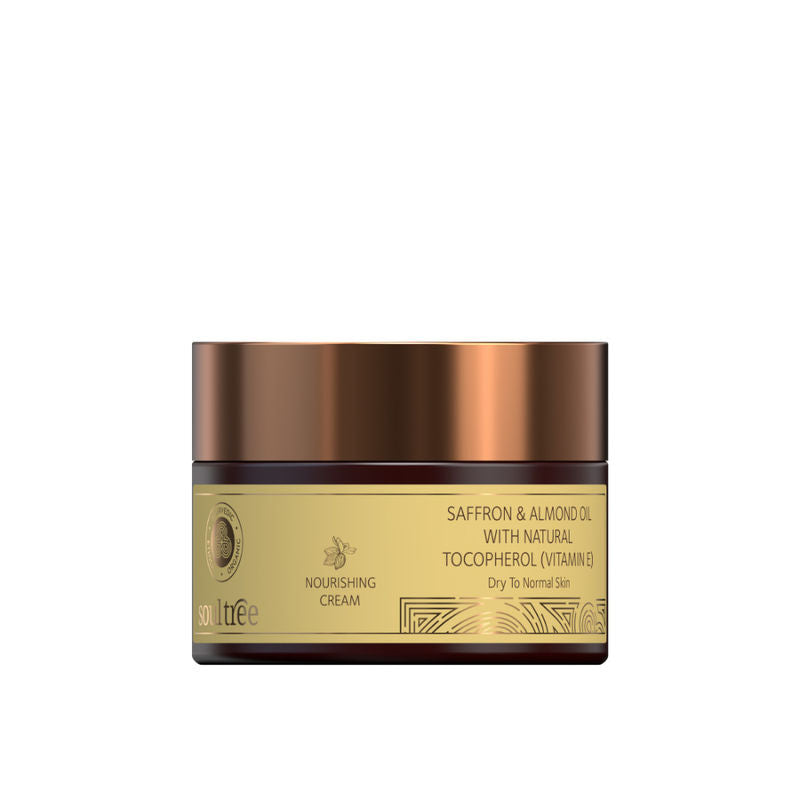
SoulTree Nourishing Cream - Saffron & Almond Oil with Natural Vitamin E

SoulTree Nourishing Cream - Saffron & Almond Oil with Natural Vitamin E
Nykaa E retail limited
soultree-nourishing-cream-saffron-almond-oil-with-natural-vitamin-e
Moisturize
10084928553253
Morning or Evening?
How often will you use this product?
Notes


Highlights
WHAT IS IT?
Face Moisturizer & Day Cream with natural ingredients, multiple antioxidants
FEATURES
Rich in antioxidants from Natural Vitamin E, boosts radiance with saffron, keeps skin supple with almond oil, reduces redness and fine lines, rejuvenates skin with Ashwagandha and Shatavari, deeply nourishes skin and prevents blemishes
BEST FOR
dry
CHECKS
No parabens, no sulfates, no silicones, no synthetic dyes
Who Is It For?
Adults Suitable For All GendersWhat Does It Help With?
Nourishment Radiance Redness Reduction Fine Line Reduction Skin RejuvenationBudget
Premium ($76-$150)How To Use
Which routine should it be used in?
Instructions:
Key Information


What Nykaa E retail limited Says
Product Description:
This gentle nourishing cream is rich in antioxidants from Natural Vitamin E. Saffron boosts radiance while Sweet Almond Oil helps keep skin supple and smooth and reduces redness and fine lines. Ashwagandha and Shatavari help rejuvenate the skin. Antioxidant-rich formula that deeply nourishes skin & prevents blemishes.
About the Brand:
Ingredients Overview
Ingredients List
aqua,glycerine,glycerol-mono-stearate,isoamyl-laurate,cetearyl-alcohol,coconut-oil*,aloe-vera-juice*,olive-oil*,squalane,withania-somnifera-(ashwagandha)-extract*,almond-oil*,cetearyl-glucoside,l-lactic-acid,sodium-benzoate,potassium-sorbate,xanthan-gum,asparagus-racemosus-(shatavari)-extract*,tocopherol,sodium-gluconate,parfum**,terminalia-arjuna-(arjuna)-extract*,sodium-stearoyl-glutamate,saffron-infusion,linalool**,geraniol**,citronellol**,limonene**,benzyl-alcohol**,benzyl-benzoate**,benzyl-salicylate**,citral**,farnesol**,eugenol**,isoeugenol**
Key Ingredients
Natural Vitamin E,Saffron,Sweet Almond Oil,Ashwagandha,Shatavari
Ingredients Details
Citral
Common Name(s): 3,7-dimethyl-2,6-octadienal,geranial+neral mix
CAS Number: 5392-40-5
DESCRIPTION
What It Does: Provides the defining intense lemon-citrus fragrance note.
Why It's Used: The lemon scent compound – citral defines the fresh lemon scent in lemon essential oil and lemongrass with potent antimicrobial activity.
How It Works: Mixture of e-isomer (geranial) and z-isomer (neral). antimicrobial via michael addition to thiol enzymes. inhibits nf-kb for anti-inflammatory activity. antioxidant via allylic aldehyde.
Typically Found In: Citrus fragrances,antibacterial products,lemon-scented cosmetics
TECHNICAL DETAILS
Primary Category: Fragrance component – lemon aldehyde
Secondary Functions: Skin conditioning
Application Areas:

Facial Skincare

Body Care
Hair Care
Beard Care
Color Cosmetics (Makeup)
Dietary/Oral Supplements
Typical Concentration Range: 0.001%–0.5%
SOURCING & ETHICS
Vegan Status: Yes – from lemon, lemongrass, melissa oils
Halal Status: Yes
Source Notes: Commercially produced for cosmetic use. verify vegan/halal status with supplier.
SKIN COMPATIBILITY
Irritancy Rating: 1/5 – very low
Comedogenicity Rating: 0/5 – non-comedogenic
Sensitivity Concerns: Well-tolerated by most skin types.
Safe for Sensitive Skin: Yes
SAFETY & COMPATIBILITY
Safety Profile: Eu cosmetics regulation: declared fragrance allergen. high sensitisation potential from alpha,beta-unsaturated aldehyde structure. ifra strict limits.
Works Well With: Standard skincare actives
Avoid Combining With: No known significant incompatibilities
SCIENTIFIC NOTE
Citral's high sensitisation potential (llna ec3 ~0.11%) is a consequence of its alpha,beta-unsaturated aldehyde structure providing a highly reactive michael acceptor for skin protein covalent binding. the e/z mixture (geranial/neral) in natural citral means both isomers contribute to the sensitisation burden – explaining why lemongrass oil (very high citral content, ~60-80%) is one of the more common essential oil allergens.
Last Verified: Cosing database,ifra standards
Primary Sources: 2026-03-12
Citronellol
Common Name(s): (r)-3,7-dimethyl-6-octen-1-ol,rhodinol
CAS Number: 106-22-9
DESCRIPTION
What It Does: Provides soft, lasting rose-floral fragrance note.
Why It's Used: Essential rose fragrance monoterpene for lasting smooth floral notes in high-quality perfumery and cosmetic fragrances.
How It Works: Allylic alcohol monoterpene provides fixative property in fragrance blends. good skin substantivity for lasting scent. softer, rounder rose note vs geraniol's fresher character. natural in rose otto at 18-34%.
Typically Found In: Rose perfumes,floral fragrances,luxury skincare
TECHNICAL DETAILS
Primary Category: Fragrance component – monoterpene alcohol
Secondary Functions: Skin conditioning
Application Areas:
Facial Skincare
Body Care
Hair Care
Beard Care
Color Cosmetics (Makeup)
Dietary/Oral Supplements
Typical Concentration Range: 0.001%–1%
SOURCING & ETHICS
Vegan Status: Yes – from rose, geranium, citronella oils
Halal Status: Yes
Source Notes: Commercially produced for cosmetic use. verify vegan/halal status with supplier.
SKIN COMPATIBILITY
Irritancy Rating: 1/5 – very low
Comedogenicity Rating: 0/5 – non-comedogenic
Sensitivity Concerns: Well-tolerated by most skin types.
Safe for Sensitive Skin: Yes
SAFETY & COMPATIBILITY
Safety Profile: Eu cosmetics regulation: declared fragrance allergen. ifra guidelines apply.
Works Well With: Standard skincare actives
Avoid Combining With: No known significant incompatibilities
SCIENTIFIC NOTE
Citronellol's r-enantiomer (natural) vs s-enantiomer (synthetic) provide meaningfully different scent character – a remarkable demonstration of chiral scent discrimination by olfactory receptors. the (r) form provides the characteristic rose note while the (s) form has a distinctly different, less pleasant character. this enantiomeric scent difference means that the biological handedness of naturally-sourced vs racemic synthetic citronellol produces perceptibly different fragrance quality.
Last Verified: Cosing database,ifra standards
Primary Sources: 2026-03-12
Eugenol
Common Name(s): 4-allyl-2-methoxyphenol,clove oil component,caryophyllene companion
CAS Number: 97-53-0
DESCRIPTION
What It Does: Provides warm clove fragrance note with local anaesthetic and antimicrobial properties.
Why It's Used: Natural local anaesthetic fragrance – eugenol provides clove's dual function as both a fragrance compound and a topical anaesthetic used in dentistry for pain relief.
How It Works: Activates trpv1 for local anaesthetic desensitisation (same mechanism as capsaicin but much weaker). inhibits cox and lox for anti-inflammatory activity. membrane disruption for antimicrobial activity. antioxidant via phenolic radical scavenging.
Typically Found In: Spice fragrances,dental products,clove-scented cosmetics
TECHNICAL DETAILS
Primary Category: Fragrance component – phenylpropanoid
Secondary Functions: Skin conditioning
Application Areas:
Facial Skincare
Body Care
Hair Care
Beard Care
Color Cosmetics (Makeup)
Dietary/Oral Supplements
Typical Concentration Range: 0.001%–0.5%
SOURCING & ETHICS
Vegan Status: Yes – from clove essential oil (syzygium aromaticum)
Halal Status: Yes
Source Notes: Commercially produced for cosmetic use. verify vegan/halal status with supplier.
SKIN COMPATIBILITY
Irritancy Rating: 1/5 – very low
Comedogenicity Rating: 0/5 – non-comedogenic
Sensitivity Concerns: Well-tolerated by most skin types.
Safe for Sensitive Skin: Yes
SAFETY & COMPATIBILITY
Safety Profile: Eu cosmetics regulation: declared fragrance allergen. ifra guidelines apply. sensitiser at high concentrations.
Works Well With: Standard skincare actives
Avoid Combining With: No known significant incompatibilities
SCIENTIFIC NOTE
Eugenol's dental anaesthetic use predates modern pharmaceutical dentistry – oil of cloves (primarily eugenol) has been used for toothache relief for centuries. modern dentistry still uses eugenol in zinc oxide-eugenol cement for temporary cavity filling, where eugenol's trpv1 desensitisation provides pain relief while zinc oxide provides structural material – a pharmaceutical application of a fragrance compound still standard in clinical dentistry.
Last Verified: Cosing database,ifra standards,eugenol dental review
Primary Sources: 2026-03-12
Farnesol
Common Name(s): Fragrance ingredient,eu allergen or aromatic component,olfactory/flavour
CAS Number: N/a
DESCRIPTION
What It Does: Provides specific aromatic character and olfactory experience contributing to product sensory experience and consumer appeal.
Why It's Used: Fragrance components are the primary cause of cosmetic contact sensitisation — eu requires individual label declaration of 26 identified fragrance allergens above threshold concentrations.
How It Works: Terpenoid and phenylpropanoid aromatic chemicals interact with olfactory receptor neurons (orns) in the nasal epithelium — small volatile molecules (logp 2–5, mw 100–300) bind g-protein coupled olfactory receptors triggering neurological scent perception. sensitisation risk from electrophilic reactivity of certain functional groups (aldehydes, α,β-unsaturated carbonyls) with skin proteins.
Typically Found In: All fragrance products
TECHNICAL DETAILS
Primary Category: Active ingredient – cosmetic active
Secondary Functions: Skin conditioning
Application Areas:
Facial Skincare
Body Care
Hair Care
Beard Care
Color Cosmetics (Makeup)
Dietary/Oral Supplements
Typical Concentration Range: Declare on label above threshold (eu)
SOURCING & ETHICS
Vegan Status: Conditional
Halal Status: Yes
Source Notes: Commercially produced for cosmetic use. verify vegan/halal status with supplier.
SKIN COMPATIBILITY
Irritancy Rating: 1/5 – very low
Comedogenicity Rating: 0/5 – non-comedogenic
Sensitivity Concerns: Well-tolerated by most skin types.
Safe for Sensitive Skin: Yes
SAFETY & COMPATIBILITY
Safety Profile: Good safety profile at recommended concentrations. ewg score: 1–2.
Works Well With: Standard skincare actives
Avoid Combining With: No known significant incompatibilities
SCIENTIFIC NOTE
Eu 1223/2009 annex iii allergen threshold: >0.001% in rinse-off, >0.0001% in leave-on — any listed allergen exceeding these levels requires individual inci label declaration separate from the generic fragrance/parfum declaration.
Last Verified: Eu regulation 1223/2009 annex iii,fragrance allergen declaration requirements
Primary Sources: 2026-03-12
