
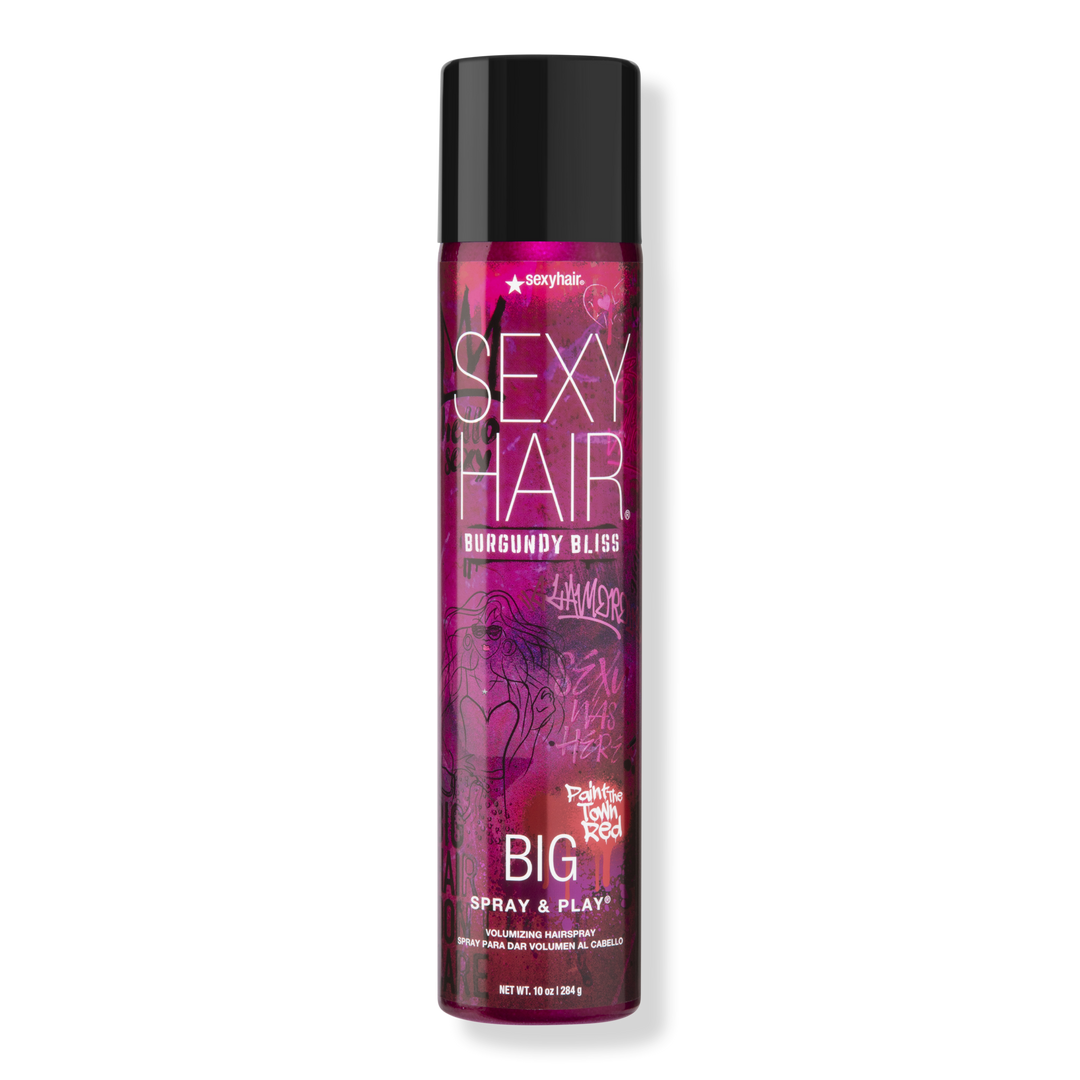

Sexy Hair
Special Edition Spray & Play Burgundy Bliss Volumizing Hairspray
Sexy Hair Special Edition Spray & Play Burgundy Bliss Volumizing Hairspray provides long-lasting medium to high hold up to 72 hours, humidity resistance, thermal protection up to 450˚F, and a shine finish. It tames frizz and flyaways without leaving residue or making hair feel stiff or crunchy.
Heat Protection
Volume
Anti-Frizz
Frizz
Breakage
Fine
Optimized for Your Environment & Lifestyle
Nykaa
In stock
Recommended

Special Edition Spray & Play Burgundy Bliss Volumizing Hairspray
Sexy Hair
special-edition-spray-play-burgundy-bliss-volumizing-hairspray
Hairspray
10407558119717
Morning or Evening?
How often will you use this product?
Notes


Secure payment protection
Your Biodata Compatibility Analysis
Based on your 6 hair health indices and environmental factors
Poor Match
Significant incompatibilities
Growth Cycle Health Index
Hair Match
Hair Health Index Alignment
Optimal for OSI, SSI, DI, HSI
Ingredient Efficacy
Matching Ingredient Score
Environment Compatibility
Current UV, Air Quality & Humidity
Why This Works for Your Specific Profile
Damage Index:
Water Quality:
Hair:
Active Lifestyle:
Your Hair Profile Integration
Your Hair Archetype

Density Level

Washing Frequency

Shedding Level

Oil Level
Your Hair Health Indices
Oil Secretion (OSI)
Very low oil production
Scalp Sensitivity (SSI)
Very low sensitivity
Growth Rate (CMR)
Poor metabolism rate
Damage Index (DI)
Minimal damage
Hair Strength (HSI)
Very weak strength
Softness Index (SI)
Significant improvement needed
Water & Environmental Integration

Water:


Expected Results & Timeline
Key Highlights

What is it?
Volumizing hairspray with 14 ingredients

Who Is It For
All ages and genders

Budget
Rs. 2,247.72 - Rs. 4,495.44

Timeline
Up to 72 hours
Why You’ll Love It

What Does It Help With?
Frizz control, volume enhancement, thermal protection

Best for
Frizz control and volume

Features
Long-lasting medium to high hold up to 72 hours, humidity resistance, thermal protection up to 450˚F, shine finish, tames frizz and flyaways, no residue, no visible flaking, flexible and workable hold, suitable for fine, medium, and coarse hair types, locks in styles without stiffness or crunchiness.

Checks
Cruelty Free, Sustainable Packaging
Ingredients Overview
Ingredients List
alcohol-denat, hydrofluorocarbon-152a, octylacrylamide-acrylates-butylaminoethyl-methacrylate-copolymer, aqua-water-eau, aminomethyl-propanol, coco-caprylate, peg-ppg-17-18-dimethicone, c12-15-alkyl-benzoate, triethyl-citrate, pentaerythrityl-tetracaprylate-tetracaprate, parfum-fragrance, ethylhexyl-methoxycinnamate, amp-isostearoyl-hydrolyzed-wheat-protein, benzoic-acid, tetramethyl-acetyloctahydronaphthalenes, linalool, vanillin
Key Ingredients
Alcohol Denat., Octylacrylamide/Acrylates/Butylaminoethyl Methacrylate Copolymer, AMP-Isostearoyl Hydrolyzed Wheat Protein
Ingredients Details
Alcohol Denat.
Common Name(s): Alcohol denat.,denatured ethanol,solvent antimicrobial astringent
CAS Number: N/a
DESCRIPTION
What It Does: Alcohol denat. dissolves oil-soluble and water-soluble cosmetic actives, provides rapid antimicrobial activity at concentrations above 60–70% by denaturing microbial proteins, delivers a refreshing cooling sensation through evaporative cooling on skin, and temporarily enhances the penetration of topical actives by transiently disrupting the stratum corneum lipid bilayer organisation.
Why It's Used: Formulators choose alcohol denat. for its irreplaceable combination of solvent power, antimicrobial activity, and penetration-enhancing properties. no other cosmetic solvent simultaneously provides the cooling sensory experience of alcohol (from evaporative cooling at the skin surface), the immediate antimicrobial activity required for sanitisers (from protein denaturation above 60%), and the transient sc lipid disruption that improves active ingredient delivery (essential in actives-rich toners and essences). for denatured alcohol specifically, denaturing agents (typically 5% isopropanol or bitrex) prevent consumption without affecting cosmetic function.
How It Works: Alcohol denat. works through multiple mechanisms depending on concentration: (1) solvent action — alcohol's hydroxyl group provides hydrogen bonding with water while the short alkyl chain provides interaction with organic solutes, enabling dissolution of both hydrophilic and moderately lipophilic cosmetic actives in a single solvent; (2) antimicrobial — above 60% concentration, ethanol denatures microbial proteins by disrupting non-covalent bonds maintaining protein secondary and tertiary structure — the alcohol molecules intercalate between protein chains, disrupting the hydrophobic interactions and hydrogen bonds that maintain enzyme active site geometry. this non-specific protein denaturation is immediately bactericidal and virucidal with no resistance mechanism possible; (3) sc penetration enhancement — at lower concentrations (5–30%), ethanol transiently fluidises the sc lipid bilayer by intercalating between the ordered lipid lamellae, disrupting the crystal packing and increasing lipid bilayer fluidity. this transient fluidisation increases the diffusion coefficient of co-applied actives through the sc for up to 30 minutes post-application; (4) astringency — alcohol's protein precipitating action at the skin surface contracts superficial proteins, temporarily tightening pores and reducing oiliness.
Typically Found In: Toners,hand sanitisers,actives serums
TECHNICAL DETAILS
Primary Category: Active ingredient – cosmetic active
Secondary Functions: Skin conditioning
Application Areas:

Facial Skincare

Body Care
Hair Care
Beard Care
Color Cosmetics (Makeup)
Dietary/Oral Supplements
Typical Concentration Range: 5%–95%
SOURCING & ETHICS
Vegan Status: Yes
Halal Status: Yes
Source Notes: Commercially produced for cosmetic use. verify vegan/halal status with supplier.
SKIN COMPATIBILITY
Irritancy Rating: 1/5 – very low
Comedogenicity Rating: 0/5 – non-comedogenic
Sensitivity Concerns: Well-tolerated by most skin types.
Safe for Sensitive Skin: Yes
SAFETY & COMPATIBILITY
Safety Profile: Good safety profile at recommended concentrations. ewg score: 1–2.
Works Well With: Standard skincare actives
Avoid Combining With: No known significant incompatibilities
SCIENTIFIC NOTE
Ethanol concentration-dependent antimicrobial efficacy: below 40% — minimal bactericidal effect (insufficient protein denaturation); 40–60% — bacteriostatic, not bactericidal; 60–70% — peak bactericidal efficacy against both enveloped and non-enveloped viruses and vegetative bacteria (optimal water content maintains protein hydration required for denaturation to proceed); 80–90% — remains effective but slightly reduced from decreased water activity; 95–100% — reduced efficacy (insufficient water for protein denaturation). the 70% 'sweet spot' for sanitisers reflects this concentration-efficacy peak, not a formulation convenience.
Last Verified: Cosing database,alcohol denat. ethanol solvent antimicrobial review
Primary Sources: 2026-03-12
Amp-isostearoyl Hydrolyzed Wheat Protein
Common Name(s): N-stearoyl hydrolyzed wheat protein,conditioning surfactant,film-forming gentle
CAS Number: N/a
DESCRIPTION
What It Does: Provides combined gentle cleansing and wheat protein conditioning from n-acyl hydrolysed protein.
Why It's Used: Conditioning surfactant — n-acyl hydrolysed wheat protein delivers both surfactant cleansing and protein conditioning simultaneously, with substantive protein deposition on hair or skin during rinse providing post-wash conditioning feel.
How It Works: Hydrolysed wheat protein + acyl chloride → n-acyl protein sodium salt. dual function: surfactant + conditioner. protein deposition: substantive post-rinse. film-forming. gentle. hair: cuticle protein film. skin: moisture retention.
Typically Found In: Conditioning shampoos,protein-rich cleansers
TECHNICAL DETAILS
Primary Category: Active ingredient – cosmetic active
Secondary Functions: Skin conditioning
Application Areas:
Facial Skincare
Body Care
Hair Care
Beard Care
Color Cosmetics (Makeup)
Dietary/Oral Supplements
Typical Concentration Range: 2%–15%
SOURCING & ETHICS
Vegan Status: Conditional
Halal Status: Yes
Source Notes: Commercially produced for cosmetic use. verify vegan/halal status with supplier.
SKIN COMPATIBILITY
Irritancy Rating: 1/5 – very low
Comedogenicity Rating: 0/5 – non-comedogenic
Sensitivity Concerns: Well-tolerated by most skin types.
Safe for Sensitive Skin: Yes
SAFETY & COMPATIBILITY
Safety Profile: Good safety profile at recommended concentrations. ewg score: 1–2.
Works Well With: Standard skincare actives
Avoid Combining With: No known significant incompatibilities
SCIENTIFIC NOTE
N-acyl protein surfactant substantive deposition: the hydrolysed wheat protein chain (mw 500-5000 da depending on hydrolysis degree) deposits on hair or skin during rinsing from the opposing charge gradient of the anionic acyl head and the positively charged amino acid residues in the protein chain. substantive deposition provides post-rinse conditioning from protein film formation on the surface — a cleansing and conditioning dual function from one ingredient.
Last Verified: Cosing database,n-acyl hydrolyzed wheat protein surfactant review
Primary Sources: 2026-03-12
Coco-caprylate
Common Name(s): Coco-caprylate,coco-caprylate,cosmetic functional ingredient,established active
CAS Number: N/a
DESCRIPTION
What It Does: Provides emollient conditioning with spreading value determined by the ester molecular architecture.
Why It's Used: Coco-caprylate is selected for its c8 caprylic ester — the c-chain length provides ultra-light fast-dry short-chain emolliency, which distinguishes coco-caprylate from esters of adjacent chain lengths in the same polarity tier.
How It Works: Ester: acid chain → emolliency type; alcohol chain → spreading speed and skin feel.
Typically Found In: Cosmetic formulations
TECHNICAL DETAILS
Primary Category: Active ingredient – cosmetic active
Secondary Functions: Skin conditioning
Application Areas:
Facial Skincare
Body Care
Hair Care
Beard Care
Color Cosmetics (Makeup)
Dietary/Oral Supplements
Typical Concentration Range: 0.1%–10%
SOURCING & ETHICS
Vegan Status: Conditional
Halal Status: Yes
Source Notes: Commercially produced for cosmetic use. verify vegan/halal status with supplier.
SKIN COMPATIBILITY
Irritancy Rating: 1/5 – very low
Comedogenicity Rating: 0/5 – non-comedogenic
Sensitivity Concerns: Well-tolerated by most skin types.
Safe for Sensitive Skin: Yes
SAFETY & COMPATIBILITY
Safety Profile: Good safety profile at recommended concentrations. ewg score: 1–2.
Works Well With: Standard skincare actives
Avoid Combining With: No known significant incompatibilities
SCIENTIFIC NOTE
Safety documented in cosing at standard formulation concentrations.
Last Verified: Cosing database,coco-caprylate technical review
Primary Sources: 2026-03-22
Linalool
Common Name(s): 3,7-dimethyl-1,6-octadien-3-ol,linalyl alcohol
CAS Number: 78-70-6
DESCRIPTION
What It Does: Provides the most common natural floral-citrus fragrance note with additional anti-inflammatory properties.
Why It's Used: The most abundant fragrance terpene in nature – linalool forms the primary scent character of lavender, responsible for lavender's documented aromatherapy calming effects.
How It Works: Monoterpene alcohol activates gaba-a receptors for anti-anxiety activity (same receptor as benzodiazepines). inhibits glutamate-induced excitotoxicity. antimicrobial via membrane disruption. anti-inflammatory via nf-kb inhibition.
Typically Found In: Virtually all fragranced cosmetics
TECHNICAL DETAILS
Primary Category: Fragrance component – tertiary terpene alcohol
Secondary Functions: Skin conditioning
Application Areas:
Facial Skincare
Body Care
Hair Care
Beard Care
Color Cosmetics (Makeup)
Dietary/Oral Supplements
Typical Concentration Range: 0.001%–3%
SOURCING & ETHICS
Vegan Status: Yes – from lavender, coriander, bergamot
Halal Status: Yes
Source Notes: Commercially produced for cosmetic use. verify vegan/halal status with supplier.
SKIN COMPATIBILITY
Irritancy Rating: 1/5 – very low
Comedogenicity Rating: 0/5 – non-comedogenic
Sensitivity Concerns: Well-tolerated by most skin types.
Safe for Sensitive Skin: Yes
SAFETY & COMPATIBILITY
Safety Profile: Eu cosmetics regulation: declared fragrance allergen on label when >0.001% (leave-on) or >0.01% (rinse-off). ifra guidelines apply.
Works Well With: Standard skincare actives
Avoid Combining With: No known significant incompatibilities
SCIENTIFIC NOTE
Linalool's gaba-a receptor activation provides a pharmacological basis for lavender aromatherapy's documented anxiolytic effects. the same receptor modulation used by benzodiazepine drugs (such as diazepam) is activated by inhaled linalool vapor, providing receptor-mediated calming without the tolerance and dependence associated with pharmaceutical gaba-a modulators.
Last Verified: Cosing database,ifra standards,elisabetsky et al. linalool gaba study
Primary Sources: 2026-03-12
Personalized Usage Instructions
How to Use
Step 1
Spray into styled hair for lift and hold
Medical Chemicals

Protein/Moisture
- Protein
pH Level
-

Porosity Taget
- Normal Porosity
Customized for Your Profile
Scalp Condtions
Climate Suitability
Humid, Dry, UV Protection
Clinical Claims
Frequency
Spray into styled hair for lift and hold.
Product Information

Cruelty Free
Sustainable Packaging
