
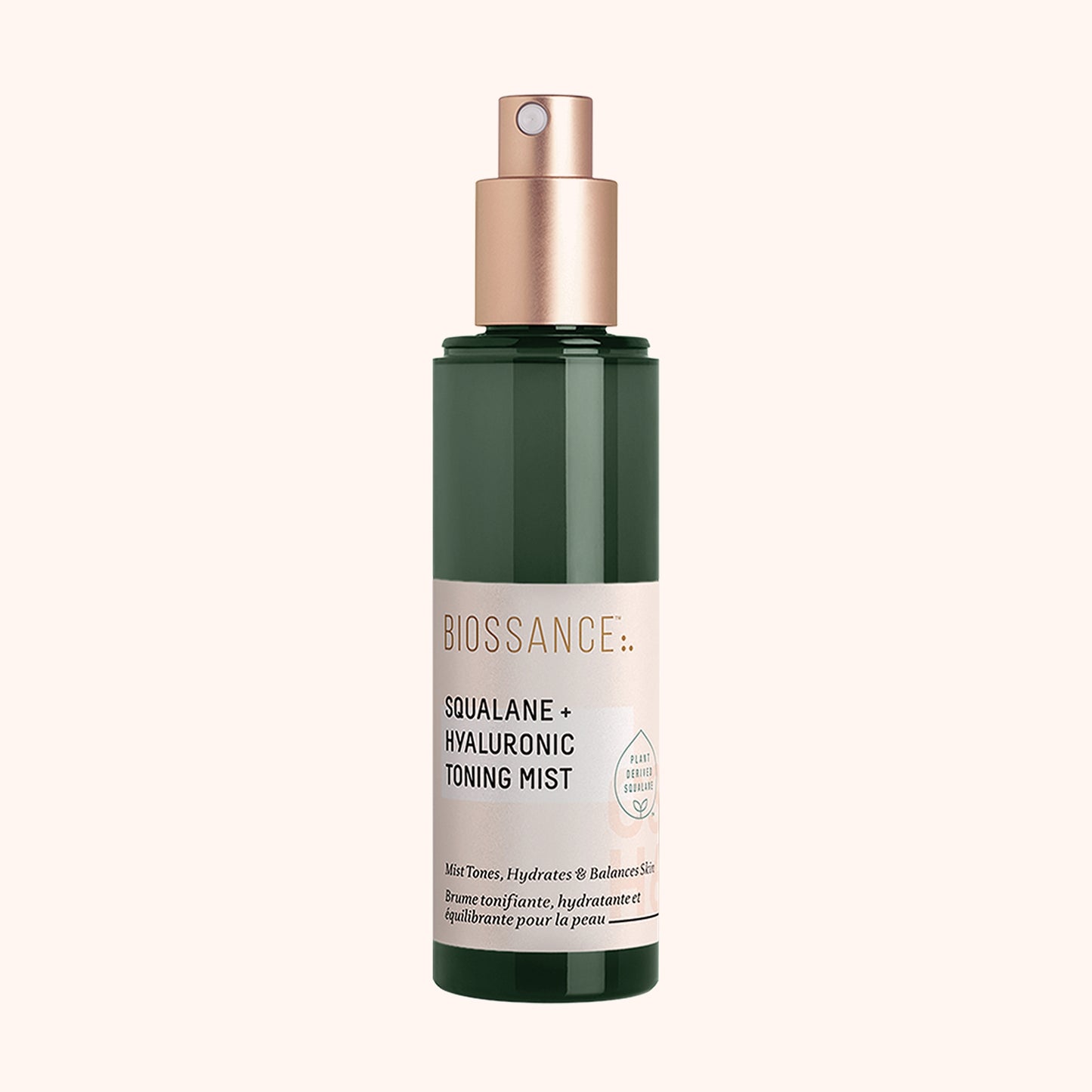

Biossance
Squalane + Hyaluronic Acid Facial Mist

Squalane + Hyaluronic Acid Facial Mist
Biossance
squalane-hyaluronic-acid-facial-mist
Tone
9643581604133
Morning or Evening?
How often will you use this product?
Notes


Highlights
WHAT IS IT?
Facial toning mist with multiple ingredients
FEATURES
Hydrates and plumps skin, refreshes makeup, and improves skin hydration
BEST FOR
All skin types, especially dry or dehydrated skin
CHECKS
Alcohol-free, paraben-free
Who Is It For?
Adults Women And MenWhat Does It Help With?
Hydration Fine Lines Setting MakeupBudget
Mid-rangeHow To Use
Which routine should it be used in?
Instructions:
Key Information


What Biossance Says
Product Description:
This award-winning formula is made with two types of hyaluronic acids, our weightless toning mist restores hydration inside and out for complete, skin-plumping moisture protection. Our luxurious squalane and mineral-rich formula locks in moisture for all-day radiance. This hyaluronic acid spray is perfect for toning, setting makeup and refreshing skin throughout the day.
About the Brand:
Ingredients Overview
Ingredients List
Water/Aqua, Polyglyceryl-10 Laurate, Glyceryl Citrate/Lactate/Linoleate/Oleate, Squalane, Glycerin, Panthenol, Sodium Hyaluronate, Hydrolyzed Sodium Hyaluronate, Enteromorpha Compressa Extract, Lysine, Magnesium Chloride, Sodium Chloride, Potassium Chloride, Zinc Chloride, Pyrus Malus (Apple) Fruit Extract, Lavandula Angustifolia (Lavender) Oil, Citrus Nobilis (Mandarin Orange) Peel Oil, Pelargonium Graveolens Flower Oil, Sodium Stearoyl Glutamate, Polyglyceryl-4 Cocoate, Polyglyceryl-3 Caprate, Glyceryl Caprylate, Tetrasodium Glutamate Diacetate, Citric Acid, Caprylyl Glycol, Ethylhexylglycerin, Phenoxyethanol, Hexylene Glycol, Limonene, Citronellol, Geraniol, Linalool
Key Ingredients
Hyaluronic Acid, Squalane
Ingredients Details
Enteromorpha Compressa Extract
Common Name(s): Enteromorpha compressa extract,botanical extract,phytochemical active
CAS Number: N/a
DESCRIPTION
What It Does: Provides antioxidant protection from reactive oxygen species, reduces inflammatory cytokine production in skin, and conditions skin through the plant's phytochemical complex.
Why It's Used: Natural origin narrative, traditional use heritage, and multi-functional phytochemical profile supporting concurrent skin care claims from one ingredient.
How It Works: Polyphenols, terpenoids, and alkaloids scavenge ros via h• donation, inhibit nf-kb or cox-2 inflammatory pathways, and interact with skin surface proteins for conditioning.
Typically Found In: Botanical skin care,natural products
TECHNICAL DETAILS
Primary Category: Active ingredient – antioxidant
Secondary Functions: Free radical scavenging,anti-aging
Application Areas:

Facial Skincare
Body Care

Hair Care
Beard Care
Color Cosmetics (Makeup)
Dietary/Oral Supplements
Typical Concentration Range: 0.1%–10%
SOURCING & ETHICS
Vegan Status: Conditional
Halal Status: Yes
Source Notes: Plant-derived extract or synthetic.
SKIN COMPATIBILITY
Irritancy Rating: 1/5 – very low
Comedogenicity Rating: 0/5 – non-comedogenic
Sensitivity Concerns: Non-irritating; well-tolerated.
Safe for Sensitive Skin: Yes
SAFETY & COMPATIBILITY
Safety Profile: Excellent safety profile. ewg score: 1.
Works Well With: Vitamin c,vitamin e,ferulic acid,spf,other antioxidants
Avoid Combining With: No significant incompatibilities
SCIENTIFIC NOTE
Plant secondary metabolites evolved as photoprotectants and antimicrobials — mechanisms directly applicable to cosmetic antioxidant and anti-inflammatory activity in human skin.
Last Verified: Cosing database,enteromorpha compressa extract botanical review
Primary Sources: 2026-03-12
Glycerin
Common Name(s): Glycerol,glycerine,1,2,3-propanetriol
CAS Number: 56-81-5
DESCRIPTION
What It Does: Glycerin pulls water from the environment and deeper skin layers into the outer skin layer (epidermis), boosting moisture levels and keeping skin soft, smooth, and plump.
Why It's Used: It is used in virtually every moisturizer, serum, and cleanser because it is highly effective at hydrating skin, is well-tolerated by all skin types, and enhances the texture and spreadability of formulations.
How It Works: As a humectant, glycerin forms hydrogen bonds with water molecules, trapping them in the skin. it also reinforces the skin barrier by integrating into lipid structures between skin cells.
Typically Found In: Moisturizers,serums,cleansers,toners,sheet masks,sunscreens,body lotions,shampoos,conditioners
TECHNICAL DETAILS
Primary Category: Humectant
Secondary Functions: Skin barrier support,emollient,solvent
Application Areas:
Facial Skincare
Body Care
Hair Care
Beard Care
Color Cosmetics (Makeup)
Dietary/Oral Supplements
Typical Concentration Range: 1%–30% (typical: 3–10%)
SOURCING & ETHICS
Vegan Status: Yes – plant-derived (coconut, soy, palm) or synthetic
Halal Status: Yes – when plant-derived or synthetic; verify source with supplier
Source Notes: Derived from plant oils via hydrolysis or saponification; synthetic versions also available. palm-derived glycerin carries sustainability concerns.
SKIN COMPATIBILITY
Irritancy Rating: 1/5 – very low; non-irritating at all standard concentrations
Comedogenicity Rating: 0/5 – non-comedogenic
Sensitivity Concerns: Extremely rare allergic reactions; generally safe for all skin types including sensitive and baby skin
Safe for Sensitive Skin: Yes
SAFETY & COMPATIBILITY
Safety Profile: Widely recognized as safe. ewg hazard score: 1. no significant concerns for irritation, sensitization, or toxicity at typical concentrations (up to 50%).
Works Well With: Hyaluronic acid,ceramides,niacinamide,panthenol,urea,peptides,retinol,ahas/bhas
Avoid Combining With: No known incompatibilities at standard concentrations
SCIENTIFIC NOTE
Glycerin is an endogenous skin component found naturally in the stratum corneum. aquaporin-3 channels in keratinocytes facilitate glycerin transport, making it integral to natural skin hydration pathways.
Last Verified: Cosing database,cir safety assessment,ewg skin deep,inci decoder
Primary Sources: 2026-03-12
Glyceryl Citrate/lactate/linoleate/oleate
Common Name(s): Glyceryl citrate/lactate/linoleate/oleate,multi-acid glycerol ester,natural glyceryl emulsifier
DESCRIPTION
What It Does: Helps oil and water blend naturally and supports skin's protective barrier.
Why It's Used: A naturally-derived complex emulsifier using multiple plant-origin acids (citric, lactic, linoleic, oleic) esterified on glycerol; suitable for natural and organic formulations.
How It Works: Multi-acid esterification creates an amphiphilic glyceryl ester with mixed hlb; linoleate and oleate tails provide oil-phase anchoring; citrate and lactate arms add hydrophilicity; ahas contribute gentle exfoliation potential.
Typically Found In: Natural cosmetics,organic formulations,skin barrier creams,natural emulsion systems
TECHNICAL DETAILS
Primary Category: Functional ingredient – emulsifier
Secondary Functions: Skin conditioning,emollient,moisturizing
Application Areas:
Facial Skincare
Body Care
Hair Care
Beard Care
Color Cosmetics (Makeup)
Dietary/Oral Supplements
Typical Concentration Range: 0.5%–5%
SOURCING & ETHICS
Vegan Status: Yes
Halal Status: Yes
Source Notes: All components from plant/fermentation origin (citric acid from fermentation, lactic acid from fermentation, linoleic/oleic from vegetable oils, glycerol from plant); fully natural.
SKIN COMPATIBILITY
Irritancy Rating: 1/5 – very low
Comedogenicity Rating: 1/5 – low
Sensitivity Concerns: Generally well tolerated; rare aha-related sensitivity possible.
Safe for Sensitive Skin: Yes
SAFETY & COMPATIBILITY
Safety Profile: Excellent safety profile. ewg score: 1.
Works Well With: Natural oils,plant butters,other natural emulsifiers,humectants
Avoid Combining With: No significant incompatibilities
SCIENTIFIC NOTE
Complex glyceryl esters incorporating aha (alpha-hydroxy acid) components (citrate/lactate) are part of the natural emulsifier trend replacing synthetic peg emulsifiers in certified organic cosmetics; the mixed fatty acid composition (linoleate + oleate) mirrors the skin's natural fatty acid profile.
Last Verified: Cosing database,inci dictionary,supplier technical data
Primary Sources: 2026-03-27
Hydrolyzed Sodium Hyaluronate
Common Name(s): Hyaluronic acid,gold standard humectant,multi-weight skin plumper
CAS Number: N/a
DESCRIPTION
What It Does: Hydrates skin at multiple depths depending on mw, provides visible plumping from dermal water retention, reduces tewl, and supports barrier integrity and fibroblast proliferation.
Why It's Used: The reference humectant in cosmetics — ha's 1,000× water binding capacity, skin-endogenous origin, and compatibility with all skin types make it the standard against which all humectants are benchmarked.
How It Works: High-mw ha (>1000 kda) films the surface reducing tewl; medium-mw (100–1000 kda) hydrates outer epidermis; low-mw (<50 kda) reaches dermis for plumping. each weight class binds water through carboxylate and amide group h-bonding across the (glcua-glcnac)ₙ disaccharide backbone.
Typically Found In: Hydrating serums,moisturisers,anti-aging
TECHNICAL DETAILS
Primary Category: Functional ingredient – humectant
Secondary Functions: Tewl reduction,skin plumping
Application Areas:
Facial Skincare
Body Care
Hair Care
Beard Care
Color Cosmetics (Makeup)
Dietary/Oral Supplements
Typical Concentration Range: 0.01%–2%
SOURCING & ETHICS
Vegan Status: Yes
Halal Status: Yes
Source Notes: Synthetic or naturally derived. excellent aqueous solubility.
SKIN COMPATIBILITY
Irritancy Rating: 1/5 – very low
Comedogenicity Rating: 0/5 – non-comedogenic
Sensitivity Concerns: Non-irritating; suitable for all skin types.
Safe for Sensitive Skin: Yes
SAFETY & COMPATIBILITY
Safety Profile: Excellent safety profile. ewg score: 1.
Works Well With: Ceramides,emollients,occlusives,glycerin,hyaluronic acid
Avoid Combining With: No significant incompatibilities
SCIENTIFIC NOTE
Ha production by streptococcus zooepidemicus fermentation provides high-purity, animal-free hyaluronic acid at molecular weights 50 kda–3 mda — batch selection determines the intended skin depth target.
Last Verified: Cosing database,hyaluronic acid multi-weight humectant review
Primary Sources: 2026-03-12
