

Suntique
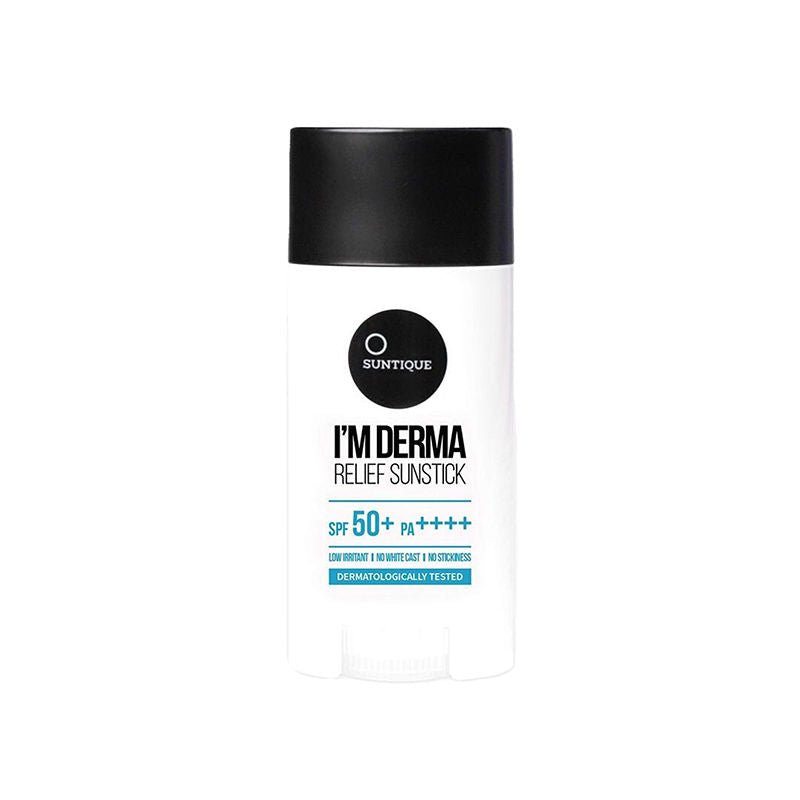
Suntique I'M DERMA Relief Sunstick SPF50+ PA++++

Suntique I'M DERMA Relief Sunstick SPF50+ PA++++
Suntique
suntique-im-derma-relief-sunstick-spf50-pa
Suncare
10084747116837
Morning or Evening?
How often will you use this product?
Notes


Highlights
WHAT IS IT?
Sunstick with SPF50+ PA++++
FEATURES
Low irritant sunscreen, Protective UV layer, SPF50+/PA++++, Soothing centella asiatica and aloe vera, Moisturizes and soothes skin, Transparent finish, Quick absorb, Travel-friendly, Dermatologically tested, Cruelty-free
BEST FOR
sensitive
CHECKS
Does not leave a whitecast, Dermatologically tested
Who Is It For?
What Does It Help With?
Uv Protection Moisturizing Soothing SkinBudget
Premium ($76-$150)How To Use
Which routine should it be used in?
Instructions:
Key Information


What Suntique Says
Product Description:
The Suntique I'm Derma Relief Sunstick is a sun stick with SPF 50+ PA++++ that is incredibly easy to apply and leaves a transparent finish. Features: Low irritant sunscreen stick that creates a protective layer for the ultimate UV protection; Has SPF50+/PA++++; Formulated with soothing centella asiatica and aloe vera; Moisturizes, soothes and protects skin at the same time; Smooth and transparent formula that absorbs quickly without leaving a whitecast; Travel-friendly and perfect to use on-the-go; Dermatologically tested; This product is cruelty-free
About the Brand:
Ingredients Overview
Ingredients List
Dimethicone,Paraffin,Triethylhexanoin,Silica,Octocrylene,Ethylhexyl-Methoxycinnamate,Diethylamino-Hydroxybenzoyl-Hexyl-Benzoate,Butylene-Glycol-Dicaprylate/Dicaprate,Phenyl-Trimethicone,Vinyl-Dimethicone/Methicone-Silsesquioxane-Crosspolymer,Ethylhexyl-Salicylate,Microcrystalline-Wax,Methyl-Methacrylate-Crosspolymer,Euphorbia-Cerifera-(Candelilla)-Wax,Bis-Ethylhexyloxyphenol-Methoxyphenyl-Triazine,Dipropylene-Glycol,Glycerin,Water,1,2-Hexanediol,Caprylic/Capric-Glycerides,Sorbitan-Sesquioleate,Polyglyceryl-10-Oleate,Hydrogenated-Lecithin,Oil-Soluble-Licorice-(Glycyrrhiza)-Extract,Adenosine,Madecassoside,Pentylene-Glycol,Aloe-Barbadensis-Leaf-Extract,Butylene-Glycol,Centella-Asiatica-Extract,Sodium-Hyaluronate,Hydrolyzed-Hyaluronic-Acid,Hydroxypropyltrimonium-Hyaluronate,Parfum
Key Ingredients
Centella asiatica, Aloe vera, Licorice extract, Madecassoside, Adenosine, Hyaluronic acid
Ingredients Details
1-2-hexanediol
Common Name(s): 1-2-hexanediol,cosmetic active,functional ingredient
CAS Number: N/a
DESCRIPTION
What It Does: Delivers characteristic cosmetic function at recommended use concentration.
Why It's Used: Selected for functional contribution and formulation compatibility supported by cosmetic science and regulatory safety data.
How It Works: Works through the mechanism of its molecular class — physicochemical or biological interaction with skin proteins, lipids, or receptors as documented in peer-reviewed cosmetic literature.
Typically Found In: Skin care formulations
TECHNICAL DETAILS
Primary Category: Active ingredient – cosmetic active
Secondary Functions: Skin conditioning
Application Areas:

Facial Skincare

Body Care
Hair Care
Beard Care
Color Cosmetics (Makeup)
Dietary/Oral Supplements
Typical Concentration Range: 0.1%–10%
SOURCING & ETHICS
Vegan Status: Conditional
Halal Status: Yes
Source Notes: Commercially produced for cosmetic use. verify vegan/halal status with supplier.
SKIN COMPATIBILITY
Irritancy Rating: 1/5 – very low
Comedogenicity Rating: 0/5 – non-comedogenic
Sensitivity Concerns: Well-tolerated by most skin types.
Safe for Sensitive Skin: Yes
SAFETY & COMPATIBILITY
Safety Profile: Good safety profile at recommended concentrations. ewg score: 1–2.
Works Well With: Standard skincare actives
Avoid Combining With: No known significant incompatibilities
SCIENTIFIC NOTE
1-2-hexanediol has an established safety and efficacy profile within the cosmetic regulatory framework at standard use concentrations.
Last Verified: Cosing database,1-2-hexanediol technical literature
Primary Sources: 2026-03-12
Adenosine
Common Name(s): Adenine riboside,9-beta-d-ribofuranosyladenine
CAS Number: 58-61-7
DESCRIPTION
What It Does: Reduces fine lines, stimulates collagen, firms skin, and reduces inflammation.
Why It's Used: Fda-recognized anti-wrinkle active with multi-action collagen stimulation + wrinkle reduction + anti-inflammatory efficacy.
How It Works: Activates adenosine a2a receptors on fibroblasts stimulating collagen type i. also activates pka pathway promoting atp production and reducing inflammatory cytokines.
Typically Found In: Anti-aging serums,wrinkle treatments,korean skincare
TECHNICAL DETAILS
Primary Category: Active ingredient – purine nucleoside / anti-aging
Secondary Functions: Collagen stimulation,anti-inflammatory,cell energy
Application Areas:
Facial Skincare
Body Care
Hair Care
Beard Care
Color Cosmetics (Makeup)
Dietary/Oral Supplements
Typical Concentration Range: 0.04%–0.1%
SOURCING & ETHICS
Vegan Status: Yes – synthetically produced
Halal Status: Yes
Source Notes: Synthetically produced for cosmetic use.
SKIN COMPATIBILITY
Irritancy Rating: 1/5 – very low
Comedogenicity Rating: 0/5 – non-comedogenic
Sensitivity Concerns: Non-irritating; excellent tolerability.
Safe for Sensitive Skin: Yes
SAFETY & COMPATIBILITY
Safety Profile: Excellent safety profile. fda-recognized as safe and effective anti-wrinkle ingredient. ewg score: 1.
Works Well With: Other b vitamins,niacinamide,antioxidant complexes
Avoid Combining With: No significant incompatibilities
SCIENTIFIC NOTE
A 2002 clinical study demonstrated 0.04% adenosine cream significantly reduced wrinkle depth and increased skin elasticity after 4 weeks. fda recognition requires controlled clinical trial evidence.
Last Verified: Cosing database,adenosine anti-aging clinical data,fda otc anti-wrinkle monograph
Primary Sources: 2026-03-12
Dimethicone
Common Name(s): Pdms,polydimethylsiloxane,silicone fluid
CAS Number: 9006-65-9
DESCRIPTION
What It Does: Provides silicone-characteristic silky feel and skin protection with adjustable viscosity.
Why It's Used: The benchmark cosmetic silicone – sets the gold standard for silky application feel, spreadability, and skin protection in virtually all skin care categories.
How It Works: Polydimethylsiloxane chain flexibility provides extremely low surface tension and high spreadability. inert si-o backbone provides chemical stability and excellent skin tolerance. occlusive film formation reduces tewl. higher viscosity grades provide more intense conditioning.
Typically Found In: Moisturizers,foundations,primers,sunscreens – nearly universal
TECHNICAL DETAILS
Primary Category: Functional ingredient – polydimethylsiloxane
Secondary Functions: Barrier sealing,softening
Application Areas:
Facial Skincare
Body Care
Hair Care
Beard Care
Color Cosmetics (Makeup)
Dietary/Oral Supplements
Typical Concentration Range: 0.1%–30%
SOURCING & ETHICS
Vegan Status: Yes – synthetic
Halal Status: Yes
Source Notes: Plant-derived, synthetic or animal-derived. verify source.
SKIN COMPATIBILITY
Irritancy Rating: 1/5 – very low
Comedogenicity Rating: 1/5 – low; formulation-dependent
Sensitivity Concerns: Non-irritating.
Safe for Sensitive Skin: Yes
SAFETY & COMPATIBILITY
Safety Profile: Excellent safety profile. ewg score: 1.
Works Well With: Humectants,ceramides,actives as carrier
Avoid Combining With: No significant incompatibilities
SCIENTIFIC NOTE
Dimethicone's exceptional silky feel arises from its very low intermolecular attractive forces (weak van der waals forces due to non-polar methyl groups) that allow silicone chains to slide freely over skin. the coefficient of kinetic friction for pdms against skin (~0.04) is among the lowest of any cosmetic material – explaining why even small amounts transform product feel.
Last Verified: Cosing database,cir safety assessment
Primary Sources: 2026-03-12
Glycerin
Common Name(s): Glycerol,glycerine,1,2,3-propanetriol
CAS Number: 56-81-5
DESCRIPTION
What It Does: Glycerin pulls water from the environment and deeper skin layers into the outer skin layer (epidermis), boosting moisture levels and keeping skin soft, smooth, and plump.
Why It's Used: It is used in virtually every moisturizer, serum, and cleanser because it is highly effective at hydrating skin, is well-tolerated by all skin types, and enhances the texture and spreadability of formulations.
How It Works: As a humectant, glycerin forms hydrogen bonds with water molecules, trapping them in the skin. it also reinforces the skin barrier by integrating into lipid structures between skin cells.
Typically Found In: Moisturizers,serums,cleansers,toners,sheet masks,sunscreens,body lotions,shampoos,conditioners
TECHNICAL DETAILS
Primary Category: Humectant
Secondary Functions: Skin barrier support,emollient,solvent
Application Areas:
Facial Skincare
Body Care
Hair Care
Beard Care
Color Cosmetics (Makeup)
Dietary/Oral Supplements
Typical Concentration Range: 1%–30% (typical: 3–10%)
SOURCING & ETHICS
Vegan Status: Yes – plant-derived (coconut, soy, palm) or synthetic
Halal Status: Yes – when plant-derived or synthetic; verify source with supplier
Source Notes: Derived from plant oils via hydrolysis or saponification; synthetic versions also available. palm-derived glycerin carries sustainability concerns.
SKIN COMPATIBILITY
Irritancy Rating: 1/5 – very low; non-irritating at all standard concentrations
Comedogenicity Rating: 0/5 – non-comedogenic
Sensitivity Concerns: Extremely rare allergic reactions; generally safe for all skin types including sensitive and baby skin
Safe for Sensitive Skin: Yes
SAFETY & COMPATIBILITY
Safety Profile: Widely recognized as safe. ewg hazard score: 1. no significant concerns for irritation, sensitization, or toxicity at typical concentrations (up to 50%).
Works Well With: Hyaluronic acid,ceramides,niacinamide,panthenol,urea,peptides,retinol,ahas/bhas
Avoid Combining With: No known incompatibilities at standard concentrations
SCIENTIFIC NOTE
Glycerin is an endogenous skin component found naturally in the stratum corneum. aquaporin-3 channels in keratinocytes facilitate glycerin transport, making it integral to natural skin hydration pathways.
Last Verified: Cosing database,cir safety assessment,ewg skin deep,inci decoder
Primary Sources: 2026-03-12
