
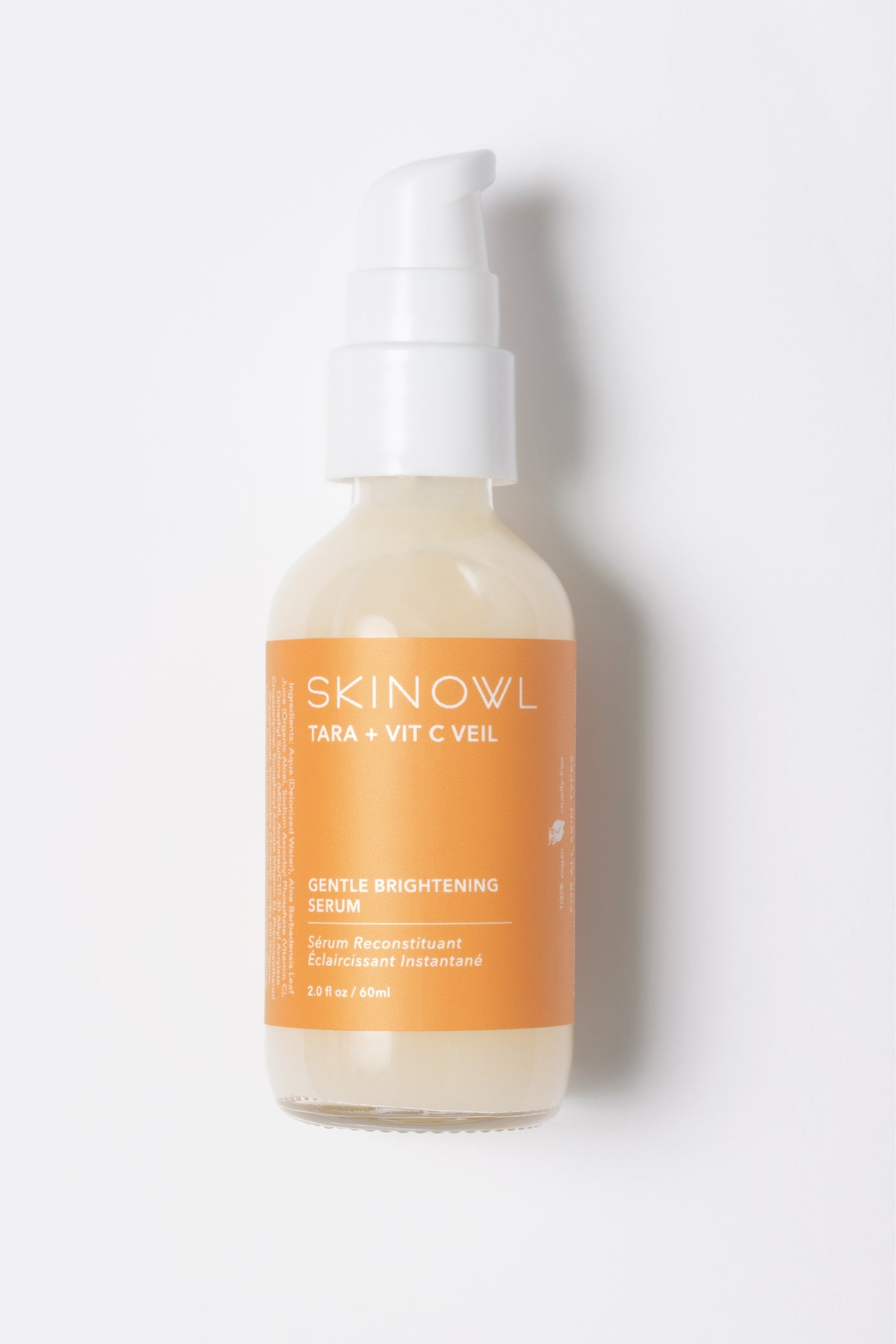

SkinOwl
Tara + Vit C Veil

Tara + Vit C Veil
SkinOwl
tara-vit-c-veil
Serum
9706808803621
Morning or Evening?
How often will you use this product?
Notes


Highlights
WHAT IS IT?
Brightening serum with multiple ingredients
FEATURES
Brightening, plumping, antioxidant-rich, restorative
BEST FOR
All skin types, including sensitive skin
CHECKS
Free of parabens, sulfates, phthalates, synthetic fragrances
Who Is It For?
Adults Both Women And MenWhat Does It Help With?
Brightening Reducing Wrinkles And Dark Marks MoisturizingBudget
Mid-rangeHow To Use
Which routine should it be used in?
Instructions:
Key Information


What SkinOwl Says
Product Description:
A brightening serum like you've never seen. Brightening, plumping and chock full of antioxidants that help restore and replenish the skin.
About the Brand:
Ingredients Overview
Ingredients List
Aqua (Deionized Water), Aloe Barbadensis Leaf Juice (Organic Aloe), Sodium Ascorbyl Phosphate (Vitamin C), Dimethyl Sulfone (MSM), Acrylates/C10-30 Alkyl Acrylate Crosspolymer, Tocopheryl Acetate (Vitamin E), Phenoxyethanol (Preservative), Simmondsia Chinensis Jojoba Oil (Organic Jojoba), Sodium Hydroxide (Caustic Soda), Glycerin (Kosher, Vegetable), Ethylhexylglycerine (Preservative), Caesalpinia Spinosa Gum (Tara, Botanical Hyaluronic Acid), Potassium Sorbate (Preservative), Sodium Benzoate (Preservative), Alcohol, Centella Asiatica Extract (Gotu Kola), Equisetum Arvense Extract (Horsetail), Geranium Maculatum Extract (Wild Geranium), Taraxacum Officinale Extract (Organic Dandelion)
Key Ingredients
Sodium Ascorbyl Phosphate (Vitamin C), Caesalpinia Spinosa Gum (Tara, Botanical Hyaluronic Acid), Aloe Barbadensis Leaf Juice, Dimethyl Sulfone (MSM), Tocopheryl Acetate (Vitamin E)
Ingredients Details
Acrylates/c10-30 Alkyl Acrylate Crosspolymer
Common Name(s): Acrylates/c10-30 alkyl acrylate crosspolymer
DESCRIPTION
What It Does: Delivers targeted skin-conditioning or bioactive benefits through a specific mechanism of action suited to the formulation's intended purpose.
Why It's Used: Specialty actives address specific skin concerns through targeted molecular mechanisms, providing efficacy beyond what base formulation ingredients alone can achieve.
How It Works: The bioactive compound interacts with specific molecular targets in skin cells or the extracellular matrix — enzymes, receptors, structural proteins, or signaling molecules — triggering beneficial biological responses.
Typically Found In: Serums,treatments,moisturizers,specialty products
TECHNICAL DETAILS
Primary Category: Specialty actives
Secondary Functions: Skin-conditioning,anti-aging
Application Areas:

Facial Skincare

Body Care
Hair Care
Beard Care
Color Cosmetics (Makeup)
Dietary/Oral Supplements
Typical Concentration Range: 0.01–5%
SOURCING & ETHICS
Vegan Status: Conditional - supplier confirmation required
Halal Status: Unverified - supplier confirmation required
Source Notes: Specialty active ingredient; check individual sourcing for vegan status. [audit 2026-07-29 rev2: the record's own source_notes does not assert a non-animal origin, or instructs the reader to verify with the supplier; "yes" asserts knowledge the record does not hold. determination requires shariah-panel sign-off.]
SKIN COMPATIBILITY
Irritancy Rating: 1
Comedogenicity Rating: 0
Sensitivity Concerns: Low sensitization potential at recommended use concentrations.
Safe for Sensitive Skin: Yes
SAFETY & COMPATIBILITY
Safety Profile: Well-characterized cosmetic ingredient with established safety profile. generally non-irritating at typical use concentrations. suitable for leave-on and rinse-off cosmetics.
Works Well With: Niacinamide,hyaluronic acid,vitamin c,peptides
Avoid Combining With: Incompatible with oxidizing agents; check ph stability
SCIENTIFIC NOTE
Specialty actives typically work through enzyme inhibition (e.g., tyrosinase inhibition for brightening, mmp inhibition for anti-aging), receptor activation (e.g., retinoid receptors, ppar-γ for barrier genes), or transcription factor modulation (e.g., nrf2 for antioxidant gene upregulation). structure-activity relationships determine potency and selectivity.
Last Verified: 2025-01-15
Primary Sources: Cosing eu database; pcpc cosmetic ingredient safety reviews; ingredient-specific safety and efficacy literature
Tocopheryl Acetate Vitamin E
Common Name(s): Tocopheryl acetate vitamin e
DESCRIPTION
What It Does: Delivers targeted skin-conditioning or bioactive benefits through a specific mechanism of action suited to the formulation's intended purpose.
Why It's Used: Specialty actives address specific skin concerns through targeted molecular mechanisms, providing efficacy beyond what base formulation ingredients alone can achieve.
How It Works: The bioactive compound interacts with specific molecular targets in skin cells or the extracellular matrix — enzymes, receptors, structural proteins, or signaling molecules — triggering beneficial biological responses.
Typically Found In: Serums,treatments,moisturizers,specialty products
TECHNICAL DETAILS
Primary Category: Specialty actives
Secondary Functions: Skin-conditioning,anti-aging
Application Areas:
Facial Skincare
Body Care
Hair Care
Beard Care
Color Cosmetics (Makeup)
Dietary/Oral Supplements
Typical Concentration Range: 0.01–5%
SOURCING & ETHICS
Vegan Status: Conditional - supplier confirmation required
Halal Status: Unverified - supplier confirmation required
Source Notes: Specialty active ingredient; check individual sourcing for vegan status. [audit 2026-07-29 rev2: the record's own source_notes does not assert a non-animal origin, or instructs the reader to verify with the supplier; "yes" asserts knowledge the record does not hold. determination requires shariah-panel sign-off.]
SKIN COMPATIBILITY
Irritancy Rating: 1899-12-31 00:00:00 -0800
Sensitivity Concerns: Low sensitization potential at recommended use concentrations.
Safe for Sensitive Skin: Yes
SAFETY & COMPATIBILITY
Safety Profile: Well-characterized cosmetic ingredient with established safety profile. generally non-irritating at typical use concentrations. suitable for leave-on and rinse-off cosmetics.
Works Well With: Niacinamide,hyaluronic acid,vitamin c,peptides
Avoid Combining With: Incompatible with oxidizing agents; check ph stability
SCIENTIFIC NOTE
Specialty actives typically work through enzyme inhibition (e.g., tyrosinase inhibition for brightening, mmp inhibition for anti-aging), receptor activation (e.g., retinoid receptors, ppar-γ for barrier genes), or transcription factor modulation (e.g., nrf2 for antioxidant gene upregulation). structure-activity relationships determine potency and selectivity.
Last Verified: 2025-01-15
Primary Sources: Cosing eu database; pcpc cosmetic ingredient safety reviews; ingredient-specific safety and efficacy literature