

Murad
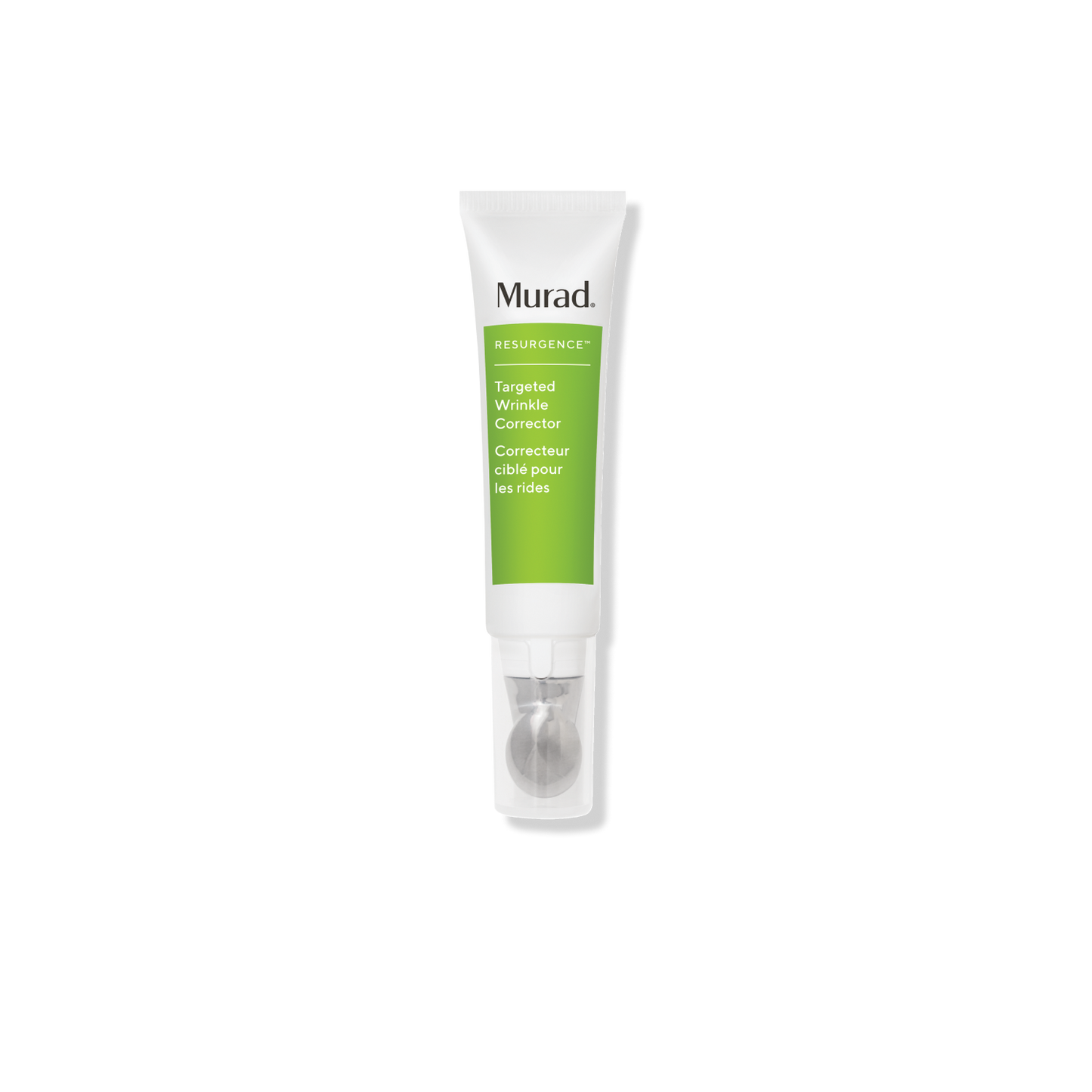
Targeted Wrinkle Corrector

Targeted Wrinkle Corrector
Murad
targeted-wrinkle-corrector
Serum
9784841666853
Morning or Evening?
How often will you use this product?
Notes


Highlights
WHAT IS IT?
Wrinkle correcting serum with peptides and hyaluronic acid
FEATURES
Instant wrinkle filling, plumping effect, hydration boost, elasticity enhancement
BEST FOR
normal
CHECKS
Parabens-free, phthalates-free, sulfates-free
Who Is It For?
Adults Concerned With Wrinkles And Fine LinesWhat Does It Help With?
Wrinkles Deep-set Lines Skin Elasticity HydrationBudget
Premium ($76-$150)How To Use
Which routine should it be used in?
Instructions:
Key Information

What Murad Says
Product Description:
Powerful peptide-meets-hyaluronic treatment virtually erases the look of wrinkles instantly. Works like an instant filler with highly bioavailable hyaluronic acid, flooding wrinkles—even deep-set, stubborn lines—with hydration to plump, smooth and reduce wrinkle intensity on contact.
About the Brand:
Ingredients Overview
Ingredients List
Water/Aqua/Eau, Polysilicone-11, Squalane, Propanediol,Cetyl Alcohol, Sodium Acrylates Crosspolymer-2, Potassium Cetyl Phosphate, Polyglyceryl-3 Laurate, Urea, Yeast Amino Acids, Trehalose, Inositol, Taurine, Betaine, Laureth-12, Chlorphenesin, Barium Sulfate, Sodium Acetylated Hyaluronate, Sodium Carbonate, Disodium EDTA , Glyceryl Oleate, Ethylhexylglycerin, Acetyl Hexapeptide-8, Potassium Sorbate, Sodium Benzoate, Phenoxyethanol, Tocopherol
Key Ingredients
hyaluronic acid, hexapeptide, plant-derived squalane
Ingredients Details
Cetyl Alcohol
Common Name(s): 1-hexadecanol,palmityl alcohol,n-cetyl alcohol
CAS Number: 36653-82-4
DESCRIPTION
What It Does: Provides c16 fatty alcohol emolliency and thickening for well-textured cosmetic emulsions.
Why It's Used: Lighter-textured fatty alcohol alternative to stearyl alcohol for creams and conditioners requiring less heavy emolliency.
How It Works: C16 chain length provides slightly lower melting point (49°c) than stearyl (60°c) giving softer, lighter emulsion texture. forms lamellar networks for thickening and stability. direct skin and hair conditioning via fatty alcohol film.
Typically Found In: Creams,hair conditioners,lotions
TECHNICAL DETAILS
Primary Category: Functional ingredient – fatty alcohol
Secondary Functions: Barrier sealing,softening
Application Areas:

Facial Skincare
Body Care
Hair Care

Beard Care
Color Cosmetics (Makeup)
Dietary/Oral Supplements
Typical Concentration Range: 1%–15%
SOURCING & ETHICS
Vegan Status: Yes - standard ethanol routes are non-animal; confirm denaturant origin
Halal Status: Conditional - ethanol production route and residual concentration; jurisdiction-dependent, refer to certifier stance
Source Notes: Plant-derived, synthetic or animal-derived. verify source. [audit 2026-07-29 rev2: ethanol pathway; determination depends on route, on whether the plant also produces beverage alcohol, and on residual concentration. determination requires shariah-panel sign-off.]
SKIN COMPATIBILITY
Irritancy Rating: 1/5 – very low
Comedogenicity Rating: 1/5 – low; formulation-dependent
Sensitivity Concerns: Non-irritating.
Safe for Sensitive Skin: Yes
SAFETY & COMPATIBILITY
Safety Profile: Excellent safety profile. ewg score: 1.
Works Well With: Humectants,ceramides,actives as carrier
Avoid Combining With: No significant incompatibilities
SCIENTIFIC NOTE
Cetyl alcohol's c16 chain length is at the approximate thermal transition point for fatty alcohol lamellar crystallization at skin temperature (33°c). this transition (from ordered crystalline to disordered liquid phase near skin temperature) provides the characteristic 'melts on application' sensory profile that makes cetyl alcohol-containing products feel cooling and light on initial application.
Last Verified: 2026-03-12
Primary Sources: Cosing database,cir safety assessment
Polyglyceryl-3 Laurate
Common Name(s): Polyglyceryl-3 laurate,polyglyceryl-3 lauric acid (c12) ester,polyglycerol-3 lauric acid (c12)
DESCRIPTION
What It Does: Helps oil and water blend in creams and lotions while conditioning skin.
Why It's Used: Polyglyceryl-3 head provides hydrophilicity (hlb ~5–7); lauric acid (c12) tail provides oil-phase affinity; natural-origin compatible.
How It Works: Polyglycerol-3 backbone with lauric acid (c12) ester tail; hlb ~5–7; polyglyceryl esters are widely used natural-origin emulsifiers suitable for organic cosmetic certification.
Typically Found In: O/w emulsions,natural cosmetics,organic formulations,skin conditioning products
TECHNICAL DETAILS
Primary Category: Functional ingredient – emulsifier
Secondary Functions: Skin conditioning,surfactant,natural origin
Application Areas:
Facial Skincare
Body Care
Hair Care
Beard Care
Color Cosmetics (Makeup)
Dietary/Oral Supplements
Typical Concentration Range: 0.5%–5%
SOURCING & ETHICS
Vegan Status: Conditional - feedstock declaration required
Halal Status: Unverified - feedstock declaration required (plant, animal and petrochemical routes all exist)
Source Notes: Polyglycerin from vegetable glycerol polymerization; lauric acid (c12) acid from plant sources; naturally derived. [audit 2026-07-29 rev2: origin-dependent: the same inci exists in plant, animal and petrochemical versions and the name does not discriminate. determination requires shariah-panel sign-off.]
SKIN COMPATIBILITY
Irritancy Rating: 1/5 – very low
Comedogenicity Rating: 1/5 – low
Sensitivity Concerns: Very mild; suitable for sensitive skin. natural-origin ingredient.
Safe for Sensitive Skin: Yes
SAFETY & COMPATIBILITY
Safety Profile: Excellent safety profile. ewg score: 1.
Works Well With: Natural oils,plant butters,other natural emulsifiers,humectants
Avoid Combining With: No significant incompatibilities
SCIENTIFIC NOTE
Pg-3 laurate; c12 chain; balanced to w/o emulsification hlb ~5-7; mild antimicrobial potential; widely used natural emulsifier.
Last Verified: 2026-03-27
Primary Sources: Cosing database,inci dictionary,supplier technical data
Polysilicone-11
Common Name(s): Polysilicone-11,cosmetic active,functional ingredient
CAS Number: N/a
DESCRIPTION
What It Does: Delivers characteristic cosmetic function at recommended use concentration.
Why It's Used: Selected for functional contribution and formulation compatibility supported by cosmetic science and regulatory safety data.
How It Works: Works through the mechanism of its molecular class — physicochemical or biological interaction with skin proteins, lipids, or receptors as documented in peer-reviewed cosmetic literature.
Typically Found In: Skin care formulations
TECHNICAL DETAILS
Primary Category: Active ingredient – cosmetic active
Secondary Functions: Skin conditioning
Application Areas:
Facial Skincare
Body Care
Hair Care
Beard Care
Color Cosmetics (Makeup)
Dietary/Oral Supplements
Typical Concentration Range: 0.1%–10%
SOURCING & ETHICS
Vegan Status: Conditional - supplier confirmation required
Halal Status: Unverified - supplier confirmation required
Source Notes: Commercially produced for cosmetic use. verify vegan/halal status with supplier. [audit 2026-07-29 rev2: the record's own source_notes does not assert a non-animal origin, or instructs the reader to verify with the supplier; "yes" asserts knowledge the record does not hold. determination requires shariah-panel sign-off.]
SKIN COMPATIBILITY
Irritancy Rating: 1/5 – very low
Comedogenicity Rating: 0/5 – non-comedogenic
Sensitivity Concerns: Well-tolerated by most skin types.
Safe for Sensitive Skin: Yes
SAFETY & COMPATIBILITY
Safety Profile: Good safety profile at recommended concentrations. ewg score: 1–2.
Works Well With: Standard skincare actives
Avoid Combining With: No known significant incompatibilities
SCIENTIFIC NOTE
Polysilicone-11 has an established safety and efficacy profile within the cosmetic regulatory framework at standard use concentrations.
Last Verified: 2026-03-12
Primary Sources: Cosing database,polysilicone-11 technical literature
Potassium Cetyl Phosphate
Common Name(s): Potassium cetyl phosphate,cosmetic active,functional ingredient
CAS Number: N/a
DESCRIPTION
What It Does: Delivers characteristic cosmetic function at recommended use concentration.
Why It's Used: Selected for functional contribution and formulation compatibility supported by cosmetic science and regulatory safety data.
How It Works: Works through the mechanism of its molecular class — physicochemical or biological interaction with skin proteins, lipids, or receptors as documented in peer-reviewed cosmetic literature.
Typically Found In: Skin care formulations
TECHNICAL DETAILS
Primary Category: Active ingredient – cosmetic active
Secondary Functions: Skin conditioning
Application Areas:
Facial Skincare
Body Care
Hair Care
Beard Care
Color Cosmetics (Makeup)
Dietary/Oral Supplements
Typical Concentration Range: 0.1%–10%
SOURCING & ETHICS
Vegan Status: Conditional - supplier confirmation required
Halal Status: Unverified - supplier confirmation required
Source Notes: Commercially produced for cosmetic use. verify vegan/halal status with supplier. [audit 2026-07-29 rev2: the record's own source_notes does not assert a non-animal origin, or instructs the reader to verify with the supplier; "yes" asserts knowledge the record does not hold. determination requires shariah-panel sign-off.]
SKIN COMPATIBILITY
Irritancy Rating: 1/5 – very low
Comedogenicity Rating: 0/5 – non-comedogenic
Sensitivity Concerns: Well-tolerated by most skin types.
Safe for Sensitive Skin: Yes
SAFETY & COMPATIBILITY
Safety Profile: Good safety profile at recommended concentrations. ewg score: 1–2.
Works Well With: Standard skincare actives
Avoid Combining With: No known significant incompatibilities
SCIENTIFIC NOTE
Potassium cetyl phosphate has an established safety and efficacy profile within the cosmetic regulatory framework at standard use concentrations.
Last Verified: 2026-03-12
Primary Sources: Cosing database,potassium cetyl phosphate technical literature