

Thank You Farmer
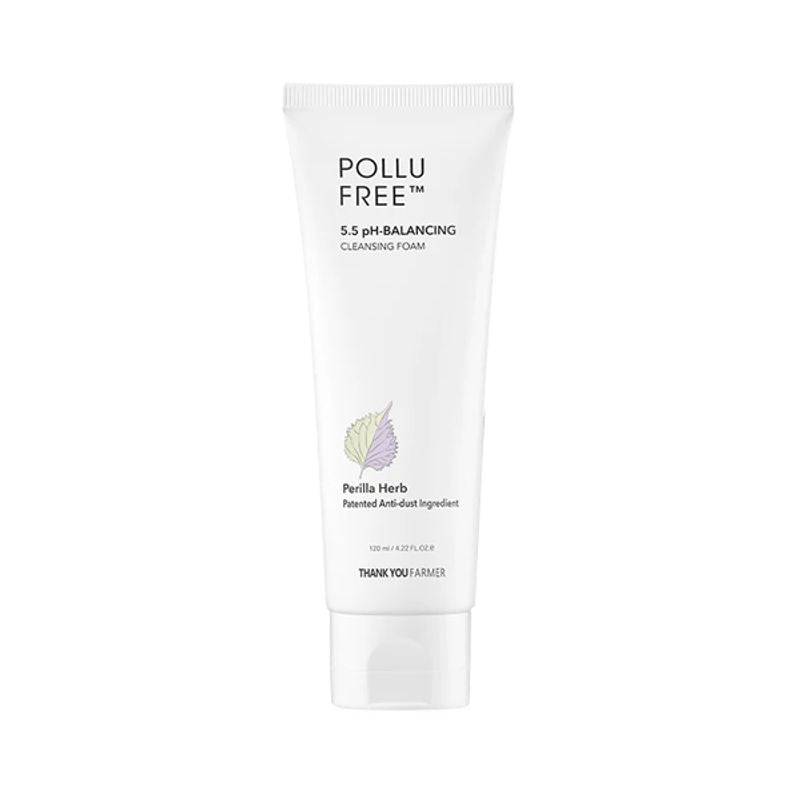
Thank You Farmer Pollu Free 5.5 pH Balancing Cleansing Foam

Thank You Farmer Pollu Free 5.5 pH Balancing Cleansing Foam
Thank You Farmer
thank-you-farmer-pollu-free-5-5-ph-balancing-cleansing-foam
Cleanse
10084748460325
Morning or Evening?
How often will you use this product?
Notes


Highlights
WHAT IS IT?
pH-Balancing Cleansing Foam with natural ingredients
FEATURES
Gentle, pH-Balanced Cleansing, Hydration and Soothing Care, Suitable for All Skin Types
BEST FOR
sensitive
CHECKS
harsh chemicals
Who Is It For?
What Does It Help With?
Removes Impurities Excess Oil And Fine Dust; Soothes And Hydrates; Maintains Skin's Natural BarrierBudget
Premium ($76-$150)How To Use
Which routine should it be used in?
Instructions:
Key Information


What Thank You Farmer Says
Product Description:
Experience the perfect balance of effective cleansing and gentle care with Thank You Farmer PolluFree 5.5 pH-Balancing Cleansing Foam. Designed to maintain your skin's natural harmony, this gentle, pH-balanced cleanser effectively removes impurities, excess oil, and fine dust without disrupting your skin's protective barrier. Infused with natural ingredients, it soothes and hydrates while leaving your skin feeling fresh, soft, and nourished. The lightweight foam glides effortlessly, offering a luxurious cleansing experience suitable for all skin types, including sensitive skin. Whether you're tackling urban pollution or daily grime, this cleanser is your perfect ally for radiant, healthy skin. Free from harsh chemicals, it ensures your skin feels calm and comfortable after every wash. Embrace the beauty of clean, balanced skin with Thank You Farmer PolluFree™ 5.5 pH-Balancing Cleansing Foam your first step to a flawless skincare routine.
About the Brand:
Ingredients Overview
Ingredients List
Aqua/Water, Sodium Cocoyl Isethionate, Glycerin, Sodium Methyl Cocoyl Taurate, Glycol Distearate, Potassium Cocoate, Glycol Stearate, Potassium Cocoyl Glycinate, Methylpropanediol, Sodium Chloride, 1,2-Hexanediol, Hydroxyacetophenone, Polyquaternium-22, Citric Acid, Ethylhexylglycerin, Disodium Edta, Decylene Glycol, Dipropylene Glycol, Laminaria Japonica Extract, Eclipta Prostrata Leaf Extract, Fructooligosaccharides, Beta-Glucan, Perilla Frutescens Leaf Extract, Hydrogenated Lecithin, Houttuynia Cordata Extract, Anthemis Nobilis Flower Extract, Althaea Officinalis Leaf/Root Extract, Foeniculum Vulgare Fruit Extract, Ocimum Basilicum Flower/Leaf Extract, Rosmarinus Officinalis Leaf Extract, Lavandula Angustifolia Extract, Hydrolyzed Hyaluronic Acid, Tocopherol
Key Ingredients
Perilla Herb Extract
Ingredients Details
1-2-hexanediol
Common Name(s): 1-2-hexanediol,cosmetic active,functional ingredient
CAS Number: N/a
DESCRIPTION
What It Does: Delivers characteristic cosmetic function at recommended use concentration.
Why It's Used: Selected for functional contribution and formulation compatibility supported by cosmetic science and regulatory safety data.
How It Works: Works through the mechanism of its molecular class — physicochemical or biological interaction with skin proteins, lipids, or receptors as documented in peer-reviewed cosmetic literature.
Typically Found In: Skin care formulations
TECHNICAL DETAILS
Primary Category: Active ingredient – cosmetic active
Secondary Functions: Skin conditioning
Application Areas:

Facial Skincare

Body Care
Hair Care
Beard Care
Color Cosmetics (Makeup)
Dietary/Oral Supplements
Typical Concentration Range: 0.1%–10%
SOURCING & ETHICS
Vegan Status: Conditional
Halal Status: Yes
Source Notes: Commercially produced for cosmetic use. verify vegan/halal status with supplier.
SKIN COMPATIBILITY
Irritancy Rating: 1/5 – very low
Comedogenicity Rating: 0/5 – non-comedogenic
Sensitivity Concerns: Well-tolerated by most skin types.
Safe for Sensitive Skin: Yes
SAFETY & COMPATIBILITY
Safety Profile: Good safety profile at recommended concentrations. ewg score: 1–2.
Works Well With: Standard skincare actives
Avoid Combining With: No known significant incompatibilities
SCIENTIFIC NOTE
1-2-hexanediol has an established safety and efficacy profile within the cosmetic regulatory framework at standard use concentrations.
Last Verified: Cosing database,1-2-hexanediol technical literature
Primary Sources: 2026-03-12
Althaea Officinalis Leaf/root Extract
Common Name(s): Althaea officinalis leaf/root extract
DESCRIPTION
What It Does: Provides antioxidant protection, soothing anti-inflammatory effects, and skin-conditioning benefits through plant-derived polyphenols and phytochemicals.
Why It's Used: Plant extracts concentrate bioactive phytochemicals evolved for environmental protection — uv, microbial, and oxidative stressors — that translate to skin benefits.
How It Works: Polyphenols (flavonoids, phenolic acids) inhibit nf-κb-mediated inflammatory signaling, scavenge reactive oxygen species through electron donation, and chelate pro-oxidant metal ions to reduce oxidative skin damage.
Typically Found In: Serums,toners,moisturizers,masks,essences
TECHNICAL DETAILS
Primary Category: Botanical extracts
Secondary Functions: Antioxidant,anti-inflammatory
Application Areas:
Facial Skincare
Body Care
Hair Care
Beard Care
Color Cosmetics (Makeup)
Dietary/Oral Supplements
Typical Concentration Range: 0.1–10%
SOURCING & ETHICS
Vegan Status: Yes
Halal Status: Yes
Source Notes: Plant-derived extract; no animal components.
SKIN COMPATIBILITY
Irritancy Rating: 1
Comedogenicity Rating: 0
Sensitivity Concerns: Low sensitization potential at recommended use concentrations.
Safe for Sensitive Skin: Yes
SAFETY & COMPATIBILITY
Safety Profile: Well-characterized cosmetic ingredient with established safety profile. generally non-irritating at typical use concentrations. suitable for leave-on and rinse-off cosmetics.
Works Well With: Niacinamide,hyaluronic acid,vitamin c,ceramides
Avoid Combining With: Strong oxidizing agents
SCIENTIFIC NOTE
Plant secondary metabolites (flavonoids, terpenes, phenolic acids) are biosynthesized as defense compounds against uv, herbivores, and pathogens. their anti-inflammatory activity typically derives from competitive inhibition of cox-2 and 5-lox enzymes (ic50 1–50 µm), while antioxidant activity involves single electron transfer (set) and hydrogen atom transfer (hat) mechanisms with structure-dependent rate constants.
Last Verified: Cosing eu database; pcpc cosmetic ingredient safety reviews; phytochemical and ethnobotanical literature
Primary Sources: 2025-01-15
Anthemis Nobilis Flower Extract
Common Name(s): Anthemis nobilis flower extract,botanical extract,phytochemical active
CAS Number: N/a
DESCRIPTION
What It Does: Provides antioxidant protection from reactive oxygen species, reduces inflammatory cytokine production in skin, and conditions skin surface through the plant's secondary metabolite complex.
Why It's Used: Chosen for its natural origin narrative, traditional use heritage, and multi-functional phytochemical profile that supports several concurrent skin care claims from one ingredient.
How It Works: Polyphenols, terpenoids, and alkaloids in the extract scavenge ros via hydrogen atom transfer, inhibit nf-kb or cox-2 inflammatory pathways, and interact with skin surface proteins for conditioning.
Typically Found In: Botanical skin care,natural products
TECHNICAL DETAILS
Primary Category: Active ingredient – antioxidant
Secondary Functions: Free radical scavenging,anti-aging
Application Areas:
Facial Skincare
Body Care
Hair Care
Beard Care
Color Cosmetics (Makeup)
Dietary/Oral Supplements
Typical Concentration Range: 0.1%–10%
SOURCING & ETHICS
Vegan Status: Yes
Halal Status: Yes
Source Notes: Plant-derived extract or synthetic.
SKIN COMPATIBILITY
Irritancy Rating: 1/5 – very low
Comedogenicity Rating: 0/5 – non-comedogenic
Sensitivity Concerns: Non-irritating; well-tolerated.
Safe for Sensitive Skin: Yes
SAFETY & COMPATIBILITY
Safety Profile: Excellent safety profile. ewg score: 1.
Works Well With: Vitamin c,vitamin e,ferulic acid,spf,other antioxidants
Avoid Combining With: No significant incompatibilities
SCIENTIFIC NOTE
Plant secondary metabolites evolved as uv photoprotectants and antimicrobial agents — mechanisms that directly translate to cosmetic antioxidant and anti-inflammatory activity in human skin.
Last Verified: Cosing database,anthemis nobilis flower extract botanical review
Primary Sources: 2026-03-12
Beta-glucan
Common Name(s): Beta-1,3/1,6-glucan,yeast beta-glucan,oat beta-glucan
CAS Number: 9041-22-9
DESCRIPTION
What It Does: Reduces inflammation, deeply hydrates, stimulates collagen synthesis, accelerates wound healing.
Why It's Used: Used in anti-aging, sensitive skin, post-procedure, and eczema care for multi-action anti-inflammatory, moisturizing, and regenerative benefits.
How It Works: Binds to dectin-1 and cr3 receptors on macrophages and keratinocytes activating tgf-beta and collagen synthesis pathways. also activates macrophage phagocytosis for wound healing. humectant from polysaccharide hydroxyl groups.
Typically Found In: Anti-aging serums,sensitive skin products,post-procedure care,eczema treatments
TECHNICAL DETAILS
Primary Category: Active ingredient – polysaccharide / immunomodulator
Secondary Functions: Immunomodulator,wound healing,collagen stimulation
Application Areas:
Facial Skincare
Body Care
Hair Care
Beard Care
Color Cosmetics (Makeup)
Dietary/Oral Supplements
Typical Concentration Range: 0.1%–5%
SOURCING & ETHICS
Vegan Status: Yes – yeast or oat-derived
Halal Status: Yes
Source Notes: Derived from saccharomyces cerevisiae yeast (1,3/1,6-linked) or avena sativa oats (1,3/1,4-linked). molecular weight affects penetration – lower mw for skin penetration vs high mw for surface hydration.
SKIN COMPATIBILITY
Irritancy Rating: 1/5 – very low
Comedogenicity Rating: 0/5 – non-comedogenic
Sensitivity Concerns: Non-irritating; ideal for reactive and sensitive skin.
Safe for Sensitive Skin: Yes – particularly recommended for sensitive skin
SAFETY & COMPATIBILITY
Safety Profile: Excellent safety profile. ewg score: 1.
Works Well With: Ceramides,panthenol,allantoin,hyaluronic acid,centella asiatica
Avoid Combining With: No significant incompatibilities
SCIENTIFIC NOTE
Yeast beta-1,3/1,6-glucan receptor binding to dectin-1 on keratinocytes activates tgf-beta1, the key pro-collagen cytokine, stimulating fibroblast collagen production. this makes beta-glucan one of the few non-retinoid, non-peptide ingredients with direct receptor-mediated collagen stimulation.
Last Verified: Cosing database,wasser (2002) beta-glucan review,cir safety assessment
Primary Sources: 2026-03-12
